Soprema Roofing Systems
Where does the flashing end and the membrane begin? On a Soprema roof, that line is often drawn in liquid. Soprema is known for modified bitumen sheets, for liquid-applied waterproofing and flashing resins such as Alsan, and for a range of single-ply and insulation products. The result is a family of layered assemblies that suit roofs with many penetrations, odd shapes, and rough use. In Temple, TX, plants, rail-served industrial buildings, and renovated downtown properties can share those traits, and the inspection record is what tells an owner which layer is carrying the load.
What does the maker's commercial line cover?
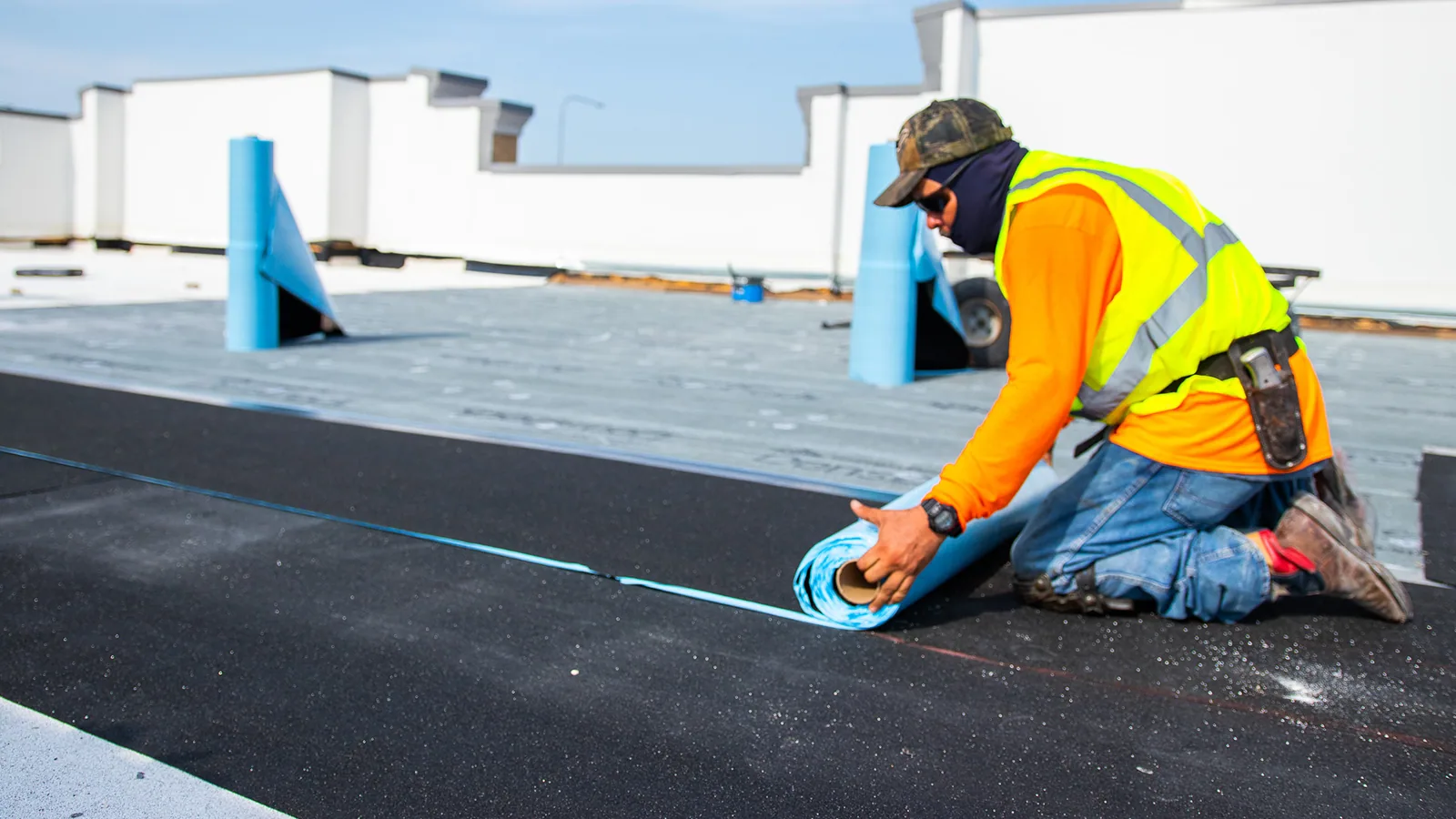
Modified bitumen is the long-standing core: SBS-modified asphalt sheets reinforced with fiberglass or polyester, laid in plies with a granule-surfaced cap. Liquid-applied membranes and flashing resins handle details and, in some systems, whole roofs. Single-ply sheets and insulation boards round out the offering, with fasteners, adhesives, and accessories alongside.
The mix suits owners who want redundancy. A two-ply modified bitumen system carries a second layer of protection under the cap, and liquid flashings can be formed around pipes, curbs, and corners without seams. The cost is installation complexity, and a longer schedule when the weather does not cooperate. Each layer, each lap, and each liquid detail is a place to inspect, and the file lists them by roof section so none is forgotten.
Torch, cold-applied, or self-adhered?
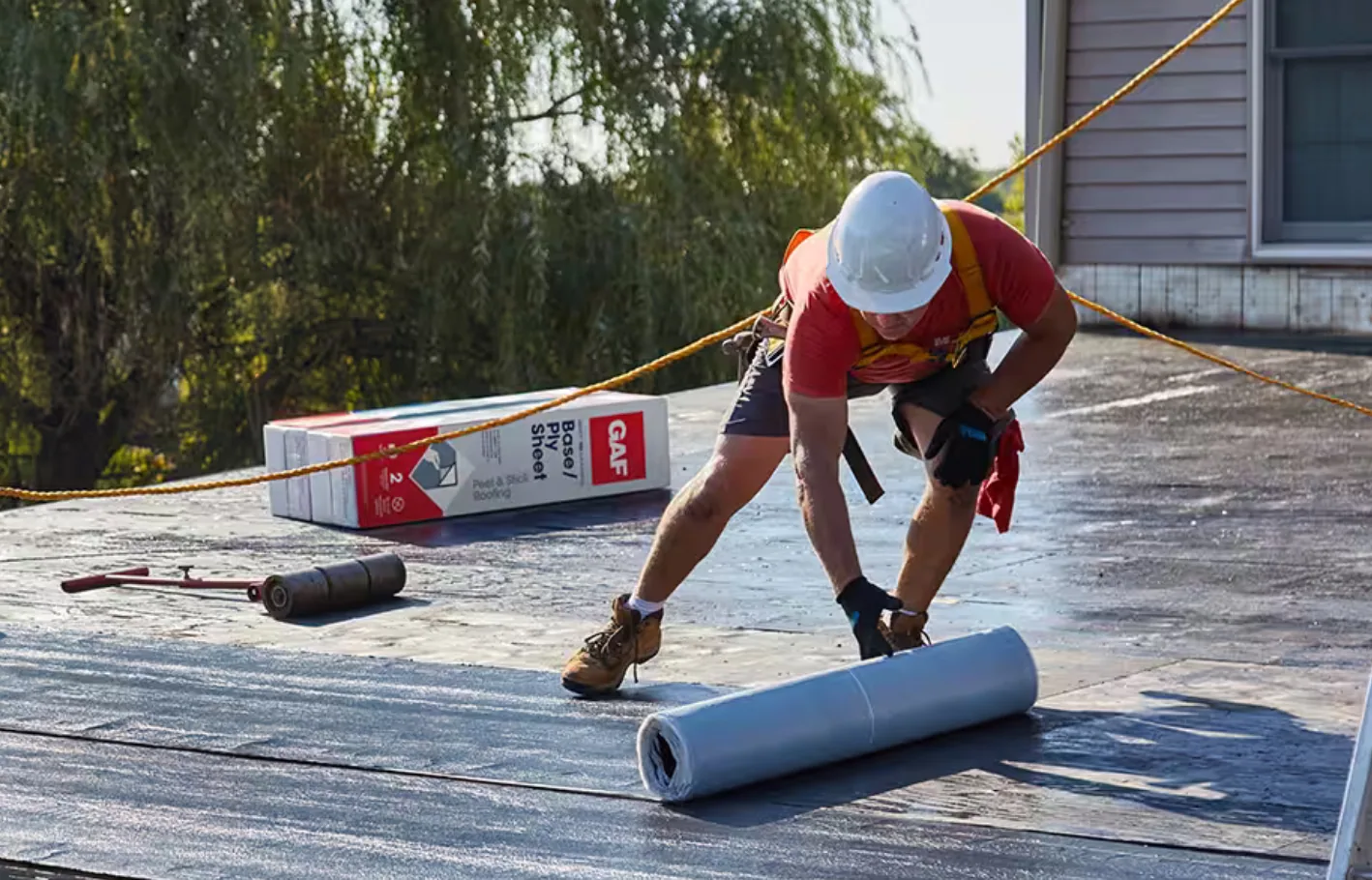
Modified bitumen laps can be fused with a torch, bonded with cold adhesive, or self-adhered. Torch work produces a strong bead but brings fire risk and demands hot-work controls. Many occupied buildings choose cold or self-adhered methods to avoid open flame. Each leaves different inspection clues: a bleed-out bead at torched laps, a smooth edge at adhesive laps, a tight line at self-adhered ones.
We record the method, the air and deck temperature at installation, and photographs of laps and flashings. That record matters years later, when a lap opens and someone has to explain why. It also shapes repairs: a torched cap takes heat-fused patches, while a cold-applied cap takes adhesive patches. The modified bitumen roofing routine lists those match-ups.
Where do liquid-applied flashings earn their place?
Around penetrations and irregular details. A resin-based liquid flashing can be applied around a cluster of pipes, a multi-sided curb, or a rough masonry junction, and it cures into a continuous skin that follows the shape. It is a common choice where prefabricated boots do not fit.
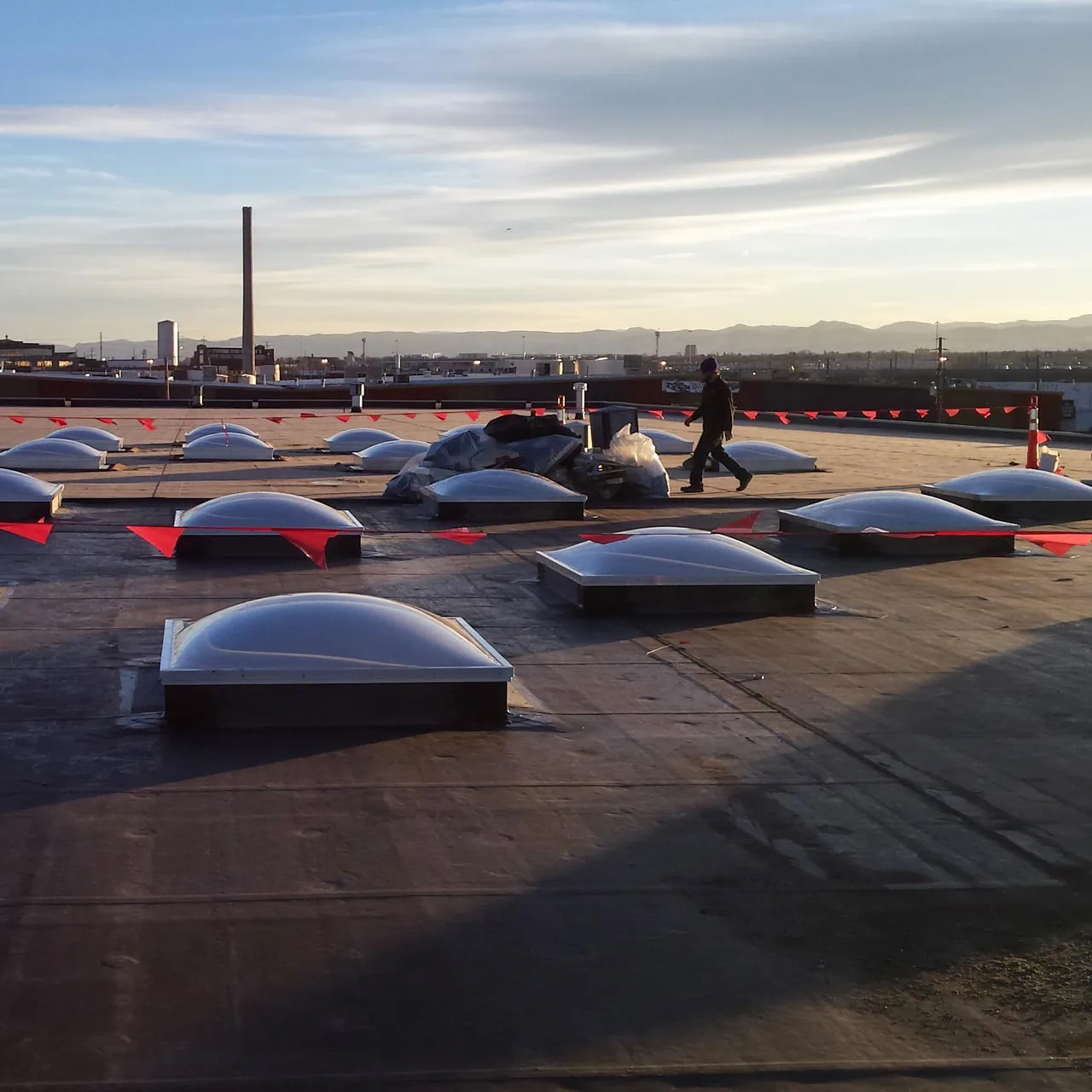
Preparation decides success. Surfaces must be clean, dry, and primed as needed, and temperatures must suit the product. We check cure, thickness, and adhesion at edges. A liquid flashing that peels at its perimeter lets water behind it, so the edge is the first thing we inspect. The skylight and penetration flashing inventory lists every liquid detail on the roof, with its date and product family.
Which Temple buildings use layered systems?
Those with heavy use. Temple's plants range from Wilsonart and Reynolds Consumer Products to Novolex, Texas Hydraulics, and E.R. Carpenter, with rail-served industrial ground along the BNSF and Union Pacific lines. A plant adds rooftop equipment, exhaust, and technician traffic, and a layered roof absorbs that wear well.
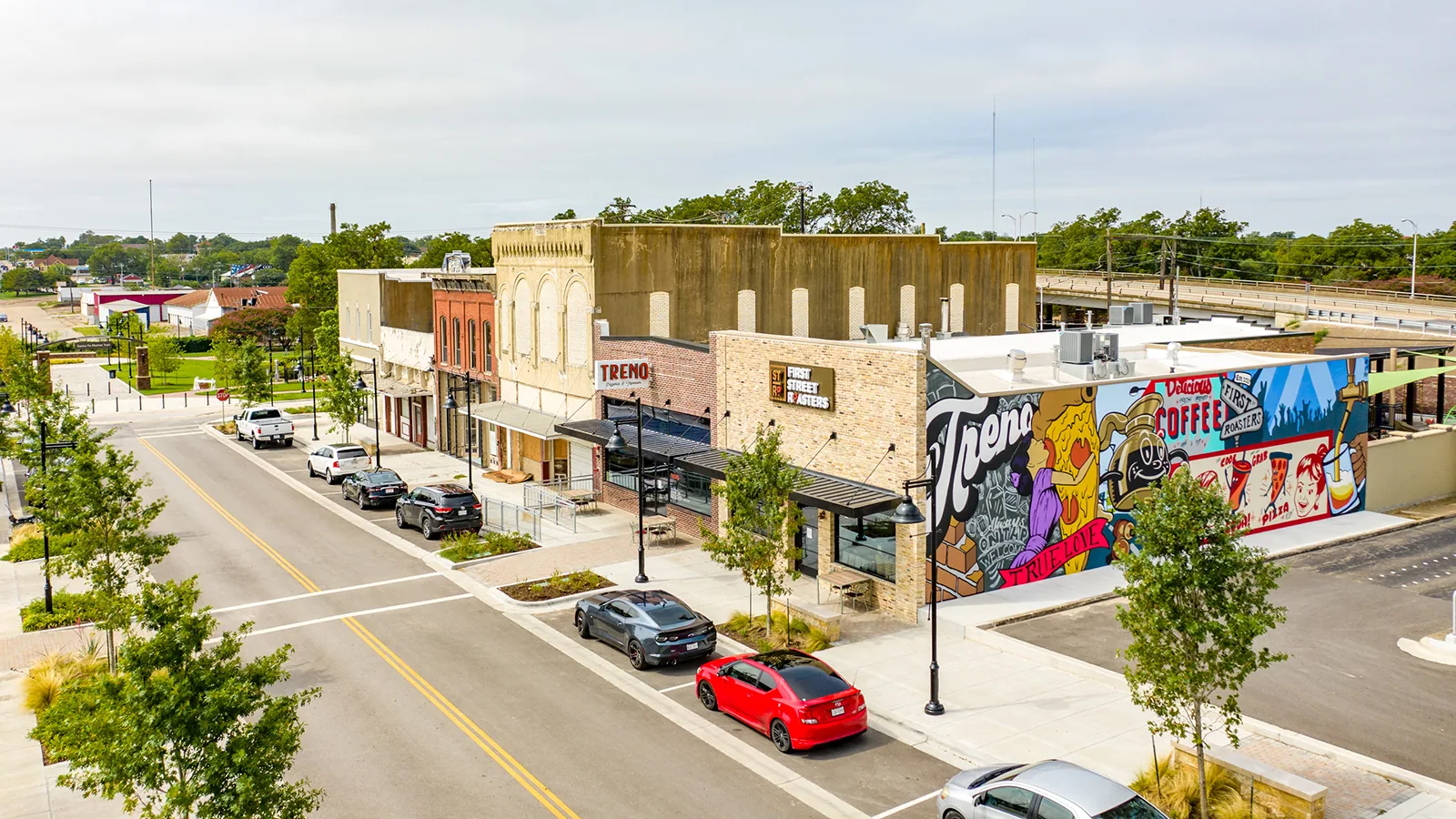
Downtown, the City Center project is redeveloping the Hawn Hotel, Arcadia Theater, and Sears Building, and renovated buildings often call for custom details at parapets and penetrations. On any of these properties the record comes first and the repair is matched to it, and the same file works for owners in Downtown Temple or in the industrial areas. Belton and Killeen owners get the identical format, and a company with plants in two cities can read both roofs side by side.
Hot-applied and torch-applied work near plants brings special care. Fire watches, hot-work permits, and attention to process vapors apply, and a plant with flammable materials may rule torch work out entirely. Cold-applied systems and liquid-applied flashings are the usual answer. The proposal states the method for each area and the reason, so the plant's safety staff can review it before work begins.
How do freezing nights and wind test an asphalt roof?
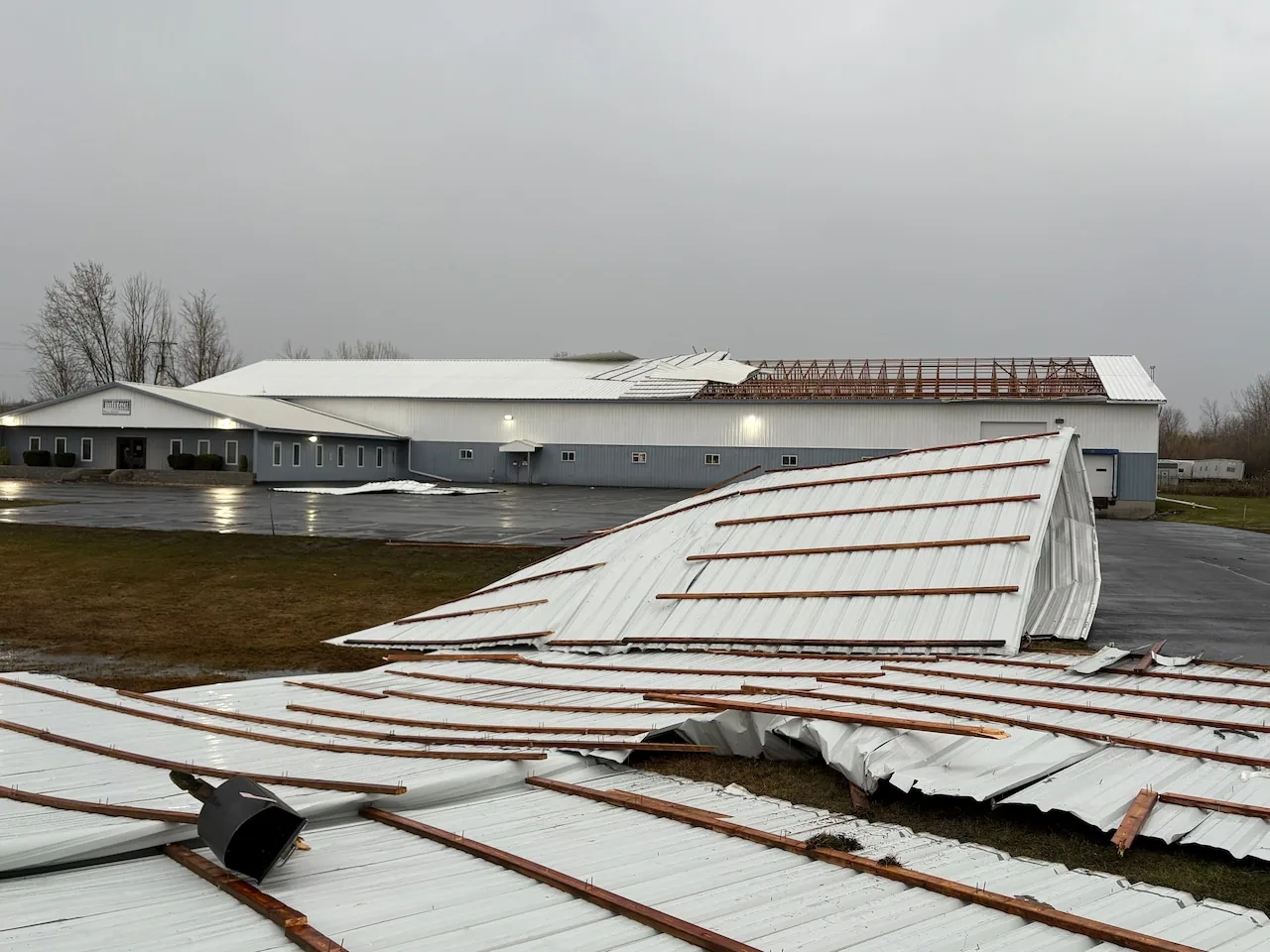
Temple logs about 26 freezing nights a year, and asphalt stiffens in the cold. Cold-weather repairs need warmed material and dry surfaces, and a roof that cracked at a lap in January is easier to see than in July. Wind is the other test: the EF-2 tornado of May 22, 2024 produced peak winds near 120 mph, and straight-line winds reached an estimated 80 to 90 mph.
After a storm, we examine edges, cap sheet laps, base flashings, and any granule loss that exposes the mat. The storm damage roof repair list that follows is ordered by exposure. A cap with exposed mat but dry insulation is a coating or recover candidate. A cap with soaked insulation is a replacement.
What should the owner file include?
Ply count and thickness from a core, the installation method, the liquid products used and their dates, the warranty documents, and the inspection history. Read the warranty terms before authorizing repairs, since rules about who may repair and what notice is needed can matter later. We document the roof's condition and every repair, so the owner and the manufacturer work from the same facts.
Mixed portfolios are common, with neighbors on GAF cap sheets or Johns Manville membranes. Each roof gets its own page in the file, and a summary table ranks them by remaining life and open items.
Drain and ponding records belong in the same file. Asphalt roofs tolerate occasional ponding but age faster under long-standing water, and about 39 inches of precipitation a year in Temple, with May the wettest month, means outlets must work. Each visit clears the bowls, measures depth after rain, and notes any low spot that is growing, so the owner can decide on tapered insulation or added drains before the next season.
Commercial Roofing Questions
Why choose modified bitumen over a single-ply sheet for a plant roof?
Because layers add redundancy and puncture resistance where traffic and equipment are heavy. A leak through the cap does not always reach the base. The tradeoff is weight and installation complexity. The choice follows exhaust, traffic, and the owner's plans for the building, and the findings lay it out.
Can a liquid-applied flashing be installed in cold weather?
Only within the product's temperature limits and on dry surfaces. In cold or damp conditions, a temporary seal holds until weather improves. We log the conditions and mark the work as temporary if it falls outside the ideal range, so no one mistakes it for the final detail.
What does granule loss tell an owner?
How much protection remains on the cap sheet. Light loss at drains is normal wear. Bare patches across the field mean the asphalt is exposed to sun and aging. We photograph the worst areas, measure them against total area, and recommend a coating, recover, or replacement based on the exposed mat and insulation moisture.
Is torch-applied modified bitumen allowed on occupied buildings?
It depends on the owner, the insurer, and the building. Many choose cold-applied or self-adhered methods to avoid open flame. If torch work is used, hot-work permits, fire watches, and post-work checks apply. The proposal states the method and the controls, and the owner decides.
How are blisters on a bitumen roof handled?
Small, dry, unbroken blisters can be monitored. Broken or wet ones are cut, dried, and patched. A moisture scan shows whether trapped water has spread. That result separates a local repair from a larger scope, and each blister is located and photographed.