Temple Industrial Park
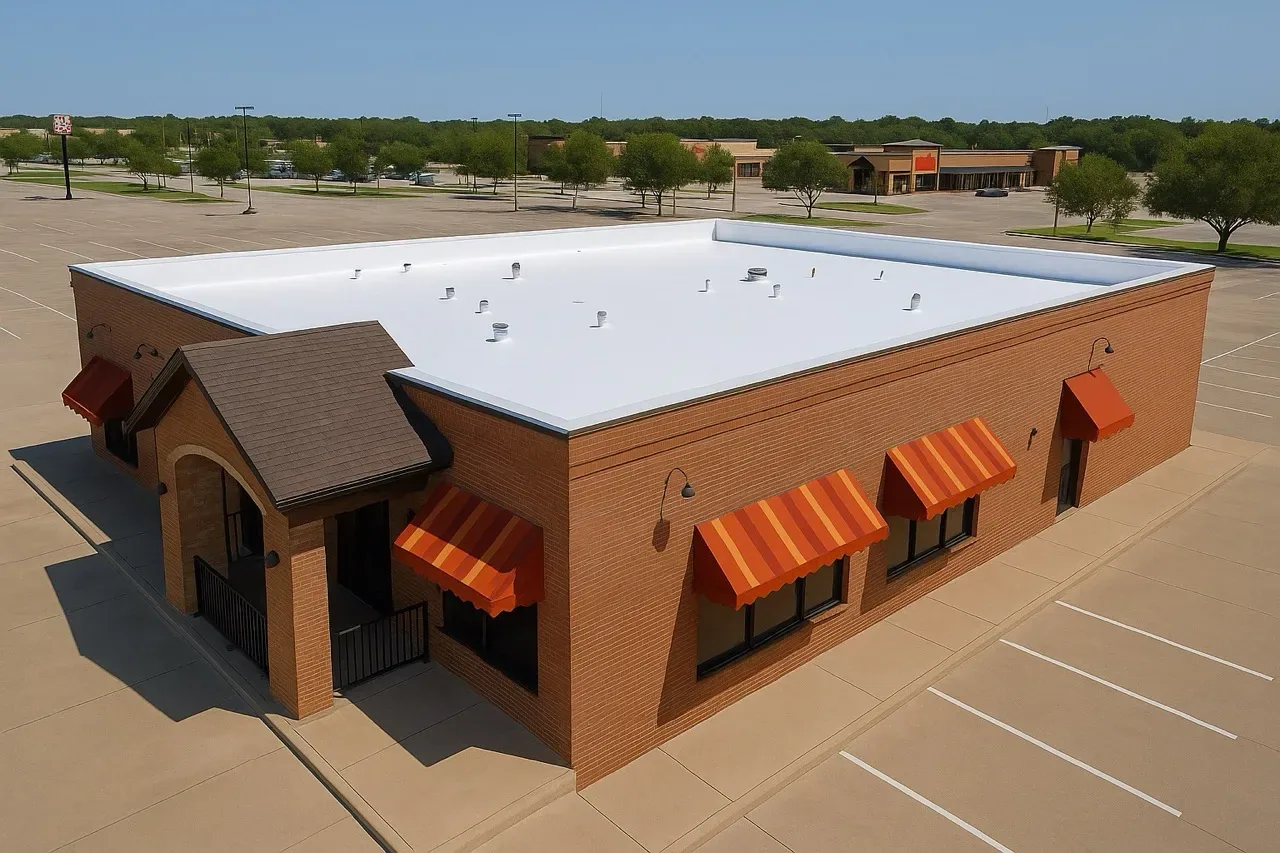
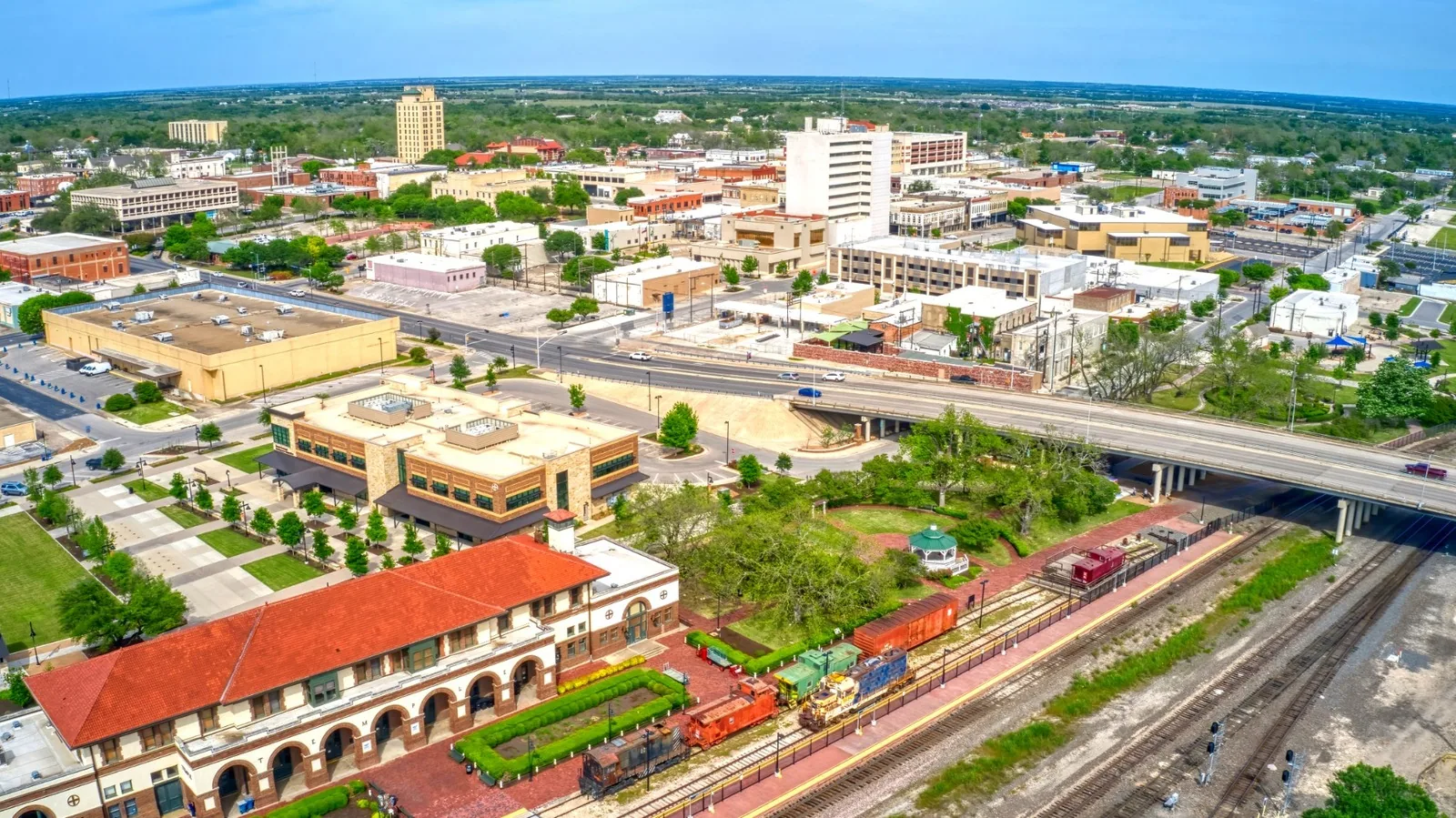
What is coming off this plant's roof besides rain? In an industrial park, the answer shapes everything: steam, solvent, oil mist, heat from process lines, and the dust that rail and truck traffic throw up. North Temple's Industrial Park is a recognized commercial area, prepared with roads, water, sewer, and railroad line access, where Temple EDC has moved to acquire 147 acres. Roofs there serve production and storage, and the first job on any of them is to learn what the building does, so the membrane, the repair, and the schedule match it.
What kinds of industrial roofs does a park like this hold?
Production buildings, warehouses, and light manufacturing space, with rooftop equipment sized to the process inside. Reynolds Consumer Products put $3.2 million in 2018 into a plastic film production line here, and McLane Company runs more than 80 distribution centers out of its Temple headquarters. Those facts describe the kind of activity the city's industrial ground supports, not any particular roof in the park.
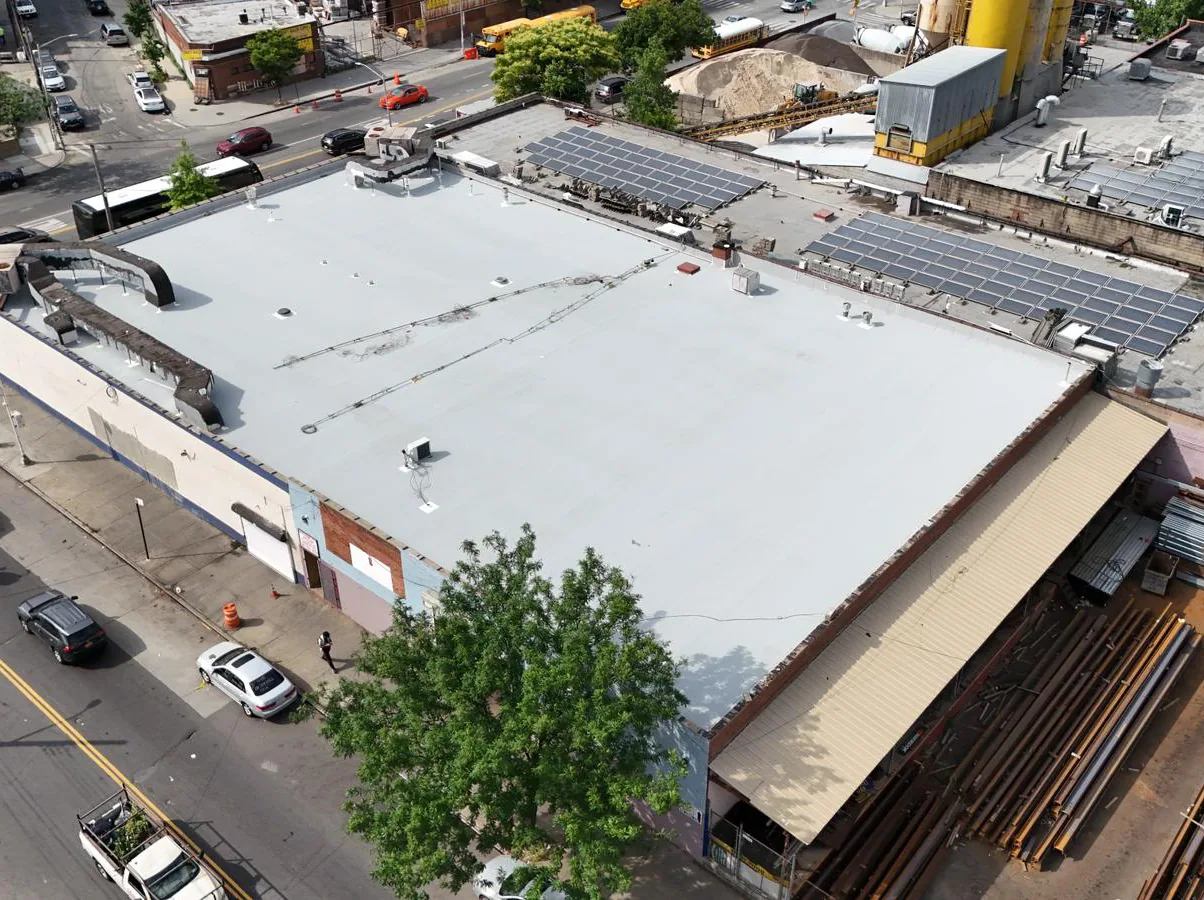
On any industrial roof we start with a plan of the equipment: stacks, fans, make-up air units, curbs, and pipe runs. Each gets a number, a photograph, and a description of what it discharges. That inventory shows where the membrane is exposed to something stronger than weather, and it guides the choice between a standard sheet and a chemical-resistant one.
Plants also move air. Make-up air units pull outside air in and exhaust fans push inside air out, and the roof sits between them. A fan placed too close to an intake can recirculate fumes, and roof work that changes the position of a stack can alter the balance. We flag these conditions for the plant's mechanical contractor instead of repairing around them.
How does process exhaust change the membrane choice?
Fats, oils, solvents, and steam attack some membranes and spare others. A plastic film or packaging line may vent heated resin vapor. A food or consumer-products plant may vent oils. Standard white sheets can soften near those discharges, while PVC roofing resists many of them, and the more resistant KEE roofing sheets add reserve where exposure is heavy.
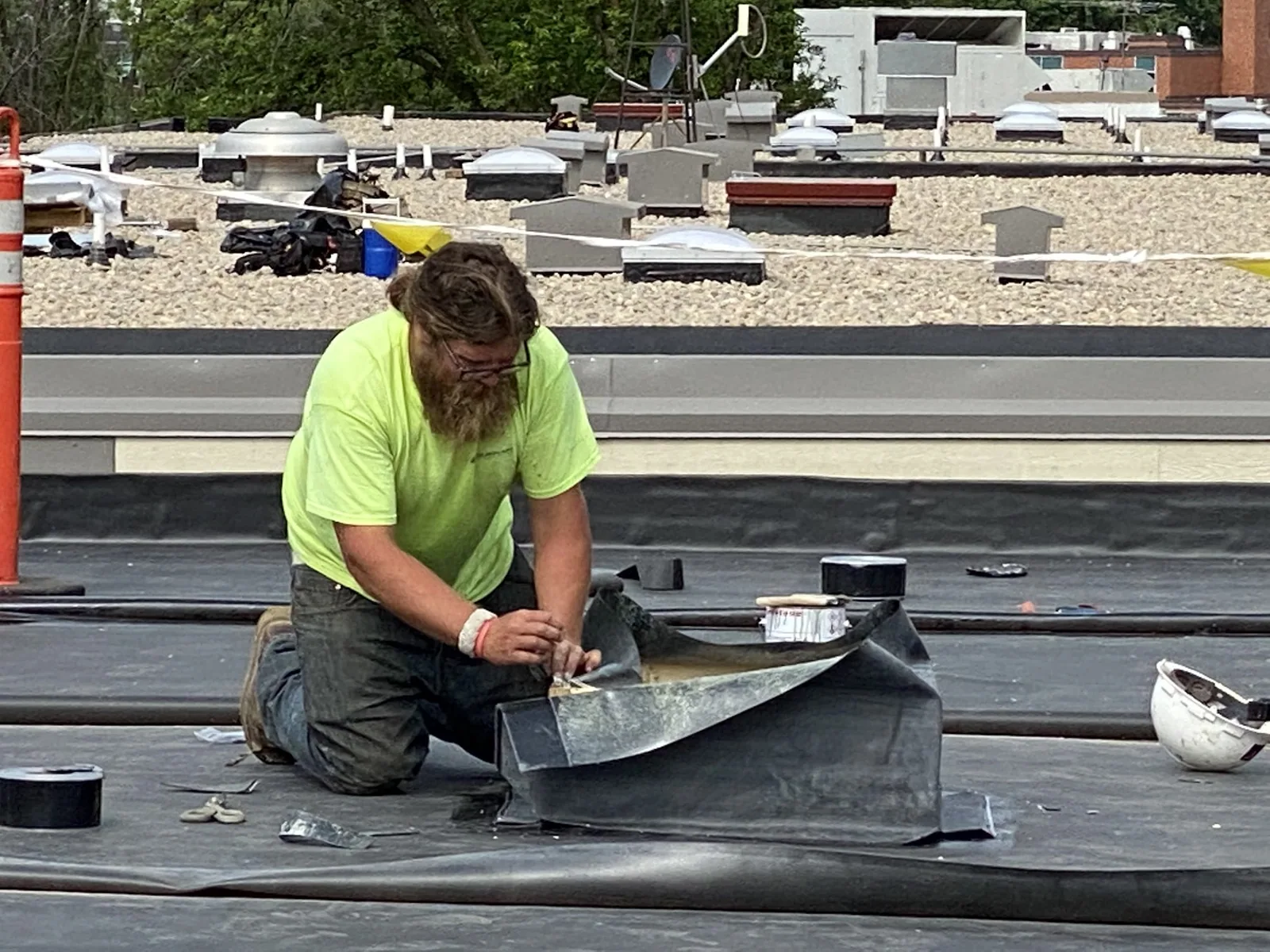
We ask the plant engineer what leaves each stack, photograph the sheet around it, and set a cleaning schedule. If a patch of membrane is already damaged, the repair uses a material that tolerates the discharge. The scope names the discharge that drove the choice, so a later reroof does not repeat the mistake.
Heat from process lines rises through the roof deck in some plants, and a membrane over a hot space ages faster than one over a cool space. We note ceiling temperatures where the plant allows, look for blistering and softening over hot zones, and record them on the sketch. Insulation thickness and reflectance may need to change over those areas, and the scope says so with the readings beside it.
What do rail-served sites add to a roofing job?
Logistics and vibration. The park is described as having railroad line access. Crews need staging areas that do not block spurs or docks, materials delivered at times the plant can receive them, and routes that avoid crossings during switching.
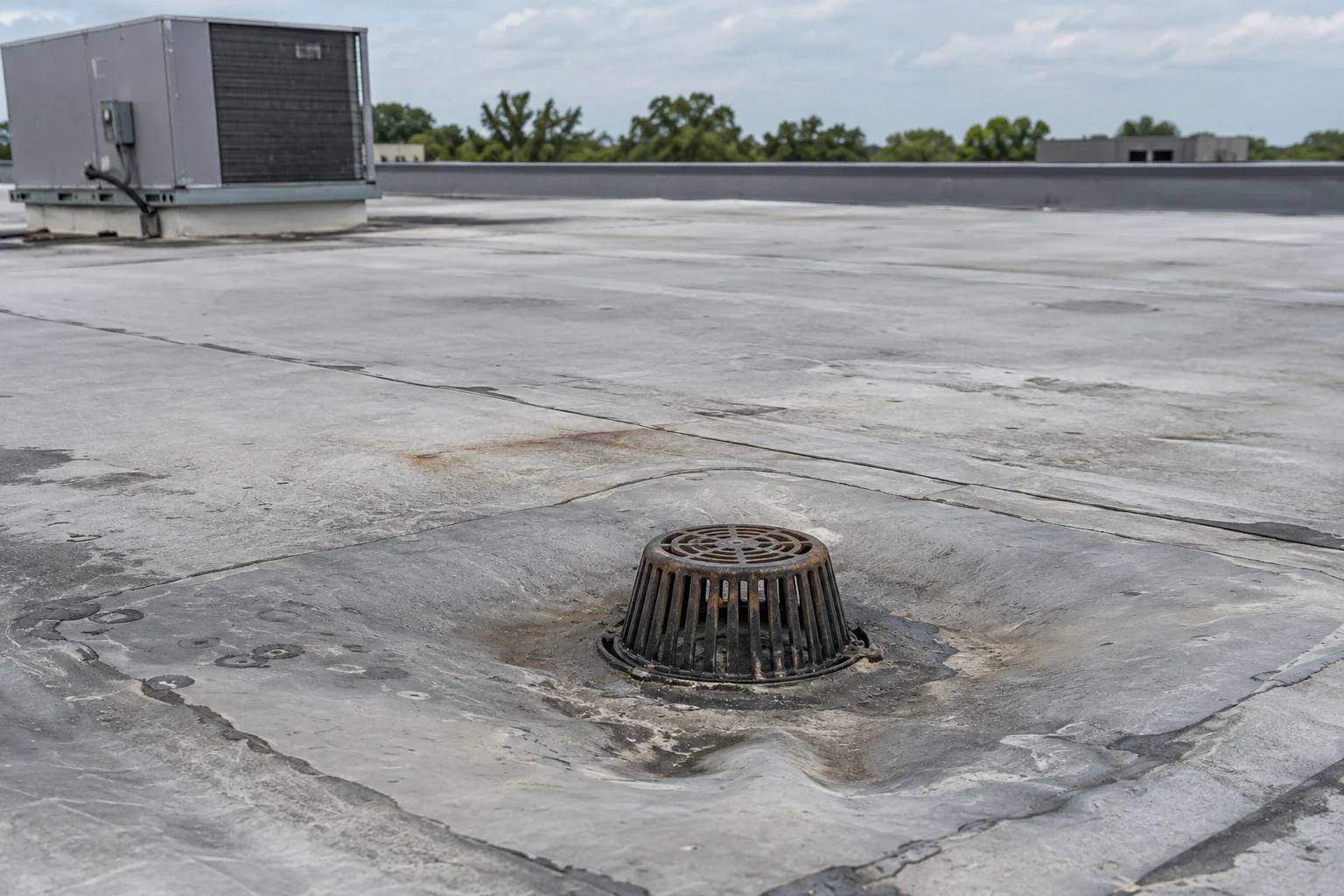
Dust and diesel exhaust from rail and truck traffic can settle on roofs and drain bowls. We clean and log drains more often on sites with heavy traffic, since fine grit packs outlets quickly. The roof drains and scuppers record shows how fast debris returns, which sets the cleaning interval for each building.
Fire protection matters as well. Sprinkler risers, standpipes, and roof-mounted detection pass through the roof on some buildings, and each is a penetration with its own flashing. They are tested only by the people who own that system, so we coordinate with the plant before work near them and photograph every flashing at closeout.
How is a reroof staged around production?
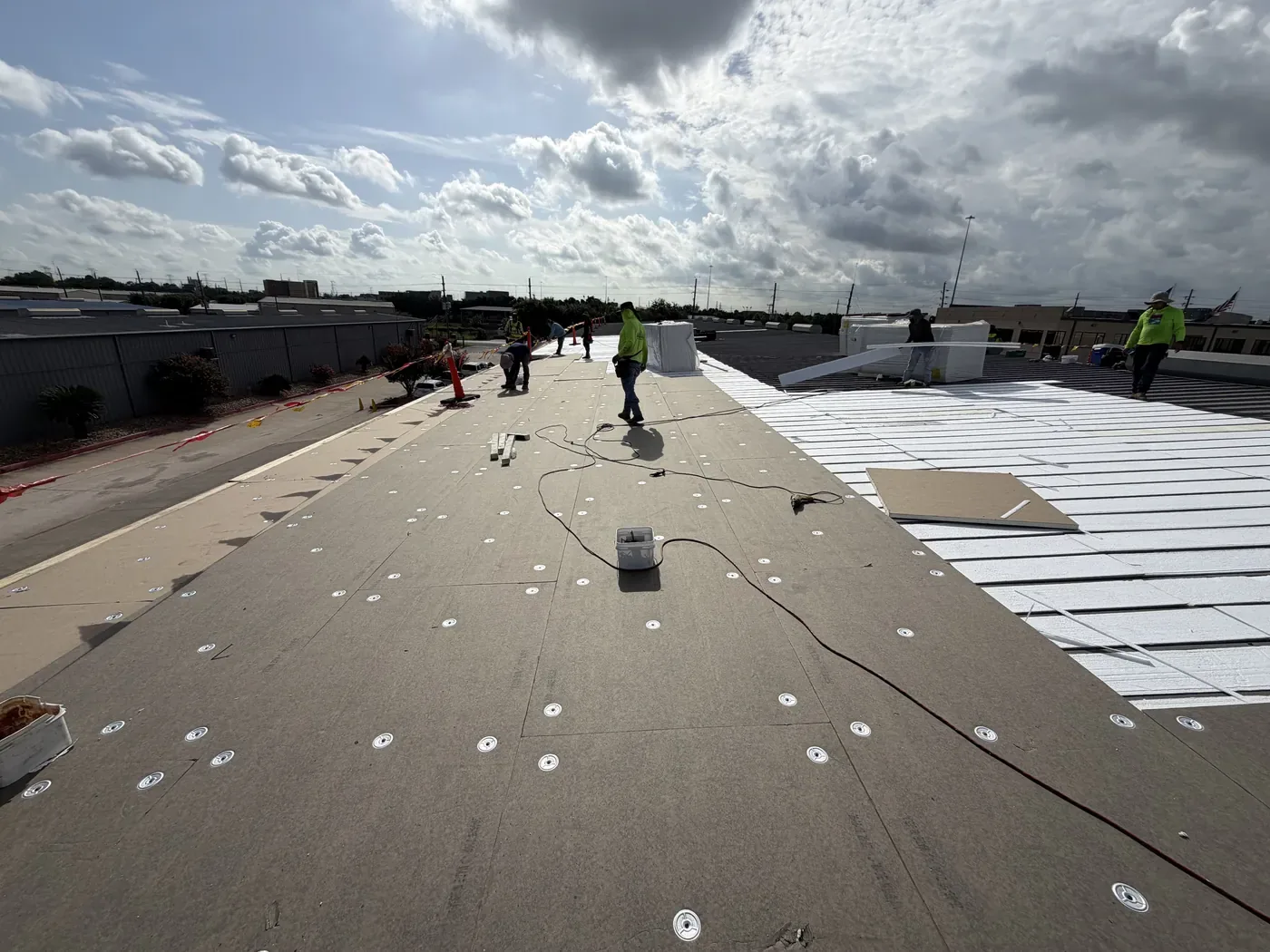
In zones sized to what the crew can close each day. Shift patterns, planned shutdowns, and delivery windows set the calendar. Areas over sensitive lines are scheduled for the best forecasts and the lowest-activity periods, and some plants hold a single annual shutdown that is the right time for work directly above critical equipment.
Hot work, noise, and fumes are managed against the plant's safety rules. Crews take site orientation, follow lockout awareness, and obtain permits. Daily photographs show the open area and its dry-in, and the plant engineer receives a short report each day. The occupied building reroofing method works for a plant much as for an office, with different hours and different hazards. Subcontractor access, laydown space, and crane lifts over active production lines are all scheduled with the plant manager, so the roofing work is one more item on the plant's calendar and not a surprise on it.
What do wind, heat, and water do to these buildings?
Industrial buildings are tall and wide, with louvers, penthouses, and long eaves that catch wind. The EF-2 tornado that reached about 120 mph over Temple on May 22, 2024, along with estimated straight-line gusts near 80 to 90 mph, is the reminder to check them. Edges and equipment are the first things checked after any severe event.
Heat in August, near 95F, plus some 80 days a year over 90F, adds load to buildings that already generate their own. About 39 inches of precipitation a year, peaking in May, and roughly 26 freezing nights test drainage and seams. A pre-season walk covers all three, and a post-event walk compares conditions with the earlier photographs. The preventive roof maintenance record carries the comparison forward.
Who else shares this work?
An owner with property in the Temple Industrial Park may hold buildings in the Rail Park at Central Pointe and across Temple. One file format covers them all, which lets a manager rank roofs by exposure and plan capital spending on the roofs that need it most.
Commercial Roofing Questions
Can a plant keep running while the roof is replaced?
In most cases, yes, with phased zones, intake protection, and interior protection under open areas. Sensitive lines are scheduled for shutdowns when possible. The plan names the sequence, noise, and fumes, and the plant engineer approves it before work begins.
How do we learn what the plant vents before choosing a membrane?
By asking the engineer and by looking. We walk the roof with the plant, mark every stack, and photograph the surface around each. Safety data sheets can confirm what a discharge contains. When uncertain, a test patch near a stack shows how the sheet behaves.
What happens when equipment is added to an industrial roof?
A curb or rail is set on prepared structure, flashed into the membrane with compatible material, and added to the inventory. Without that step, new equipment becomes a leak path. We photograph the work and update the sketch, so the file always shows what is on the roof.
Why are drains cleaned more often near rail and truck traffic?
Because dust, grit, and debris accumulate faster. A drain that clogs in a month is a different problem from one that clogs in a year. The log shows the interval, and the cleaning schedule follows it, which protects the roof before the next heavy rain.
Is a coating realistic on an industrial roof?
Sometimes. If the roof is dry, attached, and the discharges are compatible, a reflective coating can extend life and lower heat load. A moisture survey, core cuts, and a test patch decide it. Roofs with heavy chemical exposure usually point toward replacement instead.