Rail Park at Central Pointe
How many acres of roof does one failed drain put at risk? In the Rail Park at Central Pointe, the arithmetic is large. Inside the park sits the Railhead of Central Pointe, a 168-acre industrial distribution development whose 68-acre first phase and rail spurs are finished. BNSF Railway serves the park, and the short-line Patriot Rail provides dedicated service to it. Buildings that move freight by rail and truck carry big, low roofs, and on a distribution roof the decisions that matter most are about water: where it goes, how fast, and what is stored beneath it.
What does a distribution roof ask of its owner?
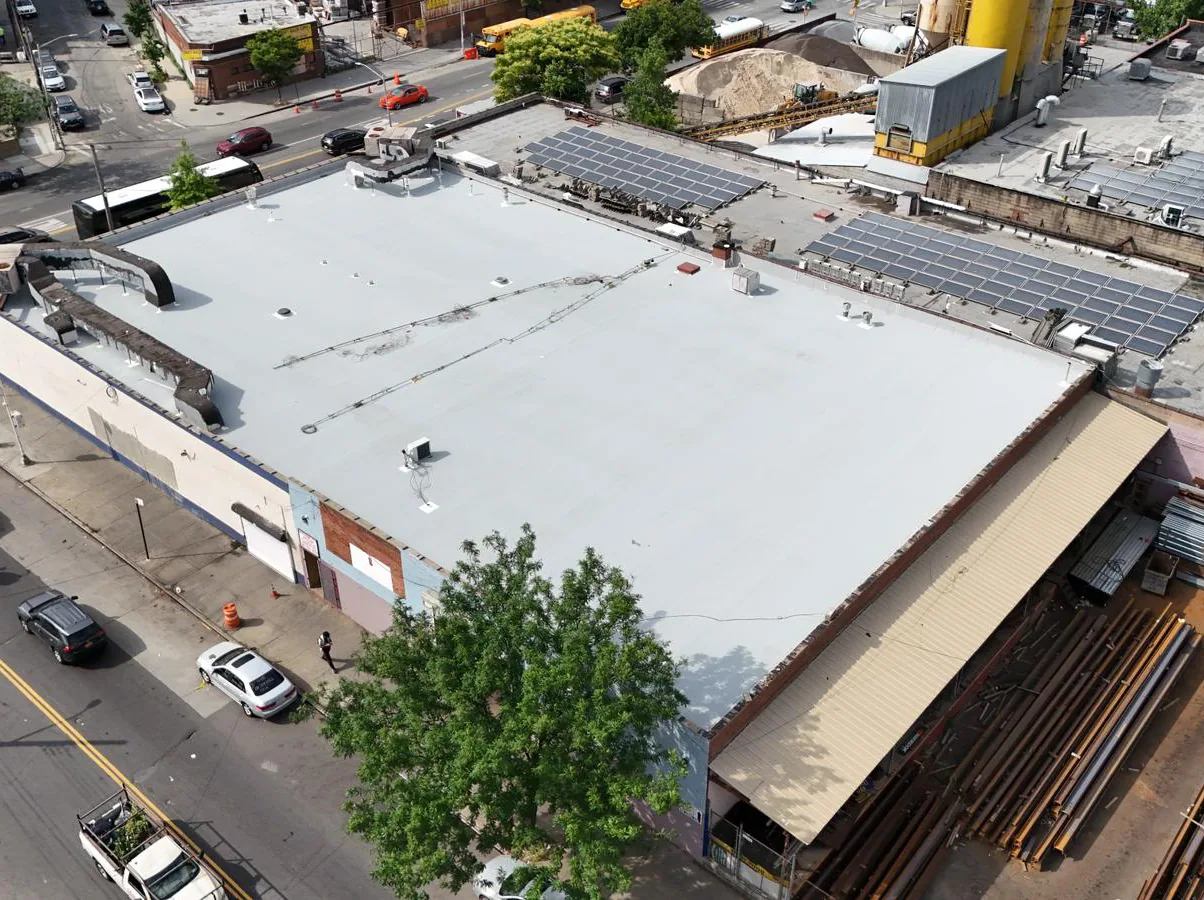
Attention to scale. H-E-B and Walmart each run a distribution center of roughly 2 million square feet in Temple, and developers at the Railhead put design-build and build-to-suit deals on the table for users of any size. A large roof has more seams, more penetrations, more drains, and more edge to protect, and small defects multiply across the area.
The first walk therefore divides the roof into numbered sections, often tied to column lines and dock doors, and records each. Seams, flashings, drains, and equipment curbs get a photograph and a note. The owner or tenant sees which sections protect the most valuable inventory, and repairs follow that ranking, not the order of calls.
Rooftop equipment on a distribution building is lighter than on a hospital, yet exhaust fans, make-up air units, and gravity vents still sit on curbs that need sealed flashing. Skylights and smoke vents add more openings. Each one is numbered, photographed, and checked for sealant and fasteners, because small openings produce a large share of the leaks on a roof of this size.
How does water leave a roof this large?
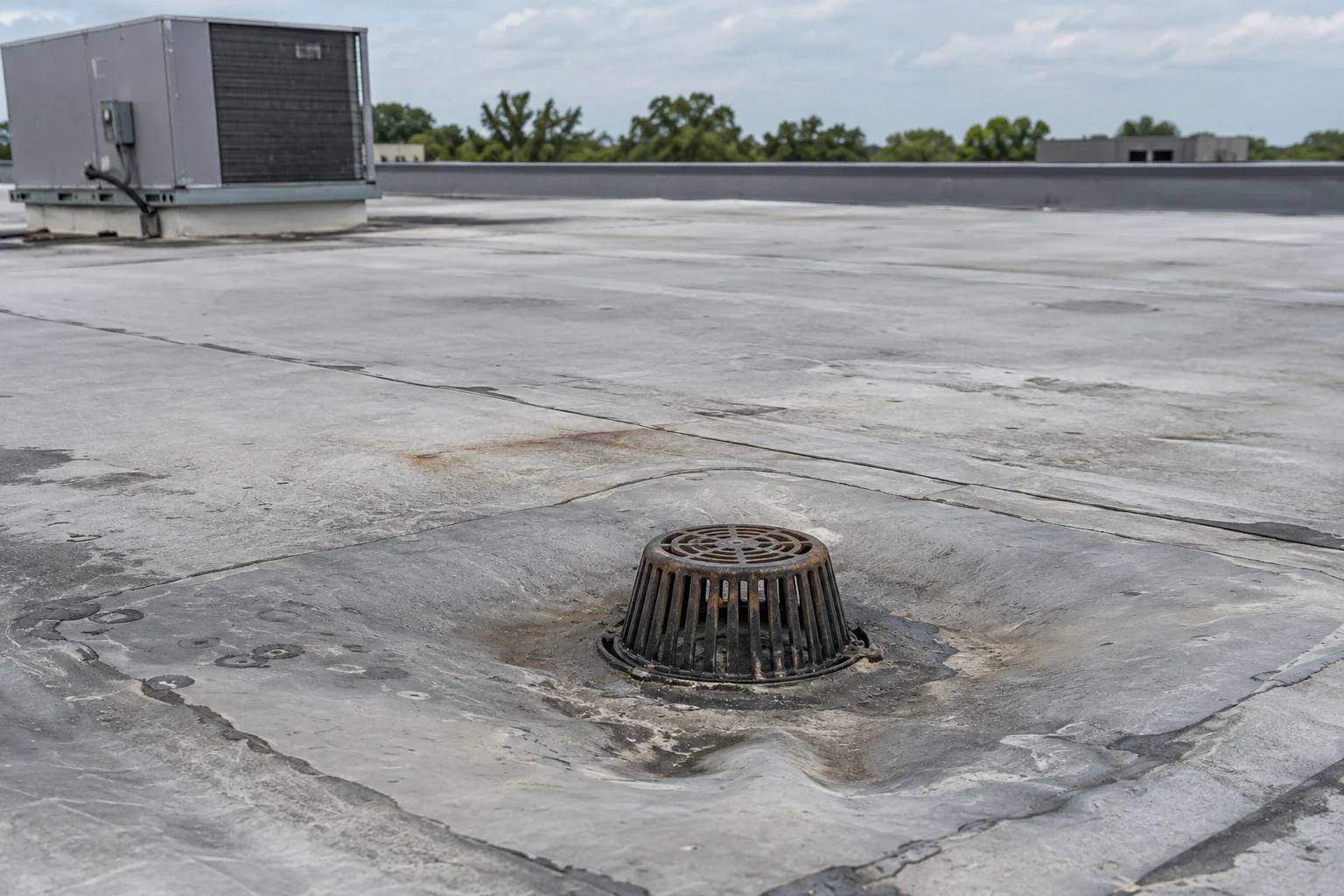
Through a limited number of interior drains and overflow scuppers. A single blocked bowl can load a wide area of deck, and the standing water ages seams and loads the structure. Roughly 39 inches of precipitation arrives in a Temple year, May being wettest at about 5.4 inches, which means spring storms put real demand on the outlets.
We count drains against roof area, clear and photograph each, measure scupper heights, and mark low spots after rain. If ponding recurs, the roof drains and scuppers work looks at added outlets, crickets, or tapered insulation. A distribution building cannot afford a roof that holds water over racking, and the record shows owners where the risk sits.
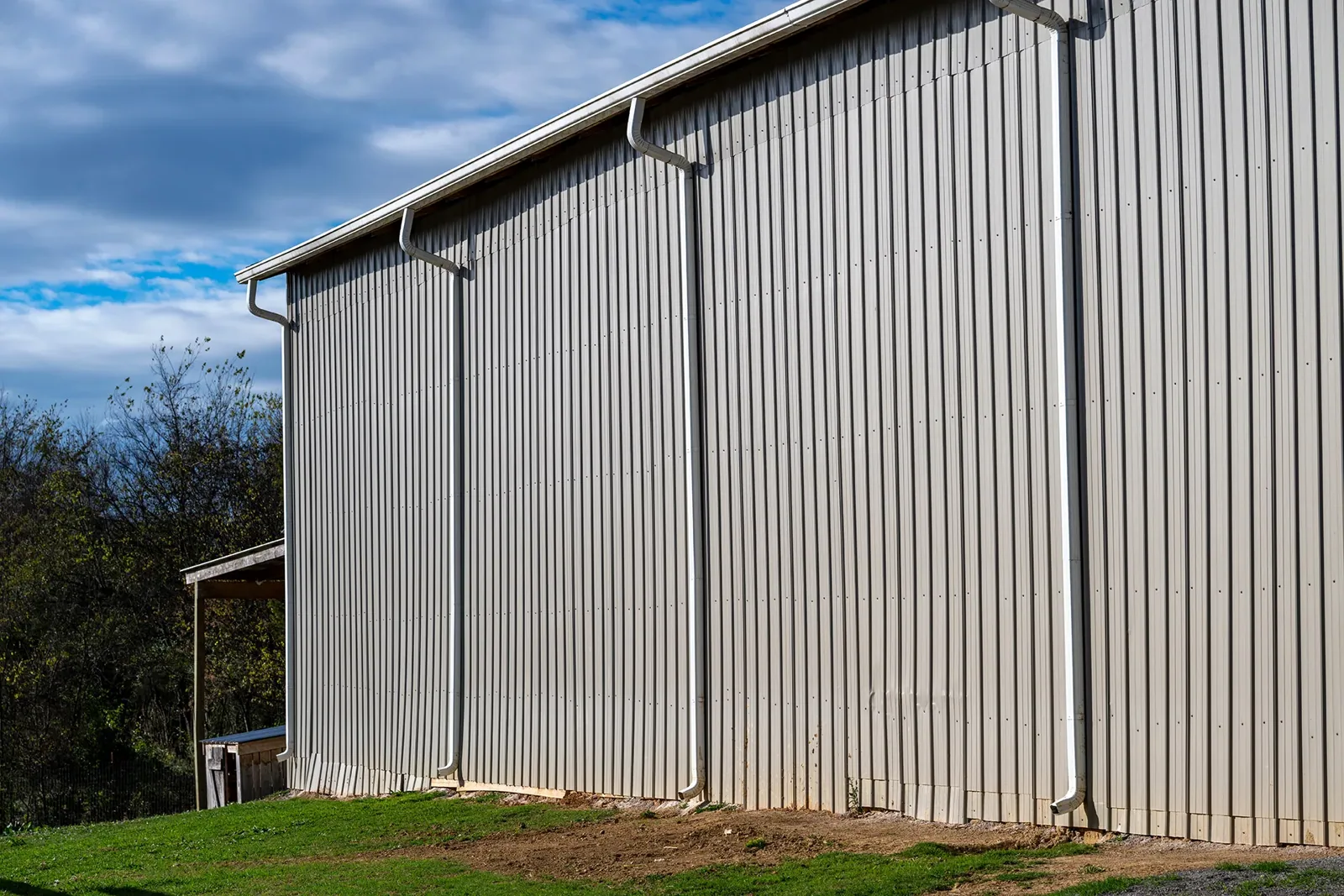
Overflow protection gets its own line. Parapets on a long building hold water if the main drains stop, and an overflow scupper set a few inches above the roof surface lets it leave before the deck is overloaded. We measure each opening, check that nothing blocks the discharge, and photograph it. A scupper capped by a later parapet cover is worth checking for.
What do dock canopies and edges need?
Wind and water meet at the dock. Canopies project over truck positions, parapets and edges can run the length of a long building, and every dock door has seals that suffer if the canopy leaks. We check flashing, fascia, gutters, and fasteners at each canopy, log them by dock number, and photograph the worst.
Edge metal on a long building is the first thing wind tests. Fastener spacing, cleat attachment, and sealant at joints are checked by hand, and weak sections are marked. A long run of loose metal is a cheap repair now and a costly one after the next storm. The edge metal, coping, and gutters findings go straight to the repair list.
How does a tornado year change the plan?
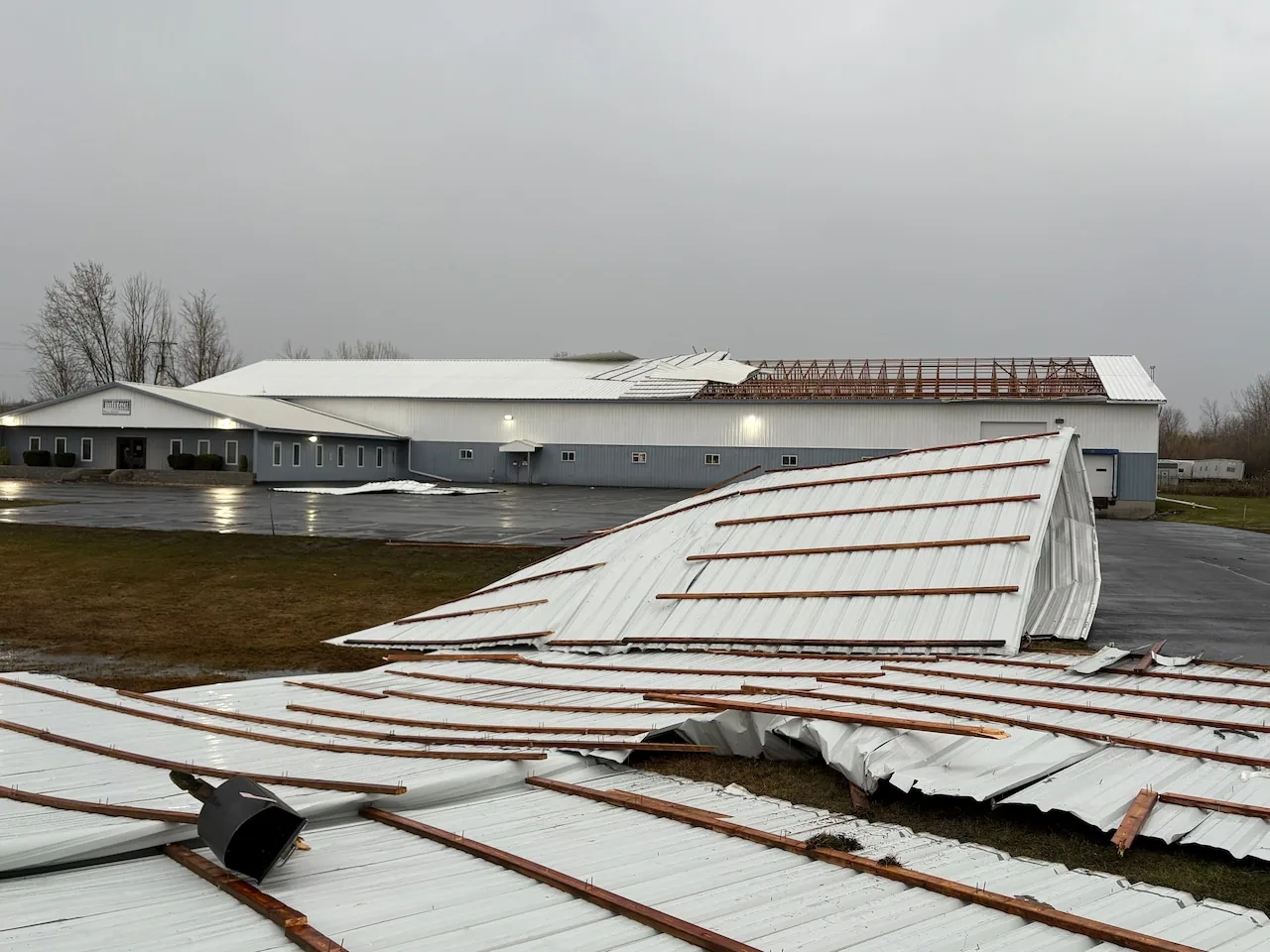
On May 22, 2024 Temple took an EF-2 tornado with winds near 120 mph, plus estimated straight-line gusts of 80 to 90 mph. A big roof on open ground has little shelter. Owners should know how the roof is held down, where the weak edges are, and how quickly a section can be made safe.
We record the attachment method and the edge details, and after a storm we compare against earlier photographs. Findings go into a storm damage roof repair list, with make-safe items first. Tenants and owners share the same record, which cuts debate over what changed and who pays.
Power and outages matter on freight buildings, where refrigeration, sortation, and dock doors depend on electricity. A roof that leaks onto electrical gear compounds an outage, so the electrical rooms, panels, and conduit entries get an early look and a first-priority dry-in. Roof sections above them are checked after every heavy rain, and the readings stay in the file beside the photographs.
Which systems fit a big low-slope roof?
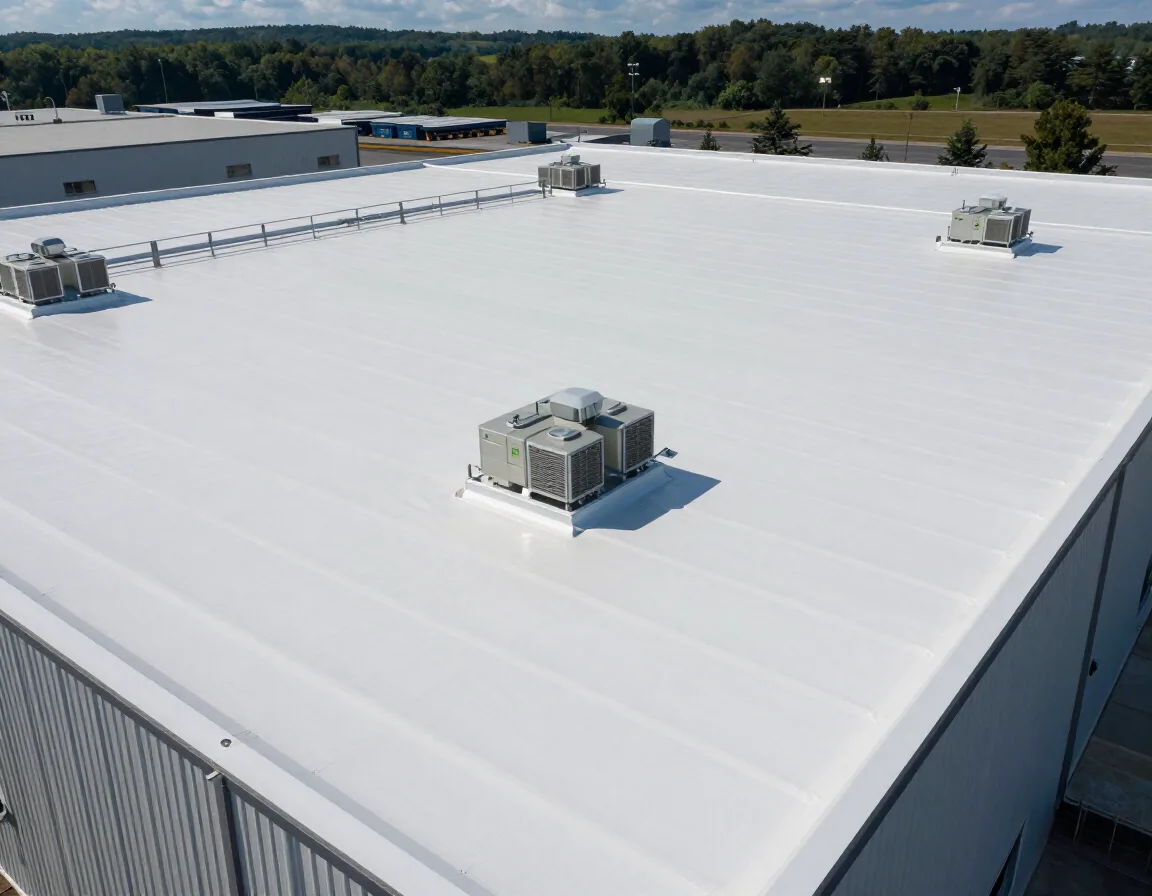
Single-ply membranes dominate: TPO roofing for reflectivity and fewer seams per area, PVC where exhaust or grease touches the roof, and metal on pre-engineered buildings. The choice follows the deck, the insulation, the wind exposure, and the tenant's use. A reflective surface eases rooftop unit load through Temple's long summer, which includes about 80 days a year above 90F.
For a new build-to-suit building, the roof design is part of the lease conversation. For an existing building, a moisture survey and core cuts decide between repair, coating, recover, and replacement, and the written findings show why. Tenants who share a building can see their own bays on the sketch, which makes it easier to agree on who authorizes what.
How is roof work staged beside rail and dock traffic?
Around the schedule. Trains, trucks, and receiving windows set the pace, and crews work in zones sized to close each day. Staging avoids blocking spurs, docks, and fire lanes. Material deliveries are timed to the plant's receiving hours, and hoisting is planned to avoid crossings.
Interior protection goes up under open sections over sensitive inventory, and fire watch follows any hot work. The occupied building reroofing approach carries over to freight buildings, where the added constraint is that shipping rarely pauses. Owners across the Temple Industrial Park and the rest of Temple receive the same record and ranking.
Commercial Roofing Questions
How do you rank sections of a very large roof?
By what sits beneath, how old the membrane is, and how many open defects each carries. Sections over high-value or perishable inventory rise to the top. The ranking appears in the written findings with photographs, so the owner and tenants can see why one section goes first.
What can a tenant expect from a roof inspection?
A schedule, a safety plan, and a written summary within a few days. The crew coordinates with the facility manager about access, and no interior disruption is expected. The summary lists findings by section, so a tenant can see exposure over its space.
Should a new build-to-suit building get a roof baseline?
Yes. A baseline walk in the first year documents the installation, catches early defects, and creates photographs for later comparison. It costs little and answers questions about responsibility if a leak appears. The file also supports lenders and insurers asking what was built.
How is hot work handled near stored goods?
With permits, fire watches, and torch-free methods wherever the owner prefers them. Welded seams and cold-applied adhesives avoid open flame. The proposal names the method for each area, and the crew checks the space below after each shift.
What does an owner do about repeated ponding on a big roof?
Measure it, log it, and correct it at the source. Added drains, crickets, or tapered insulation address ponding more reliably than coatings alone. Where correction is not practical, a membrane or coating that tolerates standing water can reduce the damage while the owner plans.