Skylight and Penetration Flashing
Where is the water getting in? On a flat roof it is most often not through the middle of the membrane. It is through a hole someone cut for something else: a skylight, a vent stack, a conduit, a gas line, an exhaust fan curb. Each opening is a place where the roof surface stops and a separate flashing begins, and that joint is only as good as its sealant, its fasteners, and its movement allowance. In Temple, TX, where summer heat and spring wind both work these details, penetrations are where an asset manager's leak calls begin.
What counts as a penetration?
Anything that passes through the roof. Plumbing vents, electrical conduits, refrigerant lines, gas pipes, flue stacks, exhaust fans, hatches, skylights, solar mounts, antenna masts, and sign supports all qualify. A roof that has had tenants for decades accumulates them, and old ones are often abandoned in place with a cap of mastic.
We start with a count and a map. Every opening is numbered, photographed, and described: type, size, flashing material, sealant condition, and whether it is active. The inventory can turn up items the owner did not know were there, including capped pipes that no longer serve anything and cables run through makeshift holes by earlier trades.
Why do flashings crack in the Texas sun?
Because sealant and rubber age under heat and ultraviolet light, and pipes expand and contract at different rates than the roof around them. Temple's hottest month is August, with highs near 95F and about 80 days a year above 90F. Flashing details sit in direct sun for most of the day, and the movement between a metal pipe and a membrane boot repeats every day.
Over years, rubber boots crack at the collar, mastic dries and shrinks, and metal flashings loosen at their fasteners. The failure is gradual, which is why it is inspectable. A technician running a thumbnail along a boot collar can feel the stiffness that sight misses, and a bead of sealant that no longer springs back is already near the end of its life. A flashing that shows hairline cracks this year is a leak next year. We photograph and rank them, and small repairs happen the same day.
What goes wrong with skylights?
Skylights fail in three places: the glazing seal, the curb flashing, and the frame itself. Plastic domes craze and yellow, glass units lose their gaskets, and curb flashings pull away as the frame moves. A skylight also condenses on a cold night, which can look like a leak even when the roof is sound.
The first step is to separate leak from condensation, using a hose test and a moisture reading, since the two call for completely different repairs. If the skylight is sound but the curb flashing is cracked, the repair is local. If the glazing is shot, replacement is cheaper than patching, and the new unit gets a curb and counterflashing sized for the roof system. Owners deciding between repair and removal can compare against roof insulation and cover board work if the opening is going away.
How are pipe boots and stacks repaired?
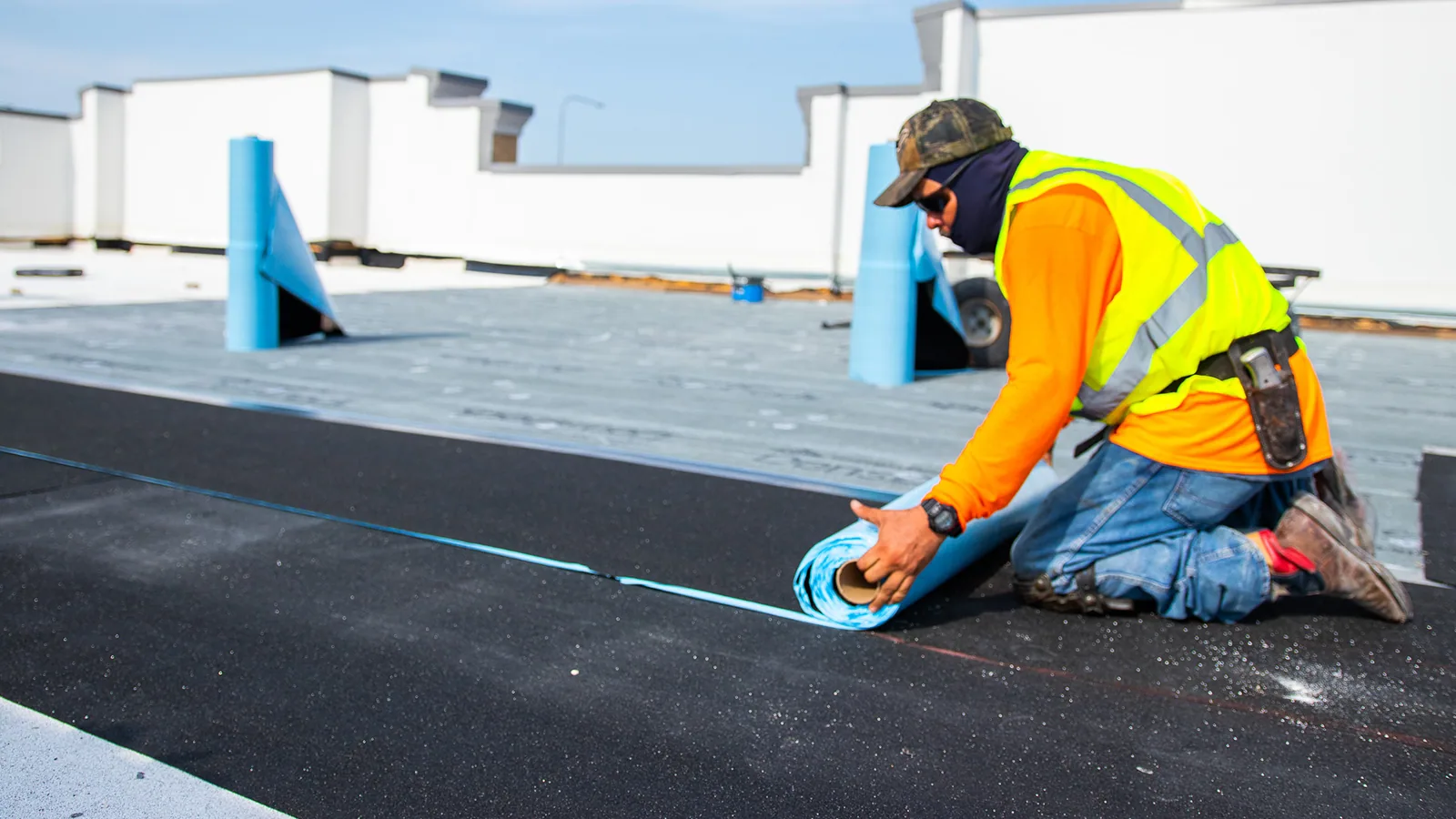
A pipe boot is a collar that seals the gap between a pipe and the roof membrane. Rubber boots crack; metal boots corrode at the base; sealant around both dries out. The repair is to replace the boot with a unit sized to the pipe and compatible with the membrane, heat-weld or adhere it to the field, and seal the top with a clamp and sealant.
Hot pipes, like flue stacks, need a different detail, with a storm collar and a heat-resistant boot. Large conduits and cable bundles are best consolidated through a single sealed penetration instead of many holes. Where the roof is a modified bitumen or built-up surface, flashing is built in layers, and the repair follows that logic.
What about equipment curbs and hatches?
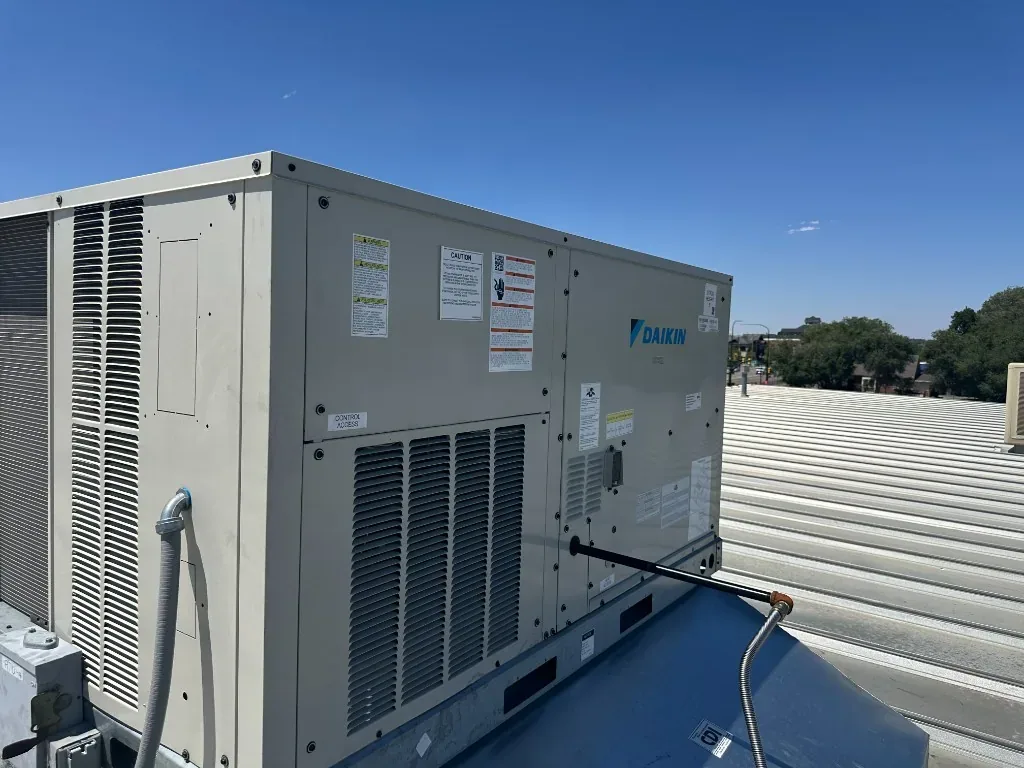
Curbs raise a unit above the roof surface. The flashing climbs the curb, and counterflashing covers the top of it. Corners are the weak spot, because membrane folds there and stresses accumulate. We check sealant at corners, fastener heads on counterflashing, and the gap between the unit and the curb, where windblown rain can enter.
The structural side of a curb, meaning its framing and the weight it carries, is handled in rooftop equipment curbs and supports work. Roof hatches get their own check: hinges, gaskets, and the curb corners where traffic wears the membrane. After tornado and straight-line wind events such as those of May 22, 2024, units can shift on their curbs and open flashing gaps that were tight the day before.
How do owners fold this into a routine?
By treating penetrations as a category in the maintenance visit. Each round updates the inventory, flags new cracks, and closes small repairs. An owner with many roofs gets a ranked list of buildings by penetration count and flashing age, which targets money where leaks are most likely.
A hospital or clinic with heavy mechanical systems can carry a long list of intake and exhaust openings, and a building in the Temple Medical and Education District is ranked by that count along with what sits beneath each opening. The inventory also protects against a common trap: a new trade cutting a hole and leaving it unsealed, which the next visit catches and logs with the date. A flashing failure repair that follows from the inventory starts with the worst corner on the list, not with whichever leak was reported last.
Owners with property across Temple can hold the inventory as a single table: building, roof area, penetration count, oldest flashing, last repair date. The table makes it easy to see which roofs are overdue and which are in good order, and it becomes the checklist for the next round of visits.
Commercial Roofing Questions
How can I tell a penetration leak from a membrane leak?
Look at the stain's position relative to roof openings and trace uphill. Leaks near pipes, curbs, and skylights usually come from those details. A hose test, with water applied to one detail at a time, confirms it. Moisture readings around the opening show how far the water has traveled.
Is sealant alone an acceptable fix for a cracked pipe boot?
As a short-term holding repair, yes. Sealant over a cracked boot buys a season or less. The permanent fix is a new boot or flashing sized to the pipe. We label the sealant repair as a holding repair in the record so the owner knows what it is and when to revisit it.
Should abandoned pipes and openings be removed?
Usually, yes. An unused pipe is a leak path with no benefit. Removal means cutting the pipe below deck level, patching the opening, and flashing the area as if the penetration had never existed. The inventory identifies abandoned items, and the owner decides which come out.
Do skylights ever add enough value to keep?
In some buildings, yes, for daylight and energy reasons. In many roofs the skylights are old, crazed, and a constant source of leaks. The recommendation compares repair cost, replacement cost, and removal, and the owner picks. Any skylight that stays is flashed and gasketed properly.
What are the first signs of a failing curb flashing?
Cracked sealant at corners, loose counterflashing screws, gaps between the flashing and the curb, and water stains on the deck beneath. Rust streaks and bubbling membrane near the curb are also signs. We photograph each curb, rank them, and repair the worst before the next storm season.