Belton Business Park, Belton
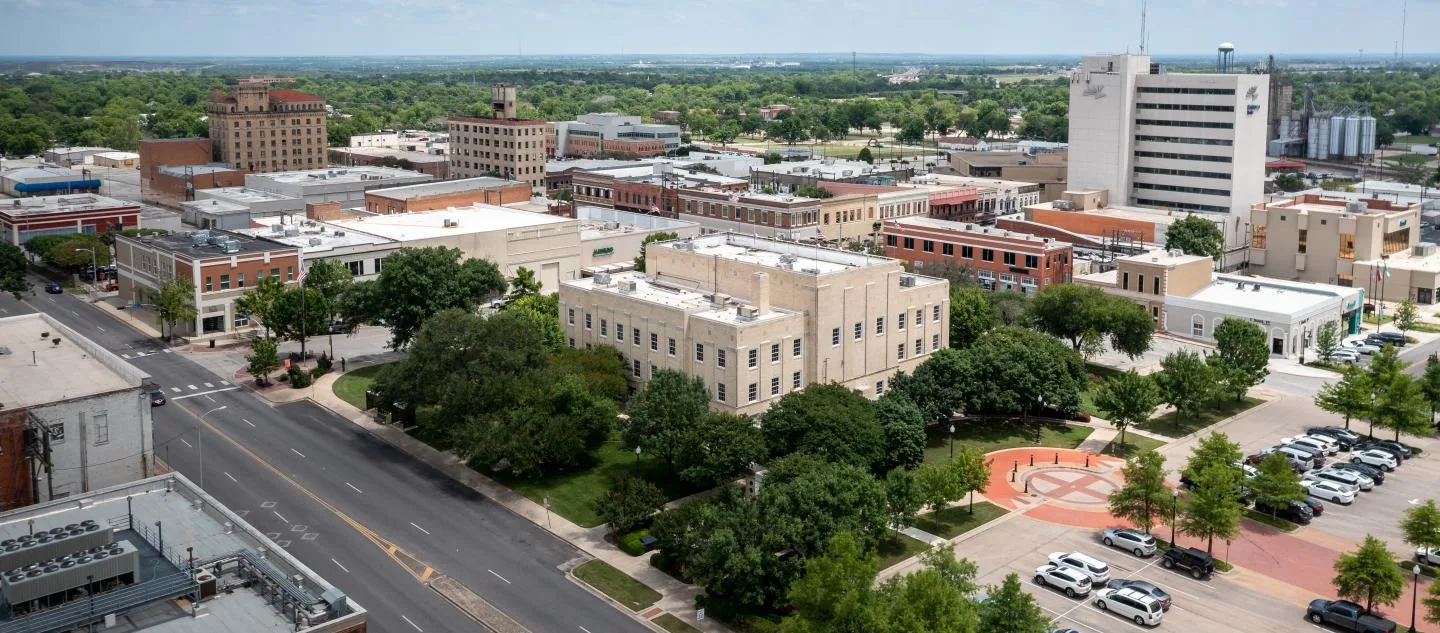
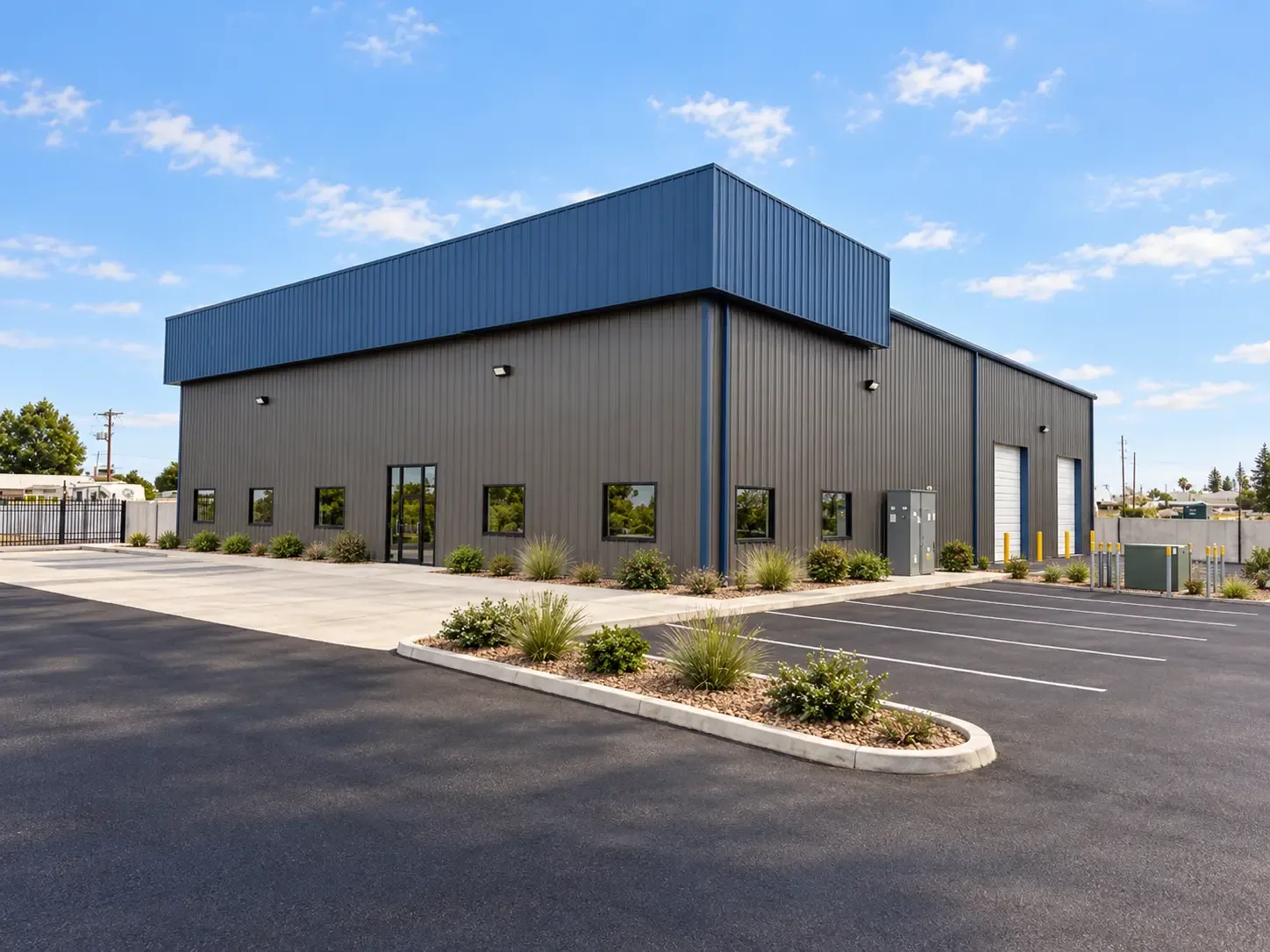
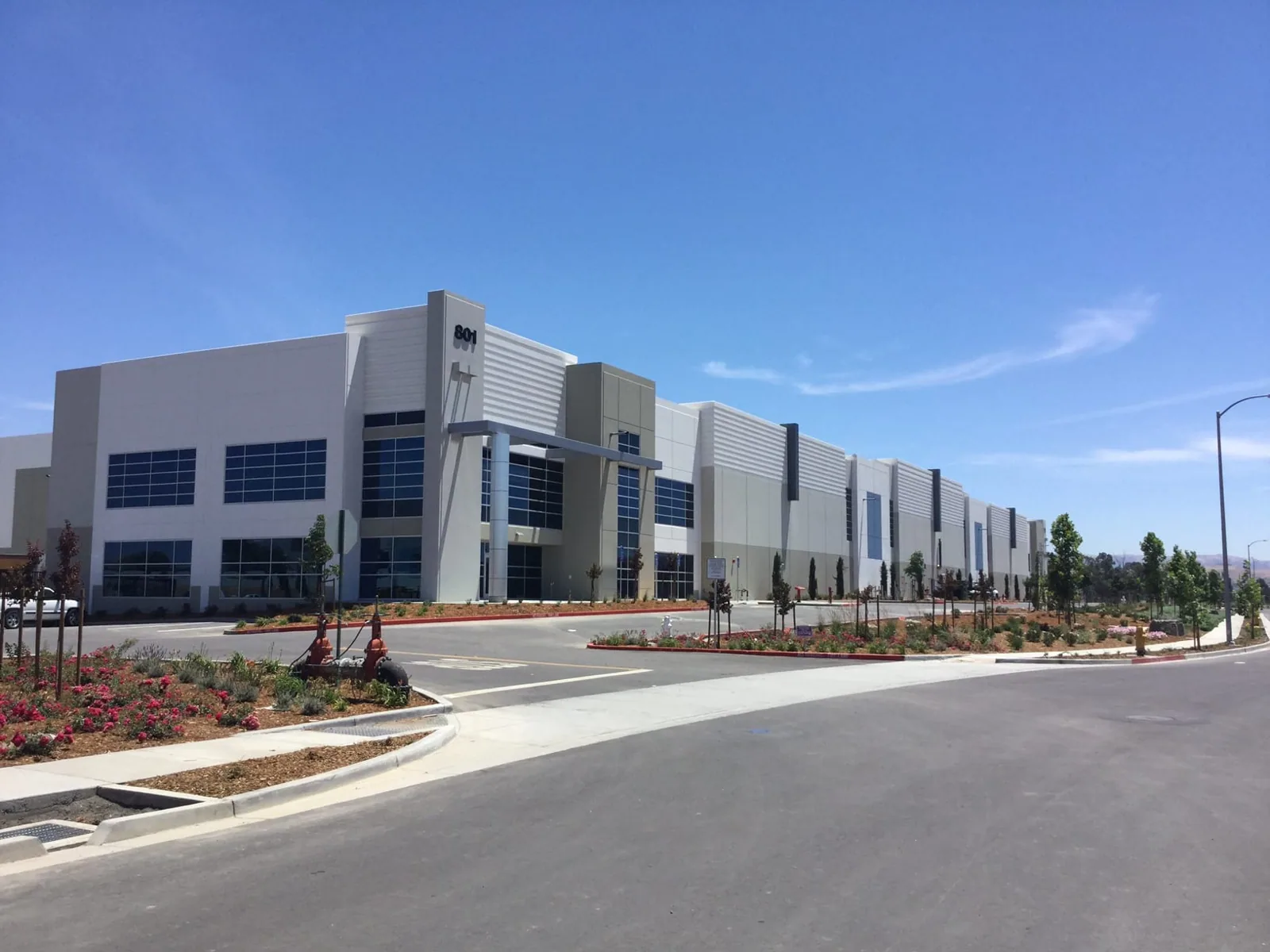
Does a roof change need approval before anyone climbs a ladder? In Belton Business Park the answer can be yes, and finding that out is the first call. The park was developed by the Belton Economic Development Corporation, formed by a citizen vote in 1990, and city staff and the BEDC review building and grounds plans in the park against the city's design standards and the park's covenants, including masonry construction. The BEDC has also built speculative industrial buildings for sale or lease to companies locating in Belton, and the park sits in central Belton near the Loop 121 and US 190 intersection.
For an asset manager, that mix of covenants and changing tenants shapes the roof file. It has to show what is on the roof, what has been changed and who had to approve it, so that the next repair or addition starts from facts.
Which roof changes need plan review?
Plan review is a question for the BEDC and the city, not for the roofer. A repair that restores a roof to its existing condition is one thing. A change that alters what the building looks like from the street, adds rooftop equipment or screening, or modifies a parapet may be another. Before scoping an alteration, we ask the owner to confirm with the BEDC and the city whether review applies, and we note the answer in the file with the date.
Where review is needed, the plan includes it in the schedule. A new unit on the roof, a change to screening or a rebuilt parapet cap goes through the same steps as any other change in the park. The roof record then shows the approval beside the work, which helps at a sale, a refinance or a tenant change.
What should the record show at a tenant change?
Speculative buildings are built for sale or lease, which means the occupant may change more than once. A tenant change is the best moment to look at the roof, since access is easy and responsibilities are clear. We walk the roof in the fixed order, photograph the perimeter, penetrations, field, seams and drains, take moisture readings and list open items with proposed actions.
That walk produces a handover record dated to the day of the change. If a leak appears later, the record shows whether the condition was already there. It also lists the equipment on the roof and the penetrations that belong to it, so the next tenant who adds a unit does not discover that a previous one left an open curb. The same file serves a lender, an insurer or a buyer without being rewritten.
What happens when equipment is added or moved?
Equipment gets added and moved on a different schedule from the roof beneath it. A new exhaust fan, a relocated unit or a new conduit run each adds a curb or a penetration, and each is a place where the roof can leak later. We photograph the existing penetrations before the work, mark them on the sketch, then photograph the new work and probe the flashings once it is complete.
When equipment is removed, the opening has to be closed correctly. A capped curb that was never flashed is a recurring source of stains. The record lists each abandoned opening and how it was sealed, so a later inspector does not have to guess. Where the change is visible from the street, we remind the owner to ask whether review applies before the work is scheduled, because reversing a change after the fact costs more than asking first.
The file keeps the equipment list and the date of each change. That list is useful to a tenant, an owner and an insurer, since it shows which loads and openings the roof has accumulated and when.
What does a freeze season ask of an industrial roof?
Freezing nights come about 26 times a year in Temple, the market city, and Central Texas including Killeen recorded 9 days at or below freezing in February 2021. A roof with a known wet area is a higher priority before winter than after the repair.
The pre-winter walk is short. We clear drains, probe seams, check flashings and photograph low spots. A roof that goes into December dry and tight comes out of February in better shape than one that does not. After a hard freeze, the walk repeats and the two sets are compared. Differences become a holding repair or a permanent scope, depending on whether the water is still entering.
How does summer heat show up on a large flat roof?
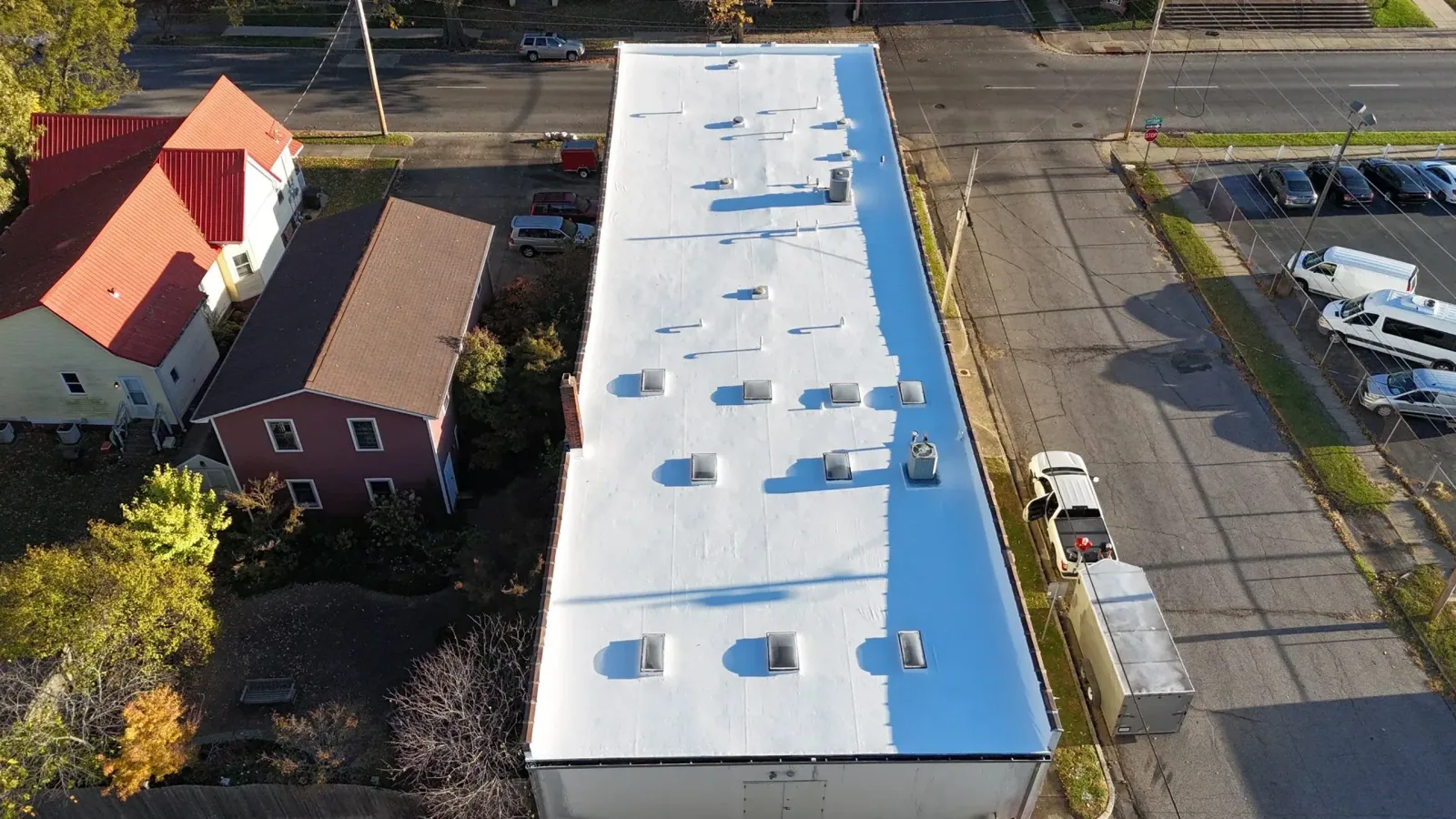
Temple's August highs sit near 95F with some 80 days a year past 90F, and a large flat roof, as on a warehouse or flex industrial building, carries that heat for months. Surface wear, sealant hardening and seam stress are the leading findings, and they appear first around penetrations and at edges.
We record the surface condition in each section and compare it with the last walk. A roof moving slowly can wait for a planned project, and the file notes the date of the next look. A roof moving quickly joins the capital plan. Where a membrane is sound and dry, a coating restoration may extend service life, and where heat has done more than the surface, the discussion turns to a recover or a replacement.
Which roofs share exposure after a storm?
The May 22, 2024 tornado in Temple and the 80 to 90 mph straight-line winds estimated across the city are context for Bell County roofs and not a claim about a roof in the park. After any storm, we start with the details that move first: edge metal, coping, rooftop equipment and any lightweight panels.
Buildings in the park built to a common plan may share a detail, so a failure on one sends us to the others. The register notes the shared detail, the make-safe step and the holding repair, and ranks the rest by exposure. Owners with buildings in Belton and in Temple's industrial areas can run the same format across both.
What are the permanent options?
The findings decide. Local defects over dry insulation are repaired. A base that can take a second membrane may take a recover. Replacement is the answer for wide wet areas. Each option is priced, and the recommendation states what would change the choice and any plan review the work may trigger.
Commercial Roofing Questions
Do park covenants affect routine roof repairs?
Routine repairs that restore the existing roof usually do not change what the covenants review, but changes to appearance, screening or equipment may. We recommend confirming with the BEDC and the city before scoping, and we record the answer.
What is the best time to inspect a speculative building's roof?
At a change of tenant or owner, when access is easy and responsibilities are clear. The handover record dates the condition and protects both sides in a later dispute.
Who decides whether a temporary repair becomes permanent?
The asset manager. The holding repair buys time and is logged with a replacement date, and the permanent scope is priced from the findings.
How is a freeze handled differently from a storm?
A freeze is a slow event, so the walk compares pre-winter and post-winter records. A storm calls for a make-safe step first, then the record.
Does masonry construction change how roofs are inspected?
Masonry walls bring parapets, copings and wall flashings into the check, but the order of inspection is the same. We photograph each and probe terminations by hand.