Roof Coating Restoration
The roof is tired, not failed, and someone has to say which. That is the whole question behind a coating. A restoration coat puts a new reflective, waterproof skin over a membrane or metal panel that still has life in it, and it can add years at a fraction of a replacement. It only works if the roof underneath is dry and attached. In Temple, TX, where summer heat is long and a wind event can arrive in any spring, the first hour of a coating job is a diagnosis, and the asset manager should see it in writing before a drum is opened.
Which roofs are real coating candidates?
The good candidates share a profile. The membrane or metal is intact, seams hold, fasteners are tight or can be reseated, and the insulation reads dry across almost the whole area. A roof with widespread blistering, saturated board, or a sheet that cracks when flexed fails that test no matter how tempting the budget is.
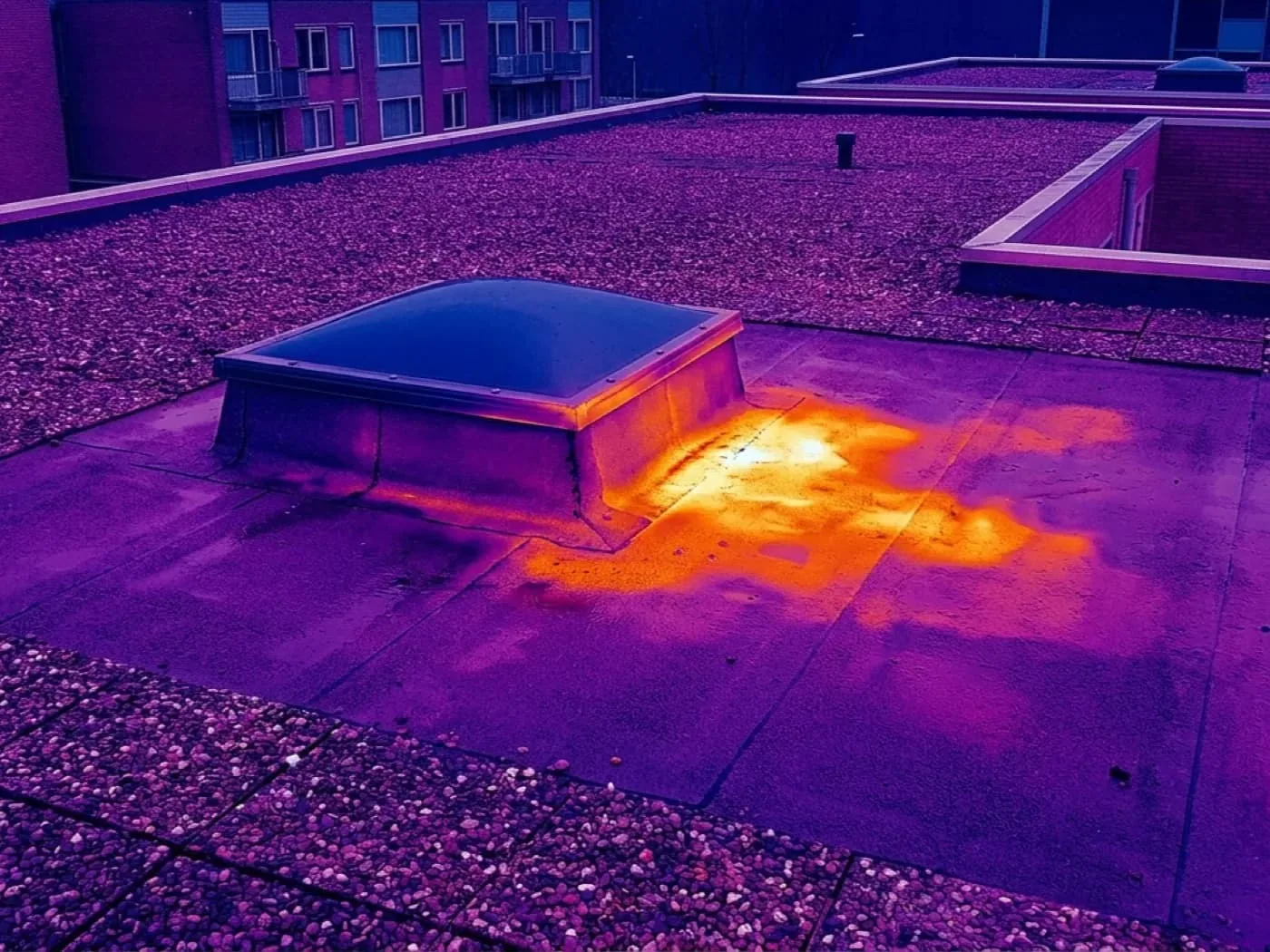
We establish the facts with an infrared moisture survey and core cuts, then record adhesion on a small test patch. The result goes into a short intake record: what the roof is, how wet or dry it is, what bonded and what did not. If the findings say replace, we say replace, and the owner has the photographs behind that call.
Metal roofs follow a variant of the same path. Panels are checked for rust at cut edges and fastener holes, and screws that have backed out are replaced with oversize fasteners and new washers. Laps and ridge closures are sealed with reinforcing fabric where needed. A tapped panel that rings dull has lost thickness, and that panel is marked for replacement, not coating.
What does a Temple summer do to an uncoated roof?
August brings Temple its hottest weather, highs around 95F, and the city passes 90F on roughly 80 days a year. A dark or aged surface under that load swings hard between day and night, and every swing works the seams, laps, and flashings. Plasticizer leaves single-ply sheets, asphalt dries and checks, and metal panels expand until fasteners back out.
A reflective coating lowers surface temperature, which slows that cycle. Rooftop units that had been sitting over a hot deck can run under a lighter load, though we do not put a number on the savings because buildings differ. What we do record is the surface condition at the start, so the change is visible at the next visit.
Cold matters too. Temple records about 26 freezing nights a year, and coatings cure poorly in cold or damp conditions. Application windows therefore fall in the warm, dry stretches, and the crew keeps a log of surface temperature and dew point for every day of work. A coat applied in the wrong conditions can look fine for a month and then fail at the first cold snap.
Silicone or acrylic, and who decides?
Two families cover most commercial work. Silicone roof coatings tolerate standing water and cure to a flexible film, so they suit roofs that pond and cannot be re-sloped cheaply. Acrylic roof coatings are water-based, bright, and economical on roofs that drain well, but they dislike prolonged ponding.
Drainage decides the first cut, and the existing surface decides the second. Some single-ply sheets need a specific primer. Rusted metal needs treatment before anything goes on. Old asphalt may need cleaning and a base coat. The choice is documented, along with the product family, so a future crew knows what is on the roof and which coating can go over it. Mixing families by accident is how peeling starts, and a clear label in the file prevents it. An owner with buildings in Belton and Killeen as well as Temple sees one labeling format on every roof, which keeps a regional portfolio consistent.
What happens before the first coat?
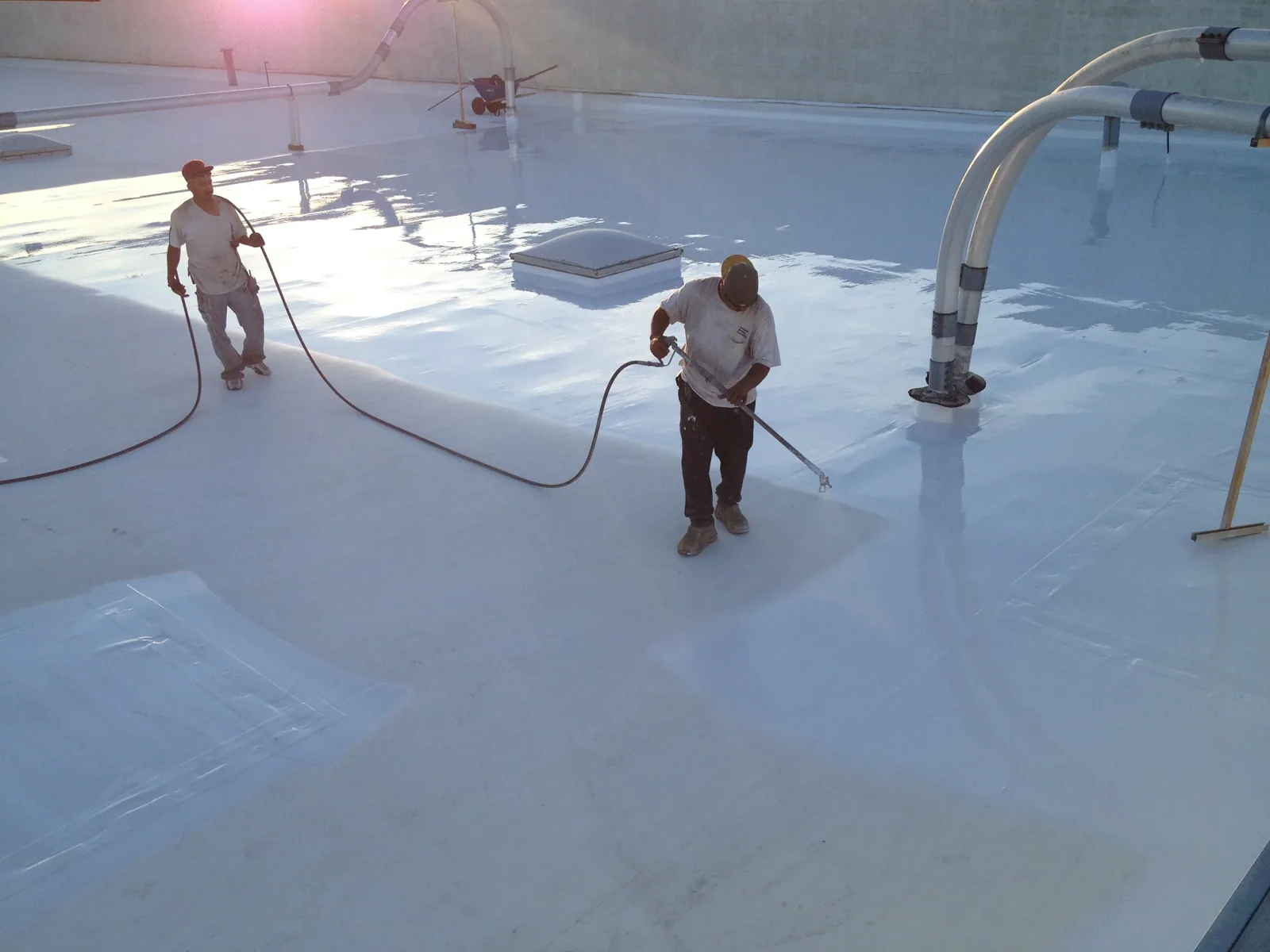
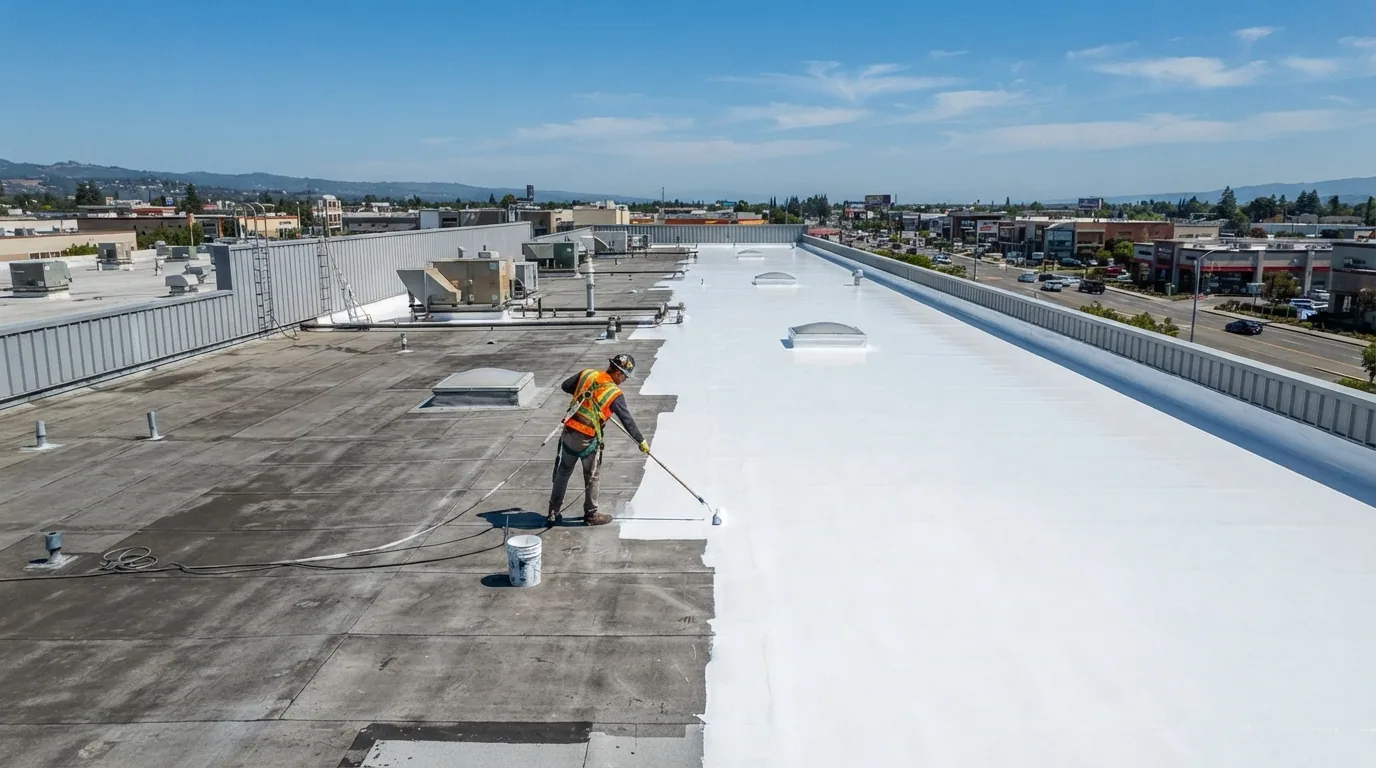
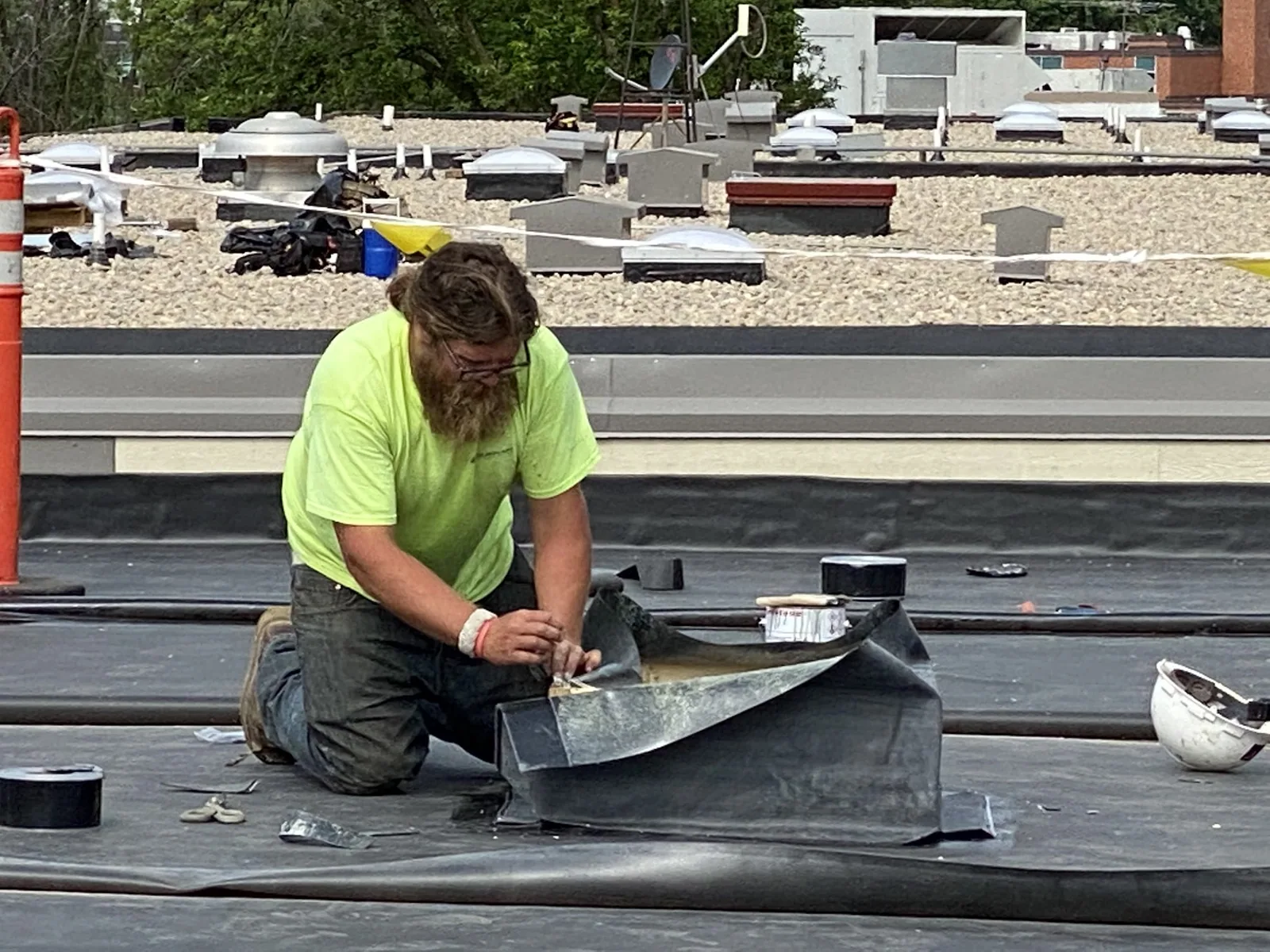
Preparation is where coating jobs are won or lost. The roof is pressure washed to remove dirt, chalk, and biological growth. Every seam, fastener head, flashing termination, and penetration is checked. Open seams are reinforced, loose fasteners reseated, cracked sealant cut out and replaced.
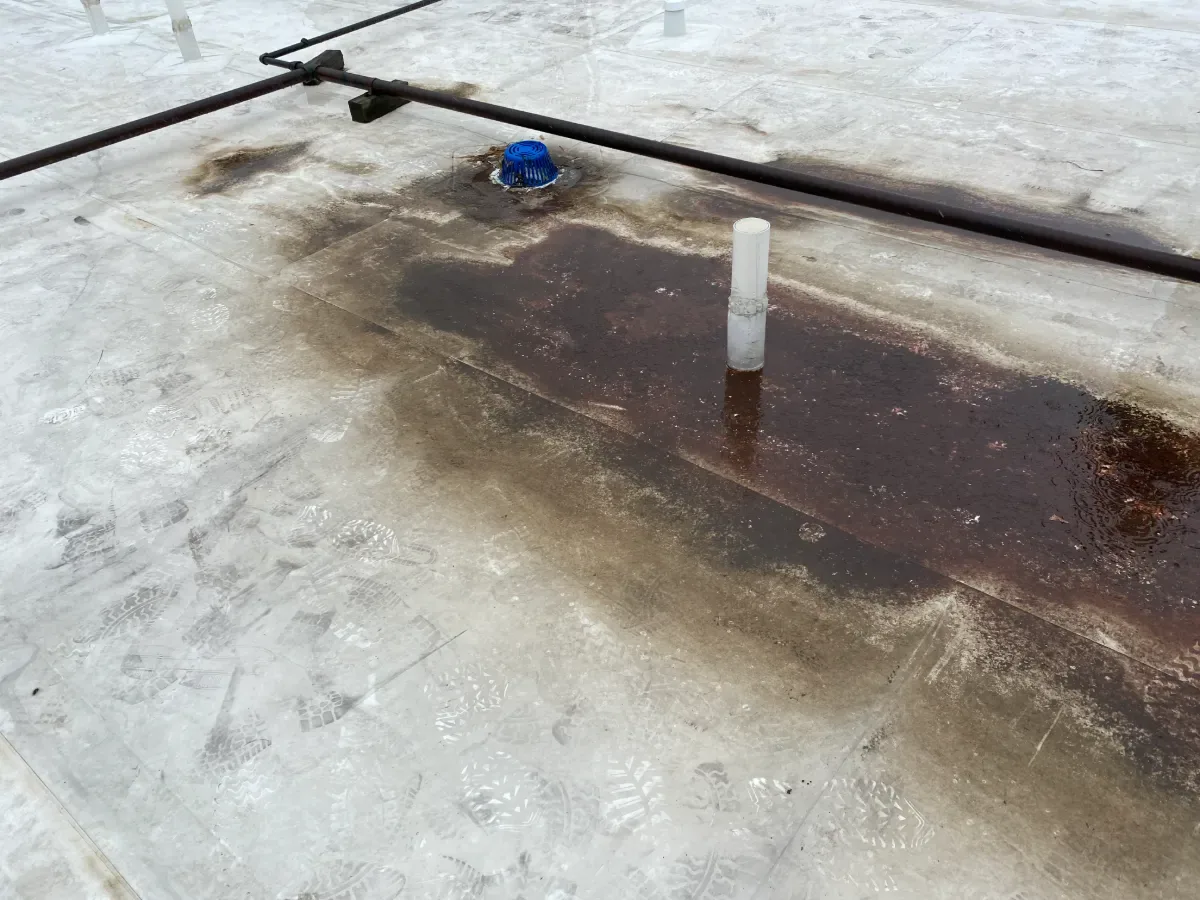
Drains get the same attention. A coating seals around a drain bowl, so a half-blocked outlet becomes a permanent one if it is coated over. We clear and log each drain before work starts, and where ponding is a recurring finding the owner sees the options in ponding water repair before choosing the coating type.
What can a coating not resist?
A coating adds protection against sun and water. It does not add attachment strength. Wind of the kind Temple saw in May 2024, an EF-2 tornado and straight-line gusts estimated at 80 to 90 mph, works on edges, loose membrane, and equipment, not on surface films. A fresh coat over a loose edge simply hides the edge.
So the coating discussion stays focused on heat, wind, and water. Edge metal is checked and refastened before coating, and the make-safe items are separated from the restoration scope so each decision is priced on its own merits.
How do we know the coating is doing its job?
We measure. Wet film thickness is checked during application, and dry film thickness is read at marked test points after cure. Corners, drain edges, and penetrations get extra passes because they wear first. Cure windows follow the forecast, since rain on a fresh film can wash or blister it.
At each later visit the same test points are photographed and read again. A thinning film is a scheduled maintenance coat, not a surprise. A warehouse owner near the Rail Park at Central Pointe, in a city where H-E-B and Walmart each run a distribution center, needs a record that ranks which building gets the next coat. It also feeds preventive roof maintenance without extra paperwork.
Commercial Roofing Questions
Can a coating stop an active leak?
Only if the leak comes from a small defect in a dry, sound roof. We trace the entry point first, repair it properly, and then coat. Coating over an unlocated leak buries the problem. Where the cause is wet insulation or a failed seam line, the finding points to a repair or replacement scope instead.
How long should a restoration coat last?
Life depends on the product, the thickness applied, the roof's condition, and how well it drains. We do not promise a number of years. We record film thickness and surface condition at each visit, so the owner sees the real rate of wear and can schedule a maintenance coat before the film is exhausted.
Does coating interfere with an existing manufacturer warranty?
It can. Some warranties limit coatings or alterations, and the owner should read the terms before work. We document the roof's condition and the product before coating, so the file is complete if the manufacturer or an insurer asks. The decision to proceed stays with the owner and the warranty holder.
What if the roof tests wet in places?
Wet zones are cut out and replaced, with the removed section photographed, before any coating covers them. A coating cannot dry insulation, and it traps moisture that is already there. A dry majority with a few wet pockets can still be restored, with the pockets handled first.
How disruptive is coating compared with replacement?
Far less. There is no tear-off, no large debris load, and no exposed deck. Washing, repairs, and spraying or rolling are the main activities, with odor and access limits managed around tenants. Tenants get a schedule in advance, and each day's area is closed out before the crew leaves. Rooftop equipment stays in service, curb tops are masked, and walkway pads are re-laid over fresh coating. The tenant who runs a clinic or a call center sees little more than a crew on the roof.