Roof Recover and Overlay
Leaving the old roof in place sounds like the cheap path, and sometimes it is. A recover puts a new membrane over the existing assembly, which avoids the tear-off, the dumpster hauls and a good share of the disruption inside the building. But a recover only works on a roof that is dry underneath. The decision belongs to the moisture survey and the code review, not to the budget alone, and an asset manager in Temple, TX who skips that step can end up paying for the same roof twice.
Our first question is always the same: what is trapped under the surface? A recover sealed over wet insulation holds the water against the deck, where it corrodes steel and swells wood. A recover sealed over dry, sound insulation extends the life of the roof at a fraction of the disruption. The difference between those two buildings is invisible from the roof surface, so we measure it.
How do we know the existing roof can take a recover?
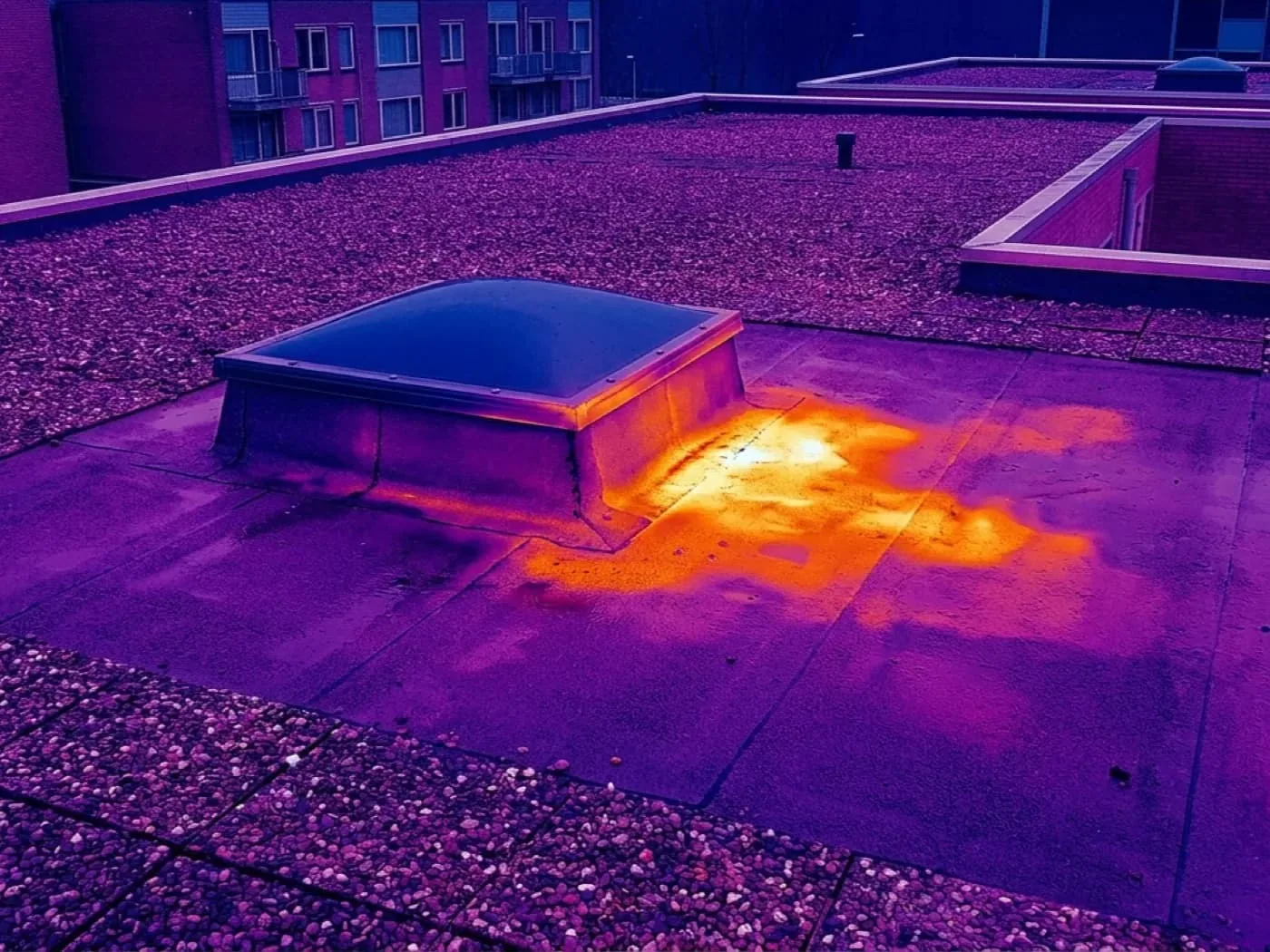
Three checks come first. An infrared scan shows temperature patterns that point to wet insulation, usually most visible in the hours after sunset when wet material releases its stored heat more slowly. Core cuts confirm the scan by showing the actual layers, the thickness of the insulation and its condition. A deck check, from above and from below where the ceiling is open, looks for corrosion, deflection and loose fasteners.
When all three come back clean, the recover is on the table. When they do not, the scope shifts to a partial tear-off or a full replacement. We would rather tell you this on day one than discover it halfway through the install with the old membrane peeled back and a forecast on the way. The infrared moisture survey is how that day-one answer gets made.
What do the code and the weight limits say?
Building codes generally limit how many roof layers can sit on a deck, and the structure has to carry the added load of the new system plus the water it may hold during a heavy rain. Texas leaves code adoption to local governments, and the International Building Code applies in all cities, so Temple's Building Department confirms the edition and amendments in force for a given permit. We pull that information at the start so the recover design does not run into a surprise at plan review.
Older buildings need a closer look. A roof that has already been recovered once may not be allowed a second layer, and a lightweight deck may not carry a heavy ballasted system. If the structure says no, the answer is a full replacement, and we price it that way before anyone is committed to a recover design. A layer count and a deck load check come before any design, whether the building sits downtown or out along the Loop 363 corridor.
Which systems go over an old roof?
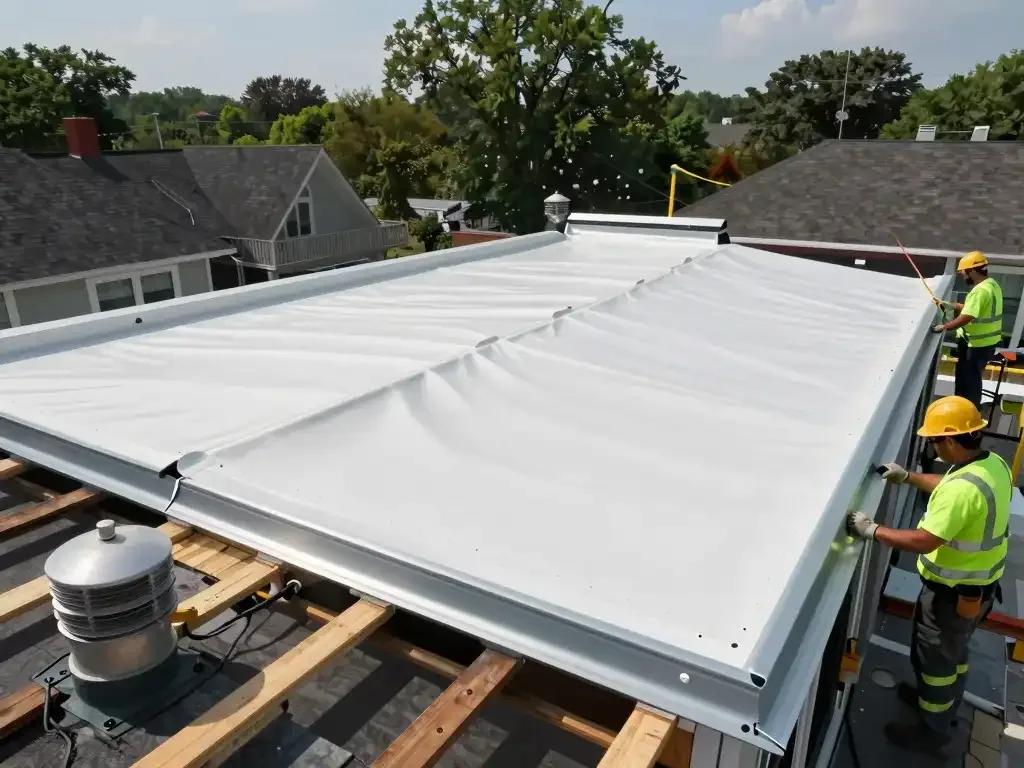
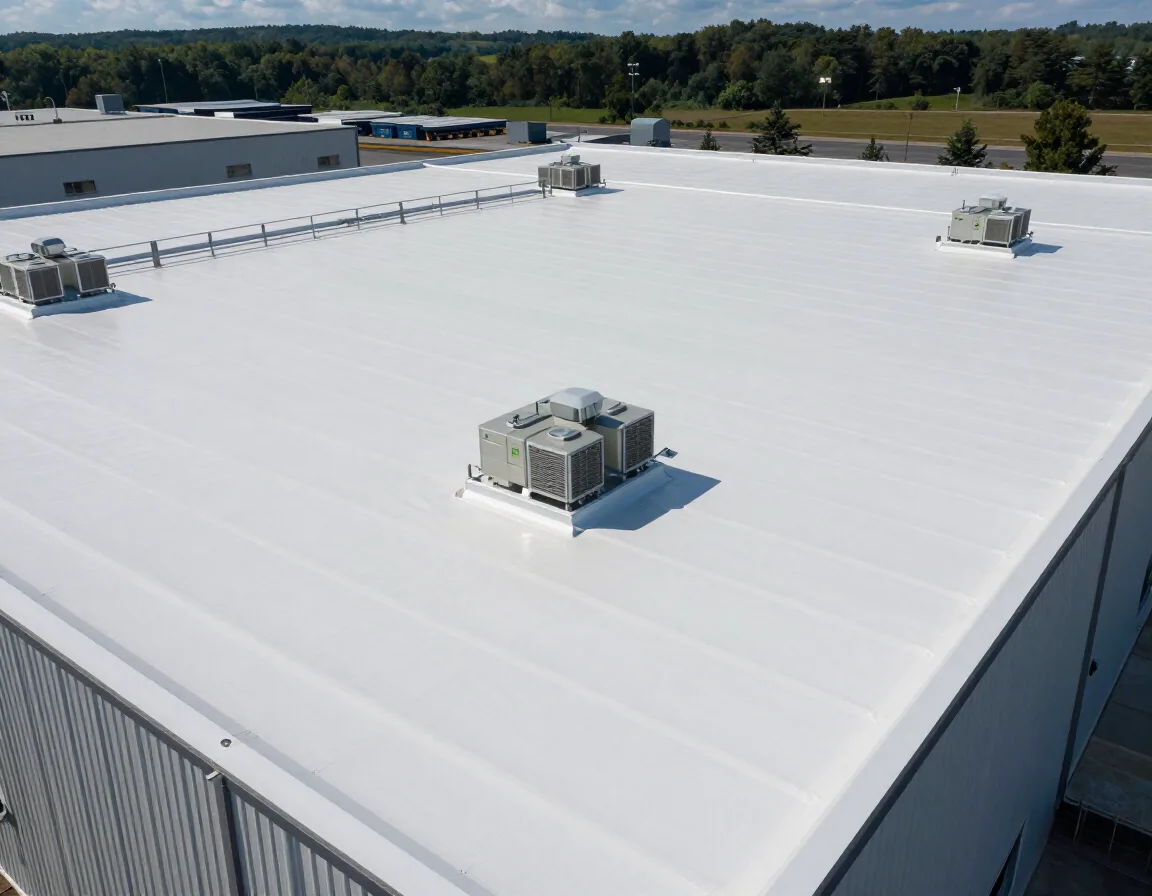
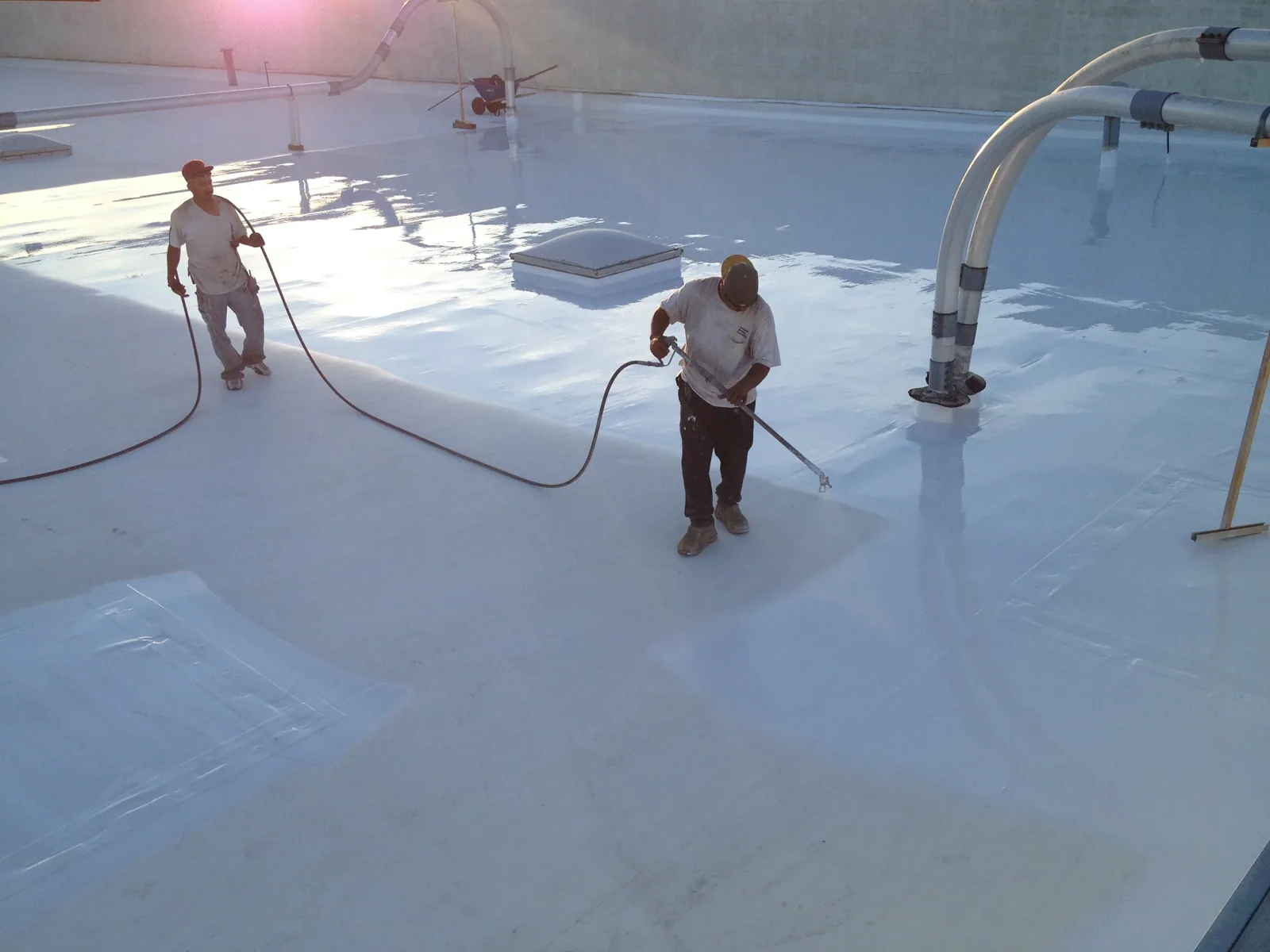
Single-ply membranes such as TPO and PVC are common recover choices because they are light and install over a cover board or a separator sheet. Coating systems can restore a sound membrane without adding a layer, and silicone roof coatings are a frequent option on roofs whose seams are tight but whose surface is weathered.
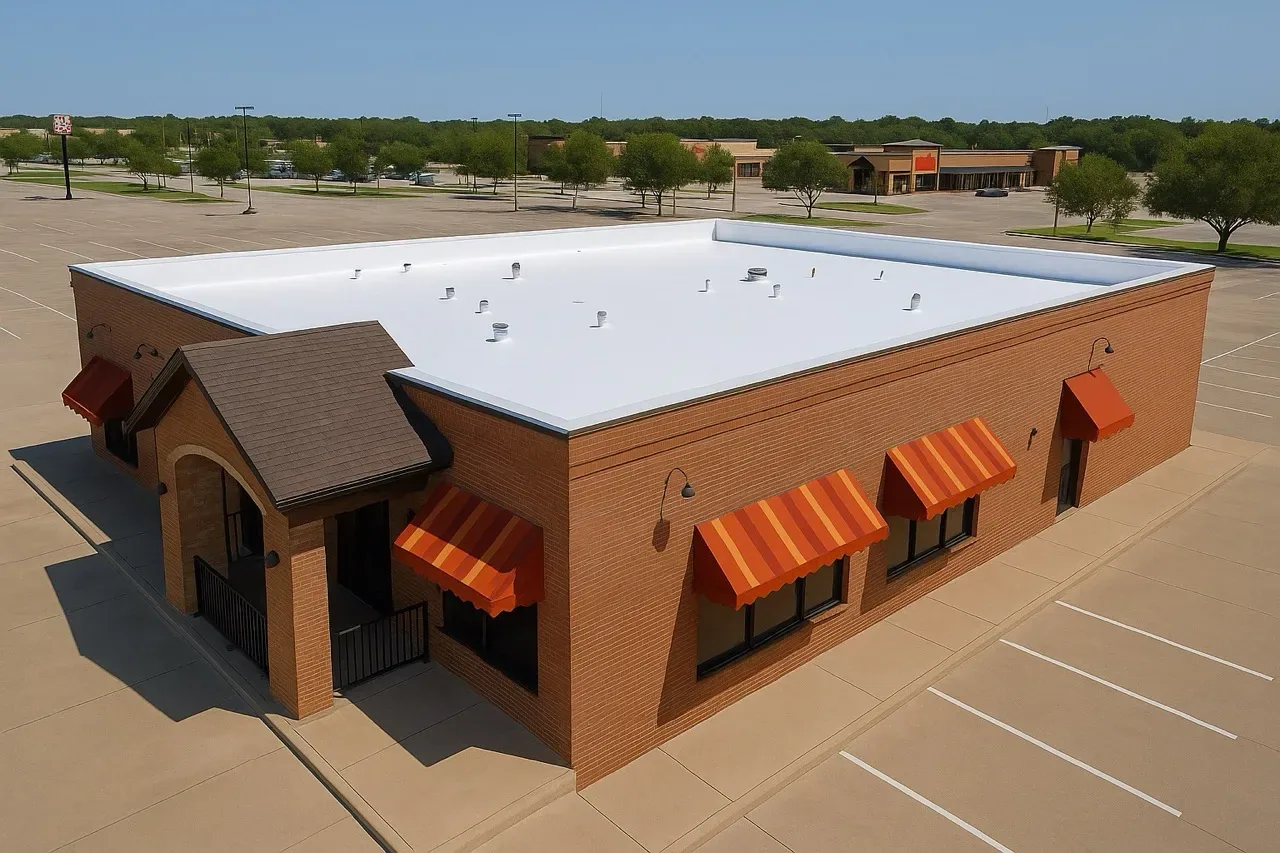
Surface temperature drives that choice in Temple. Summer afternoons that reach about 95F in August, with some 80 days a year past 90F, put a membrane through daily heat cycling. A reflective recover lowers the roof surface temperature compared to a dark membrane, which reduces thermal movement at the seams and flashings. We select the assembly for the building, the substrate and the way the owner uses the space below.
Where do recover jobs fail?
Almost always at the edges and the penetrations. An extra layer raises the roof surface, so flashings at walls, curbs and pipes have to be extended, and edge metal has to be reset higher. If those details are skipped, water finds the gap between the old flashing and the new membrane. We list each raised detail in the scope: parapets, rooftop equipment curbs, drain bowls and expansion joints.
Wind is the second failure mode. The straight-line winds estimated at 80 to 90 mph across Temple during the May 2024 tornado event are a reminder that edge attachment cannot be an afterthought. Recover systems get their uplift resistance from the attachment pattern, and on a recover that pattern has to reach the deck through the old layers. We verify fastener lengths and pull-test results before the membrane goes down.
How disruptive is a recover compared with a replacement?
Considerably less, which is the best reason to choose one when the roof allows it. Without tear-off, there is less debris, less noise at the deck and a smaller chance of open exposure if the weather turns. A clinic building in the Temple Medical and Education District or an office in Belton can often keep its schedule with only a few access restrictions on the day of staging, because the crew works from the roof surface rather than opening the deck.
The tradeoff is time. A recover does not reset the clock on the deck or the old insulation. It buys a stretch of service life that the survey and the new system should define in writing, and a capital plan should carry the eventual replacement as a dated line, not an unknown.
What does the asset manager sign off on?
Three things: the moisture and deck findings, the recover assembly with its edge and flashing details, and a statement of what the recover does not fix. We put the moisture map, core photographs and deck notes in a written report so the file holds more than a quote. If a lender, buyer or insurer needs the roof history later, that record is the document they ask for. Owners who manage several buildings can fold those findings into roof condition reports that rank each roof by remaining life.
Commercial Roofing Questions
Can a roof with ponding water take a recover?
Ponding is a drainage question first. Standing water after rain points to low spots, deck deflection or blocked drains, and a recover laid over the problem keeps the problem. We correct drainage with tapered insulation or new drains where the structure allows, and when it does not, replacement becomes the sensible route.
Does a recover change the manufacturer warranty options?
It can. Many manufacturers require specific preparation, cover boards and moisture conditions before they will issue a warranty on a recover. We confirm those requirements against the survey results before choosing the system, so the warranty path is known when the work begins.
Is a coating the same thing as a recover?
No. A coating adds a thin liquid-applied layer to an existing membrane and restores its surface, while a recover adds a full new membrane assembly. Coatings suit sound, dry roofs with tight seams. A membrane with open laps or saturated insulation needs more than a coating can offer.
How many times can a roof be recovered?
The structure and the code set that limit. Many buildings allow one recover and then require tear-off, and some cannot take any additional load. The permit office in Temple confirms the rule for your address, and the deck check confirms the structure can carry the extra weight.
What if the survey finds wet insulation in only a few places?
Then a hybrid scope makes sense. We cut out and replace the wet sections, then recover the rest. That keeps most of the savings of a recover without burying water. The survey map draws the line, and the written scope shows which areas are removed and which are covered.