Little River-Academy
What do you do with a roof that a tornado has opened and an insurer has not yet seen? The order matters more than the speed. An EF-1 tornado began near Little River-Academy on the evening of May 22, 2024, and roof damage was reported near Bob White Road and Heidenheimer Road. The city was formed in 1989 when Little River and Academy merged, it lies about 10 miles south of Temple, and Texas State Highway 95 runs through its central intersection.
For an owner or asset manager in a place where a storm has already been, the sequence we follow is fixed: the water comes first, the photographs second, a bridging repair third and the lasting scope last. Each step has an owner and a log, and none of them stands in for the next.
What happens first when a roof is open?
Water is the first problem, so the make-safe step comes first. The opening is closed with a tarp, a dry-in or a sealed patch, and the interior is protected where it can be reached. Before anything is covered, the opening is photographed from several positions with a scale card and a time. That photograph is the most valuable item in the later claim.
The make-safe step is not a repair. It is logged as a temporary measure with a date by which it should be replaced, and it is checked after the next rain. A tarp that has lifted or a patch that has pulled is a new finding, not a part of the original record. Keeping the two apart lets the insurer, the owner and the contractor see what the storm did and what the response did.
What should the damage record show?
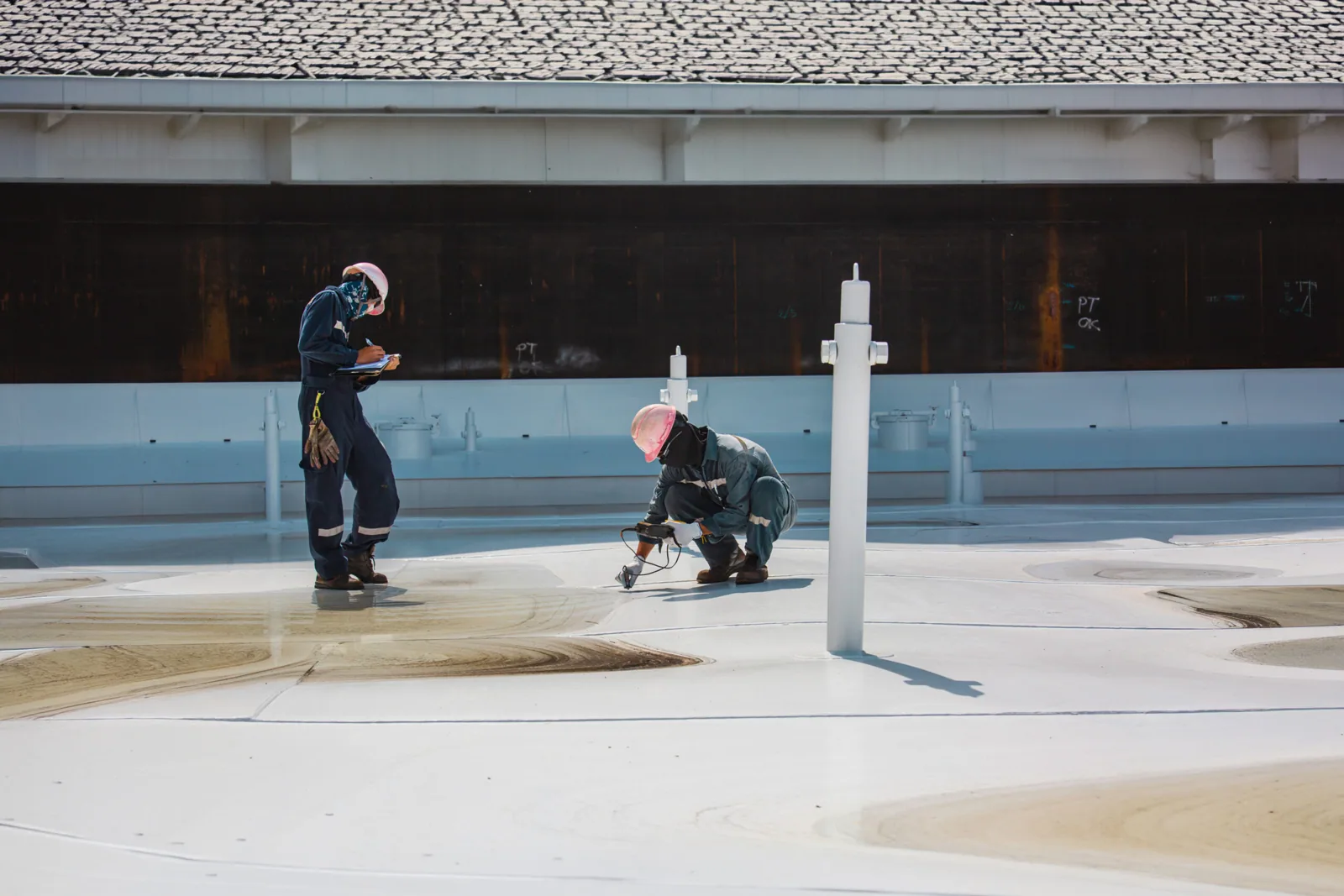
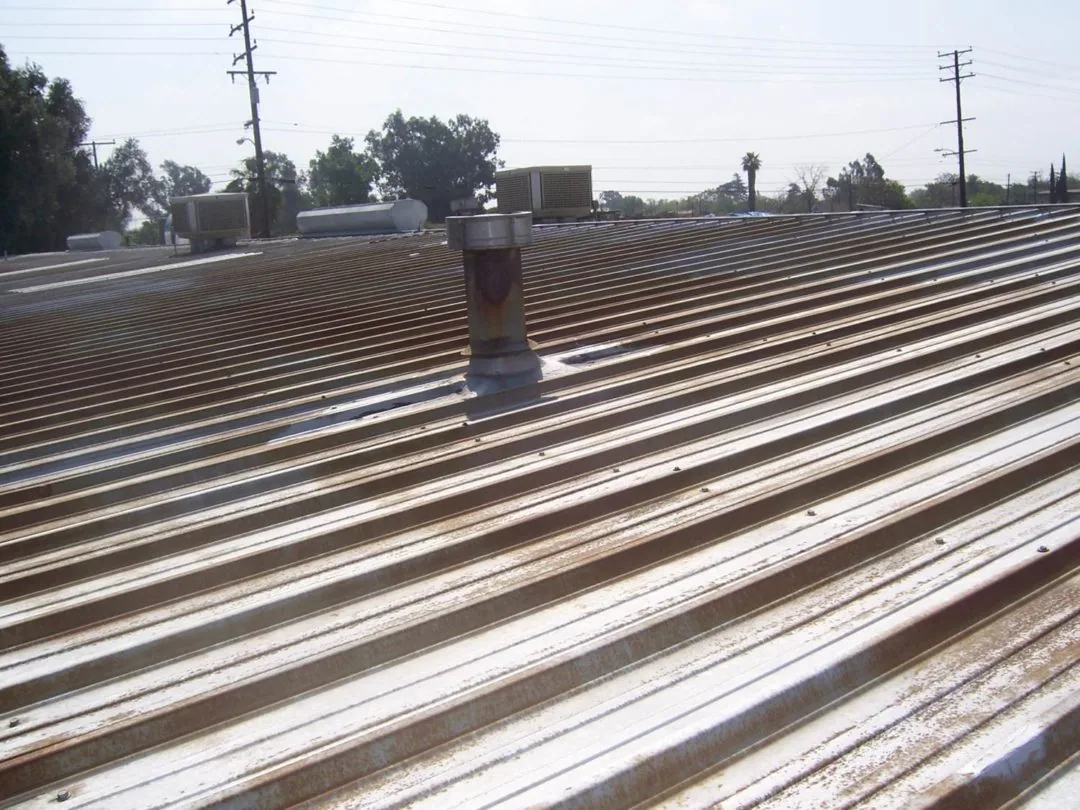
The damage record is built on the walk. We start at the edges, where wind attacks first: coping, drip edge, fascia, parapet caps. Then the field: lifted membrane, torn seams, displaced insulation, missing panels. Then penetrations and equipment: shifted units, broken vents, torn flashing. Then the drains, which may be blocked by debris.
Each finding gets a photograph, a section tag, a location on the sketch and a rating. Moisture readings show where water has entered the insulation. The record separates storm damage from older wear, since an adjuster will ask, and since the owner's budget should not absorb damage that belongs to the claim. We hold this record for the asset manager and do not file anything on the owner's behalf. A claim documentation package follows the same order.
How is damage from a tornado different from wind damage?
Tornado damage is often concentrated and violent. A strip of roof is gone while the rest is intact, debris punctures the membrane, and rooftop equipment may be displaced or missing. Straight-line wind tends to spread across a wider area and lift edges and panels. On May 22, 2024 the weather service also put straight-line gusts at 80 to 90 mph over Temple, alongside the tornadoes.
For the roof, the difference shapes the walk. After a tornado, we expect punctures and debris and check the deck below for damage. After straight-line wind, we expect lifted edges and torn seams. Both are covered in the tornado damage and wind damage records, and a roof may show both.
What does a holding repair buy before the permanent decision?
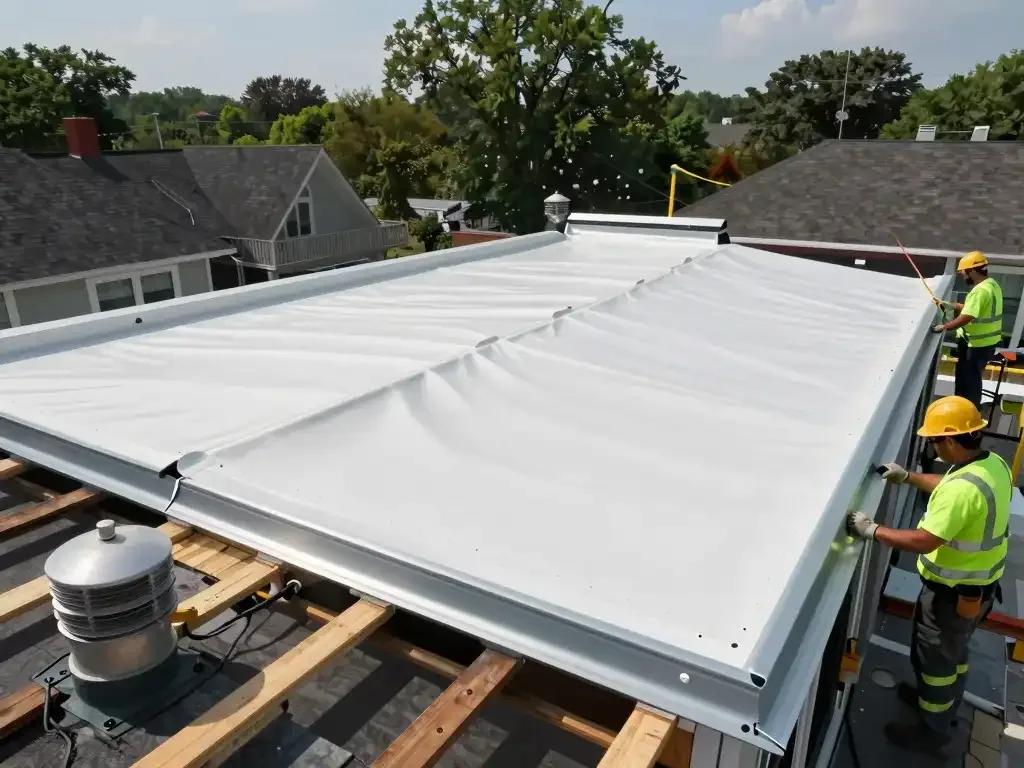
A holding repair is more durable than a tarp and less final than a replacement. It might be a welded patch over a torn seam, a rebuilt flashing at a curb, re-fastened edge metal or a sealed penetration. It is designed to last through the next season, so that the permanent scope can be priced, approved and scheduled without water in the building in the meantime.
We write down what the holding repair is expected to last, what would make it fail and when it should be rechecked. If the permanent scope is a replacement, the holding repair is the bridge. If the permanent scope is a repair, the holding repair may be the first stage. In either case the log shows it, so nobody mistakes a bridge for a destination.
The decision about how much to spend on a holding repair belongs to the asset manager. If the permanent work is a few weeks away, a light measure may do. If it is a year away, the holding repair should be built to last through a storm season. We give the options and the prices, and the owner picks.
What does the regional record say, and what does it not?
Temple took the larger tornado that day, an EF-2 that injured 30 people, while the smaller EF-1 started near Little River-Academy as a separate event. The two are regional context for owners in the area. They are not a finding about any roof, and the walk is what shows a roof's actual condition.
The practical use of the regional record is planning, and the register is where that planning is kept, building by building, with the dates of every walk. It tells an asset manager that spring storm season is real, that edge details and rooftop equipment deserve attention before it, and that a record taken in advance makes the afterward faster. We build that record in spring, and we update it after each storm.
Which roofs go first when several are affected?
With several roofs affected, the ranking goes by what is open and what is below it. A roof with an open edge over occupied space goes first. A roof with a lifted seam over a storage room goes after. A sound roof with a loose cap goes on the list for a quick fix. The ranking is written down and shared with the asset manager, who may change it for reasons only the owner knows.
Holding repairs follow the ranking, and permanent scopes are priced against the capital plan. A Temple portfolio with a Little River-Academy building can use one register for both, and the same ranking logic applies to buildings in Belton.
What are the permanent options?
The findings decide. Local damage with dry insulation is repaired. A roof with widespread punctures and wet insulation needs a replacement in whole or in part. Each option is priced, with the finding behind it and the date by which any temporary measure must be replaced.
Commercial Roofing Questions
Should I photograph the damage before or after covering it?
Before. A photograph of the opening with a scale card and a time is the best evidence of what the storm did, and it cannot be taken once the roof is covered.
Is a tarp a repair?
No. A tarp is a make-safe step that buys time. It is logged with a replacement date and checked after the next rain.
How do you separate storm damage from older wear?
By pattern and by records. Fresh breaks, clean edges and debris point to the storm. Aged sealant, old staining and weathered seams point to wear. A pre-storm record, where one exists, settles most questions.
Do you file the insurance claim?
No. We provide the dated photographs, the sketch and the moisture readings in a form an adjuster can read. The owner or asset manager files the claim.
Can all affected roofs be fixed at once?
Not usually. We rank them, make the worst safe first and set holding repairs while permanent scopes are priced.
How long should a holding repair last?
As long as the permanent scope needs to be priced and scheduled, and ideally through the next storm season. The log states the expected life and the recheck date.