Roof Insurance Claim Assistance
Who decides what the storm did to this roof, and on what evidence? In a commercial claim, that question gets answered by whoever has the best record. The owner knows the building. The adjuster knows the policy. The roofer can supply the one thing both of them need: a dated, photographed, scoped account of what failed, where, and what it will take to correct. In Temple, TX, after a season with tornado and straight-line wind exposure, that record can be the difference between a short conversation and a long one.
What does a roofer actually do in a claim?
We document and estimate. We do not negotiate the policy, interpret coverage language, or represent the insurer. The owner or the owner's public adjuster handles those parts. Our job is to produce evidence that holds up when someone else reads it later.
That evidence has a standard shape: photographs tied to a roof sketch, a written description of each failure and its likely mechanism, moisture readings where water entered, a list of make-safe measures with dates, and a repair scope priced by line. The scope is written so an adjuster can compare it with their own, line against line, and see where the two differ and why.
When should documentation start?
Before anything is covered. The first photographs of a failure are the most valuable ones, because they show the condition the event produced. Once a tarp goes on or a patch is installed, the original is gone. That is why the triage visit records the damage first and secures it second.
Notice to the insurer has its own deadlines under most policies, and the owner or risk manager should check them. We keep a running log with times, photographs, and the names of people on site, which helps when a claim is reviewed weeks later and memory has softened. A clean timeline from the first emergency roof repair call forward is easy to defend.
Interior damage belongs in the same file. Stained ceiling tiles, wet insulation, buckled flooring, and affected equipment are photographed by room, and each is tied to the roof opening that let water in. The roofer does not value contents or business interruption, but the link between a specific roof failure and a specific wet room is something only the roof record can show.
How is storm damage separated from old wear?
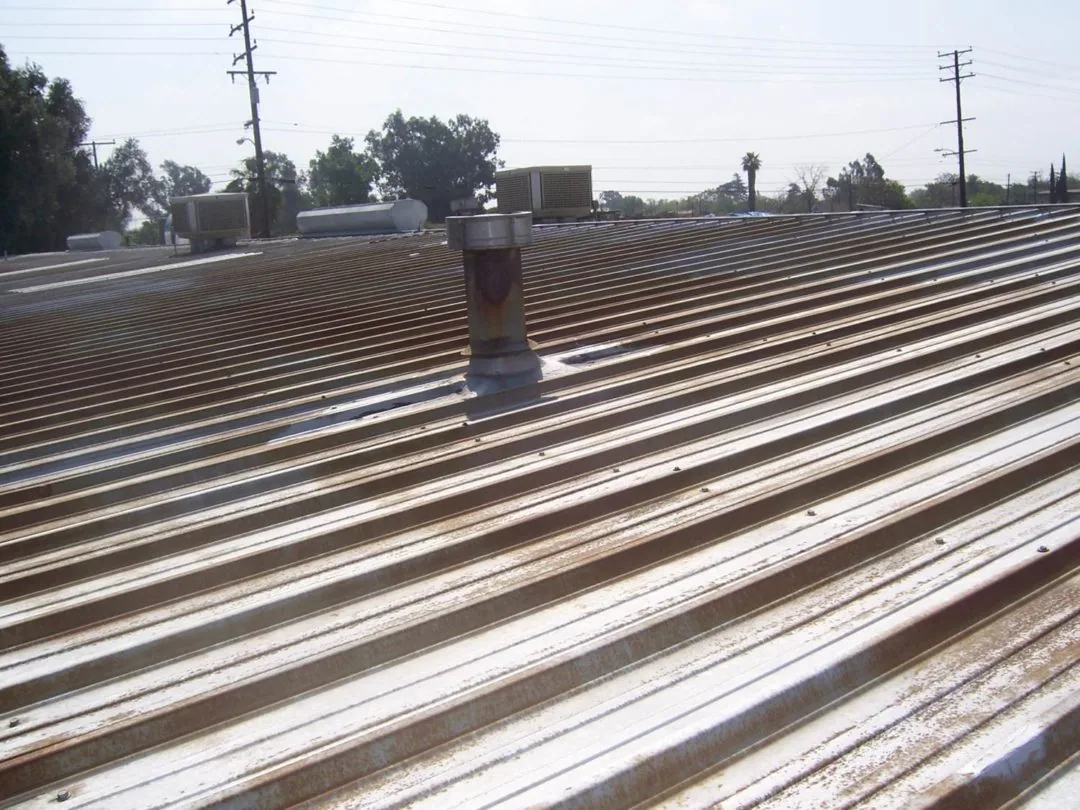
By describing each condition for what it is. A fresh tear with bright edges and displaced debris reads as event damage. Weathered sealant, long-term staining, and prior patches read as wear. A roof that was already ponding before the event shows rust rings and algae that a storm did not produce.
Both categories go in the record, labeled. The labeling helps the owner as well, because it prevents a claim from including items that will be challenged and leaves the strong items standing on their own. The distinction also tells the owner what should be funded from the maintenance budget, and what belongs to the claim, which keeps both budgets honest.
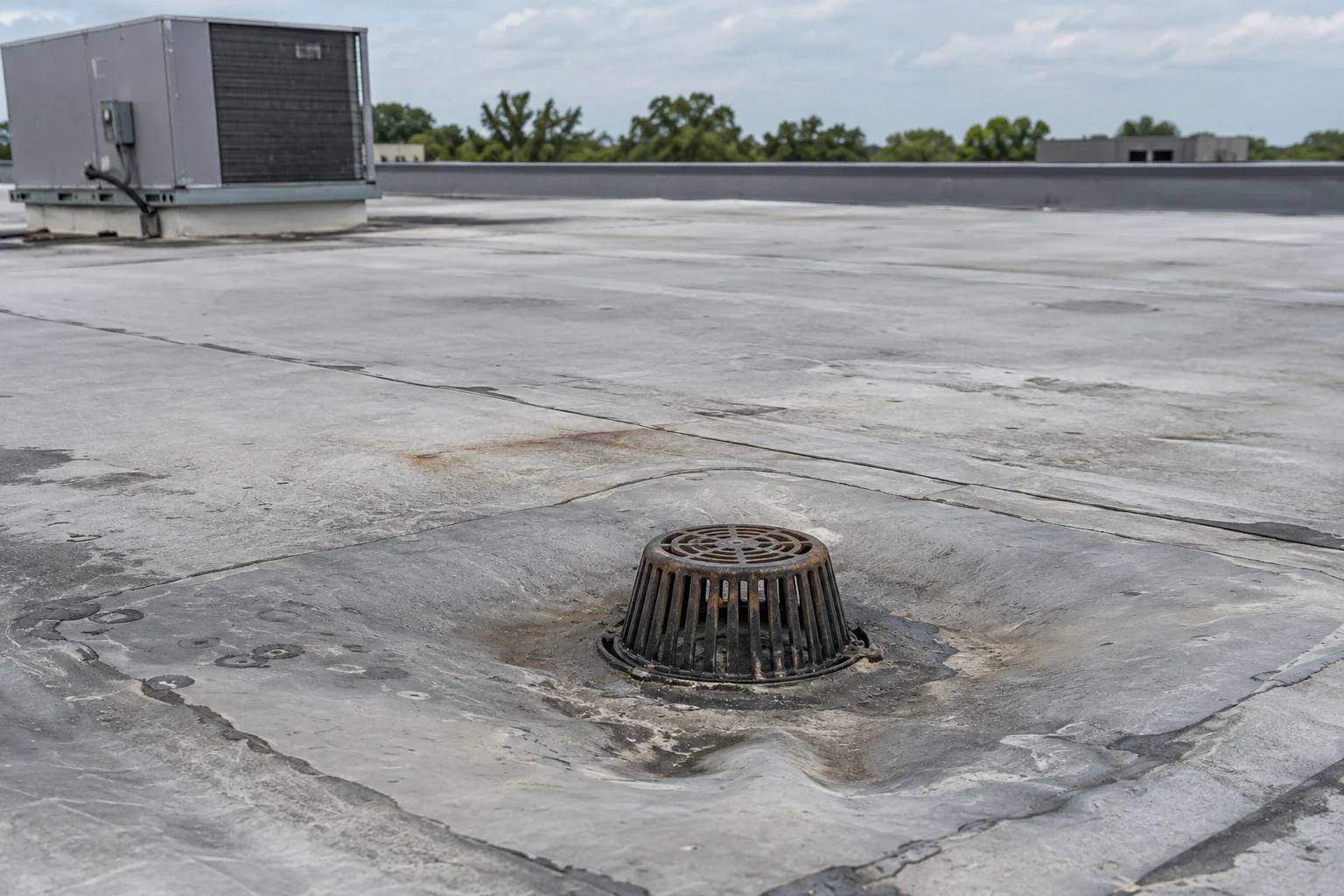
Ponding is a common gray area. Standing water after a storm may come from a clogged drain, a deflected deck, or an event that damaged a drain line. The record includes drain photographs from before and after, and the water depth measured with a level. Where a drain was blocked before the event, the finding says so, and the owner can address it separately through roof drains and scuppers work.
What evidence does the local weather record add?
Weather data helps to establish that an event occurred and how severe it was. Forecasters rated the May 22, 2024 tornado in Temple EF-2, with winds near 120 mph, after it damaged restaurants, shops, banks, and strip centers. An EF-1 tornado also formed near Little River-Academy that evening, and estimated straight-line winds of 80 to 90 mph blew through Temple itself.
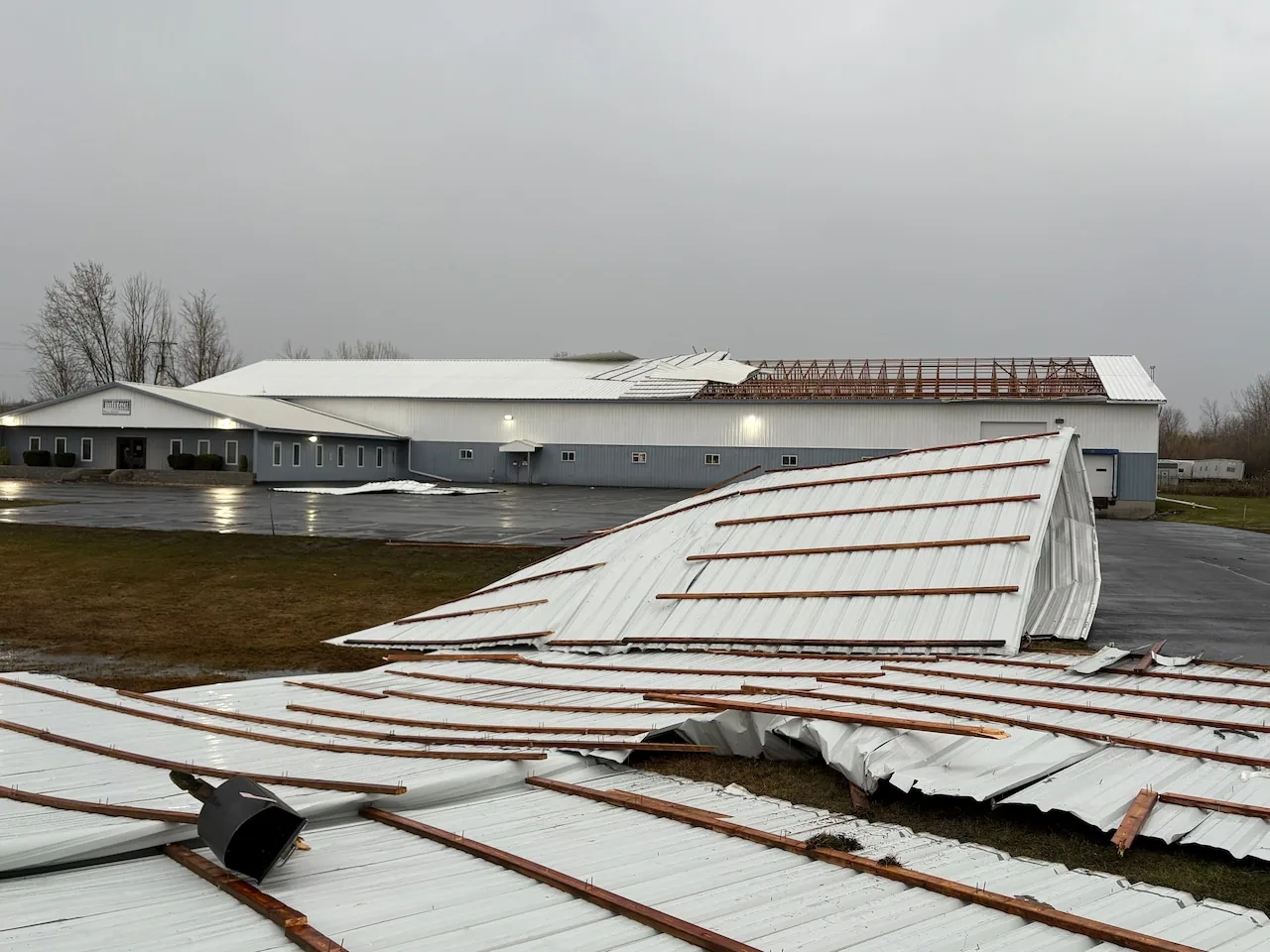
That context supports a claim without proving damage at any given address. The building's own condition does that. We pair the public record with the roof's photographs, so the account runs from the event to the specific failure. Our storm damage roof repair process captures the on-roof facts, and the weather record explains the circumstances. For wind losses specifically, the wind damage roof repair findings describe lifted edges, displaced metal, and torn terminations in the language adjusters use.
How is the repair scope built for an adjuster?
By line item. Each repair has a location, a method, a quantity, and a price basis: membrane replacement by area, flashing by linear foot, edge metal by length, insulation by board count, equipment resets by unit. Temporary work is listed separately from permanent work, so the two are not confused.
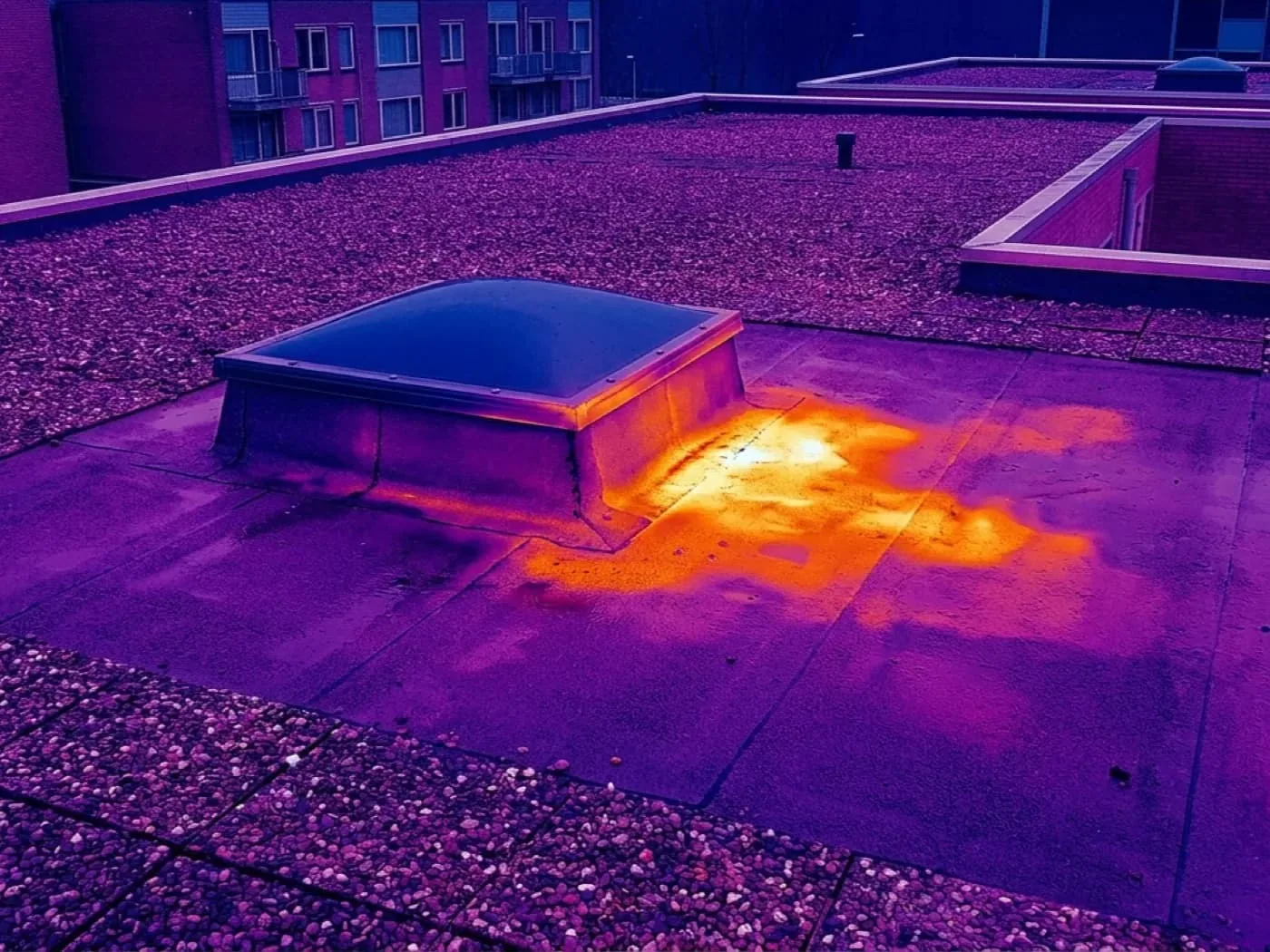
Where a roof is near the end of its life, the scope may point toward replacement, and the record explains why a patch would not hold. Where the damage is limited, a localized repair is the sound recommendation. When disagreements arise, an infrared moisture survey or core cuts can settle whether insulation is wet, using evidence both sides can examine. The moisture map, the core photographs, and the dates all go into the file, and the owner can hand the whole package to an adjuster, a public adjuster, or counsel without redoing the work.
How do multi-building owners handle many claims at once?
Consistently. A regional event can touch warehouses, clinics, retail strips, and offices in the same week. Each building gets its own file in the same format, and a summary sheet ranks exposure across all of them. The ranking lets the owner prioritize make-safe work and see total scope at a glance.
Healthcare campuses, distribution buildings, and rail-served industrial properties often come first because the cost of an open roof is highest there. Properties in Temple, Belton, and Killeen are batched so crews and photographers are not scattered across the county. The owner receives one report format whether the building is a clinic or a cold dock, which simplifies review by a risk manager. When a lender or a property manager asks for a status update, the same summary answers it without a second site visit, which keeps the focus on getting roofs dry.
Commercial Roofing Questions
Does your estimate bind the insurance company?
No. An insurer sets its own scope and payment. Our estimate is a documented, priced account of the repair, written so an adjuster can compare it with their numbers. Differences are common and are resolved between the owner and the insurer, with our record available as evidence.
Should we get several roofing estimates for a claim?
That is the owner's decision, and some policies or lenders expect it. A consistent record helps whichever way the owner goes. If more than one contractor documents the damage, differences in scope can be traced to differences in findings, and our file shows exactly what we found.
What if the insurer disputes that the roof was damaged?
The dated photographs and the failure descriptions are the answer. We can also add core cuts, moisture survey results, and a written explanation of how the damage occurred. Where damage and wear overlap, the labeled record shows which part of the scope is the storm's.
Can we start repairs before the adjuster inspects?
Make-safe work goes ahead without delay, and every step is written down. Permanent repairs usually wait for the adjuster or for written agreement on scope. If the building is at risk, we explain that and photograph everything before work, so the inspection can still see what the roof looked like.
Does maintenance history matter in a claim?
It helps. Dated photographs from earlier visits show the roof's baseline, which makes it easier to show what the event changed. A roof with no history can still be documented, but the before picture is then built from the condition at the time of the loss.