Wind Damage Roof Repair
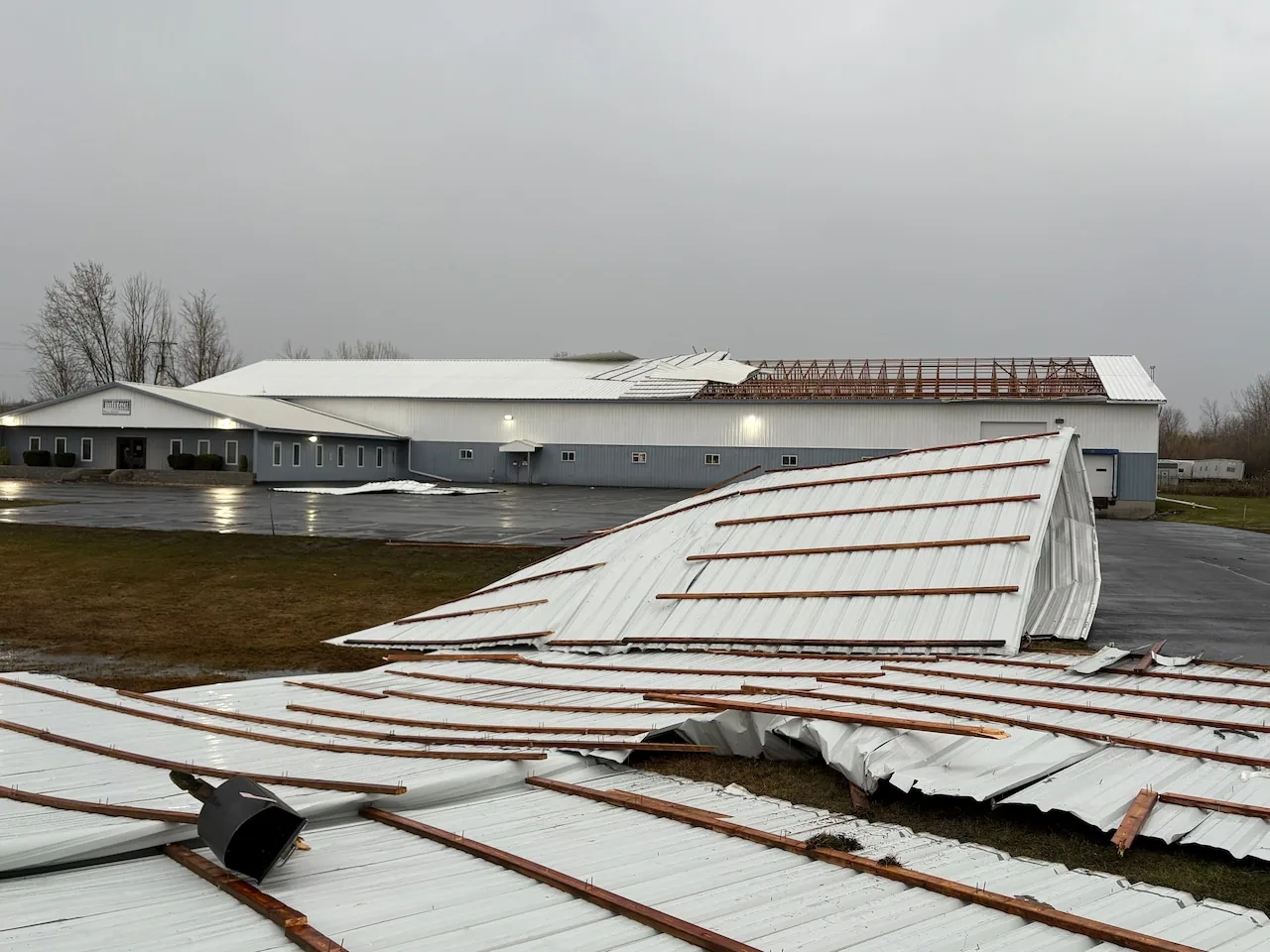
Where did the wind get under the roof first, and what is it still lifting? On a commercial roof in Temple, TX the answer is almost always an edge, a corner or a piece of rooftop equipment. Wind does not tear a membrane from the middle. It finds a loose coping, a gap in edge metal or a curb with a failed flashing, pushes under it and peels the sheet back from that point. The first hour is about stopping the peeling and keeping water out, and the first record is a set of photographs of the failure point before anything is covered. Access on the roof itself decides how quickly the opening is secured: a ladder, a hatch, a lift and a safe route past the damaged area.
We keep emergency work and permanent work apart. A make-safe step ties down what is lifting and seals what is open. The intake record names the failure point and the moisture around it. The permanent scope follows after a survey, priced against the capital plan rather than against the next storm.
Who Decides What in the First Hour After Wind?
The property manager or facilities lead decides whether to dispatch, and the crew decides how to stabilize. We ask where the roof has lifted, whether water is entering, whether anything is flapping or loose and whether debris is on the roof or the ground. If a membrane is flapping, it is secured first, because a flapping sheet tears further with every gust. If edge metal is hanging, it is removed or fastened so it cannot fall. Tarps and temporary patches go over open areas, and photographs go with them.
The note that follows names what failed, what was done, what remains at risk and when the next check will happen. It is short enough to read on a phone.
While the crew is on the roof, it checks whether the wind has moved anything that was not obviously damaged. Rooftop units can shift on their curbs. Satellite dishes, antenna masts and signs can lean. Conduit and gas lines can pull at their supports. Any of those can puncture the membrane or open a flashing, and a unit that has moved a quarter inch may have broken the seal around its curb. We note each one and, where it is safe, photograph the base from two angles.
Which Roof Details Fail First in High Wind?
Edges, corners, rooftop equipment and penetrations take the load. Perimeter metal sees uplift on the windward side and suction on the leeward. A coping with spaced fasteners or a sealant joint that has aged will start to open. Corner zones carry more uplift than the field, so a membrane that is adequately attached at the center can still lift at the corner. Equipment curbs have flashing that bends and cracks, and a bent curb flashing is the usual start of a flashing failure. Skylight frames and roof hatches can open. We walk those details in that order and photograph each one.
After the details, we look at the field for lifted seams and billowing, and at the deck for movement. Debris marks and dents show where objects struck the roof.
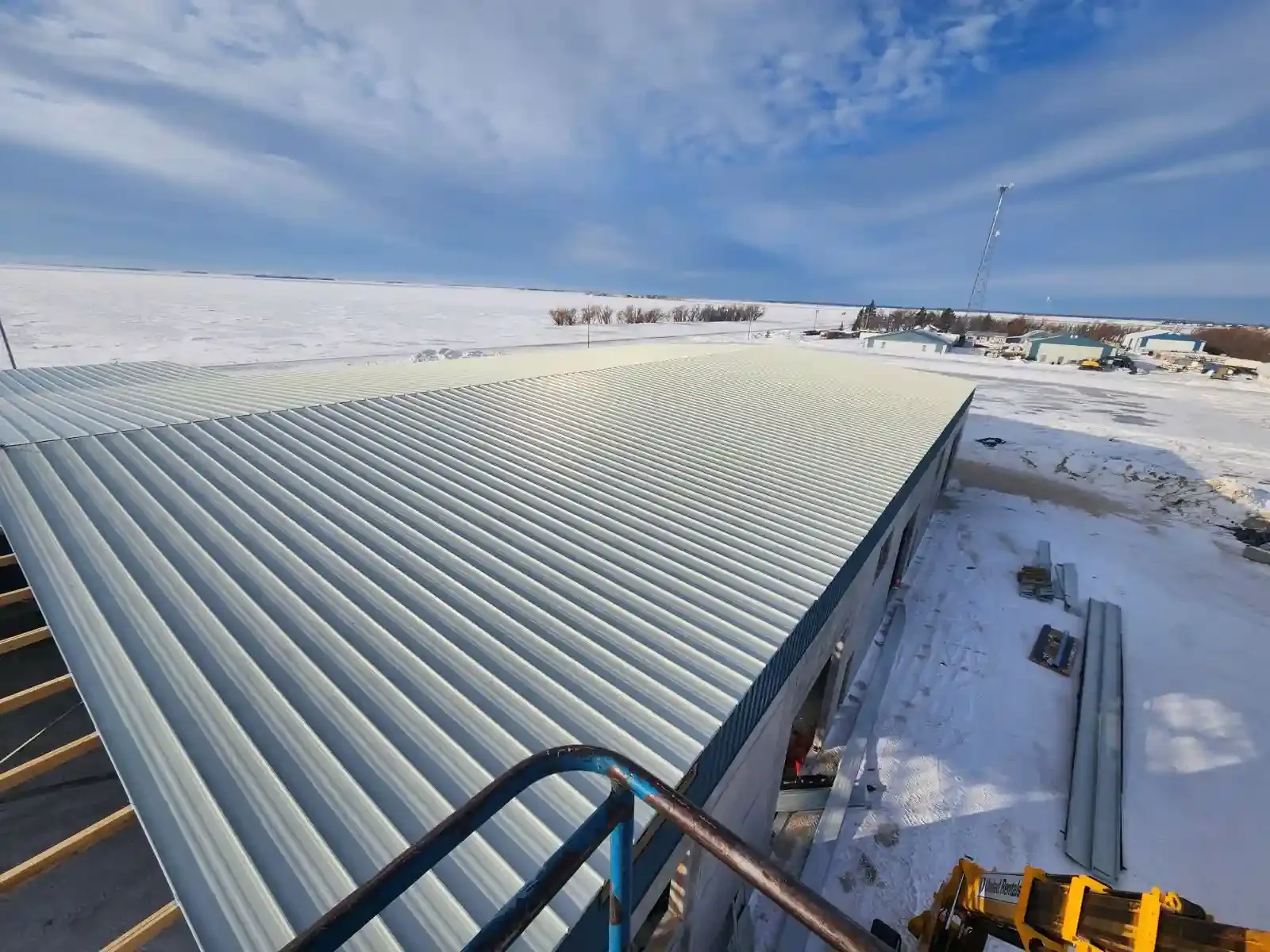
Metal roofs get the same walk with different details. We check panel laps for lifting, clips for movement and fasteners for backing out. We look for oil canning that did not exist before, for scratches on the finish that show where loose material slid and for open seams at ridge caps. On a standing seam metal roof, a clip that has slipped lets the panel move at its seat, so each section gets a pull test at selected clips.
What Do Temple Conditions Say About Wind?
An EF-2 tornado carried peak winds near 120 mph across Temple on May 22, 2024, hitting restaurants, shops, banks and strip malls, and elsewhere in the city the weather service put gusts at 80 to 90 mph that evening. A second, rated EF-1, began near Little River-Academy, and a roof hit by the stronger storm may also need the debris-impact checks that a tornado-damaged roof calls for. Those events set the context for any wind inspection in the area, but they do not prove damage on any one roof. What they justify is a close look at edges, curbs and attachment after any severe wind, and a baseline for comparison in a quiet season. A building whose owner photographs the edges every spring has a record that makes the next claim faster and the next repair cheaper, and a building without one starts from nothing.
Why Run a Moisture Survey After Wind?
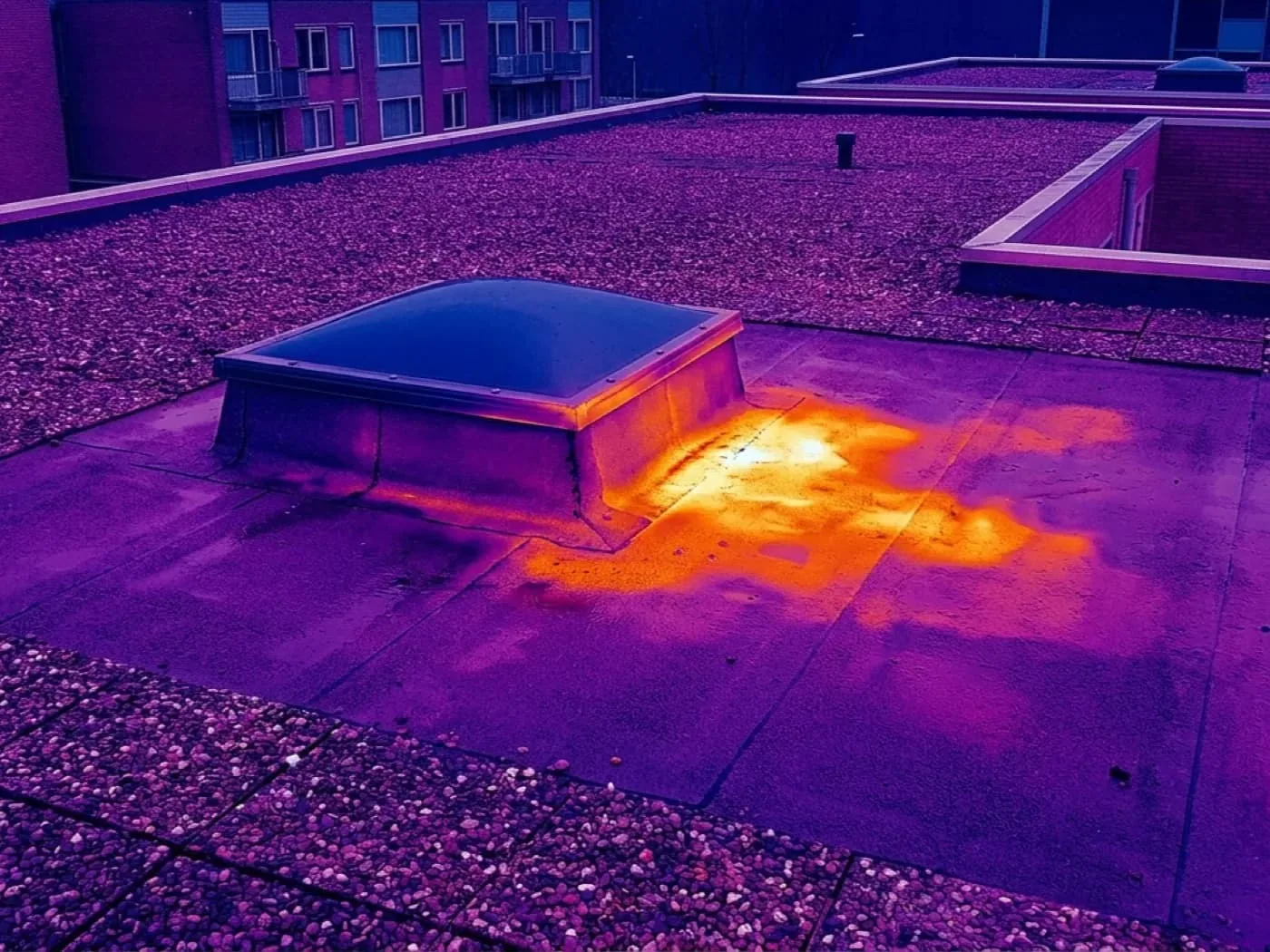
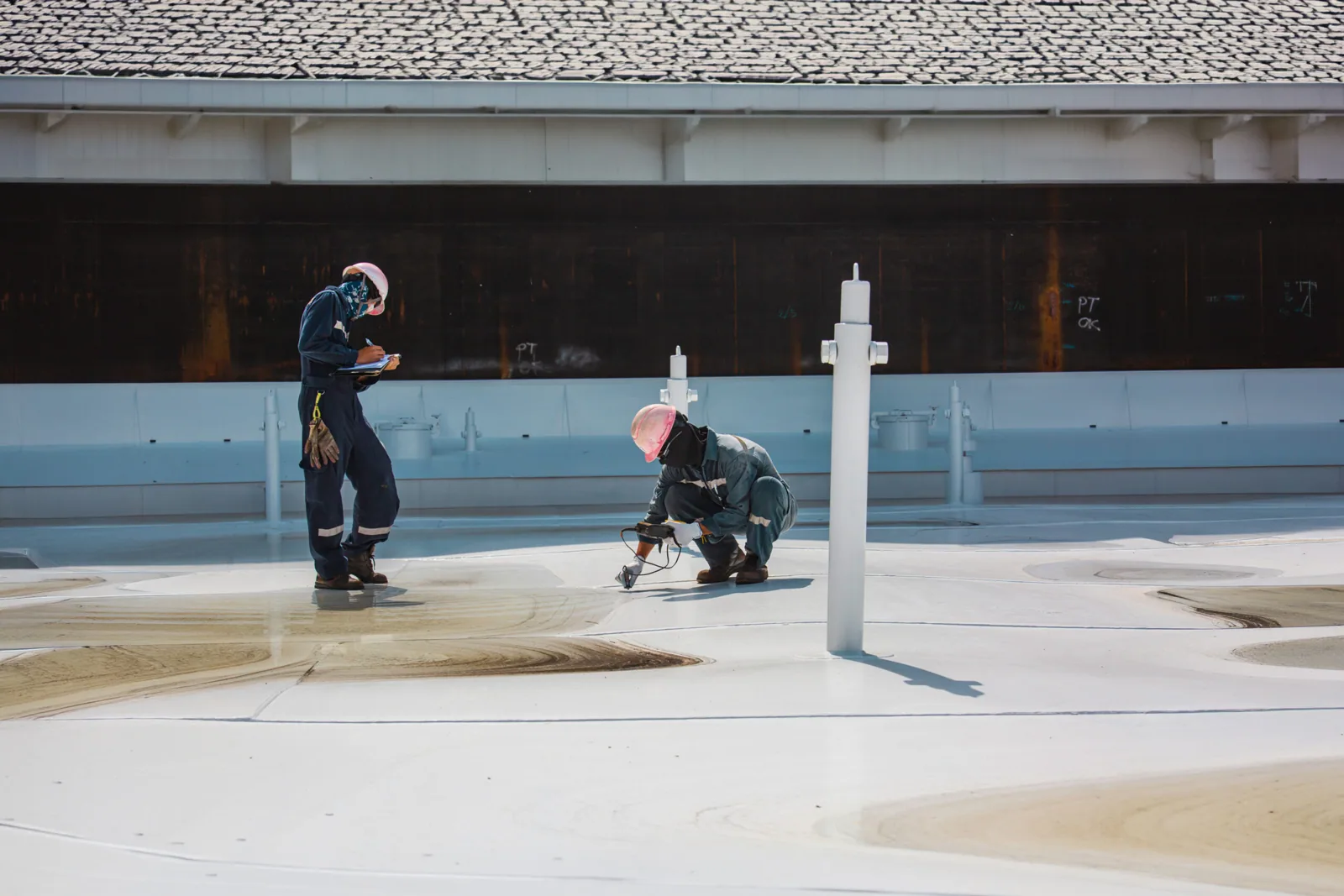
A lifted edge lets rain into the insulation, and the insulation can stay wet long after the sky clears. An infrared moisture survey outlines the wet area. The permanent scope then replaces only what the boundary requires. Without the survey, an owner pays either for too little, leaving wet insulation under a new sheet, or for too much, replacing dry sections. The survey also supports the insurance conversation, because it shows the extent of water entry from the event. Readings are taken in a grid and logged by number, and a second set is taken after the repair to prove the wet area has been removed.
What Does a Holding Repair Buy?
A holding repair secures the lifted area with temporary fasteners, a patch or a tarp and seals open details. It buys weeks or months, depending on the roof, and it gives the owner time to get quotes, line up funds and choose a permanent approach. It is documented on its own, so it never becomes the permanent fix by default. If another storm is forecast, the crew rechecks the temporary work and adds restraint. A holding repair on a roof that is near the end of its life may be the last repair before replacement, and the record says so. If a second wind event arrives before the permanent work, the crew rechecks the temporary fastening, adds restraint where needed and updates the photographs. The note to the owner states which parts held and which did not.
What Does the Permanent Scope Include?
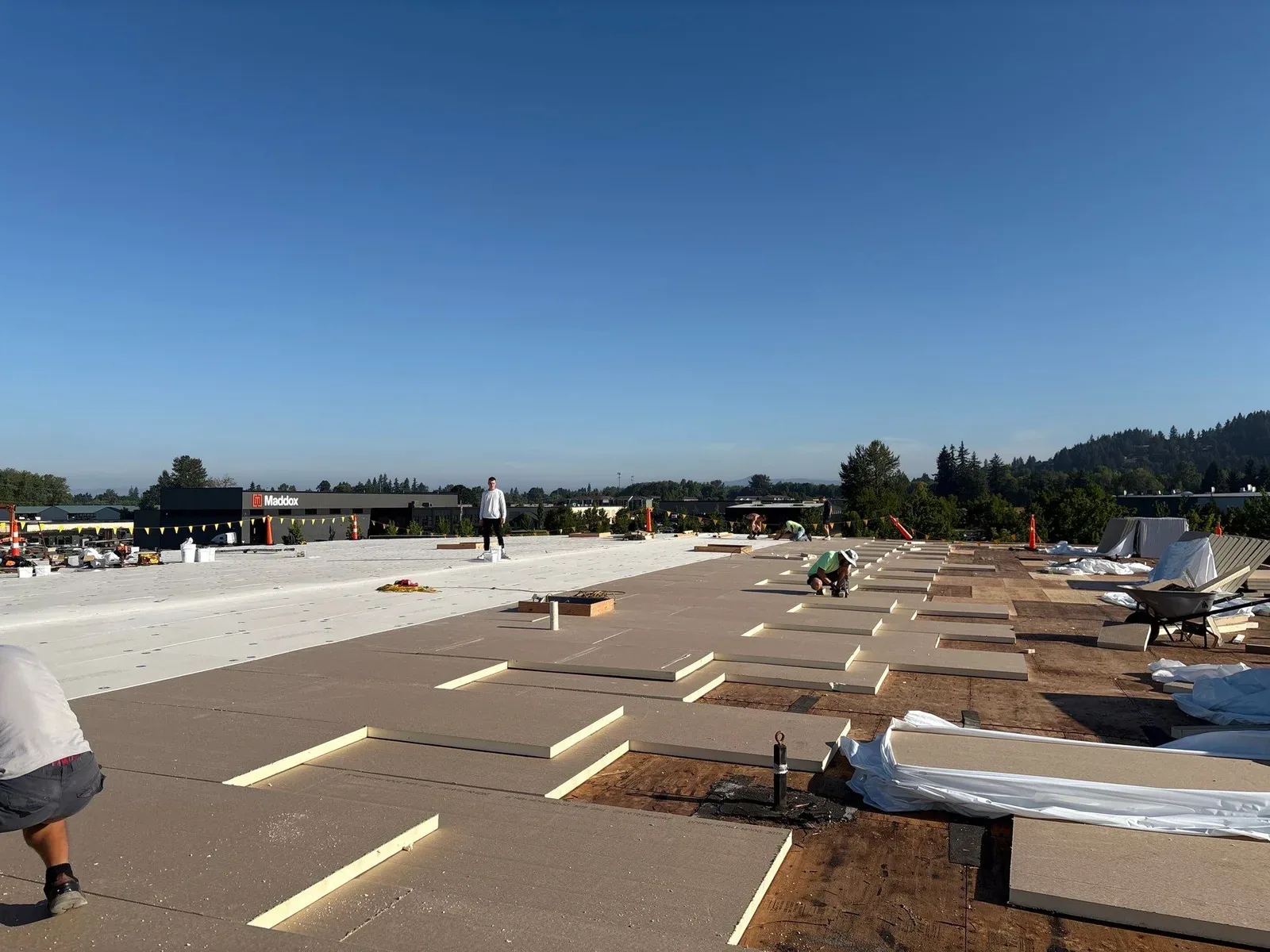
The permanent scope restores the edge and corner attachment, replaces damaged membrane and wet insulation, reflashes curbs and resets edge metal. It may add heavier fastening at corners and perimeter. It is priced by quantity with a line for each item. A storm damage repair and a claim documentation package can run together. Crane and truck access near the Loop 363 corridor or the Temple Industrial Park is confirmed on the first walk, and the plan lists any limits.
Commercial Roofing Questions
What gets fixed first after wind lifts a roof?
Whatever is flapping, open or about to fall. Then the opening is sealed and photographed, and the permanent scope follows once the roof has been read.
Can wind damage be separated from age?
Usually yes. Wind damage clusters at corners, edges and curbs and leaves lifted or torn pieces. Age leaves chalking, shrinkage and thin coating.
Do we need to replace the whole roof after wind?
Not always. If the damage is at an edge and the insulation is dry, a repair may be enough. A moisture survey shows the extent.
How soon should a survey follow?
As soon as the roof is dry enough to read, typically within days. Infrared works best in the evening.
What is the next decision for the owner?
Whether to hold the temporary repair, repair permanently or plan a replacement. The record and the survey support each choice.