Commercial Roof Leak Repair
Water is inside the building, and someone has to decide what happens in the next sixty minutes. That decision is not a roofing decision yet. It is about buckets, tarps, ceiling tiles, electrical panels and who in the building has authority to close a space. A leak call to us starts there, with a short set of questions that sort the problem by urgency before anyone climbs a ladder.
For owners and asset managers in Temple, TX, the pressure to fix a leak quickly is real, and so is the risk of fixing the wrong thing. Water travels along decks, down fasteners and across insulation before it drips, so the ceiling stain can sit many feet from the opening. The work that follows the first-hour response is tracing: finding where the water entered, why it entered, and whether the same weakness is waiting elsewhere on the roof.
What happens in the first hour?
We ask where the water is, how much, and whether it is still coming in. If it is active and heavy, the building protects what it can: moves inventory, covers equipment, shuts power where the risk calls for it. On the roof side, a make-safe step follows, usually a temporary seal over the suspected opening or a tarp over a damaged area, depending on what we find and what the weather is doing.
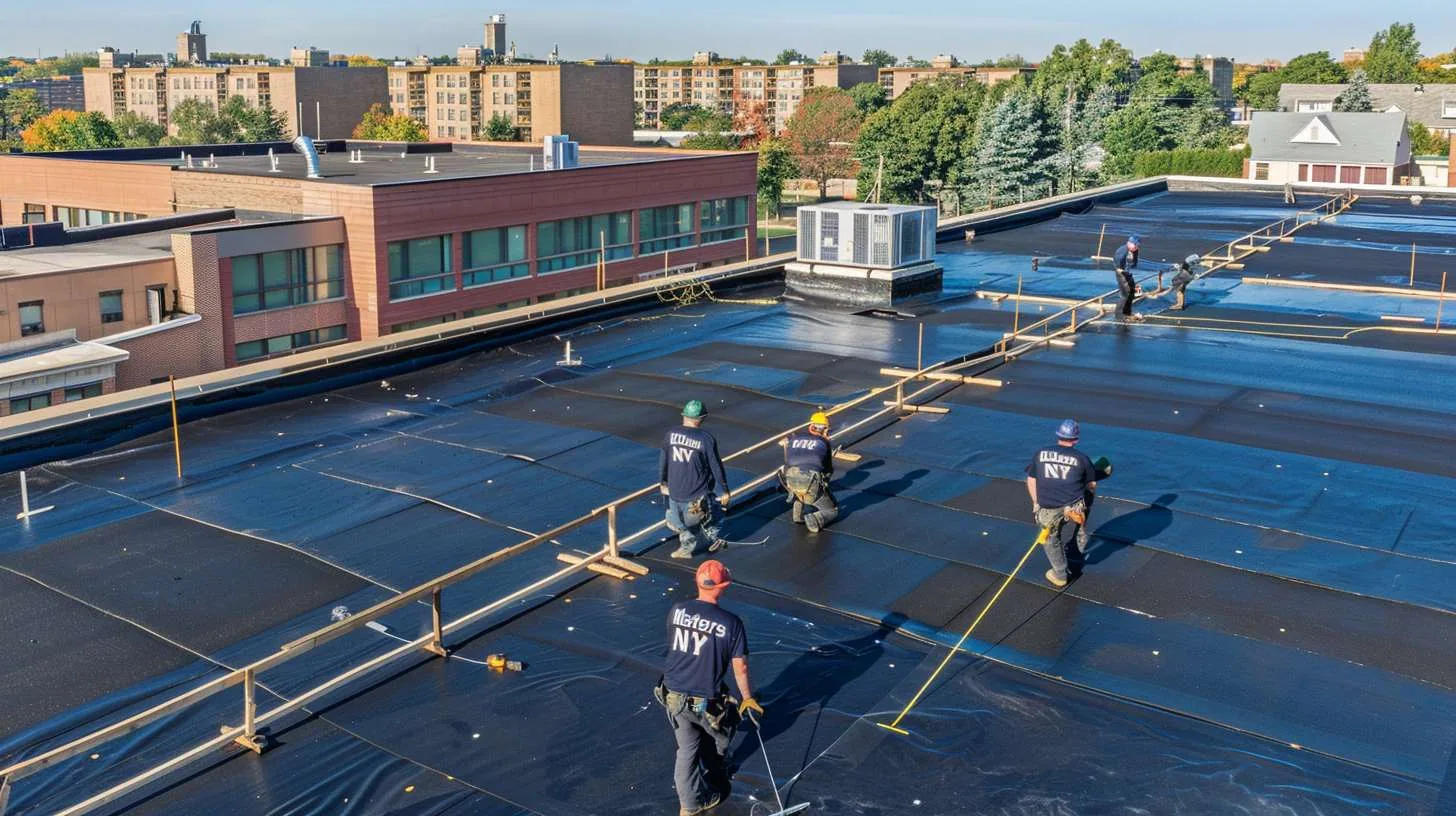
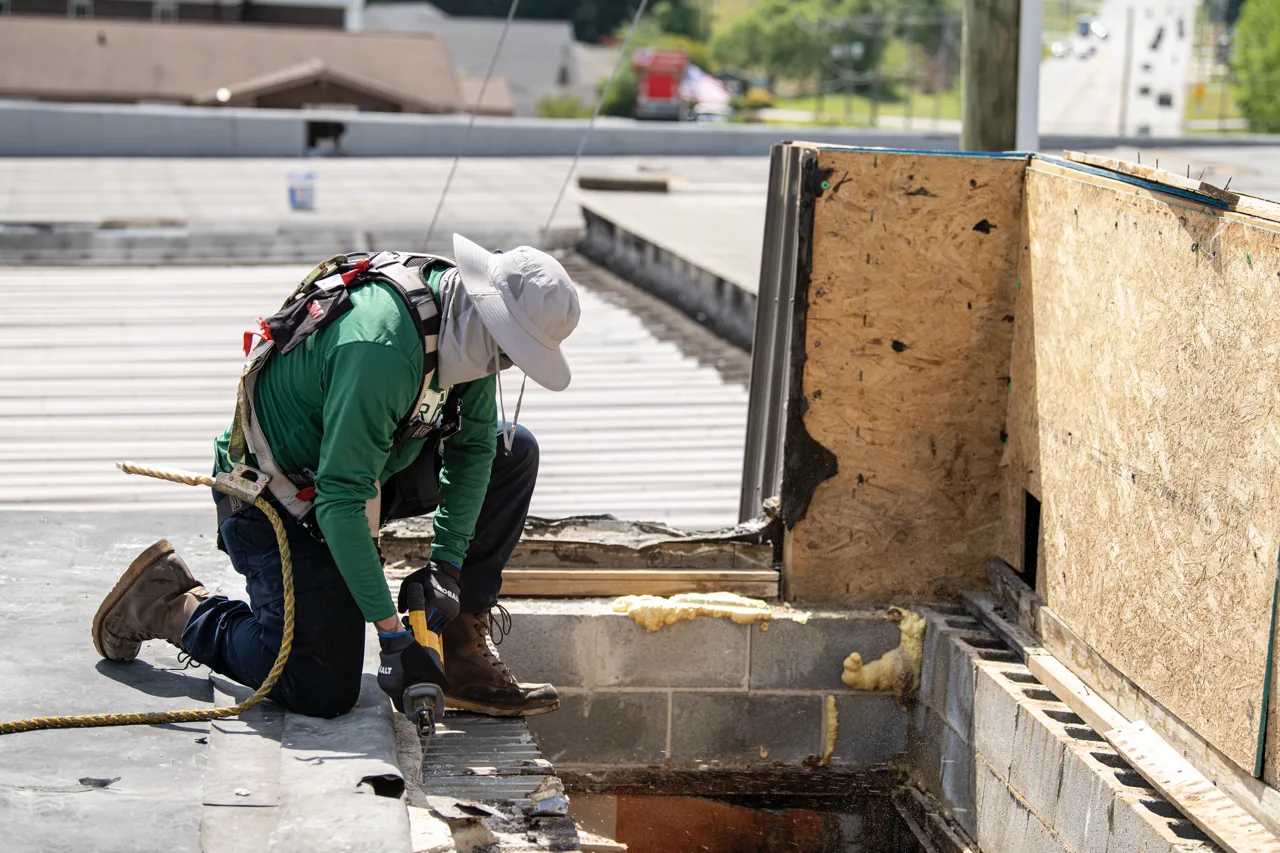
That step is a holding repair. It is meant to stop the damage while the cause is traced and the permanent fix is scheduled. We photograph the work and record where it was placed, because the temporary closure has to be removed or integrated into the final repair, and the record is what the permanent crew works from. Anything bigger than that belongs to our emergency roof repair response.
How is the entry point traced?
We work upstream from the stain. Interior photographs and moisture readings show the wet area, and on the roof we look for the higher ground that feeds it: a seam, a flashing, a drain, a penetration, a crack in a coping stone. If the opening is not obvious, a controlled water test isolates one section at a time, starting low and moving up the slope until the leak reappears inside.
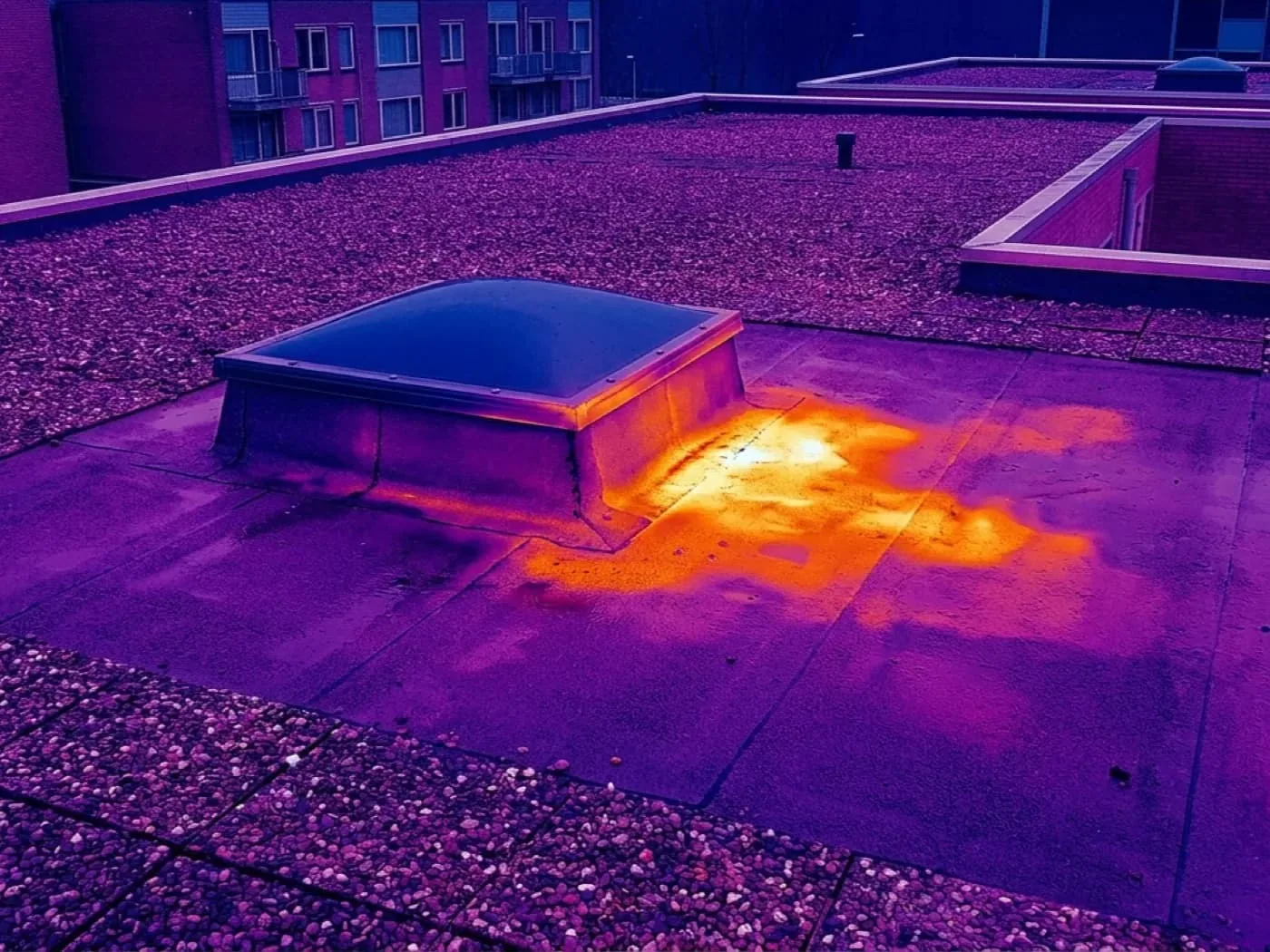
Infrared scanning helps when the roof is large or the leak has traveled. It shows where insulation holds moisture and often reveals a second wet area that has not yet reached a ceiling. A moisture survey turns one leak call into a view of the whole roof.
Why do roofs in this part of Central Texas leak?
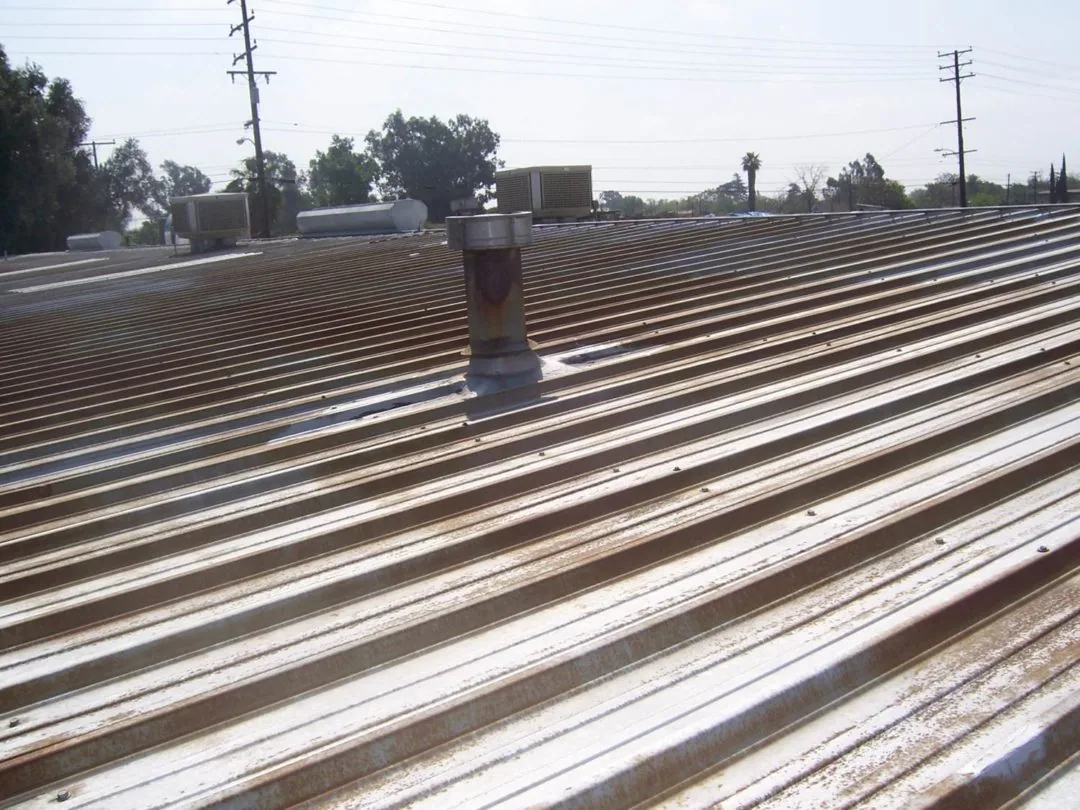
Heat and wind do the work. Temple summers reach about 95F in August and top 90F on roughly 80 days a year, which stresses membranes, flashings and sealants through a wide daily temperature swing. Materials expand in the afternoon and contract after dark, and a marginal seam or a dried-out sealant bead cracks open over time. The leak that follows may only show during the next hard rain.
Wind adds sudden damage. The National Weather Service found that the May 22, 2024 tornado damaged restaurants, shops, banks and strip malls in Temple and estimated straight-line winds of 80 to 90 mph through the city. A building that came through with a lifted edge or a loose coping can start leaking weeks later, and the connection to the storm is easy to miss.
What is the difference between a stop and a fix?
A stop closes the opening. A fix removes the reason it opened. If a pipe boot has split, replacing the boot stops the leak; checking the others on the roof and the sealant around them is the fix. If a seam has opened, welding it stops the water, and understanding why it opened in that spot tells you whether the adjacent seams are next.
We write both on the repair order. The owner gets the immediate repair, the cause as we understand it and a recommendation about the rest of the roof. Sometimes the recommendation is nothing more. Sometimes it is a planned repair of three more spots before the next rainy season, and in a few cases it is the conversation about replacement.
What should be documented?
Photographs of the interior damage, the roof defect and the repair; the date and weather at discovery; the location on a roof plan; and the repair materials used. Those pieces matter for three reasons. A manufacturer may require them for a warranty claim. An insurer may need them if the leak came from a storm. And the next person to work on the roof, whoever that is, benefits from knowing what has been done.
If the leak affected tenant space, we also note the interior areas involved so property management can coordinate drying and repair. Leaks that follow a wind event can feed a wind damage claim, and the sooner the documentation is gathered, the cleaner that claim is. Keep any damaged ceiling tile or insulation that was removed until the adjuster or owner has seen it, since it shows how long and how far the water traveled.
Which buildings are hardest to trace?
Large, complex roofs with many penetrations and more than one level. A big distribution building has a long uninterrupted field where water can travel a long way across the deck before it reaches a drain or a ceiling, and the same is true of any warehouse in the Rail Park at Central Pointe or the Temple Industrial Park. Healthcare buildings, such as those clustered in the Temple Medical and Education District, tend to carry heavy rooftop equipment, and every curb and line set is a place water can enter.
In both cases the tracing process is the same, but it takes more time and more methodical testing. We divide the roof into sections, test one at a time, and keep a written log of what was wet and what was dry. That log shortens the next leak call on the same building, because the first answer is already on file.
Commercial Roofing Questions
Can a leak be repaired in the rain?
A temporary seal can be applied in wet conditions when the situation calls for it, but permanent repairs generally need a dry surface to bond properly. We stabilize the opening first and return for the permanent repair when the weather and the surface allow.
Why does the leak stop and come back?
Because the underlying opening is still there. Water only enters when the rain direction, intensity or ponding depth reaches the weakness. A roof can seem dry for weeks and then leak in the next storm. Tracing the opening, not just treating the stain, prevents the return.
How much of the roof has to be opened up to find the source?
Often none. Visual inspection, moisture scanning and water testing find most openings without cutting. When we do cut, it is a small core sample or a targeted opening at a suspected point, and we seal it as part of the repair.
Does a leak always mean the roof needs replacement?
No. A single failed detail on an otherwise sound roof is a repair. A leak is a sign of replacement when the insulation is saturated across a wide area or the same membrane keeps failing in new places.
Which steps protect the interior while the roof waits for a crew?
Protect the interior: move valuables, cover equipment, note where the water is entering and photograph it. If electrical equipment is near the leak, have a qualified person isolate it. Do not go onto a wet roof.