Commercial Roof Repair
Repairs are cheap right up until the second one. A patch that fails in a year was usually placed over the symptom, not the cause, and a building owner in Temple, TX ends up paying for the roof's real problem on the installment plan. Planned repair is different. It starts with a walk across the roof, a written list of what is wrong, and a decision on which items are patch-level and which point toward something larger.
We separate the work into three buckets. The first is repair that restores the roof to full service. The second is repair that buys time while a larger decision is made. The third is repair that should not be attempted because the surrounding material cannot hold it. Telling those apart is most of the job, and it is the part that protects the owner's money.
Where does the walk begin, and what do we log?
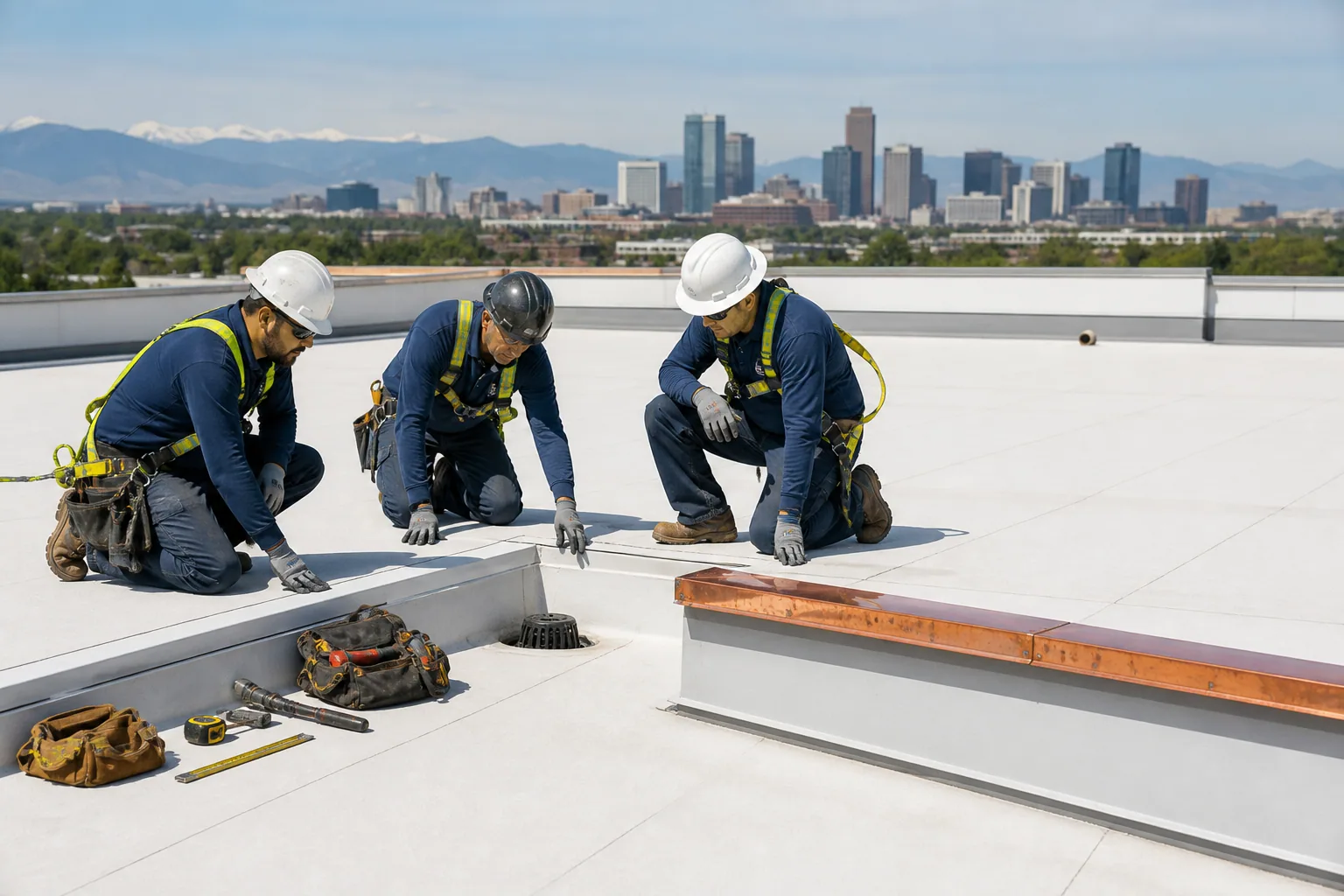
We begin at the drains and the low points, because water tells the story fastest there. Then the field, the seams, the walls and every penetration. Each defect is photographed, located on a roof plan and given a number so the repair list matches the roof one-to-one. That list becomes the work order, the progress record and the file the owner keeps.
We log the type of defect, not just its location: open seams, split flashings, cracked sealant, blistered membrane, fastener backout, punctures from foot traffic. The type of defect points to the cause, and the cause decides the repair. A split at a wall flashing is a movement problem, and a patch alone will split again unless the movement is addressed.
Which failures cause most commercial leaks?
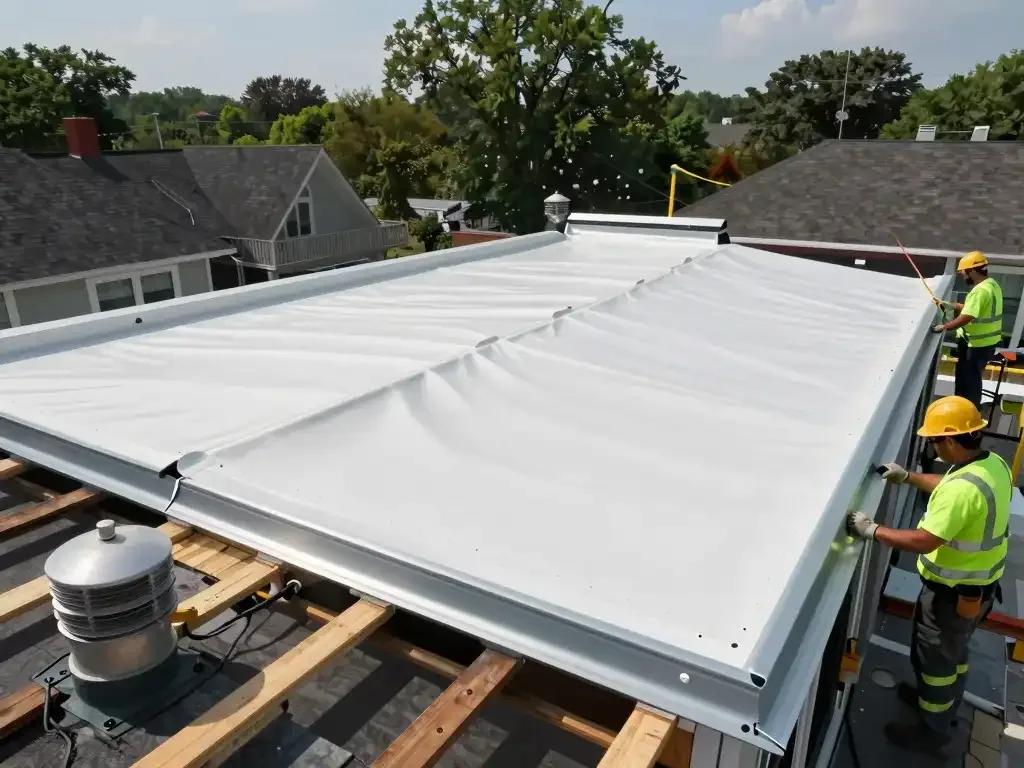
Flashings and penetrations account for a large share of commercial roof leaks, because that is where different materials meet and move at different rates. Rooftop equipment curbs, pipe boots, skylight frames and parapet walls each need their own detail, and a worn sealant bead on any of them lets water in during a hard rain. The flashing failure repair rebuilds those transitions with new metal and membrane rather than another bead of caulk.
Seams are the second source. Heat-welded and adhered laps loosen where the membrane has been under tension, and temperature swings pull them apart a little more each season. Roughly 80 days a year past 90F, with August afternoons near 95F, mean the membrane moves through a wide thermal range, and any lap that was marginal at installation will show it. A seam failure repair restores the bond with the right welding or adhesive method for the membrane type.
What does wind damage look like after a storm?
Wind rarely strips a roof in one sweep. It lifts a corner, peels a flashing, or breaks a seam and leaves the damage to grow with the next rain. After the May 22, 2024 tornado, the National Weather Service found damage to restaurants, shops, banks and strip malls across Temple, with straight-line winds estimated at 80 to 90 mph through the city. Owners who see debris on the roof, loose coping or lifted edge metal should treat it as a repair list, not as cosmetic.
Our first move after a wind event is to make the roof safe: secure loose metal, close open seams and protect the interior. Then we document the damage with photographs and measurements so the permanent repair, and any claim, have a clean record behind them. Dates, wind direction if known and the sequence of events all go into the file, because an adjuster and a manufacturer both ask for them.
When is a repair really a holding action?
If the membrane is brittle, the insulation is wet or the same area has been patched before, repair is a bridge. It keeps the building dry while the owner plans for replacement or a restoration. A holding repair is priced and written as one, with the expected service period and the conditions that would end it.
The distinction matters for the capital plan. An asset manager who knows a roof has one more season of repair left can budget the next step. One who believes the roof has been fixed finds out otherwise in the first heavy rain. We would rather the owner plan the next step than react to the next storm, and the written repair list gives the plan its starting point.
What drives the price of a repair?
Access, extent and substrate set the price more than the patch itself. A defect on a low roof reached by a ladder is a short job; the same defect on a tall building may need a lift or fall protection that outweighs the material cost. Extent matters because a dozen small items on one roof share a mobilization, while the same dozen spread across several buildings do not. Substrate matters most: a repair on sound, dry membrane holds, and a repair on saturated insulation does not.
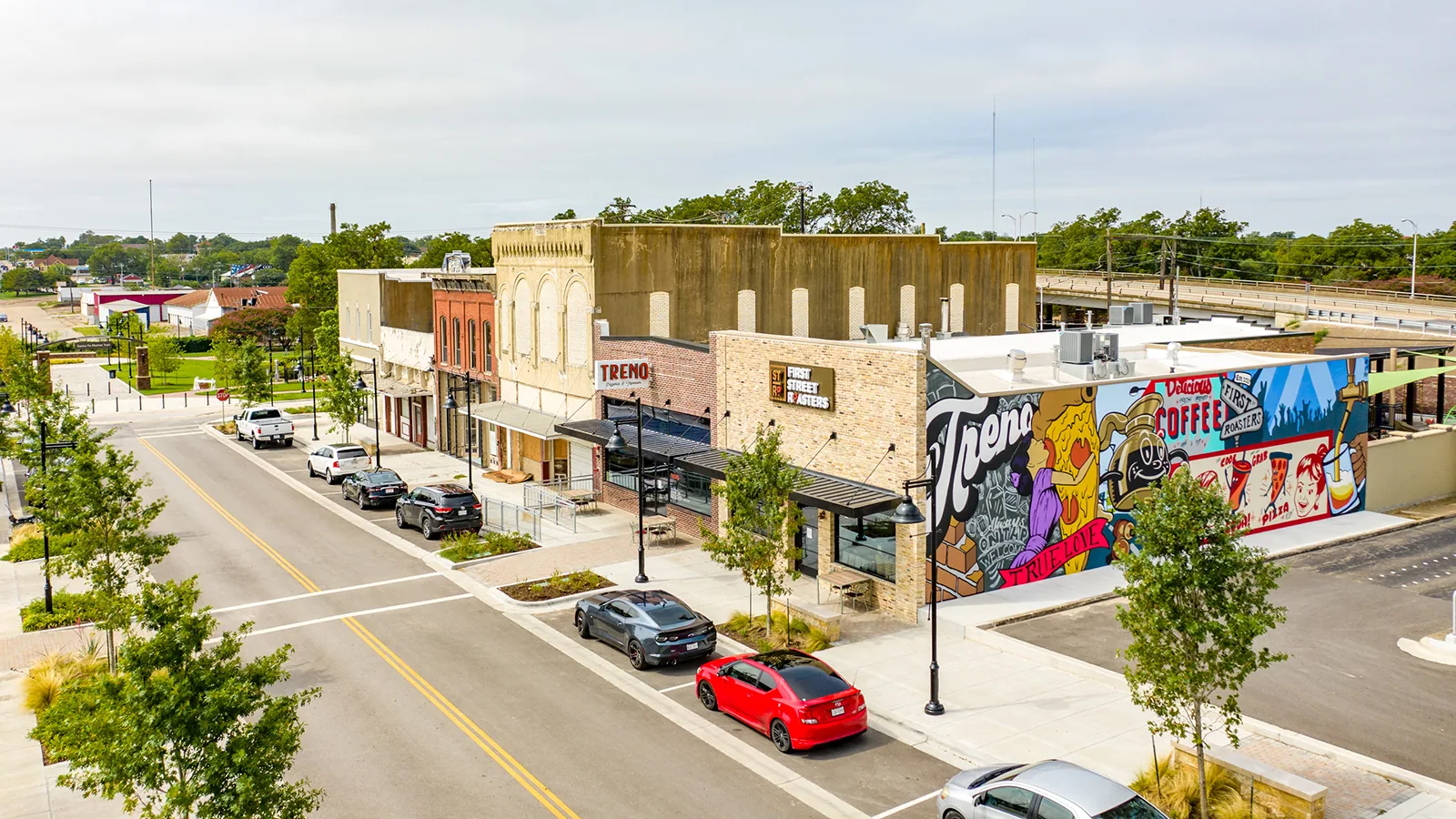
For owners of older warehouse roofs and downtown buildings in Downtown Temple, a building with its own history brings its own transitions to inspect, and the repair list reflects what is actually found. We price each item separately on the repair list so the owner can approve a subset, defer a few and see where the money goes. Active leaks are handled under leak repair, with the same itemized approach.
How do we work around tenants and operations?
Repairs are quick, but they still touch the building. We coordinate access through property management, avoid loading and delivery windows, and keep material and equipment staged away from entrances. A distribution building near the Rail Park at Central Pointe may need work scheduled around truck traffic, while a medical building in the Temple Medical and Education District may need quiet hours near procedure spaces.
For multi-tenant buildings we notify tenants of the work window and keep the repair area tidy and secure when the crew leaves. If rain comes before the work is finished, the open area is closed with a temporary seal so no section stays exposed overnight.
Commercial Roofing Questions
How do I know whether to repair or replace?
The condition of the insulation and the age of the membrane decide it. If moisture is limited to the immediate leak area and the surrounding membrane is flexible, repair is sound. If the insulation is wet over a wide area or the membrane is brittle, repairs will keep recurring and replacement is the better spend.
Why did a patch fail within a year?
Usually because it covered the symptom rather than the cause. A patch over a seam that is still moving will open again, and a patch on a wet substrate will not bond. We diagnose why the original defect formed before choosing the repair method.
Can repairs be done in cold or wet weather?
Some can, many cannot. Adhesives and sealants have temperature and dryness requirements, and heat-welded seams need a dry surface. In wet weather we make temporary closures and schedule the permanent repair for a window when the materials can cure properly.
What documentation comes with a repair?
A before-and-after photo set tied to the roof plan, a written description of each repair and the materials used. That record helps with warranty questions, insurance claims and any later sale of the building.
Does repair work affect an existing manufacturer warranty?
It can, depending on who does the work and what materials are used. We check the warranty terms before starting so repair methods match what the manufacturer allows, and we record the work in a form the manufacturer will accept.