Rooftop Equipment Curbs and Supports
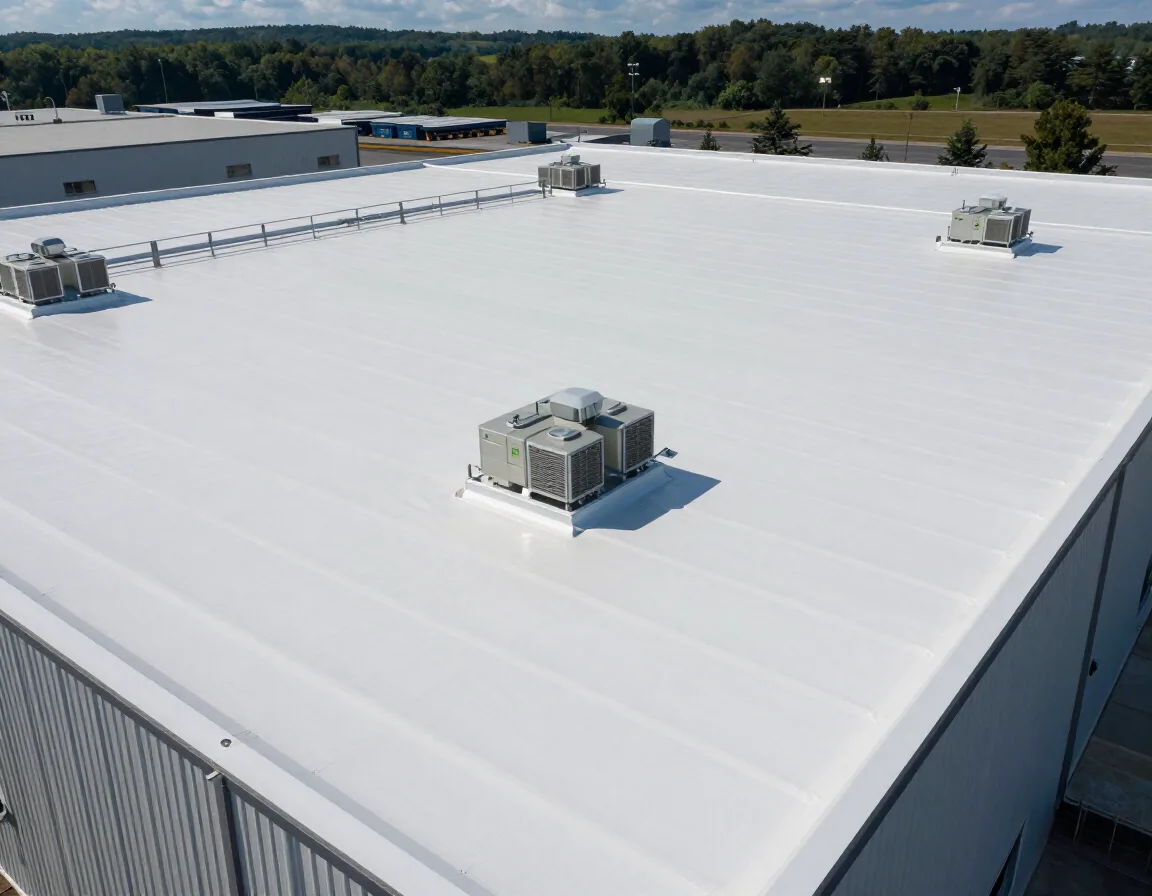
Which unit on the roof is going to leak next, and who owns the curb under it? Rooftop equipment sits on small structures that most owners never think about until water shows up in a ceiling. A curb is a box frame that raises the unit above the roof surface. A rail or sleeper is a lower support for ducts and pipes. Each one is wrapped in flashing, and each flashing is a seam in the roof. In Temple, TX, where large buildings carry large mechanical loads, those details decide how many leak calls an asset manager takes.
What is on the roof, and who put it there?
The inventory comes first. We number every unit and support, then record its type, size, curb height, flashing condition, and whether it is active. Air handlers, package units, exhaust fans, make-up air units, condensers, and ductwork all count. So do gas lines, conduit runs, and refrigerant lines on sleepers.
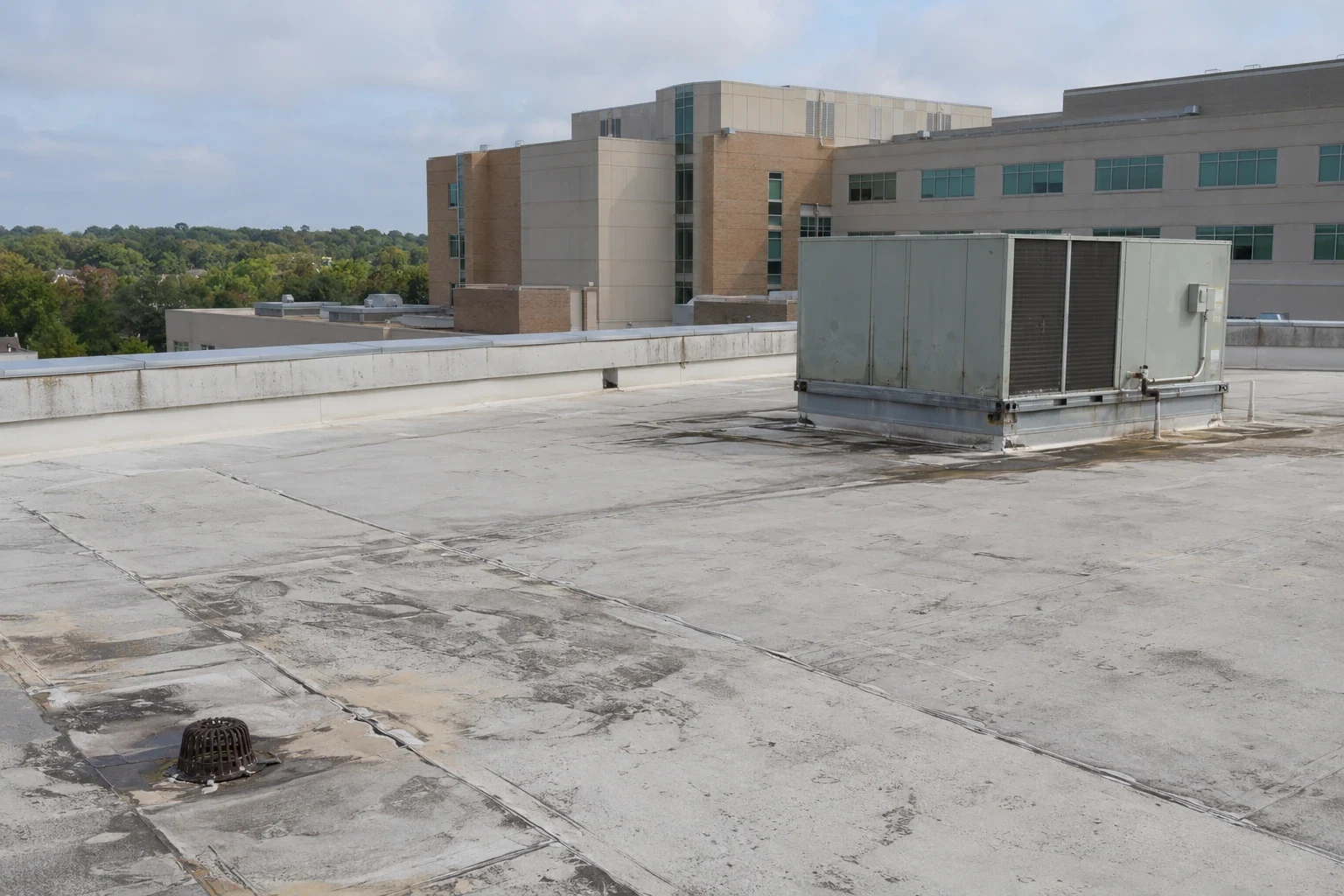
Roofs collect equipment over decades. A building that started with two units may now carry eight, installed by different trades at different times, with different curb details. Some were set on the membrane with a pad of sealant. Some were added without a curb at all. Many are abandoned in place. The inventory shows where the roof has been cut and patched, and it is the base for every repair decision that follows.
On a building in Temple, the roof drawings and the mechanical drawings can disagree on what is up there. The roof walk reconciles them. Where a unit appears on a drawing but not on the roof, or the reverse, the discrepancy is listed so the owner can find out who removed or added it and whether the opening was ever properly closed.
How do curbs and supports fail?
Four ways dominate. Flashing at curb corners cracks, because membrane folds there and takes the most stress. Counterflashing screws back out or rust, letting rain run behind the cap. Sealant at the unit-to-curb joint hardens and splits. And the curb itself shifts, because the roof moved or the unit's weight crushed insulation beneath it.
Vibration makes each of these worse. A unit that rattles a little every day works fasteners loose and wears a path through the membrane at its base. Condensate lines that discharge in the same spot stain and soften the sheet. We photograph each condition and record the date, so a slow failure is visible over several visits instead of arriving as a surprise. A flashing failure repair at a curb corner is cheap when the crack is hairline, and the photographs show exactly when it reaches that point.
Does Texas heat change the work?
It does, because every material moves. August in Temple brings highs near 95F, and the city logs about 80 days a year above 90F. Metal curbs, rubber flashings, and plastic collars expand at different rates, and the joints between them open and close daily. Sealants chosen for a mild climate harden quickly here.
We specify flexible sealants rated for movement and UV, metal counterflashing with slotted fasteners where appropriate, and pre-molded corners that avoid field-cut folds. A flashing built to handle expansion lasts through more seasons than one that is rigid. The choice goes into the file with the product family, so the next crew uses a compatible repair.
When is a curb a structural question?
When the unit is heavy, the curb is old, or the deck below is soft. A rooftop unit may weigh thousands of pounds, and its curb transfers that load to the structure. A rusted or sagging deck under a curb changes the situation from a flashing repair to a structural one.
We look for deflection, rust, and crushed insulation, and where they appear we flag the area for a structural review and, if needed, for an engineer. Raising or rebuilding a curb is straightforward once the support is sound. Rails for pipes and ducts need the same attention, with sleepers or pads that spread load and protect the membrane. Where the membrane under a rail is a TPO roofing sheet, walkway-grade pads under each sleeper stop the scuffing that otherwise wears through the top ply. These items connect to skylight and penetration flashing, because the same logic applies to anything that sticks through the roof.
How do we work with the mechanical contractor?
By agreeing on sequence. A unit that has to be replaced next year should not get a new curb flashing this year. A unit that has to be lifted for roof work needs a mechanical contractor to disconnect and reconnect it, and a crane booked for the day. We coordinate dates, shutdown windows, and responsibility for gas, electric, and refrigerant lines.
On healthcare campuses and busy industrial buildings, units serve critical spaces and cannot sit dark for long. Planning the shutdown around the building's operations, not around the roofing schedule, is the right order. A hospital roofing project is the clearest case, because the units feed surgical and patient spaces. The plan is written so the facility manager and both trades read the same document. Owners with equipment across Temple Medical and Education District properties use that same sequence sheet building by building.
What happens to equipment in a wind event?
Units shift, hoods tear off, and screens bend. The May 22, 2024 storms in the Temple area included an EF-2 tornado and straight-line winds estimated at 80 to 90 mph, and the exposed gear on a roof is often the first thing to move. A unit that has slid on its curb leaves a gap, and a torn refrigerant line can leak oil onto the membrane.
After an event, we check anchorage, curb gaps, hood and louver attachment, and disconnects. Anything that moved is photographed and marked. A storm damage roof repair response treats equipment as a priority, since a roof leak at an air handler can affect the building's cooling and electrical systems. Straps, extra restraints, and added screws are options for exposed units, and the choice is made with the mechanical contractor.
Commercial Roofing Questions
Who is responsible for a leaking curb, the roofer or the mechanical contractor?
The answer depends on who installed or last modified it, and on the contract. For the owner, the practical step is to document the leak and call both. We repair the roofing side and coordinate with the mechanical trade so a repair does not get undone by a later unit swap.
Can a rooftop unit be moved without cutting the roof?
Sometimes, if the new location has an existing curb or the unit fits an existing opening. Most moves need a new curb, a new opening, and a patch where the old one was. The roof sketch shows the options and the work needed for each, and the owner picks.
What should the owner expect when a unit is replaced?
The new unit should match the existing curb, or the curb should be rebuilt to match the new unit. Flashing is reset, the gap is sealed, and the work is photographed. If a replacement is coming, we wait to repair the old flashing and tell the owner so.
How do pipe supports damage a roof?
Fixed supports can punch through the membrane when the pipe moves, and sleepers without protection pads wear it away. Using supports with wide bases and a protective layer spreads load and prevents wear. We replace worn supports and add pads wherever the membrane shows scuffing.
Why does condensate matter for a roof?
Because a steady discharge in one spot softens the surface and grows algae, and in winter it freezes. Directing the discharge to a splash pad or a drain line protects the membrane. It is a small fix that prevents a long list of problems later.