Flashing Failure Repair
Which flashing has let go, and is it the one leaking or only the one that was easiest to see? On a commercial roof in Temple, TX the sheet across the field is rarely the first thing to fail. The first failures sit at the joints: where the membrane turns up a wall, wraps a curb, closes around a pipe or meets an edge. Flashing takes movement from heat, wind and settlement that the flat sheet does not, and the sealant that holds it in place ages in the same sun that heats the roof. A failure there lets water behind the sheet and into the insulation. A flashing leak depends on the roof's details, and the walk starts at the wall nearest the stain.
We keep the steps separate. The make-safe step seals or covers the open detail. The intake record photographs it and the surrounding sheet. The permanent scope follows once a moisture survey shows how far water has traveled, and the decision about spending belongs to the asset manager.
What Does the First Hour Look Like for a Flashing Leak?
A tenant reports a drip near an exterior wall, a rooftop unit or a stairwell. We ask which wall, which unit and when the water first appeared, then send a crew to the nearest likely detail. On arrival, the crew checks the termination bar or sealant line at the wall, the corners at the curb, the pipe boots and the edge. A bead of sealant, a patch of membrane or a temporary cover may stop the water. The crew photographs the detail before and after and probes the sheet around it for softness.
The owner's note covers the detail, the step taken and what is still at risk. A second visit is scheduled for a recheck, usually after the next rain.
While the crew is at the detail, it records the method used to build it. A counterflashing set into a masonry reglet looks different from one surface-mounted with sealant, and a reflashed curb with a prefabricated corner looks different from one cut and welded on site. Those differences affect how long the repair will last and what the next repair should be. The record notes the method, the materials and the condition, so a future crew does not have to guess.
Which Flashings Fail Most Often?
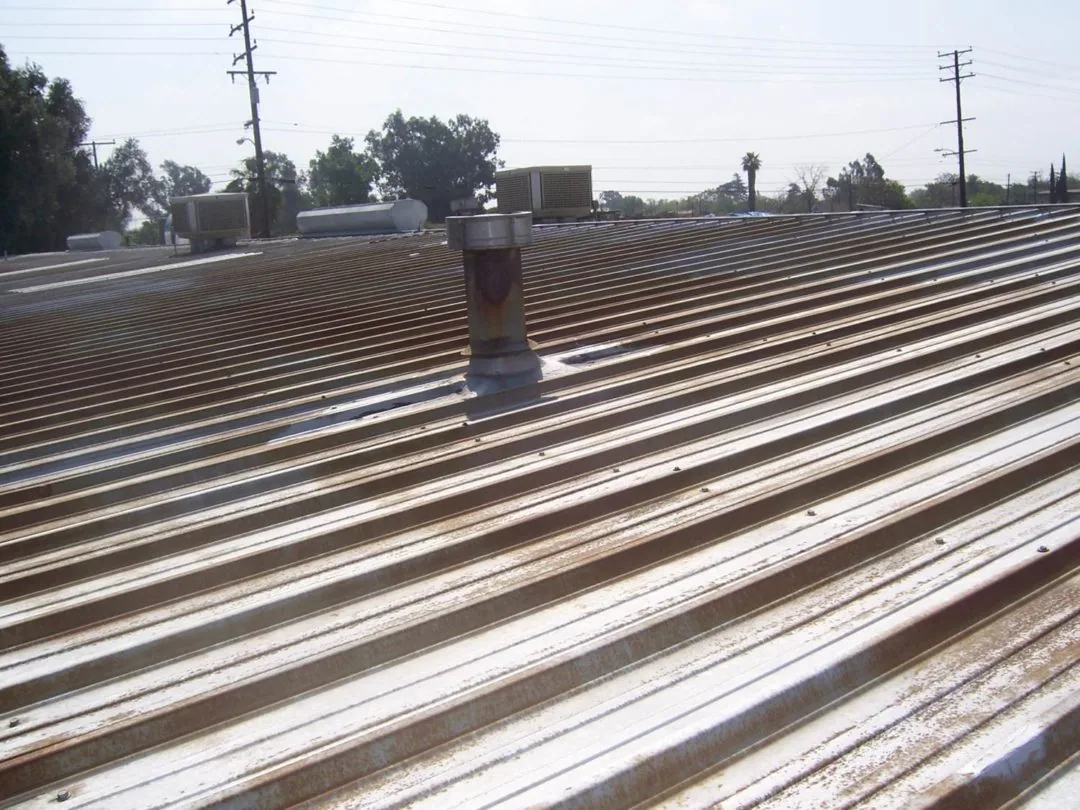
Wall flashings fail where the termination loses its seal or where the wall moves against the roof. Curb flashings fail where a rooftop unit vibrates or where a curb has been reset and the old flashing no longer fits. Pipe boots crack in the sun and split at the clamp. Skylight frames shrink away from the sheet. Edge metal opens at joints and corners. Each of those details gets a number on the sketch and a photograph, so a future visit can compare. Photographs are taken at the same angles each time, and the crew lead initials the sketch to confirm which details were inspected. The skylight and penetration flashing approach follows the same order.
We also look at details where one trade has worked after another. A cable run, a conduit support or a sign bracket added after the roof was finished may have been flashed poorly or not at all. Those additions are common on roofs that serve tenants who change over time, because each tenant brings equipment and each installer makes a hole. We list every penetration we can see, note which ones belong to the building and which to tenants and recommend that the owner require flashing details for each new installation.
How Does Temple Weather Age Flashing?
Summer heat, with August near 95 F, bakes sealants and softens adhesives, and it lasts: some eighty days a year pass 90 F. Flashing membranes expand in the afternoon and contract at night, and the daily cycle works at every fastener and termination. About 26 freezing nights a year add a smaller cycle in winter. Rain, about 39 inches a year, peaks in May at 5.4 inches, so a spring flashing failure meets the wettest month. The May 22, 2024 tornado showed that wind can strip flashing and edge metal, so a post-storm walk is part of the plan.
Parapet walls bring their own concern. Water that runs down a masonry wall can bypass a counterflashing and enter behind the termination, and a small gap in mortar or sealant at the top of the wall can feed that path. We look at the wall above the flashing, at the coping and at the joints, and we include repairs there in the scope when they are the real cause.
How Far Has the Water Traveled?
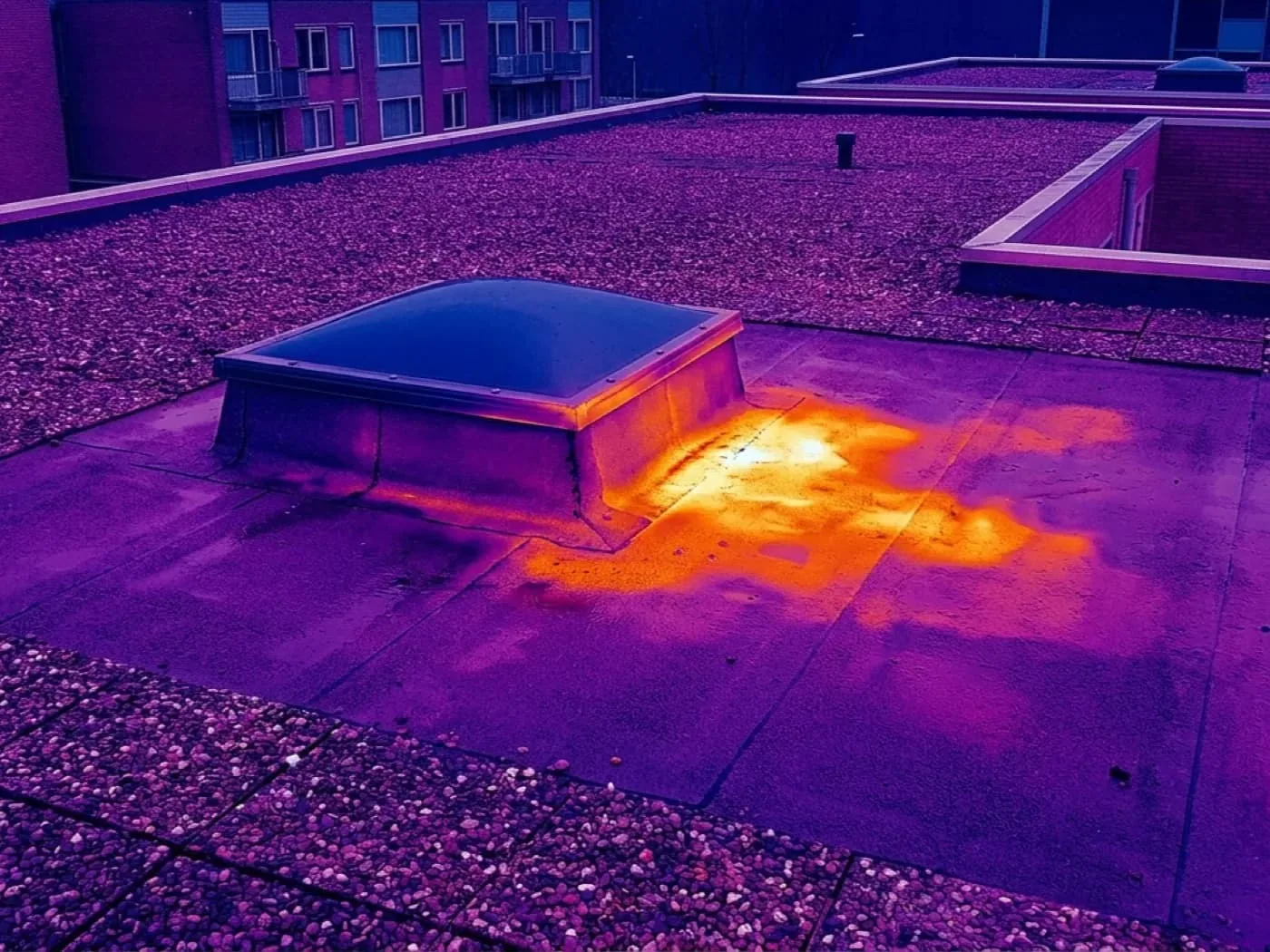
Water that gets behind a flashing does not stay at the detail. It runs along the deck, into the insulation and out toward the nearest low point or drain. A stain on a ceiling can be many feet from the opening. An infrared moisture survey outlines the wet area, and a probe checks the outline. The permanent scope then replaces the wet insulation, the failed flashing and the sheet around it, and leaves dry areas alone. Readings are numbered, mapped and repeated after the repair to confirm that the wet area has been removed.
What Does a Holding Repair Buy on a Flashing?
A holding repair re-seals the termination, patches a split boot or covers an open corner. It buys time to plan a permanent fix. It does not replace flashing that has reached the end of its life. The record says so, with a date for recheck and a note on what will happen if the detail opens again. Where a detail has failed twice, we recommend rebuilding it rather than patching it a third time.
The permanent scope for a flashing usually covers a full detail, not a spot. A curb is reflashed on all four sides, a wall flashing is replaced along its length and a boot is replaced with a new one. Cost depends on the number of details and their access. Owners can often bundle several details into one visit to save mobilization, and a roof condition report that lists every detail by number makes the bundling easy to price.
What Belongs in the Permanent Scope?
The scope lists each detail by number, with a drawing, a photograph and a quantity. It names the flashing material, the fastening and the sealant, and it notes the interface with any trade that touches the detail. Downtown Temple's older commercial buildings can carry parapets and masonry walls, and wall flashings there often need the most work; a building along the Loop 363 corridor is scoped the same way. A wind damage repair and a membrane puncture repair often involve the same details.
Commercial Roofing Questions
Why do flashings fail before the field of the roof?
They take more movement and more exposure. Sealant ages in the sun, and joints open under thermal and wind movement.
Can flashing be repaired without replacing the roof?
Often yes. If the field is sound and the insulation is dry, a flashing can be replaced or rebuilt on its own.
How do you tell a flashing leak from a seam leak?
By tracing the water. Staining, moisture readings and a probe along the nearest seam and the nearest detail show which is the source.
How often should flashings be checked?
Twice a year at minimum, with an extra walk after severe wind. Sealant lines are inspected for cracks and gaps.
What is the next decision for the asset manager?
Whether to patch, rebuild or plan a replacement. The record shows which details are failing and what each option costs.