Membrane Puncture Repair
Who walked there last, and what did they drop? A puncture in a commercial membrane in Temple, TX is rarely a mystery once the roof is read. It sits on a path to a rooftop unit, beside a hatch, under a spot where tools were laid down or at a corner where a ladder was set. A hole the size of a coin lets in water with each rain, and the water spreads under the sheet and into the insulation, where it stays after the surface dries. The question for the asset manager is how many punctures there are, which trade made them and whether the water has traveled. Every kind of building in Temple, from healthcare campuses to distribution sites, draws service traffic onto its roof: HVAC technicians, window cleaners, sign installers, security vendors and utility crews.
The make-safe step and the permanent scope stay separate. The make-safe step patches the hole. The intake record maps every puncture and traffic mark. The permanent scope follows after a moisture survey and includes walk pads where traffic repeats.
What Does the First Hour Look Like After a Puncture Leak?
A tenant reports a drip after a technician visit, or a manager finds a tear after a service call. We ask which trade was on the roof, where they walked and when the leak started. A crew then locates the puncture by following the stain and checking the walk routes. A patch of compatible membrane, welded or adhered, covers the hole with an overlap in every direction. The crew photographs the puncture before and after, probes around it for soft insulation and marks the area on the sketch.
The note to the owner states the number of punctures, the patches installed, the moisture found and the trade or route that likely caused them.
If a tenant needs to claim against a vendor for damage to the roof, the record gives them the evidence: dated photographs of the puncture, the traffic route and the visit log. The photographs are taken with a scale reference and a number that matches the sketch, so a reviewer can find each mark. We do not assign blame, but the record shows where the damage is and what preceded it.
Where Do Punctures Cluster on a Commercial Roof?
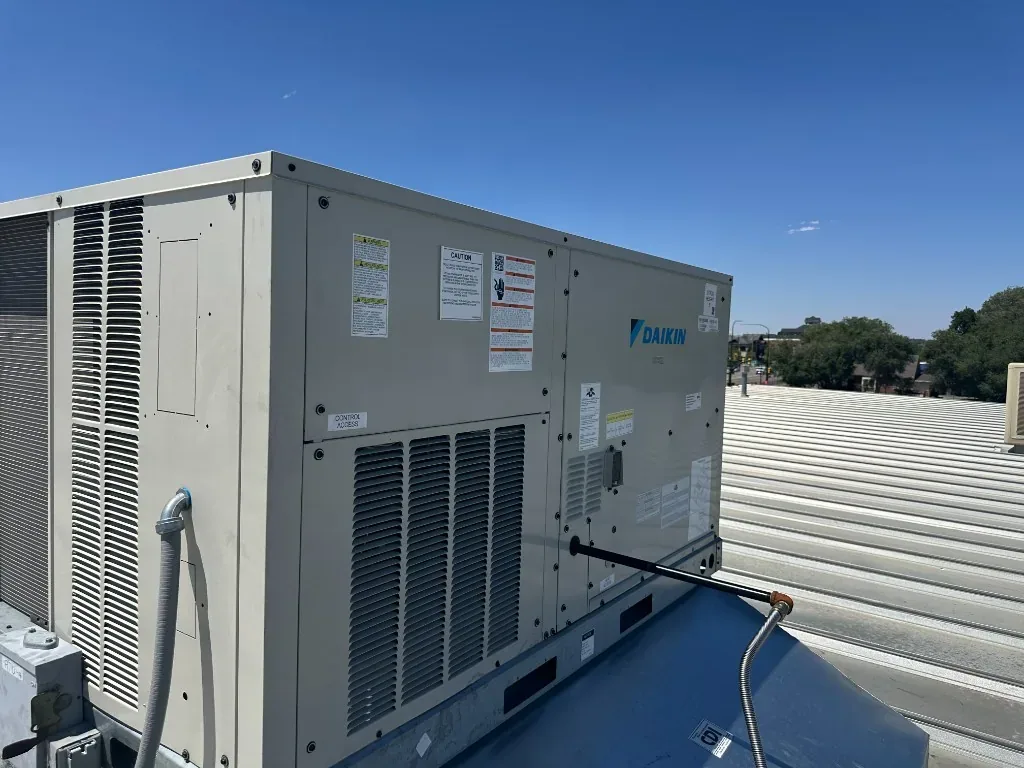
Around rooftop units, where technicians carry tools. Along routes from the hatch to the unit. At drains, where debris is cleared. Near antennas, signs and conduit supports. At edges, where ladders are placed. We walk those places first and photograph every mark. Foot traffic also leaves scuffs and thinning, which are not holes yet but will be. Those are logged and, where traffic repeats, protected with walk pads. The rooftop equipment curb and support details matter here, because a support that rubs the sheet will wear through it. Conduit and gas lines laid across a membrane without pads act like saws as the building moves. Rubber pads or raised supports lift the line off the sheet and cost little compared with the repair they prevent. The sketch lists each support and flags those that rest directly on the roof.
How Does Temple Weather Make Punctures Worse?
In August heat near 95 F a membrane softens, and a soft sheet cuts and scuffs more easily underfoot. Heavy rain, about 39 inches a year, finds each hole, and a May peak at 5.4 inches arrives while the roof is still being serviced for the summer. The May 22, 2024 tornado carried debris that can puncture a sheet in a storm, and a post-storm walk checks for strike marks, dents and torn areas. In downtown Temple or along Loop 363, tree limbs, signs and loose material from nearby construction can also reach a roof, and the walk looks for them.
Did the Water Travel?
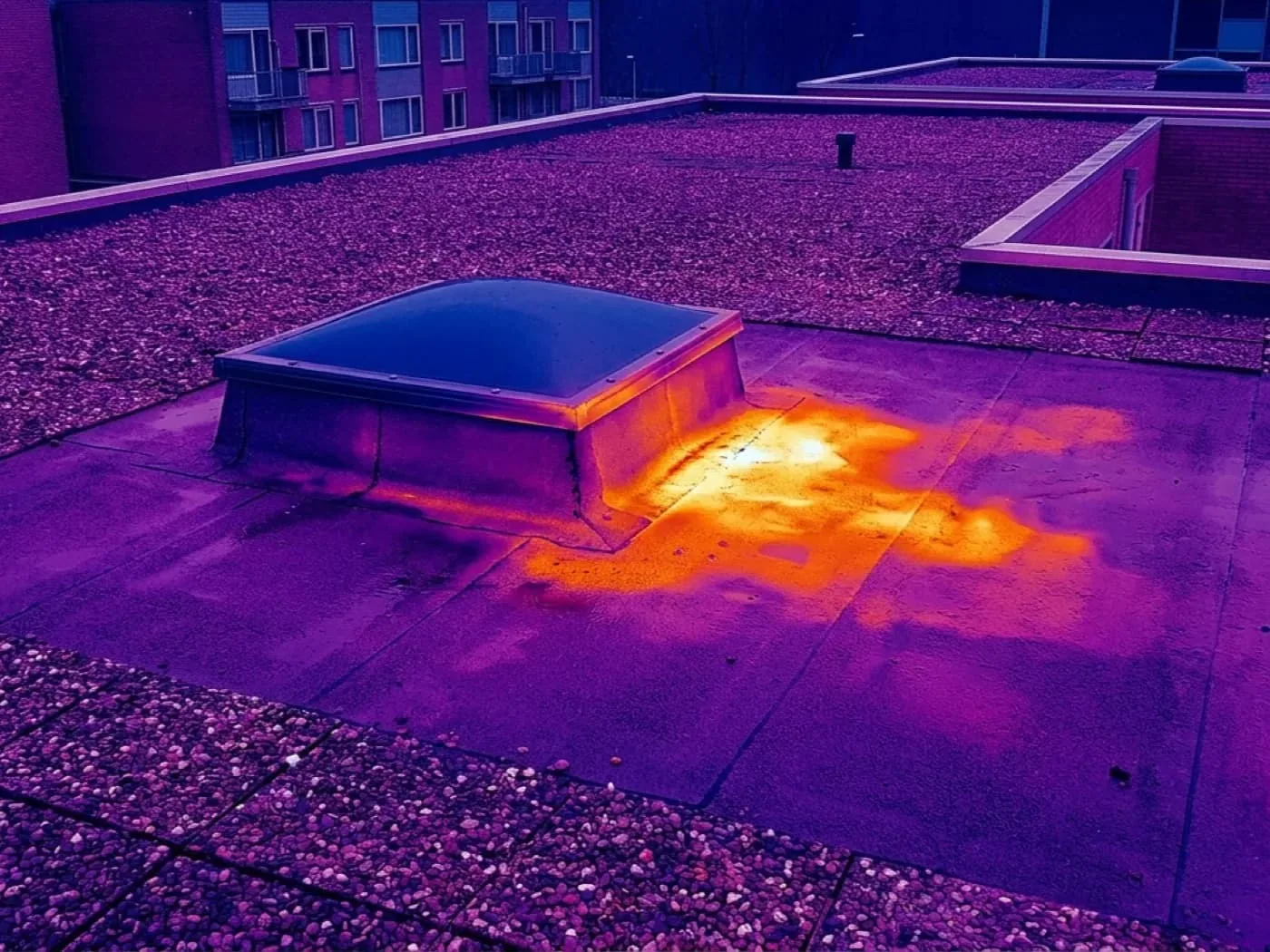
A puncture lets water in at one point, and the water spreads under the sheet. An infrared moisture survey maps the wet area, and the probe confirms it. If the insulation under the puncture is dry, a patch is enough. If it is wet, the permanent scope replaces the wet insulation and the sheet over it. A repeat survey after the repair shows the wet area is gone, which closes the finding in the record. Moisture that is left in place under a new patch can bubble the patch within a season, so the second reading is as important as the first.
What Does a Holding Repair Buy for a Puncture?
A patch can last a long time on a sound sheet. It is the permanent repair for a single dry puncture, not a holding step. The holding repair is for the cases where water has traveled or where punctures are numerous, and the patches are placed to keep the building dry until the section is replaced. Each patch is numbered, photographed and probed, and the list is kept with the roof file so the section replacement can remove them cleanly. The record says which case applies and lists the dates for recheck. Where traffic repeats, a seam failure repair may also be needed, because traffic stresses seams as well.
A patch must be compatible with the sheet. On thermoplastic sheets, a welded patch with rounded corners resists lifting. On rubber sheets, an adhered patch with primer and a cover strip is the standard. On modified bitumen, a patch of the same material with a granule surface restores protection. Rounded corners and a two-inch overlap in every direction are our standard, and the patch is probed at the edges before the crew leaves. The patch location, size and material go on the sketch with a number, so a future inspection can find it and check it, and a patch that lifts is recorded as a finding in its own right.
What Does the Permanent Scope Include?
The scope lists each puncture with a location and a size, the wet insulation to be replaced, the walk pads to be added and any change to the access route. It may add a rooftop walkway system between the hatch and the units, and a bent curb flashing beside a puncture is rebuilt in the same visit. A hospital or clinic in the Temple Medical and Education District carries a lot of rooftop equipment and frequent service visits, so walk pads often pay for themselves. Cost depends on the number of punctures and the length of the route. A short route to one unit may need a few pads, while a long route across a large roof needs a continuous walkway, and the scope prices each so the owner can choose the level of protection, and a preventive maintenance program can keep the walk pads in place and replace them as they wear.
Commercial Roofing Questions
Can a small puncture wait?
Not for long. A coin-sized hole can let in water with each rain, and the water can spread.
Who is responsible for punctures made by service trades?
The intake record notes the route and the visit that preceded the damage. Allocation is for the owner and the trade to settle.
Do walk pads help?
Yes. They spread load and mark the route, and they protect the sheet where traffic repeats.
How do you find punctures that do not leak yet?
By walking the routes and probing for soft areas, then using infrared if the roof is dry enough.
What is the next decision for the owner?
Whether to patch, add walk pads or replace a section. The record shows how many punctures there are and where.