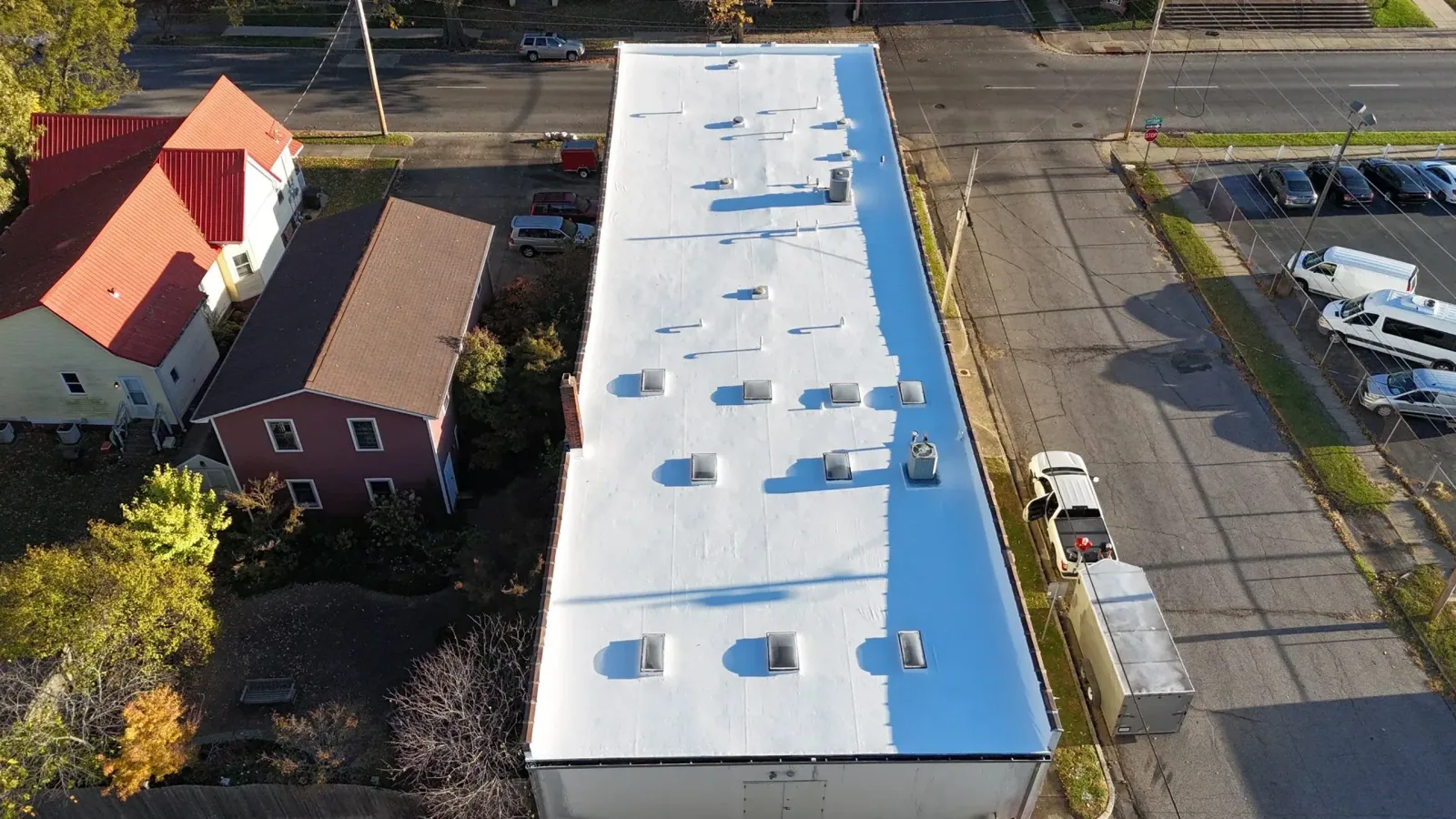
Seam Failure Roof Repair
Which seam has opened, and how far does the opening run? On a single-ply or modified bitumen roof in Temple, TX, a seam is the line where two sheets are joined by heat, adhesive or tape, and it is the first place a roof comes apart under stress. A hairline gap at a lap lets water into the insulation with every rain, and the gap grows with each heat cycle. The question for the asset manager is whether the seam failed from age, from ponding, from movement or from poor workmanship, because the cause decides whether a repair will hold.
We keep the steps separate. The make-safe step covers or seals the open stretch. The intake record maps the seam and records the cause. After a moisture survey comes the permanent scope, priced by repair line, with the decision left to the owner. A membrane puncture near an open seam is repaired first, since water entering at one place travels to the other.
What Happens in the First Hour When a Seam Opens?
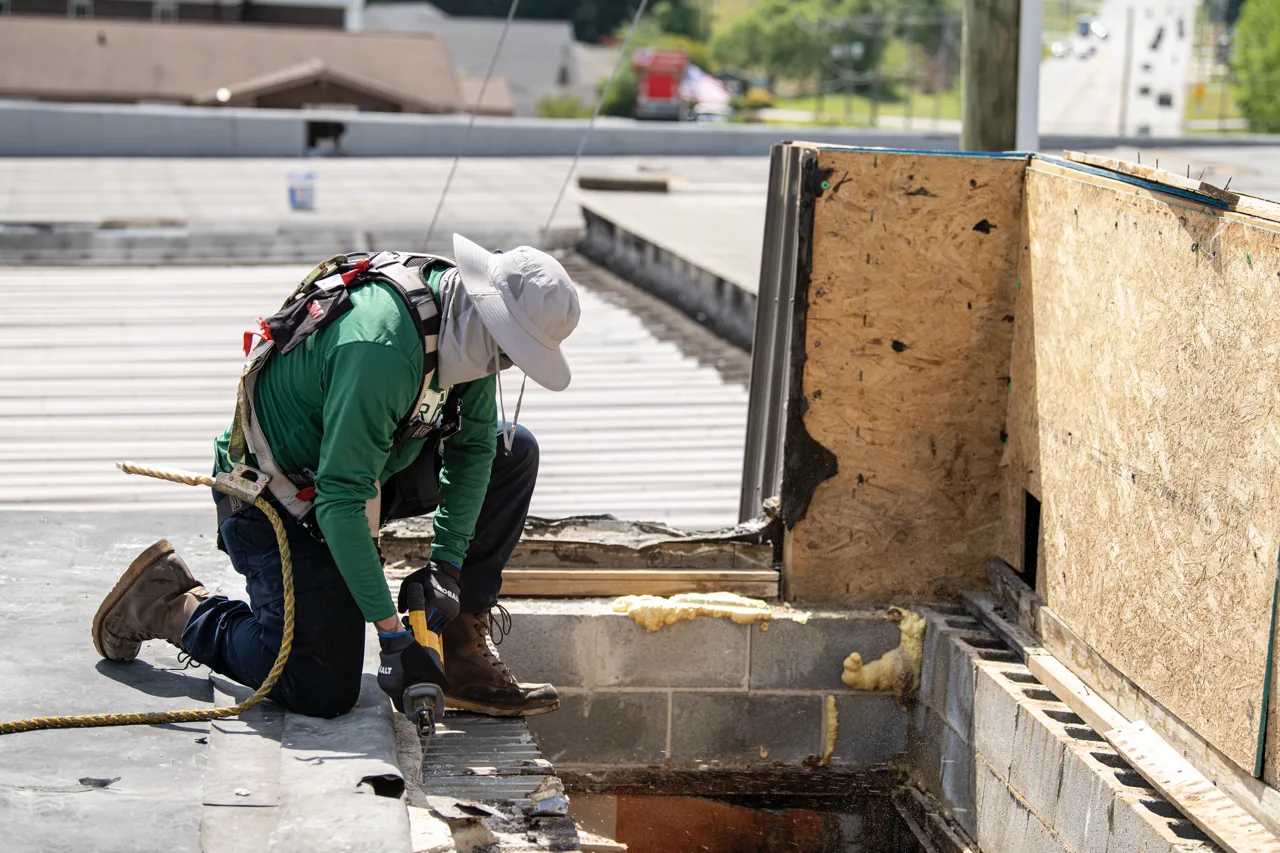
A tenant reports a drip, or a roof walk finds a gap. Our questions: where does the water show, was there rain or heat in the last day, and how long has the roof leaked? A crew then walks to the likely seam, finds the open stretch with a blunt probe and covers it with a temporary patch or sealant. Open stretches are marked with paint on the roof and with numbers on the sketch, and each one is photographed. The note to the owner states the length of the open stretch, the step taken and the remaining risk.
If the seam opened because of a puncture or a bent flashing nearby, the crew checks those too. A seam is often the symptom rather than the cause, and a bent flashing at a wall or curb can pull a seam open, and the permanent repair belongs at the cause. On a roof near busy roads such as Interstate 35 or Loop 363, dust and grit can leave a seam with a layer of dirt that prevented a good weld in the first place, so cleaning is part of every seam repair.
How Do You Find Every Open Seam?
A probe is drawn along each seam on a heat-welded sheet. Where it slides in, the weld has not fused. Where it stops, the seam is sound. We probe the full length of seams in the area of the leak and a sample elsewhere. On a modified bitumen roof, we look for lifted laps, fishmouths and exposed reinforcement, and on a taped system, we check the tape edges. The results go on the sketch with lengths and locations, so the owner can see whether the failure is local or widespread.
Widespread failure points to age, movement or an installation problem. Local failure points to a specific event, such as ponding, a dropped tool or a foot-traffic route.
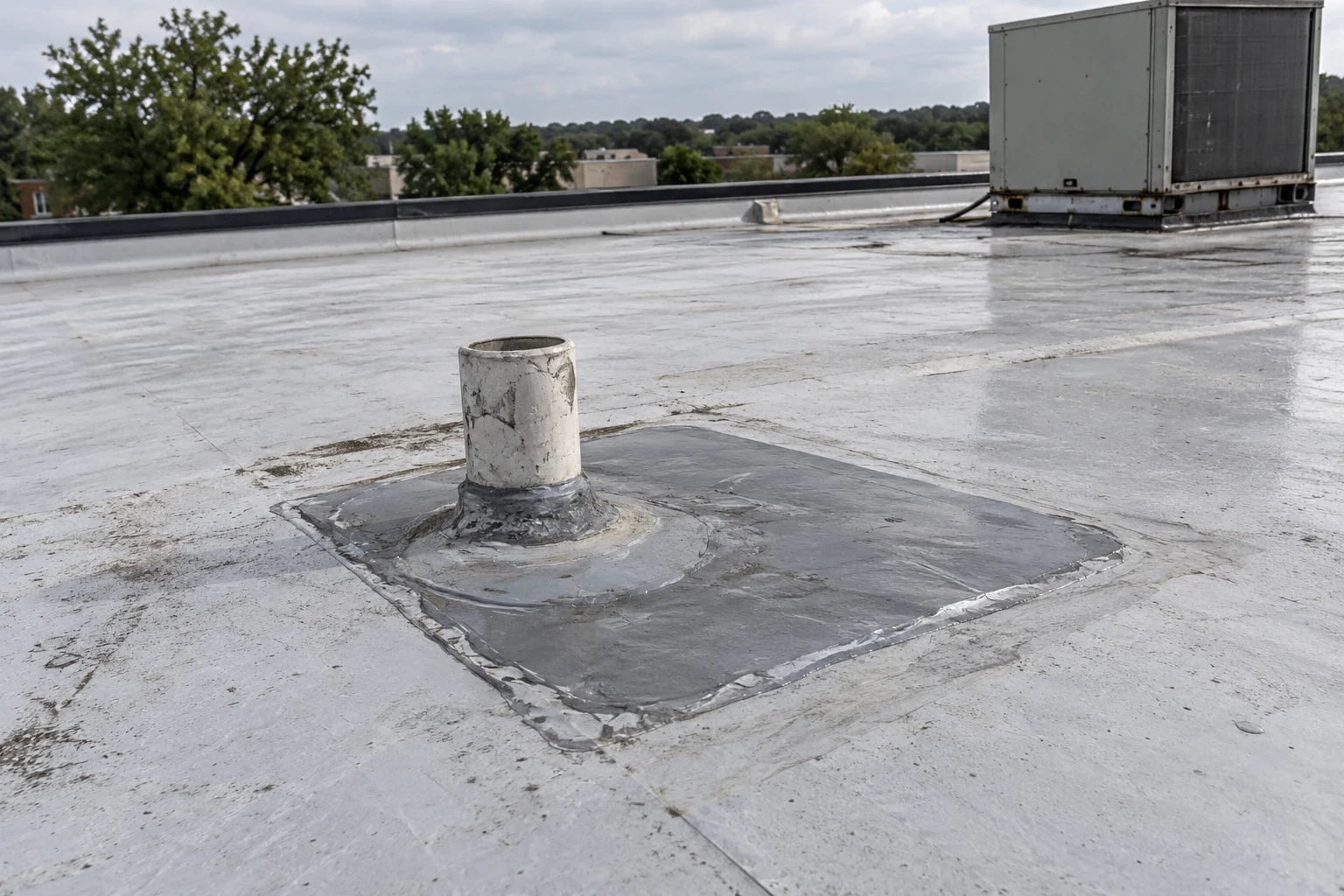
Seams on modified bitumen roofs behave differently from welded seams. A lap may open at the leading edge, a condition called a fishmouth, or the cap sheet may lift at the end of a roll. These are seen by eye and by lifting the edge gently with a blade, and they are repaired with compatible adhesive or torch work where the system allows it. We note the system on the sketch so the right method is used, since a thermoplastic repair material will not bond to an asphalt-based sheet.
Why Did the Seam Fail?
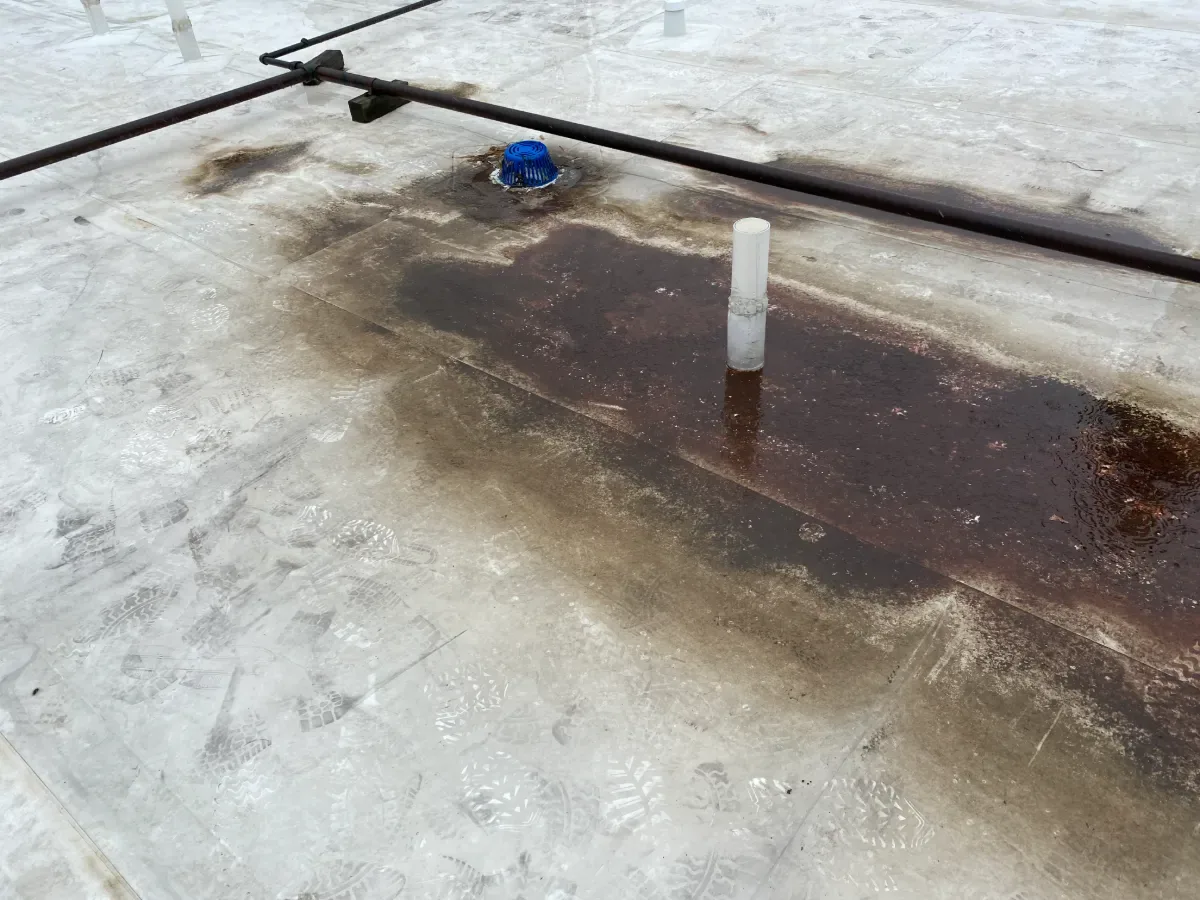
Age is the most common cause. Years of heat cycling weaken adhesives and thermoplastic welds. Ponding is another, because water sitting over a seam keeps it wet and stresses it. Foot traffic around rooftop units wears seams that cross walk routes. Poor workmanship, such as a weld made over dirt or a seam laid with too little overlap, may show up in the first years. Movement at a wall or a joint tears seams that cross it. We note the likely cause for each open stretch, and the scope addresses the cause, not only the gap. A seam repaired without correcting a puncture, a ponded corner or a stressed flashing nearby will open again within a season, and each failed repair adds cost, delay and another round of tenant calls, and the record shows that sequence so the owner can see why the repair order matters. For ponded areas, the ponding water repair comes first.
What Does Temple Weather Do to Seams?
Heat expands a sheet in the afternoon and contracts it at night, and in a Temple summer, with highs near 95 F in August and a long run of days over 90 F, a seam takes the pull every cycle. Rain, about 39 inches a year with a May peak at 5.4 inches, finds each gap. About 26 freezing nights a year add a smaller winter movement. The May 22, 2024 tornado, rated EF-2, damaged restaurants, shops, banks and strip malls, and a seam that was already marginal is likely to open first in wind. Inspection after any such event should include a probe of the seams nearest to the roof edge.
What Does a Holding Repair Buy for a Seam?
A holding repair seals the open stretch with compatible material, usually a patch or a hot-air weld where the sheet allows it. It buys months on a sound roof and weeks on a worn one. The record says which, with a date for recheck. If the seam fails again at the edge of the patch, the sheet may be too weathered to weld, and a section replacement becomes the better answer. Each commercial roof repair of this kind is a numbered line in the file, so the owner sees what was done and what remains.
What Does the Permanent Scope Include?
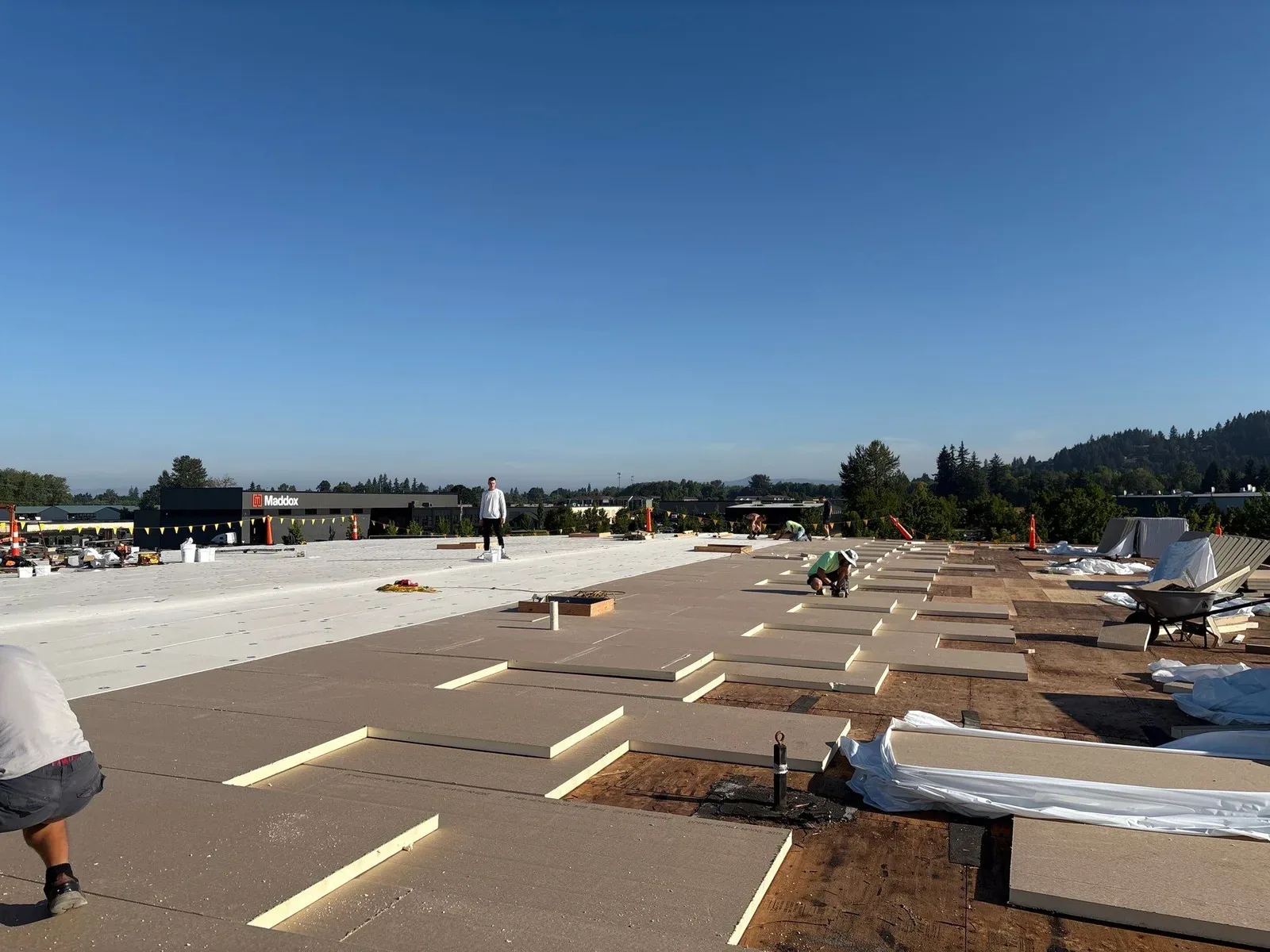
The scope may include a welded repair of every open stretch, a cover strip over critical seams, replacement of a worn section or a coating over the field when the sheet is sound. It lists the length of each repair, the material and the cost per foot. On a large distribution building, such as those planned at the Rail Park at Central Pointe, a long run of failing seams can justify a recover or a replacement, and the scope prices both alongside the repair. A cover strip over a failing seam can add years to a sound roof, and a fully adhered section can replace a worn area with a new sheet and new seams. The owner sees each path in dollars per foot and in expected years, and the choice rests on how long the building will be held. Where the seam repair is part of a wider move to a recover, the recover overlay scope lists what stays and what goes.
Commercial Roofing Questions
Can a seam be repaired without replacing the roof?
Often yes. If the sheet is sound and the insulation is dry, a welded or taped repair can restore the seam.
How do you know how many seams have failed?
By probing the full length in the leak area and a sample elsewhere, then mapping the results.
Does ponding cause seam failure?
It can. Standing water keeps seams wet and stressed, so ponded areas are checked first.
When is a coating better than a repair?
When the sheet is sound, the insulation is dry and many seams show minor wear. A moisture survey confirms those conditions.
What is the next decision for the owner?
Whether to hold with the temporary repair, repair permanently or plan a section or full replacement.