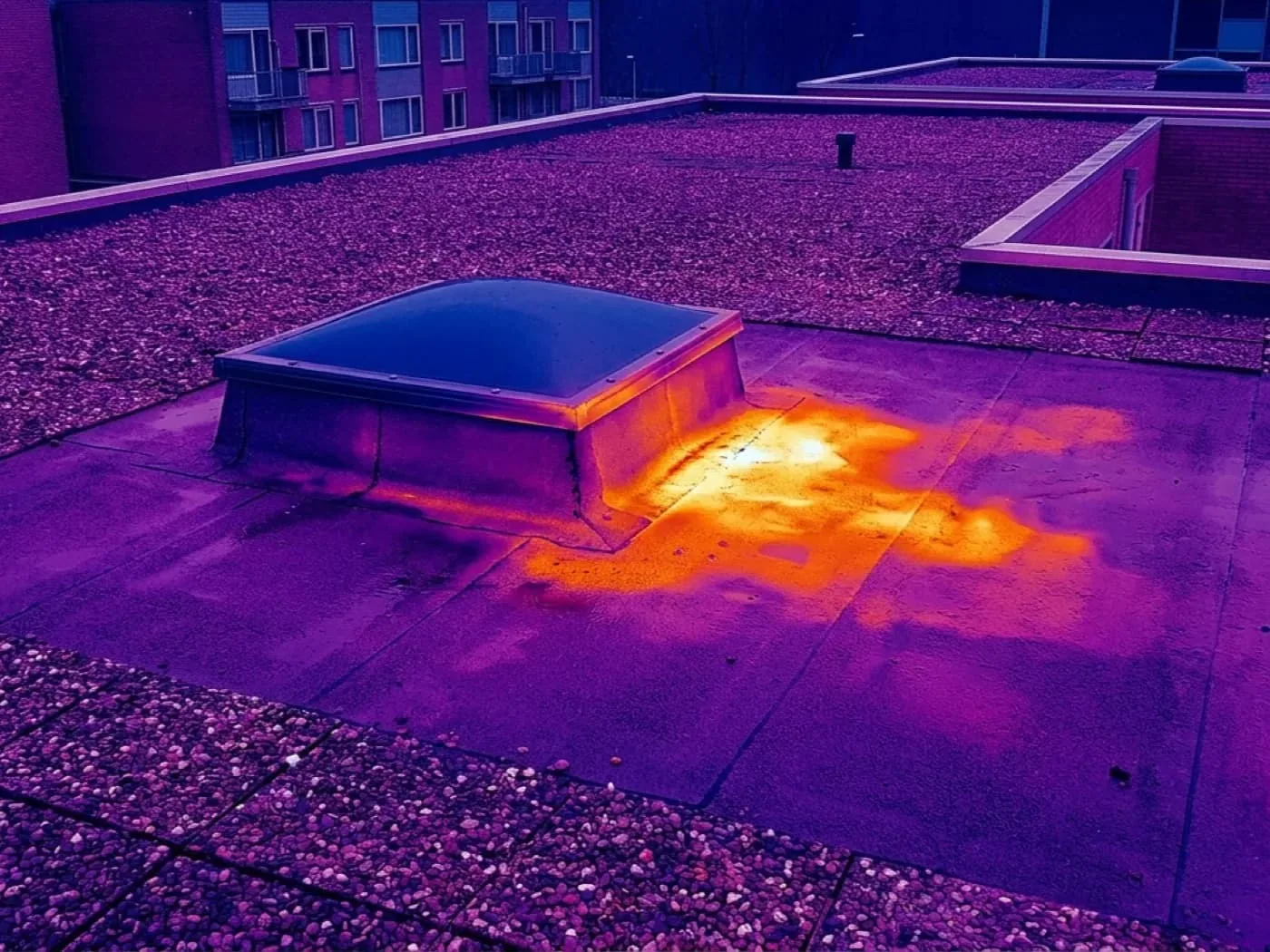
Ponding Water Roof Repair
How long has that water been standing, and where does it go when it finally leaves? On a flat commercial roof in Temple, TX, a pond that outlasts the rain by two days is a failure point, not a puddle. The water adds weight, grows algae, presses on seams and gives every small defect in the sheet a head start. The question for the asset manager is whether the pond is a drain problem, a slope problem or a deck problem, because each has a different cost and a different decision attached to it.
Make-safe work and the permanent scope stay separate. The make-safe step is often as simple as clearing a drain. The intake record measures the pond, notes its depth and duration and photographs it from two angles. The permanent scope follows after a moisture survey, and it is priced against the capital plan.
What Is the First Thing to Check on a Ponded Roof?
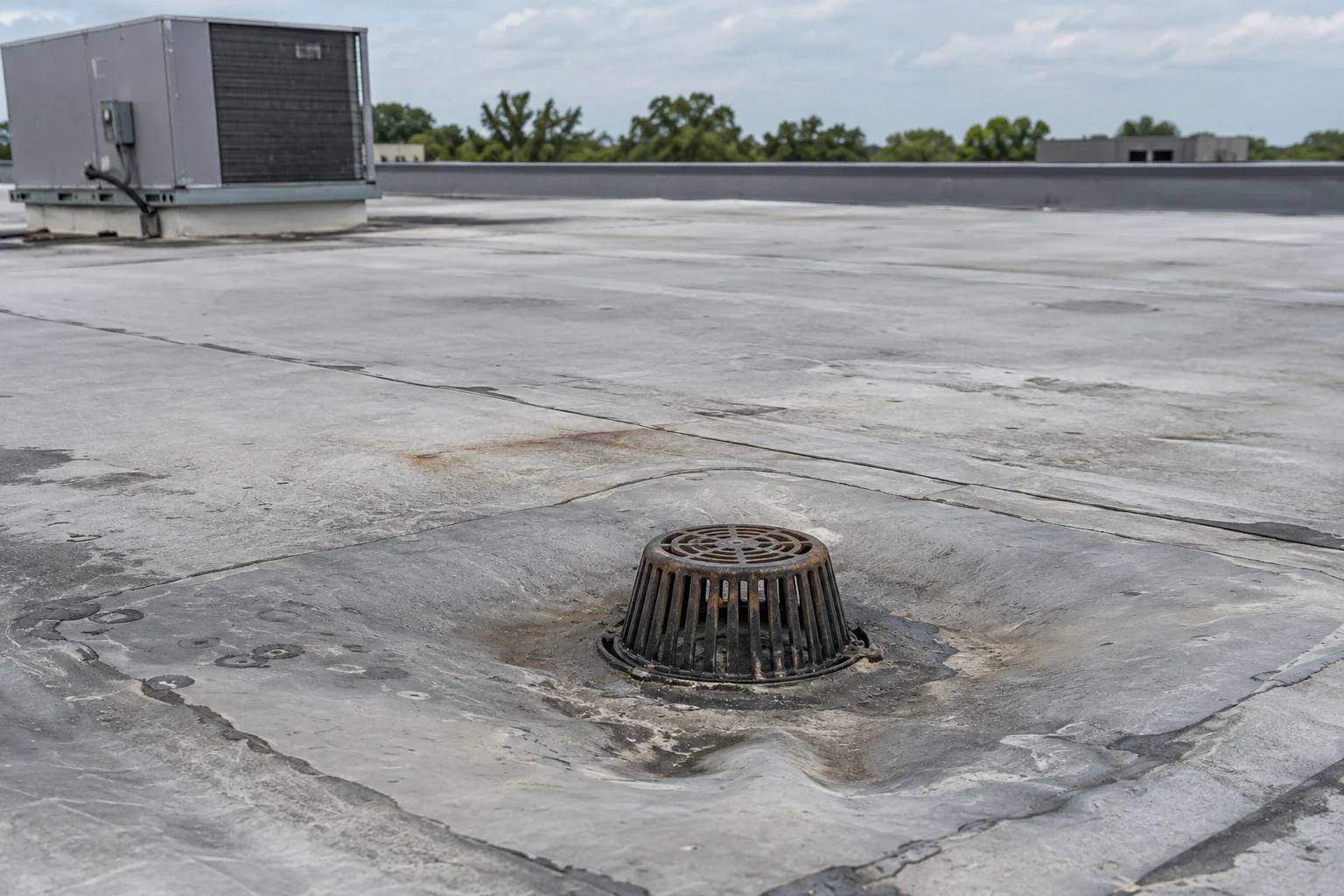
The nearest drain. A clogged strainer, a missing basket or a drain set above the surrounding sheet can hold a pond all by itself. We clear the outlet, flush the line where we can and photograph the water level before and after. If the pond drains, the cause was maintenance. If it does not, the line may be blocked below the roof or the drain body may be set too high, and the next step is a closer look at the plumbing and the deck around it. On a long warehouse roof, one blocked outlet can hold water over a wide area, and a second outlet set a little high will keep a pond alive even when the first is clear.
The record notes each drain by number, with its condition, the debris found and the time of the check. A drain that clogs again within weeks points to a nearby source, such as a tree, a parapet gap, a roof surface shedding granules or a damaged membrane shedding material.
How Do You Measure a Pond?
We wait for rain to stop, then walk the roof at intervals and record where water stands, how deep it is and how long it stays. Depth is measured with a level and a rule at several points. Duration is noted at the next visit. The measurements go on the rooftop sketch as contours, so the owner can see the low spots and compare them with the drains. Photographs are taken from the same two angles each visit, which makes a growing pond easy to see. A shallow film that dries by the next day is normal on many flat roofs. A pond that persists two days or more, or that grows after each storm, is the finding we care about.
Is It the Drain, the Slope or the Deck?
Three causes account for most ponds. A blocked or high drain is the cheapest to fix. Slope that was never enough, or that insulation was supposed to provide and did not, calls for tapered insulation or a re-pitched section. Deck deflection, where framing has sagged under load or equipment, calls for a structural look and sometimes a repair below the roof. We check each in order: clear and test the drain, level across the pond to find the low point and look at the deck from below where access allows.
The answer decides the scope, and it also decides who needs to be involved: a roofer for a drain, a roofer and an insulation supplier for a taper, an engineer for a deck. A drain fix costs little. A tapered insulation package costs more but removes the pond for years. A deck repair costs the most and may involve a structural engineer.
What Does Temple Weather Add to Ponding?
Rain in Temple adds up to about 39 inches a year, and May is the wettest month at 5.4 inches. A roof that holds water through a wet spring is stressed at exactly the time storms arrive. Summer then bakes the pond's edges, and with August highs near 95 F the algae line becomes a heat trap, where algae and dirt collect and the membrane ages faster than the field. About 26 freezing nights a year can freeze water standing in low spots and stress seams. The May 22, 2024 tornado showed how much debris a storm can move onto roofs in Temple and along Loop 363, so a post-storm drain check is part of the plan.
Roof drains in older buildings, including the historic commercial buildings of Downtown Temple, may tie into internal piping that is hard to see. Where the pipe has sagged or cracked, water backs up even when the drain is clear. A camera pass or a flow test finds the problem, and the repair may involve a plumber. We note it in the record as an item for the owner's other contractors, not as a roofing item, and what lies below the roof stays with them.
What Does a Holding Repair Buy for a Ponded Roof?
A holding repair clears the drain, adds a temporary scupper or sump if the roof allows, patches any seam that has opened under the pond and documents the result. It buys time for the owner to price a permanent fix. It does not correct the slope. The record says so, with a note on what will happen if the pond returns, and a date for rechecking after the next heavy rain.
For roofs where water must leave quickly, such as those over equipment rooms or medical offices, an overflow scupper is worth discussing even if the main drain is clear. An overflow gives the water somewhere to go if the drain blocks during a storm, and it limits the depth a pond can reach before it spills over the edge. The location is chosen so the discharge does not land on a doorway or a walkway.
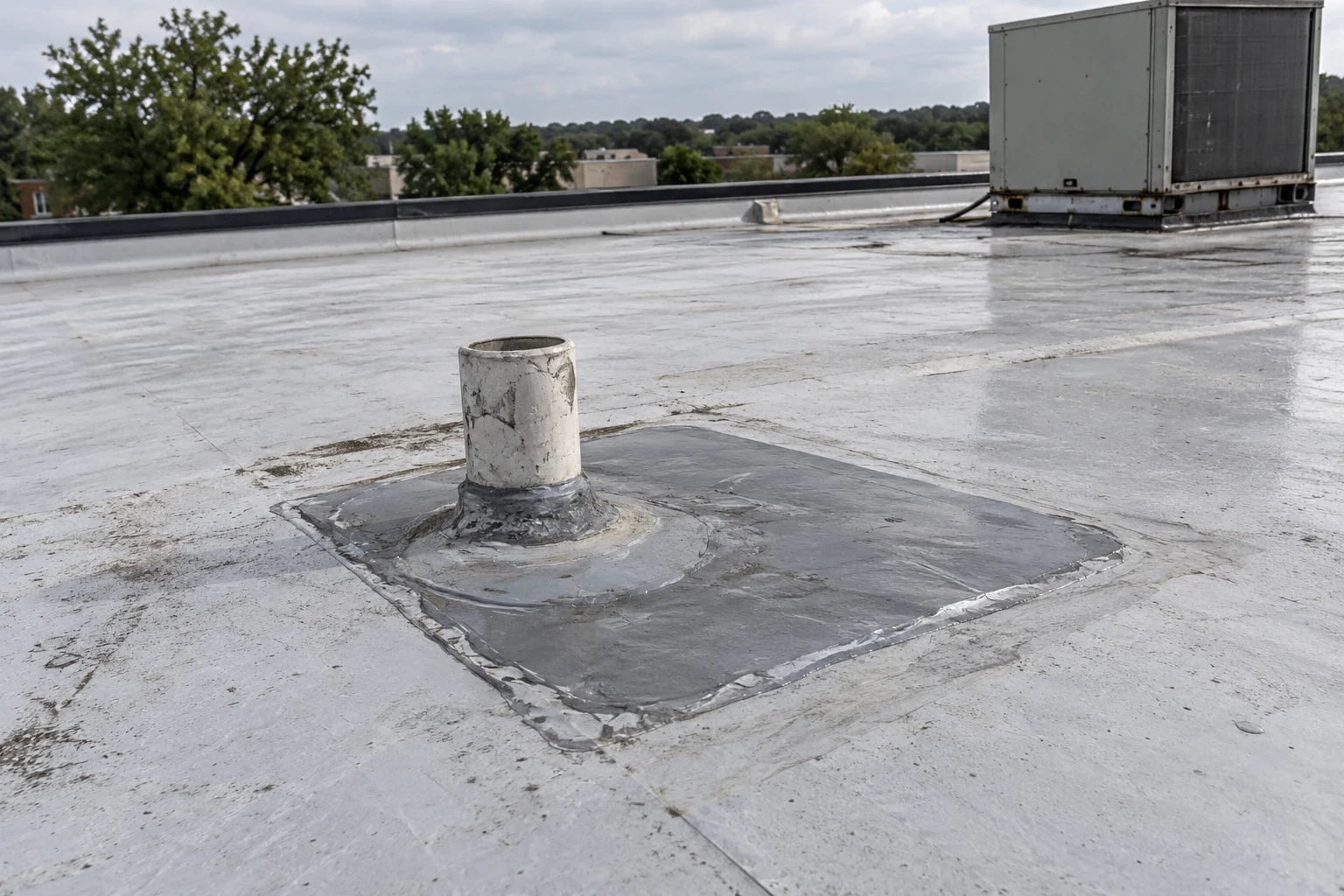
Where the pond sits over a seam, we probe the seam and repair it first, because water over an open seam reaches the insulation fastest.
What Does the Permanent Scope Include?
The scope may include new or reset drains and scuppers, tapered insulation to move water toward outlets, a new membrane over the corrected area and a cover board. Cost depends on the size of the ponded area, the slope needed, the drain count and the access. Owners can compare the cost of correcting the area with the cost of replacing the roof, and the moisture survey shows which one the findings support. A pond that has sat over one corner for years often leaves wet insulation under it, which changes the answer.
Where ponding has opened laps, the permanent scope also includes seam failure repair in the ponded area. A seam that has sat under water for a season is rarely tight, and welding or sealing it before the new insulation goes down avoids a second visit.
Commercial Roofing Questions
How long can water stand before it matters?
More than about two days after a rain deserves attention. A pond that returns after every storm is a finding.
Can ponding be fixed without a new roof?
Often yes. Clearing drains, resetting outlets or adding tapered insulation can correct it without replacing the whole roof.
Why does ponding shorten the life of a membrane?
Standing water adds load, grows algae and keeps seams wet. Heat and ultraviolet exposure at the pond's edge then age the sheet faster.
Do drains need maintenance?
Yes. A calendar visit before spring storms and after heavy rain keeps strainers clear and prevents most ponds.
What is the next decision for the owner?
Whether to fix the cause now, hold with a temporary repair or plan a replacement. The measurements and the survey support each option.