Roof Drains and Scuppers
Where does the water go when it stops raining? On a flat commercial roof in Temple, TX, the answer is a handful of openings, each the size of a dinner plate, doing the work of an entire watershed. When one clogs, the roof turns into a shallow pond that loads the deck, soaks seams, and finds every weak flashing. A drain that sat half-blocked for six months becomes a failure point in the first hard rain, and the person who gets the call is usually the asset manager.
How many outlets does the roof actually have?
The first job is a count. We mark every interior drain, scupper, gutter, downspout, and overflow on the roof sketch, then compare the count to the roof area. A large roof served by a few drains has little margin. A roof with scuppers but no overflow depends on one line of defense.
Each outlet gets a photograph, a size, an elevation relative to the roof surface, and a condition note: strainer in place or missing, bowl cracked or sound, clamp ring tight or loose, leader draining freely or slow. That inventory is the base record, and it is the single most useful sheet in the file for anyone who has to explain a ponding problem to a tenant or an insurer.
How much rain does a Temple roof actually handle?
Temple averages about 39 inches of precipitation a year, and May is the wettest month at roughly 5.4 inches. Spring storms can deliver that rain in bursts, and a drain that works in a drizzle can fail in a downpour. Around 26 nights a year fall below freezing, and trapped water expands then, splitting fittings, strainers, and sump edges.
February 2021 gave Killeen and the rest of Central Texas 9 days at or below freezing, a stretch that was hard on any exposed drain line. A bowl or leader holding water going into a freeze is the one most likely to split. Drains kept clear and sloped to empty freely are the ones that come through freezing weather intact.
Why does water pond even when the drains are clear?
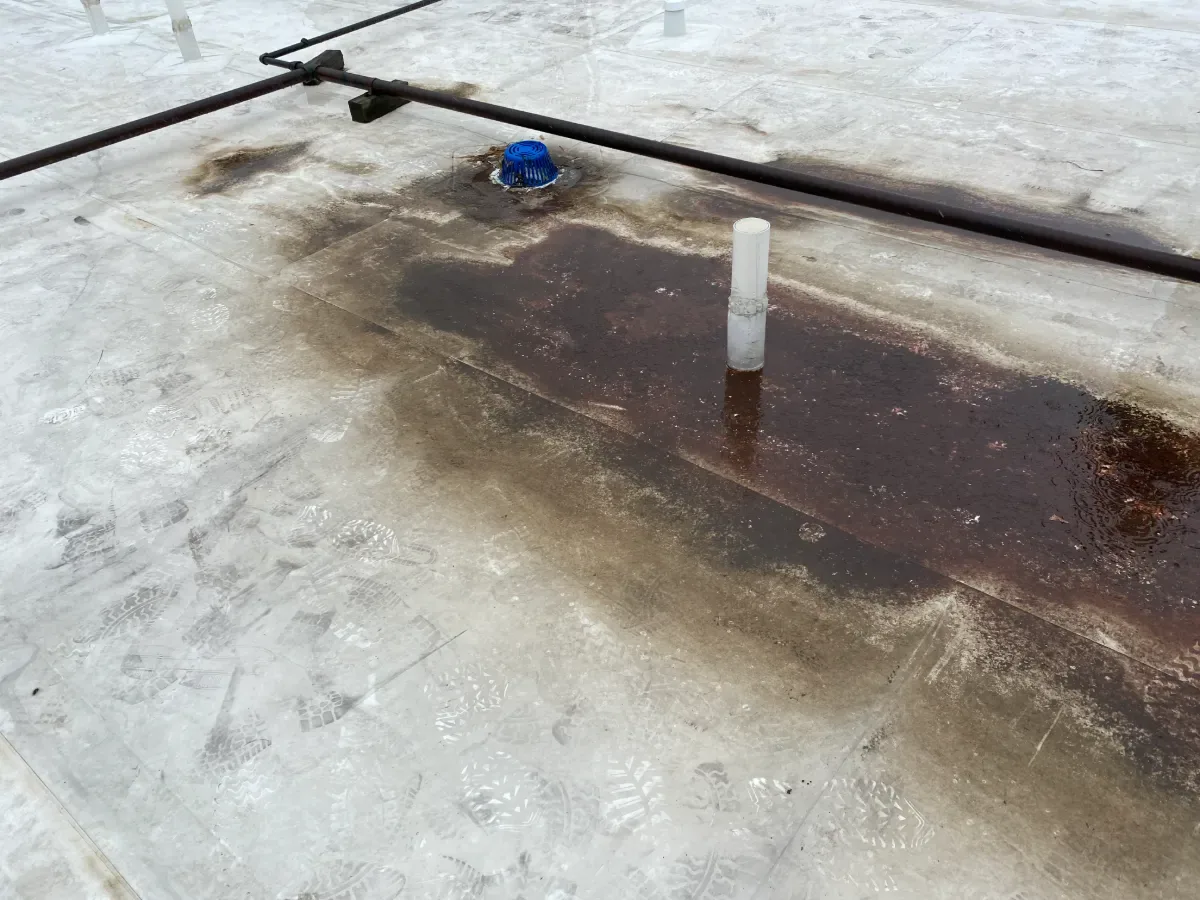
Because the roof may not slope toward them. Decks deflect between supports, insulation settles, and old repairs build up high spots. A roof that was flat to begin with has no margin for that movement. Water sits in the low areas and evaporates slowly, leaving stain rings, algae, and dirt.
We measure ponding with a level the morning after a rain and again two days later. A pond that clears in a day is a minor finding. One that stays for a week is a structural and waterproofing risk, because seams under standing water age faster and deck load rises. The ponding water repair options start from those measurements.
What are the real fixes for standing water?
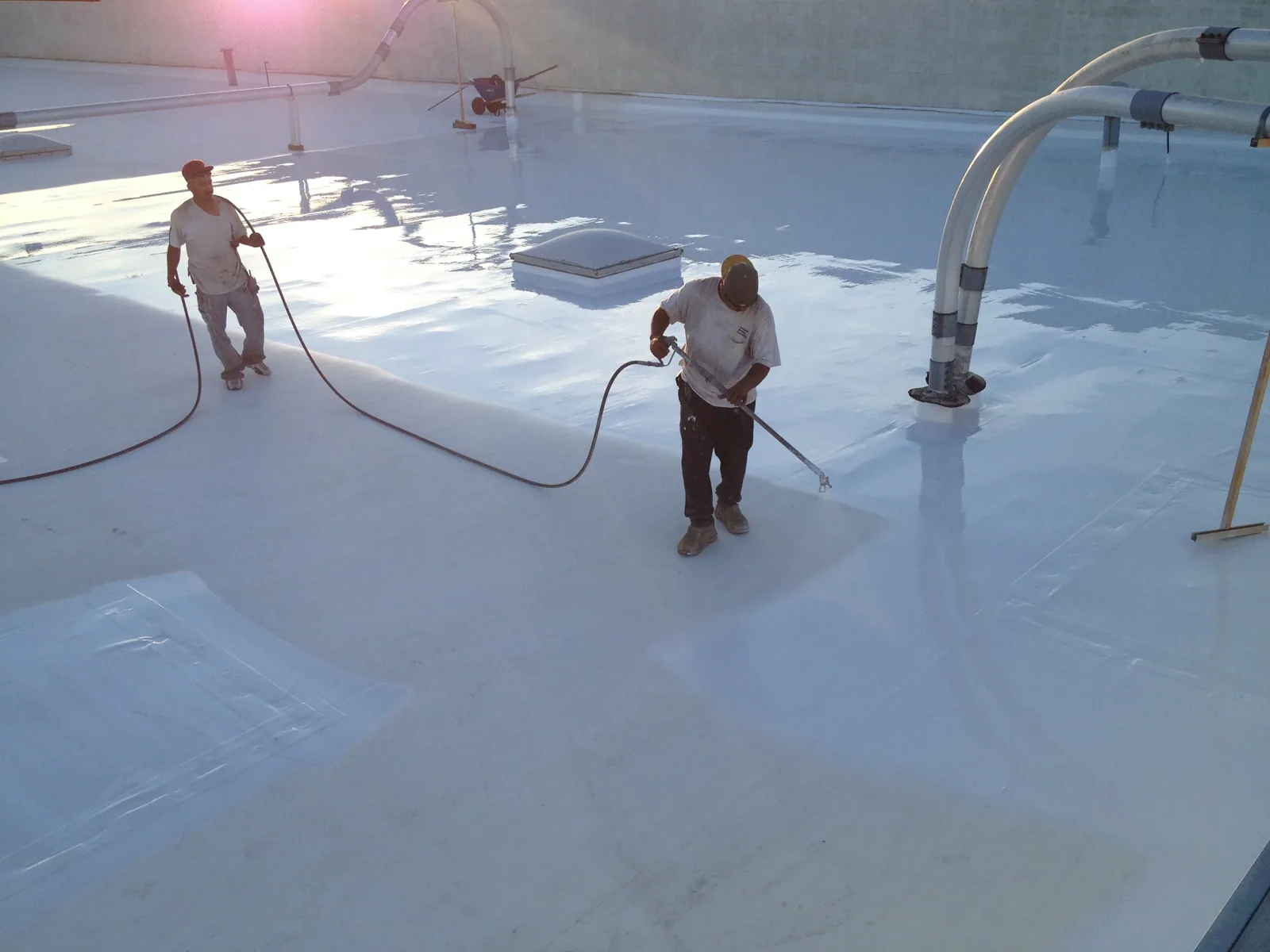
Four options come up. The first is cleaning and resetting existing drains, which solves a surprising share of problems. The second is adding drains or scuppers where the count is thin. The third is building slope with tapered insulation, crickets behind curbs, and sumps around drain bowls. The fourth is selecting a membrane or coating that tolerates standing water when the structure cannot be corrected, such as a silicone roof coating over a sound roof.
Tapered systems are part of a roof insulation and cover board design and need drain heights checked before and after. A drain left above the new surface defeats the whole purpose. Each fix is priced and described, so the owner sees what is cleaned, what is rebuilt, and what is accepted.
Wind-driven debris adds to the load. After a violent storm, whether the EF-2 tornado of May 2024 or a line of straight-line wind, roofs shed membrane scraps, insulation, leaves, and loose material that finds the nearest bowl. A post-event walk clears them and checks whether anything cracked a strainer or bent a clamp ring. The tornado damage roof repair record then shows whether drainage contributed to any interior leaks.
What does an overflow scupper protect?
The building. A roof with parapets holds water if the main drains stop. The overflow scupper is set a few inches above the roof surface so that, when the primary outlet fails, water leaves through the wall before the load on the deck becomes dangerous. Without one, a clogged drain and a heavy rain can combine into a structural problem.
We measure overflow height, opening size, and condition, and confirm that the discharge point is clear. Many roofs have a scupper that was blocked by a later parapet cap, a conduit, or a painted-over cover. Reopening it costs little, and the photograph of the reopened opening goes into the file. Related edge metal, coping, and gutter work often comes up at the same time, because the discharge has to land somewhere.
Which Temple buildings depend most on drainage?
Large flat roofs: distribution buildings, among them the H-E-B and Walmart regional centers, plus manufacturing plants, healthcare buildings, and shopping strips. The bigger the roof, the more water each outlet must move. Parapet walls, rooftop equipment, and screen walls all add obstacles that trap water and debris.
Owners with properties in Temple Medical and Education District, the Rail Park, and the downtown core get the same drain log format. Maintenance visits update it, so a trend such as a bowl that clogs every visit leads to a cause, not just another cleaning.
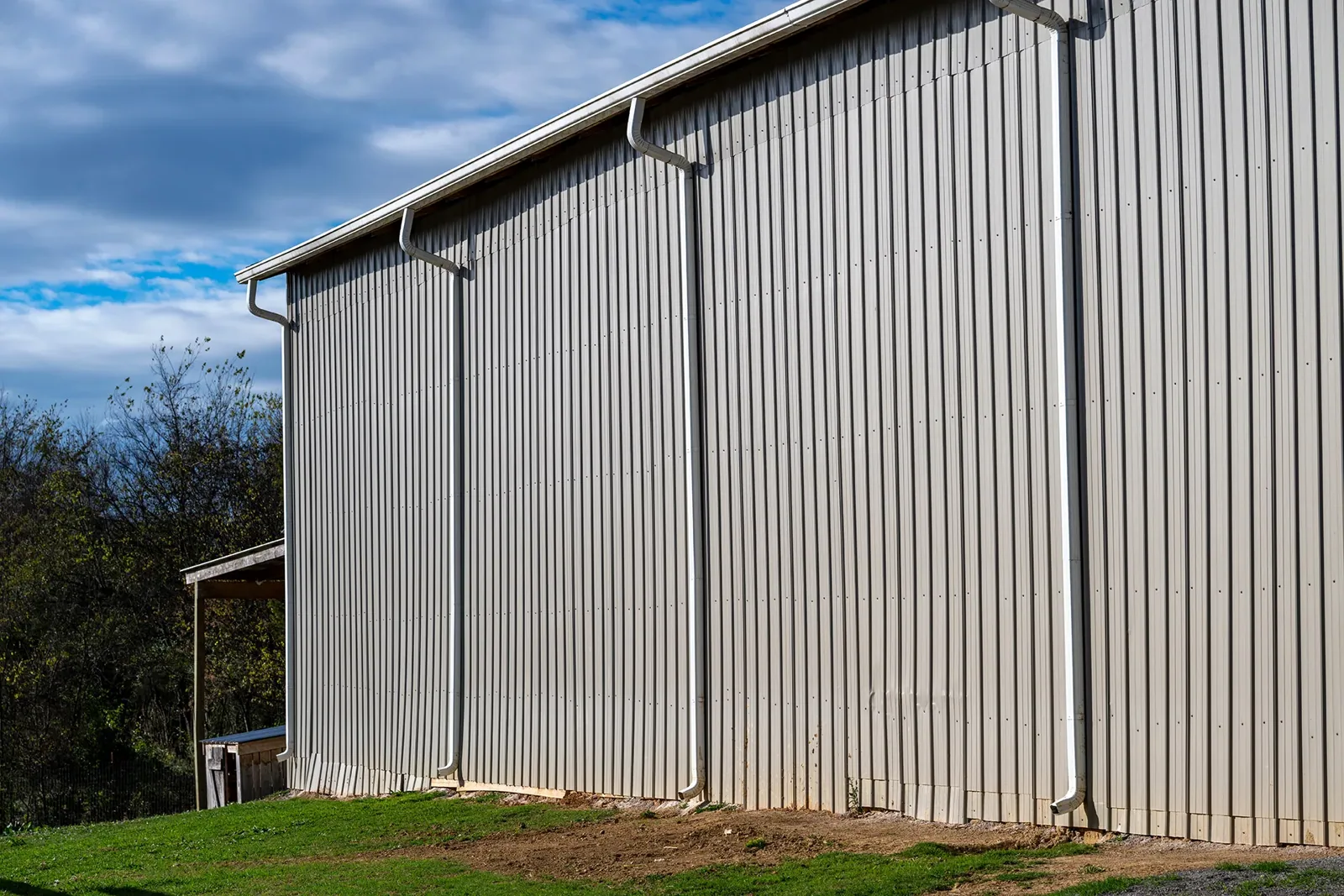
Gutters and downspouts on smaller buildings follow the same logic at a different scale. A gutter hung on a fascia carries a lot of weight when it is full, and a downspout that discharges against a wall or onto a sidewalk undermines more than the roof. We log gutter slope, hanger spacing, and discharge points, and we flag any downspout that dumps water where it can freeze or erode a footing.
Commercial Roofing Questions
How often should roof drains be cleaned?
Twice a year is a common baseline, timed before the spring rains and after the leaf and dust season. Roofs near trees, construction, or dust sources may need more. The log shows how quickly debris returns, which sets the schedule better than a calendar can.
Can a roof drain be too small?
Yes. If the drain and leader size do not match the roof area and the local rainfall, water backs up during heavy storms even when the outlet is clean. A review compares the existing outlets to the roof area and recommends added capacity or overflow if the margin is thin.
What is a cricket and when is one needed?
A cricket is a small sloped section built behind a curb, chimney, or large unit to move water around it instead of letting it pool upstream. It is needed wherever equipment blocks the natural flow to a drain. We build crickets with tapered insulation and flash them into the membrane.
Will clearing the drains stop the leak?
Only if ponding caused it. Clearing the drains is the first step, because standing water finds weak seams and flashings. If the leak persists after the roof drains freely, we trace the entry point separately. The drain log helps rule water backup in or out.
Do coated roofs still need drain attention?
Yes. A coating seals around the edge of a drain bowl, so a drain that is partly blocked when the roof is coated stays that way. Drains are cleared, checked for cracks, and logged before any coating goes on, and they are checked again at each later visit.