Healthcare Systems
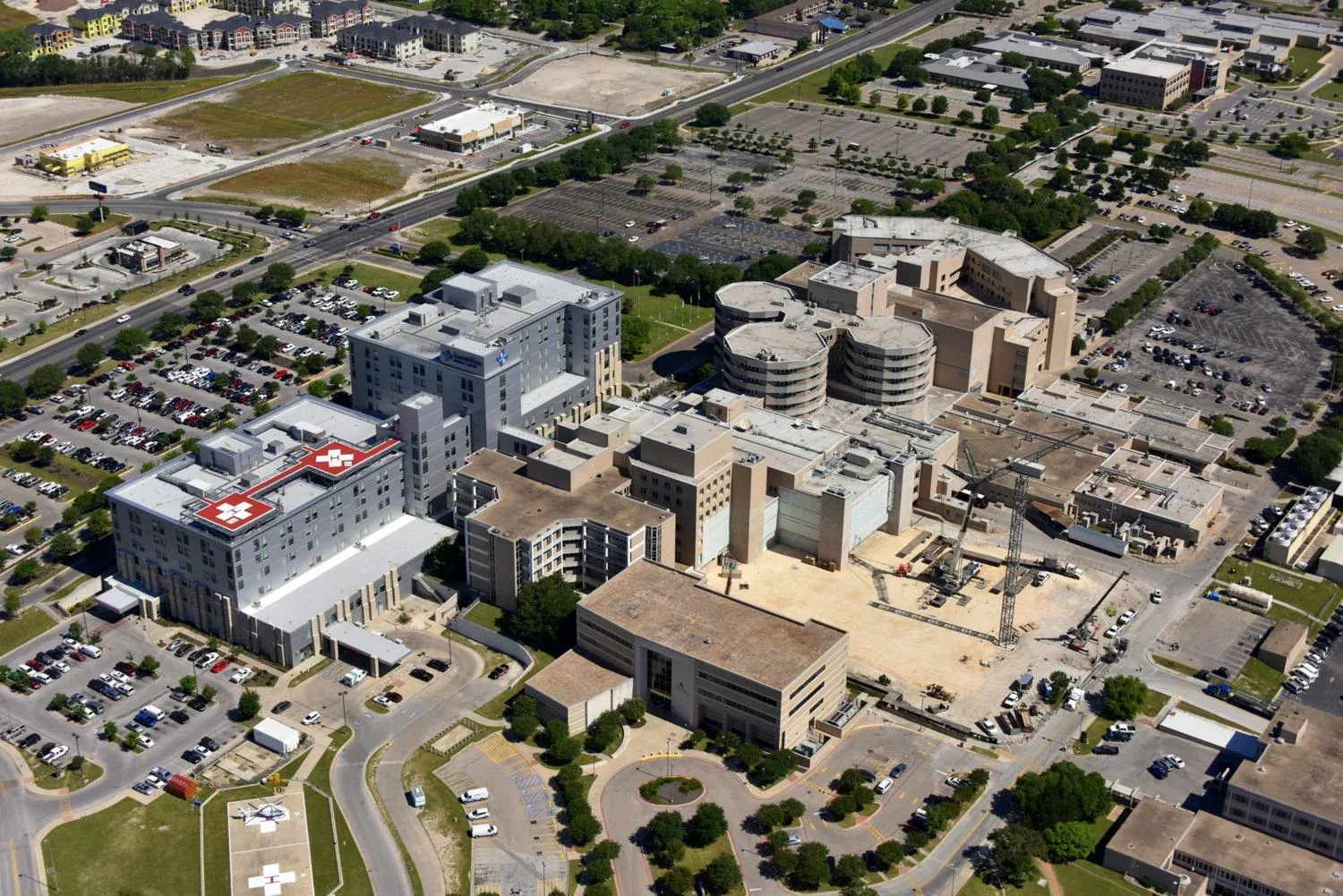
Which roof on a healthcare campus cannot be allowed to leak, and who is on the phone when it does? In Temple, TX, healthcare leads the building stock, with Baylor Scott & White Health employing 8,884 people and the Central Texas Veterans Health Care System employing about 3,500. A roof over an operating suite, a pharmacy or a clinic waiting room is a clinical risk as well as a building one. The first decision in the first hour belongs to the facilities lead, and our job is to put the right information in front of that person fast. Several of Temple's campuses sit in the Temple Medical and Education District, and in a city that Interstate 35 runs through, the access inside a campus matters more to a crew than the road to it. Badge rules, loading docks and visitor parking all shape how a crew gets to the roof, and we ask for those details before the dispatch window opens.
We separate three jobs. A make-safe step keeps the water out. An intake record names the failure point. Pricing of the permanent scope waits for a moisture survey, and infection-control rules go into the schedule.
What Happens in the First Hour of a Healthcare Leak?
A leak above a patient area triggers a protocol on the clinical side before the roofer arrives. Our side of the protocol is quick and quiet. We want to know where the water appears, what sits under it and whether an air handler or a ceiling plenum is involved. The crew installs a tarp or a temporary membrane patch, keeps noise and debris away from sensitive areas and photographs the roof before covering anything.
The facilities lead gets a brief note listing the failure, the step taken, the remaining risk and the time of the next check. A longer record follows within the day.
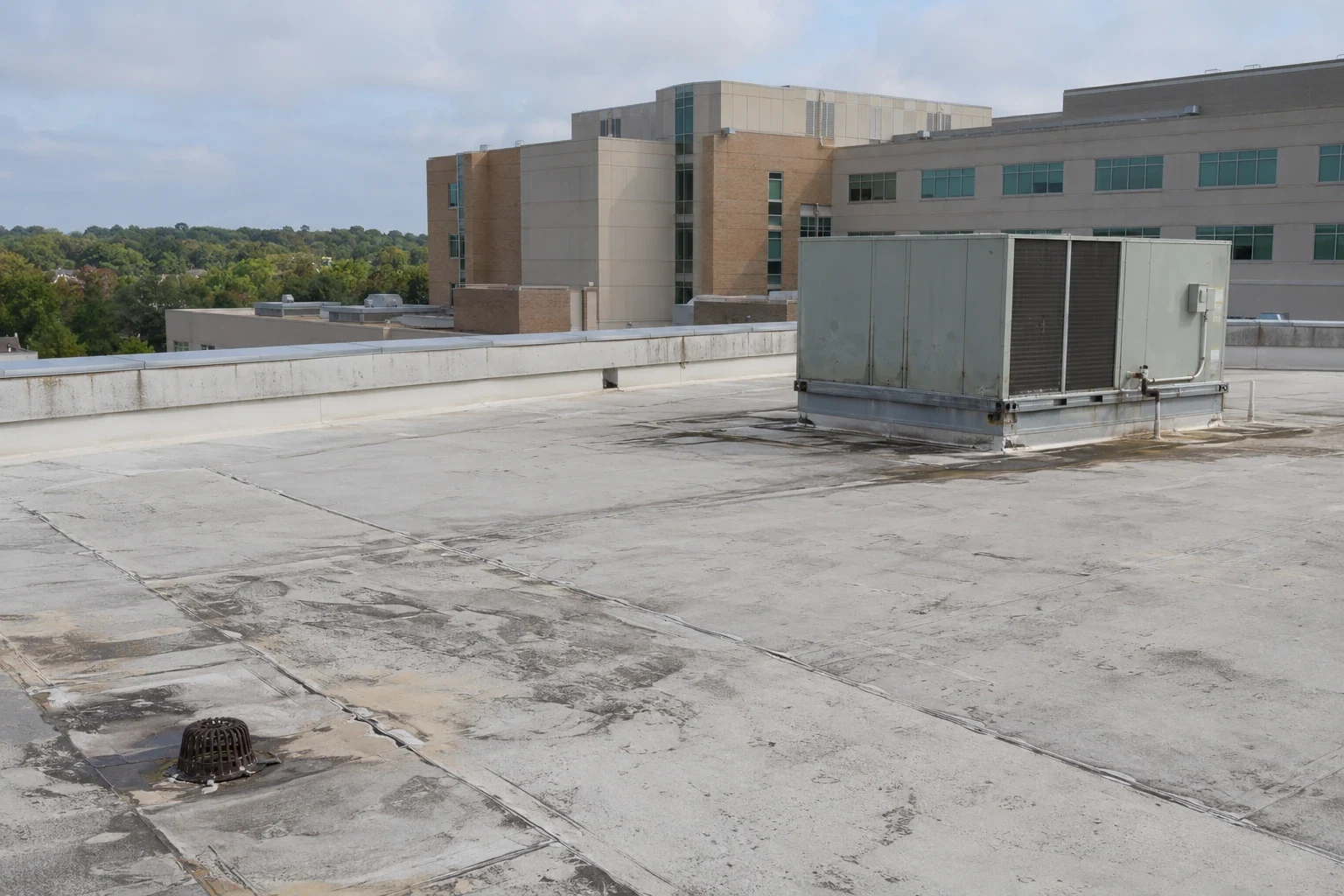
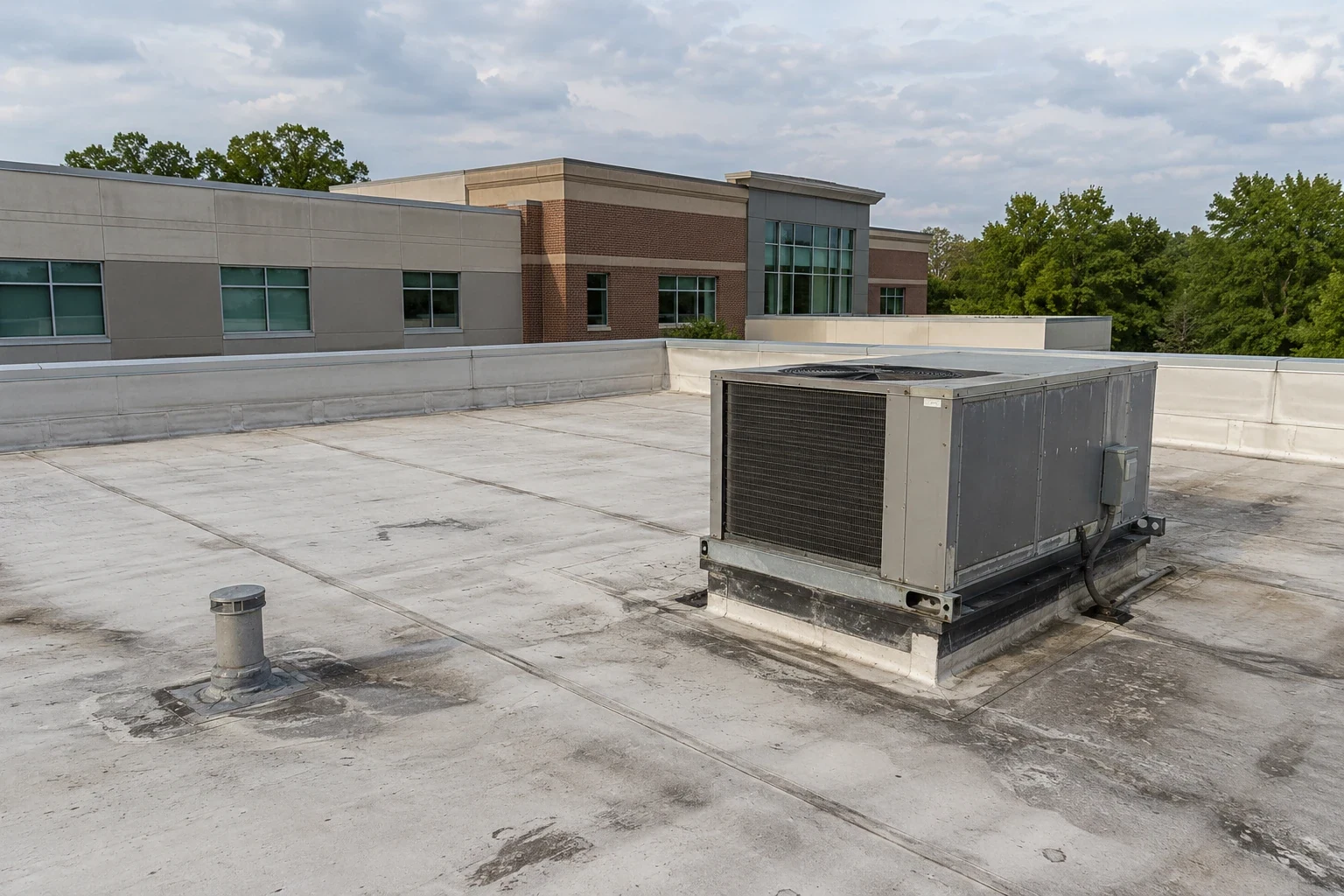
Behind the note sits a checklist the crew works through without being asked: isolate the opening, protect equipment below, check the nearest drain, photograph the surrounding membrane, probe for moisture and look at the closest rooftop unit for a curb that might be the source. A hospital roof carries more equipment than most, and equipment is the usual culprit.
How Is Work Planned Around Infection Control?
Roofing creates dust, noise and vibration, and each can matter in a clinical setting. The plan names the air-intake locations nearby, the barriers that protect them and the times when loud work is allowed. Material is staged away from intakes. Debris leaves the roof by chute or hoist and is bagged. If the infection-control team requires a risk assessment, we provide the scope details they need and wait for their approval at each hold point. Our crews also keep a log of the barriers, the filters and the dust counts that the owner's team requests, so the record shows that the controls were in place when the work was done.
Noise is a separate issue. Jackhammers, saws and compressors are not used near surgical suites or recovery rooms while patients occupy them. Where cutting is unavoidable, it is scheduled for hours when the area below is empty, and the schedule is shared with the unit manager.
Hold points are written into the schedule: before tear-off over an occupied floor, before a crane lift near an entrance and before the final dry-in check. Work does not continue past a hold point without a signature.
Which Healthcare Roofs Carry the Most Risk?
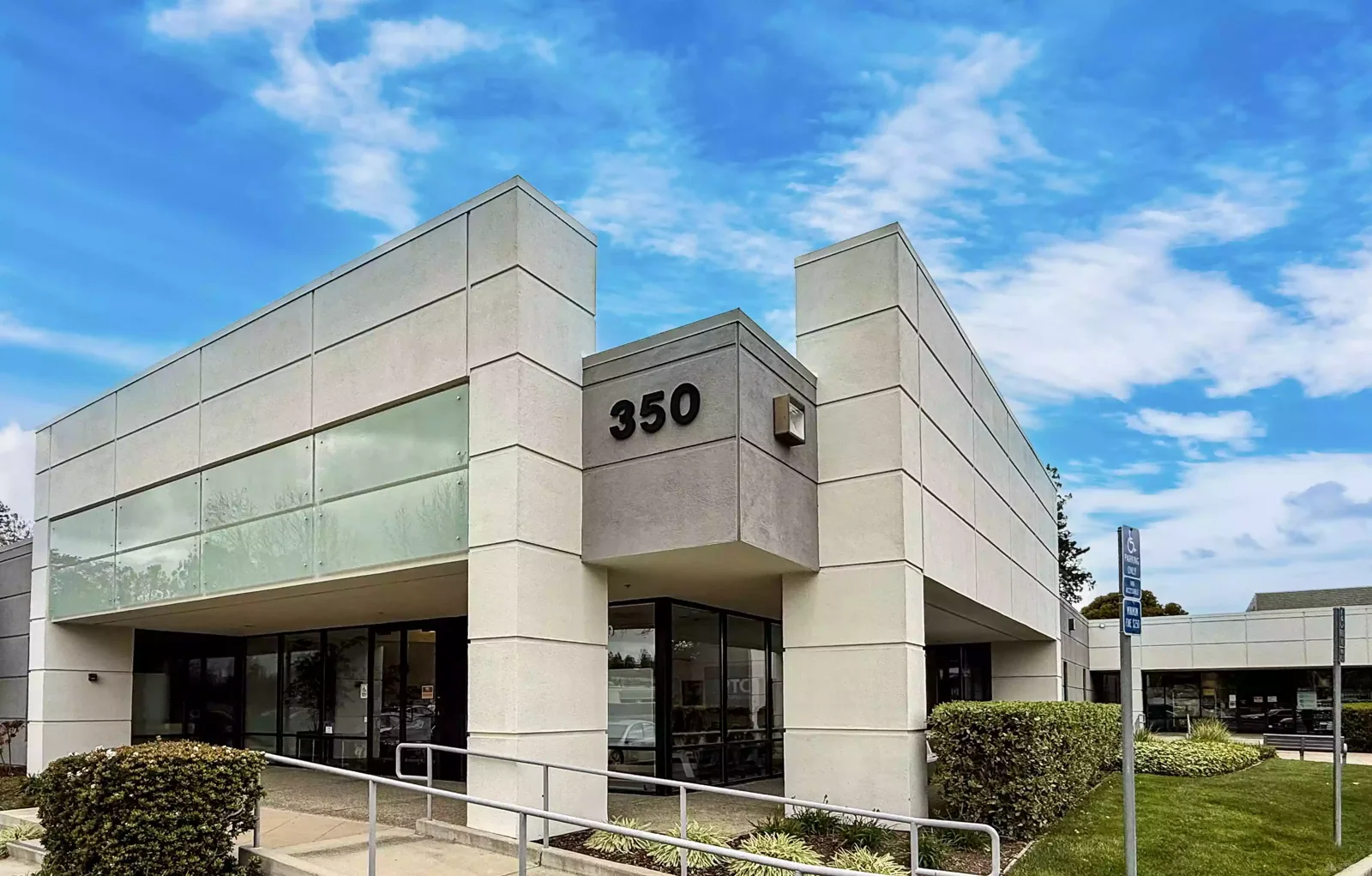
Hospital roofs carry mechanical equipment, exhaust, medical gas penetrations and drains that tie into a complex building envelope. Medical office roofs carry rooftop units and multiple tenants. Clinics often sit in strip centers with shared roofs. Each type raises different questions. We map penetrations, curbs and equipment on the sketch, check flashing at each one and record which air handlers sit near which openings. The hospital roofing and medical office roofing records follow the same format. For a health system with several buildings, an owner-side property manager or a real estate investor may hold some of the clinics under lease, and the same record can be shared with each of them.
What Does Temple Weather Mean for a Campus?
Air handlers run hard through a Temple summer, where August peaks near 95 F and some eighty days each year pass 90 F, and the membrane over them bakes; the cold side is milder, with about 26 freezing nights a year to stress sealants and exposed flashings. About 39 inches of rain fall in a year, wettest in May. The tornado that hit Temple on May 22, 2024 was rated EF-2, with peak winds near 120 mph, and it injured 30 people. Facilities teams use these facts to prioritize edge and equipment checks before the storm season, and we write those checks into the maintenance calendar so they are done in March and not in June.
The Central Texas Veterans Health Care System operates its main campus in Temple, which includes a teaching hospital, a community living center and a research institute. Sites of that kind keep their own facilities teams and their own standards. What we can offer any campus is a clean record and a clear plan.
Why Run a Moisture Survey Before the Permanent Scope?
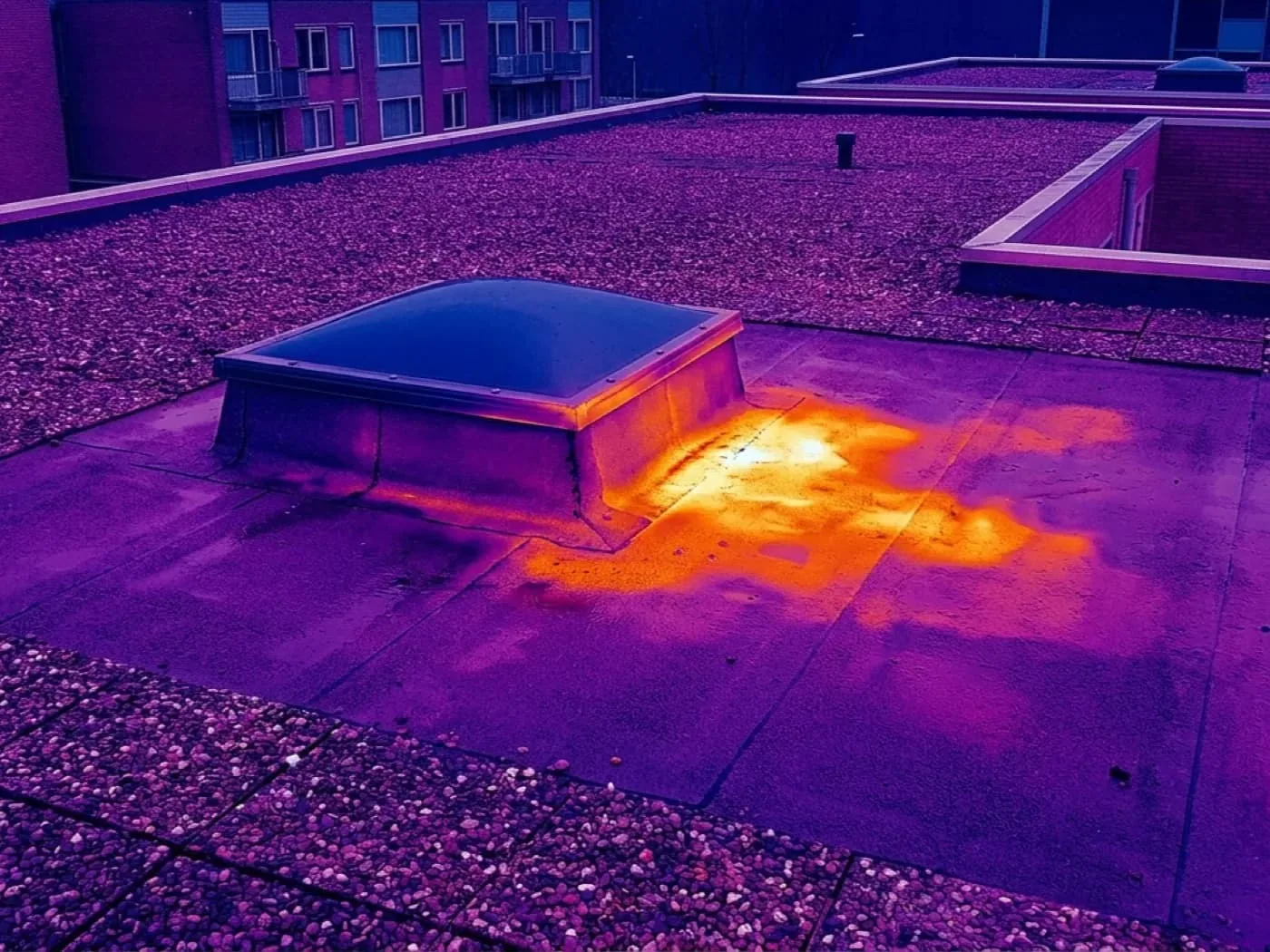
An infrared moisture survey shows where insulation has taken on water, which is often far from the visible stain. For a healthcare owner, that matters because trapped moisture can feed mold below the roof deck. The survey draws a boundary around the wet area, and the permanent scope replaces only what the boundary requires, with a price for each section.
The survey also helps with sequencing. Wet sections near occupied areas go first, and dry sections can wait for a quieter window. The survey images go into the owner's file with the date, the weather and the surface temperature, and they are repeated after the repair to show that the wet area has been removed.
What Is the Next Decision for the Facilities Lead?
Once the roof is dry and documented, the decision moves to the capital plan. The record shows how the roof ranks among others on the campus, what a holding repair buys and what a permanent fix costs. The facilities lead takes that to leadership with the evidence in hand, together with a simple statement of what each option protects. For campuses with older buildings, the plan may combine several roofs into one project, which saves mobilization cost and shortens the time that crews are on the grounds.
Where a system holds both owned and leased clinics, the record also notes which party answers for the roof, so a leak does not start a debate before it starts a repair.
Commercial Roofing Questions
Can roof work happen during patient hours?
Often yes, with barriers, quiet periods and air-intake protection. Loud steps are scheduled for agreed windows, and hold points stop the work if conditions change.
Who approves the infection-control plan?
The facility's own infection-control team. We supply the scope, the staging plan and the debris path, and we wait for sign-off at each hold point.
What does a make-safe step cost compared with a leak?
A tarp or temporary patch costs far less than a ruined ceiling, equipment or a closed treatment room. The record separates the temporary cost from the permanent scope.
How are clinics in strip centers handled?
The roof is shared, so work is sectioned by tenant space, with notices to each suite and noise limits for exam rooms.
When should a survey be repeated?
After any leak, after a storm and on a regular calendar, typically twice a year for critical roofs, with the results filed beside the previous survey for comparison.