Property Management Companies
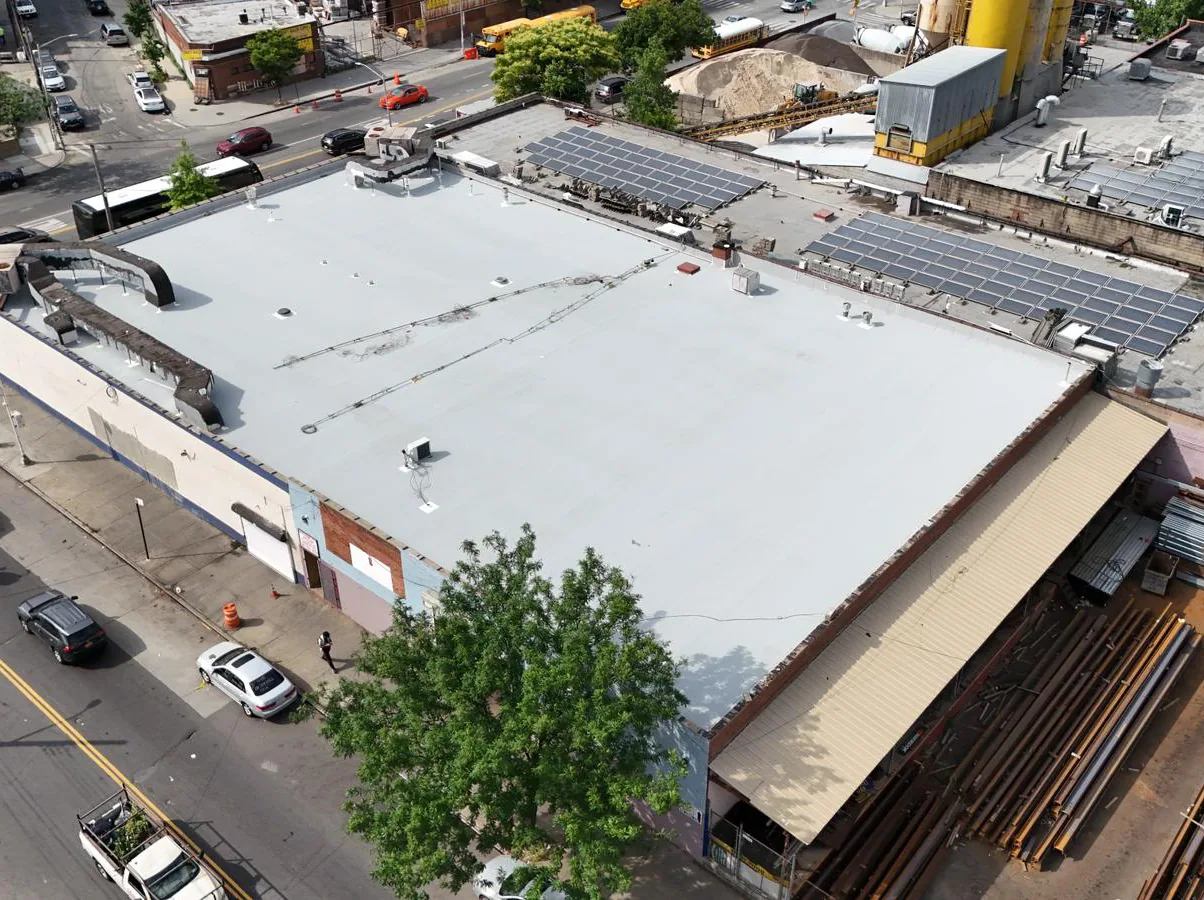
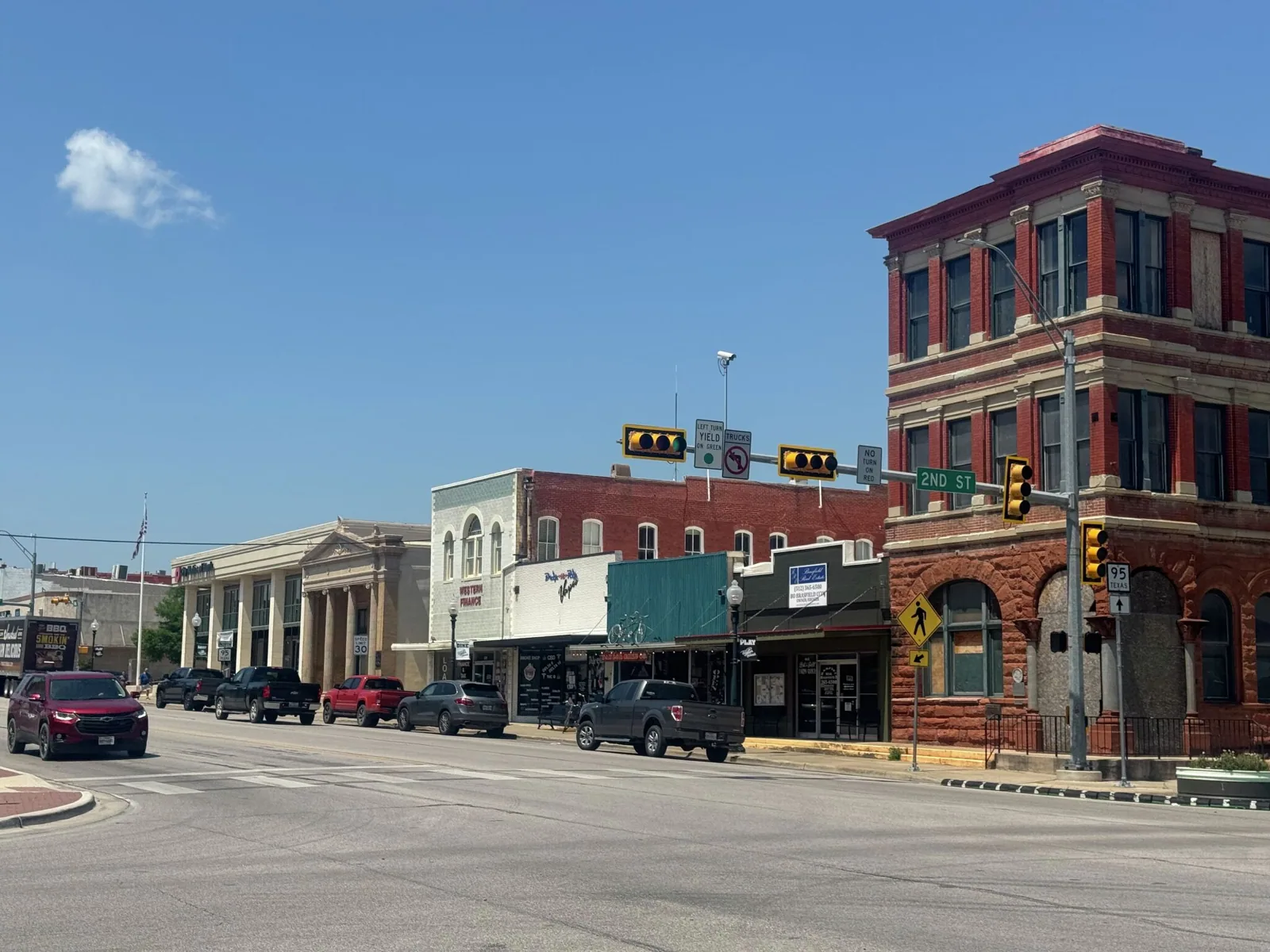
Which of your buildings loses the first roof in a bad afternoon, and who on your team makes the call? A property manager in Temple, TX rarely holds one roof. The portfolio may hold a strip center on a loop road, an office near a medical campus, a flex building by the rail line and an apartment complex east of the interstate. When wind lifts an edge on one of them, the question is not only what failed. It is which other buildings share the same edge detail, and what the next call to the owner should say. A building on a Loop 363 frontage and one near Interstate 35 can share a parapet detail, a flashing method and a contractor who patched them both years ago, and the shared detail is what turns one failure into three.
We work that question in order. First comes the make-safe step that stops water. Then comes the intake record, with photographs, moisture readings and a sketch of the failure point. Last comes the decision that belongs to you: a holding repair now, a permanent scope next quarter, or a place in the capital plan.
Who Decides What in the First Hour?
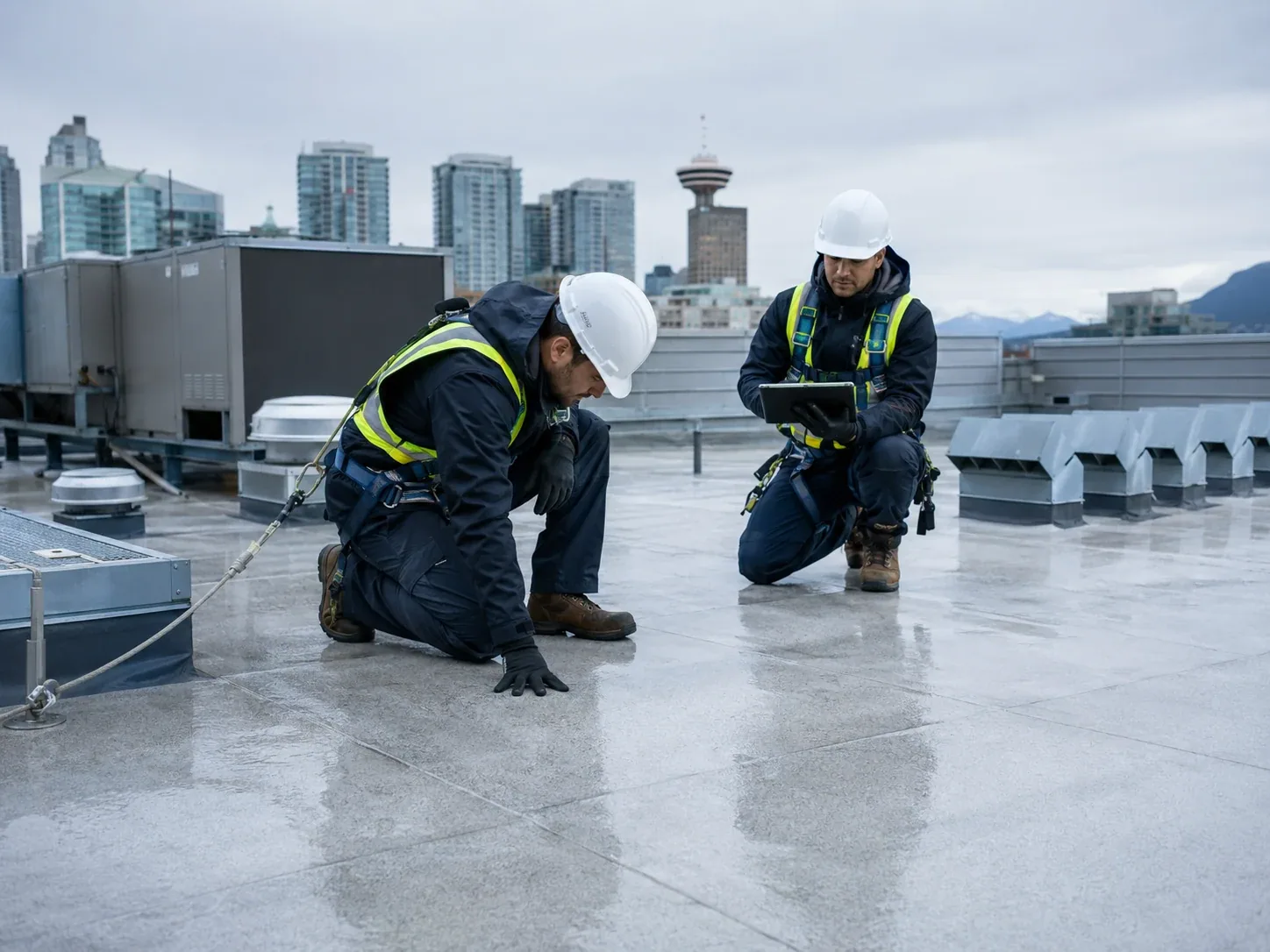
A leak call from a tenant arrives with little detail. A stain on a ceiling tile, a drip over a desk, a puddle by a loading door. The first hour is for triage, not for pricing. We ask where the water shows, what the weather did in the last day and whether anything above the ceiling is at risk. We then dispatch a crew for a make-safe step, which might be a tarp, a temporary patch or a drain cleared, and the crew documents the roof before anything is covered.
The property manager keeps the decision about spending. The crew keeps the record: dated photographs, the location of the opening and the moisture reading under it. The two stay separate on purpose, so a temporary fix never turns into a permanent one by default.
Tenants get their own thread. The affected suite receives a call from the property manager's office within the hour, with a plain statement of what was found and when the crew will return. If inventory or equipment sits below the opening, the crew covers it before the repair begins. If the tenant needs to document a loss for its own insurer, the intake photographs are available the same day.
What Should the Portfolio Expect From Temple Weather?
Slow wear on Temple roofs comes from August highs near 95 F, some eighty days each year past 90 F, about 39 inches of precipitation and roughly 26 freezing nights. Those numbers describe slow wear: membranes bake, sealants dry out, seams open a little each season. The fast events are different. A tornado hit the city on May 22, 2024 (EF-2, peak winds near 120 mph); elsewhere in Temple that day, gusts were estimated at 80 to 90 mph.
That is context for an inspection, not a verdict on any one roof. It tells a manager which details to check first: edge metal, rooftop equipment curbs and the attachment under older membranes.
What Belongs in the Intake Record?
An intake record is the document that lets someone who never saw the roof make a decision. Ours holds the date and time of the call, the weather, the location of the failure on a rooftop sketch, photographs taken before and after the make-safe step, moisture readings around the opening and the name of the person who authorized the work. For a manager with many tenants, it also lists which tenants were affected and what each was told.
When the record is complete, an insurer, an owner or a lender can read it without a phone call. That saves days on a claim and keeps the story of the roof in one place. Property managers change, owners change and contractors change, but a record that names the roof, the date, the failure point and the repair survives all three. It also protects the manager, who can show that the response was prompt and the decision rested on evidence rather than guesswork.
Which Roofs Move to the Front of the Capital Plan?
After a failure, we rank the remaining roofs by exposure. A commercial roof inspection of each building produces a condition score, a list of repairs and a remaining-life estimate. Roofs with open seams, ponding or old attachment rise in the ranking. Roofs with recent work and dry insulation fall. The list becomes the basis for budget requests, and an owner can see why one building gets money this year and another can wait.
A multi-site roof program extends the same idea across every property, with the same format, the same scoring and a calendar of visits. A manager who runs buildings for several owners can produce a ranking for each owner, so the money requested from one does not depend on the condition of another's roof. The ranking also exposes shared risks: two buildings built in the same year by the same builder with the same flashing detail will tend to fail in the same places.
Owners who also run investment portfolios or hire general contractors for tenant improvements can attach the same roof record to their own files.
How Do Repairs Work Around Tenants?
Tenants rarely care what membrane is overhead. They care about noise at nine, dust over inventory and a parking lot that stays open. We plan occupied-building work in sections that can be closed by evening, with notices to tenants, protected entrances and a call-back window for questions. The schedule names who signs off each day, and tenants receive a contact they can reach.
Retail tenants near the Loop 363 corridor have holiday trade to protect, and medical tenants near the medical and education district need quiet and clean air. Both questions go into the scope before pricing, along with parking, deliveries and any signage that touches the roof edge. A plan that respects the tenant's busiest hour costs a little more on paper and much less in lease concessions.
What Does the Permanent Scope Include?
The permanent scope states the system, the insulation, the cover board, the edge metal and the drains, with a quantity for each. Cost depends on area, penetrations, deck condition, access and how long a section may stay open. A repair extends a sound roof. A replacement resets the clock. Temple's Building Department confirms the International Building Code edition in force during plan review, which settles the permit path before material is ordered.
Commercial Roofing Questions
What do we need to know before dispatching a crew?
The building address, where water is showing, whether a tenant is at risk and who can sign for emergency work. With those four items, a crew can arrive prepared and leave a record behind.
Does a holding repair commit us to a replacement?
No. A holding repair buys time and protects the interior. The permanent decision is made later, with the intake record and a moisture survey in hand.
How do we rank several buildings with different roof types?
Rank by condition and consequence of failure, not by roof type. A leaking roof over a tenant's inventory ranks above a worn roof over empty storage.
Who keeps the records after a storm?
We keep the intake record and give you a copy. The copy is formatted so it can be forwarded to an owner, an insurer or a lender without rewriting.
When does a coating make sense for a managed building?
Once the membrane is sound and the insulation is dry. A moisture survey confirms both, and the coating is priced beside a replacement.