Carlisle SynTec Roofing Systems
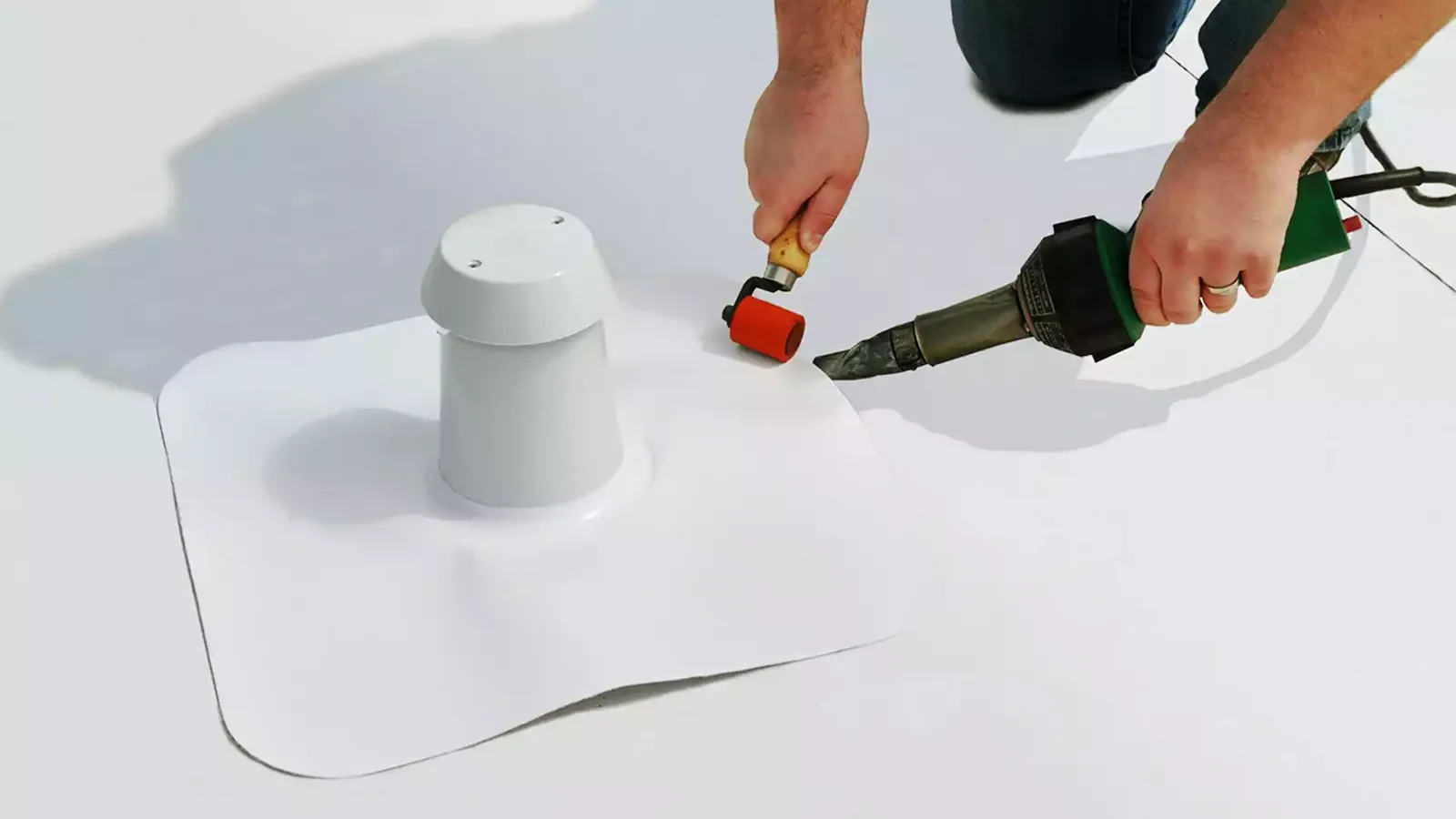
A membrane splits at a seam, and someone has to work out what the sheet actually is. On a single-ply roof the answer decides the repair: a cured rubber sheet takes tape and splice adhesive, while a thermoplastic sheet takes a hot-air weld. Carlisle SynTec makes both kinds, along with the insulation and accessories that go with them. An asset manager gets the best result from a short identification and a clear record, before anyone orders material or opens a seam.
What single-ply families does the maker supply?
Three main families. EPDM is a vulcanized synthetic rubber, black or white, joined with seam tape or splice adhesive. TPO is a white thermoplastic welded with hot air, and the maker's Sure-Weld line is a well-known example. PVC is a welded thermoplastic with plasticizers that resist fats and many chemicals. Insulation, cover board, fasteners, adhesives, and flashing accessories complete the assemblies.
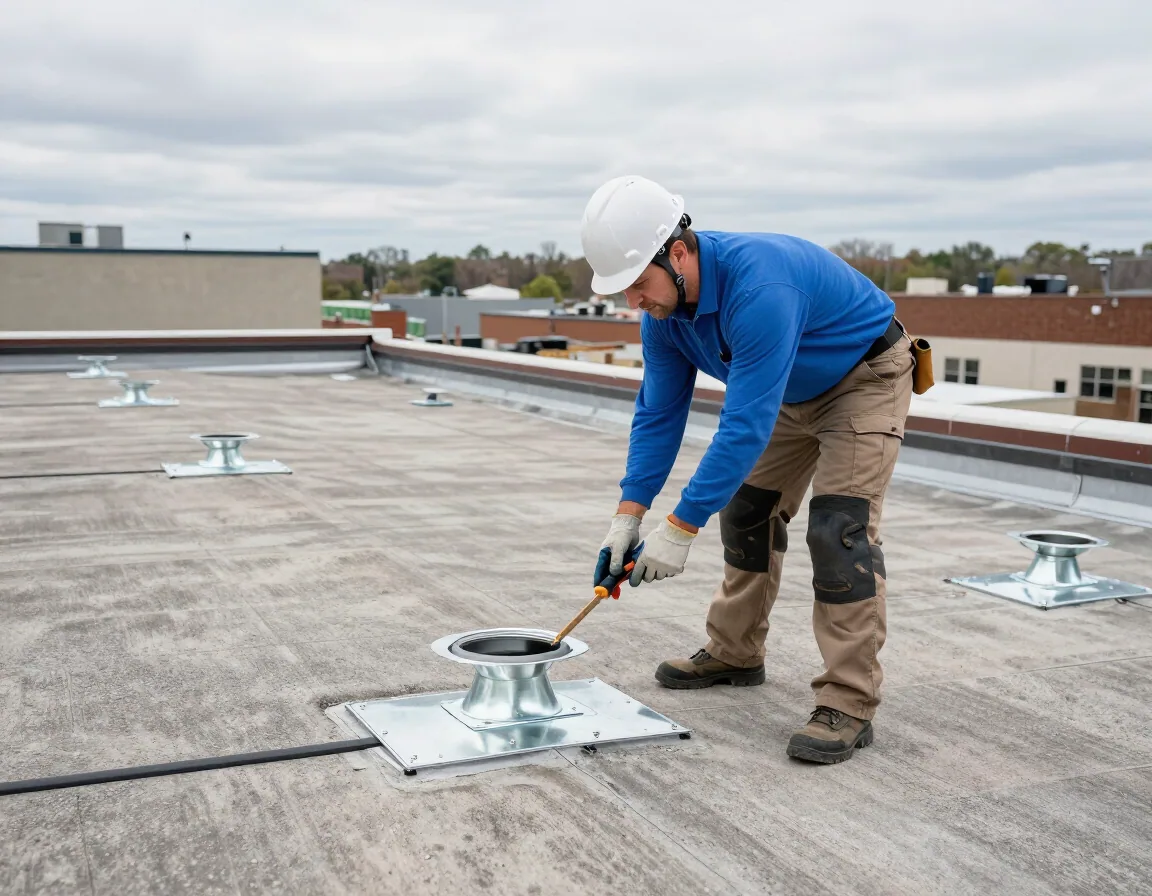
These materials behave differently, so the inspection differs too. Rubber seams are checked for lifted tape, thermoplastic seams are probed for unfused edges, and all flashings are examined for cracks, shrinkage, and loose terminations. We label each roof section by family on the sketch, which keeps a patch from being laid in the wrong chemistry.
How does an EPDM roof wear in Central Texas?
Slowly, when it is kept clean and its details are maintained. Black rubber absorbs heat, and Temple's August highs near 95F mean the membrane runs hot for months. The material tolerates that well, but the building pays in cooling load, and shrinkage can pull on parapet flashings. Over many seasons the rubber also loses some of its elasticity, so a technician checks it by hand for stiffness and surface checking, and notes any area where foot traffic has worn the sheet thin. We measure the gap at wall bases and photograph it each visit.
Seams are the other focus. A tape seam pressed under good conditions stays tight, while one applied dirty or cold can peel after years of thermal cycling. Our EPDM roofing checks cover seam edges, boot collars, and curb corners, with each defect located on the sketch and priced separately.
How do TPO and PVC differ on the same building?
TPO suits low-slope roofs with ordinary exhaust and wants a clean, reflective surface. PVC roofing suits roofs near kitchen exhaust, chemical vapors, or other aggressive discharges. Both are welded, and both rely on weld quality more than on the sheet itself.
On buildings with mixed use, such as a healthcare campus beside a kitchen wing, both may appear. Owners in Temple, Belton, and Killeen can see the same split in their portfolios. The inspection records the exhaust points and photographs the sheet around them. Where a TPO sheet shows swelling or softening near a stack, that is a chemistry mismatch, and the repair options include replacing the affected section with PVC. The record says which sections carry which sheet, which prevents a welding crew from trying to fuse the wrong material.
What do freezing nights and rain do to single-ply details?
Temple records about 26 freezing nights a year and receives roughly 39 inches of precipitation, with May the wettest month. Water that stands in a low spot expands when it freezes and stresses seams and drain edges. Cold stiffens membranes too, which means any repair tried on a freezing morning needs warmed material and a dry surface.
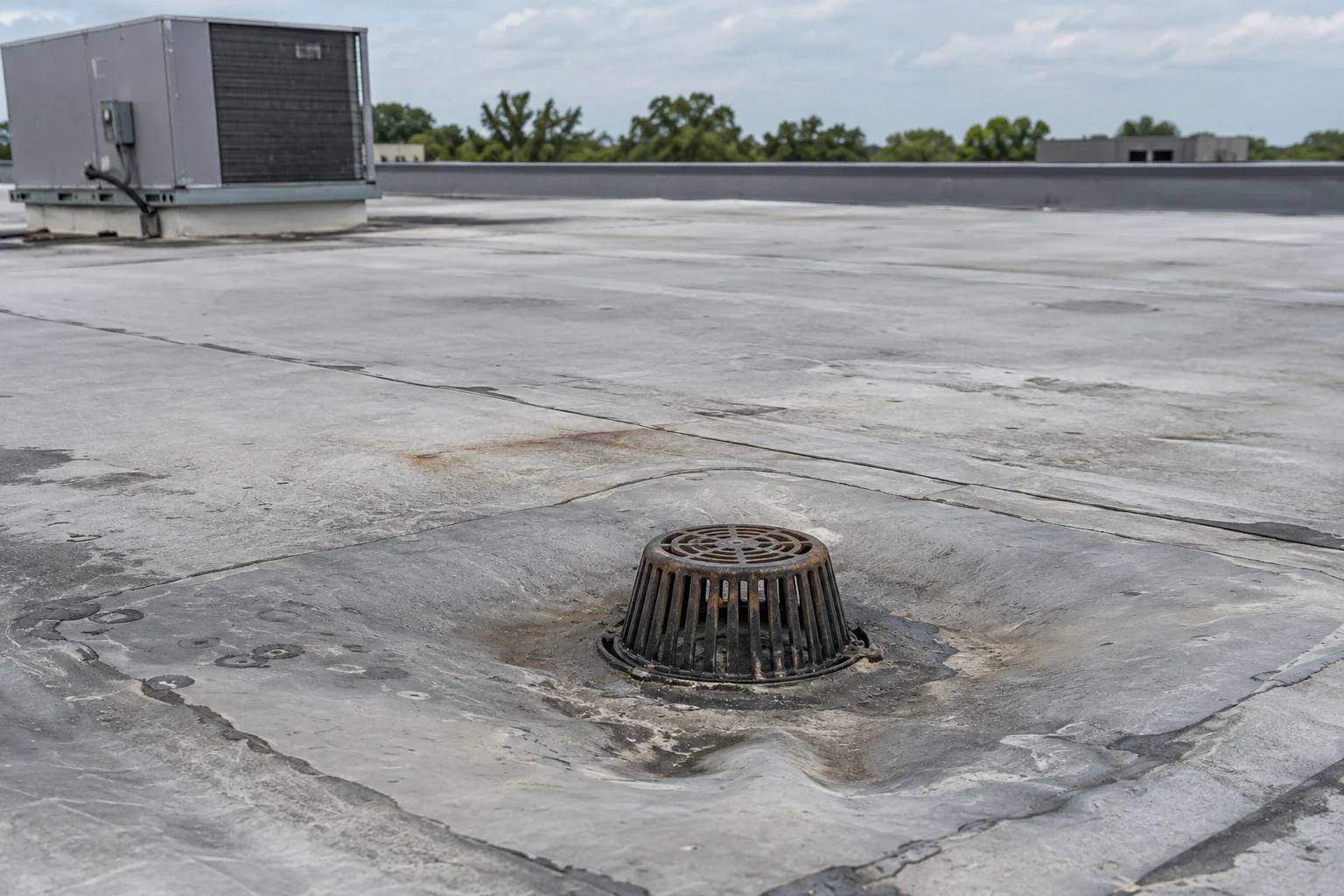
Adhesive and seam work is timed for workable temperatures, and a log keeps the conditions. A roof with a history of ponding gets its low spots measured after the first spring rain, and the number is compared with the previous year's, which shows whether a correction is needed before summer. Drains, scuppers, and crickets are checked before the cold season, since standing water through a freeze is a common start for splitting. The roof drains and scuppers record shows whether a problem is chronic or a one-time clog.
What belongs in the file when a manufacturer warranty exists?
The specification, the product labels and lot numbers if available, the installation photographs, the inspection and maintenance history, and any correspondence with the manufacturer. Warranties set conditions: who may repair, what notice is required, what maintenance is expected. The owner should read them before authorizing work, and the file should make compliance easy to show.
We document the roof's condition and the repair, so the owner and the manufacturer are working from the same facts. Mixed portfolios, with a roof from another maker such as Versico or Duro-Last on a neighboring building, are tracked in the same format, with each roof's terms listed separately.
Distribution and industrial owners carry the largest exposure here, since a large roof makes the cost of a mislabeled sheet, a wrong adhesive, or a missed seam very real. Temple has an H-E-B and a Walmart distribution center, each about 2 million square feet by EDC account. The method is the same at any size: identify the sheet, record the details, and keep the repairs compatible from the first call to the last, so a large roof is never patched with a guess.
How are single-ply roofs checked after a tornado or wind event?
The evening of May 22, 2024 brought two tornadoes: an EF-2 over Temple itself, with winds near 120 mph, and an EF-1 that started near Little River-Academy. Straight-line gusts of 80 to 90 mph were also estimated across the city. Single-ply roofs lose edges first, then flash points, then field membrane if the perimeter gives way. Rooftop units shift on their curbs, and the flashing around them tears with the movement.
We walk the edges, check coping and termination bars, look for fluttered membrane and torn flashings, and photograph debris punctures. A tornado damage roof repair list orders what we found by urgency. The make-safe step stops water, the holding repair buys time, and the permanent scope follows from the manufacturer's details for the sheet involved.
Commercial Roofing Questions
What is the quickest way to tell EPDM from TPO or PVC?
Color and seams help. Black or white rubber with taped seams is usually EPDM. A white or gray sheet with welded laps and a small bead at the edge is thermoplastic. A flame-free test patch, or a small sample sent for identification, settles doubtful cases, and the answer goes in the file. Identification also settles which cleaner, primer, and adhesive are safe to use on the sheet.
Why do some single-ply roofs need cover board?
To protect insulation from foot traffic and impact, to give adhesives a firm surface, and in some assemblies to improve fire performance. A softer substrate lets the membrane flex and puncture. The scope states whether cover board is included and why, so owners can compare proposals fairly.
Can a repair be made in cold weather?
With care. Adhesives and tapes need minimum temperatures, surfaces must be dry, and welded repairs need controlled heat. If conditions are poor, a temporary seal holds until the weather improves. We log the conditions and label the repair as temporary if it was made outside the ideal range.
How do we compare a Carlisle SynTec proposal with another system?
Line by line: assembly, attachment, edge details, flashing materials, accessories, record-keeping at closeout, and the roof's wind and drainage design. Price follows those lines. Comparing only the membrane name hides the differences that decide how the roof performs.
Will older single-ply sheet accept a new patch?
Usually, if the surface is clean and the sheet still has flexibility. Aged membranes can stiffen or lose plasticizer, which affects bonding. A test patch and a pull check show whether the repair holds. If not, a larger section is replaced and tied into sound material.