EPDM Roofing
An EPDM roof that is pulling away from a wall is failing at the edge of the sheet, and the first decision belongs to whoever holds the maintenance budget. Rubber membranes shrink slightly as they age. The movement is small on the field but concentrated at the wall flashing, where the sheet is held, and that is where a gap opens and rain finds the insulation. In Temple, TX the first sign can be a stain below a parapet after a spring storm.
The first hour is about water. The make-safe step closes the gap, the intake record documents what shifted, and the permanent scope waits for the walk.
Why does EPDM fail at walls and curbs?
EPDM is a vulcanized rubber sheet that arrives in wide rolls and is joined with adhesive or tape. It has a long service history, flexibility in cold weather and good resistance to ponding, and its weak points are predictable: shrinkage at terminations, failed splices and punctures. Because the sheet is stretched and fixed at each vertical surface, a few millimeters of shrinkage over years can pull a termination bar loose or open a corner.
We probe each corner, each curb and each pipe boot. A pipe boot that has cracked in the sun, a corner patch that has lifted, or a termination bar with failed sealant above it all go on the intake record with a photograph and a plan location. The flashing failure repair that follows rebuilds the detail, not just the caulk line. On a roof with many penetrations, the boots are counted and graded, because a dozen aging boots on one roof are a dozen small leaks waiting for the same hot afternoon.
How does Temple's weather treat a black membrane?
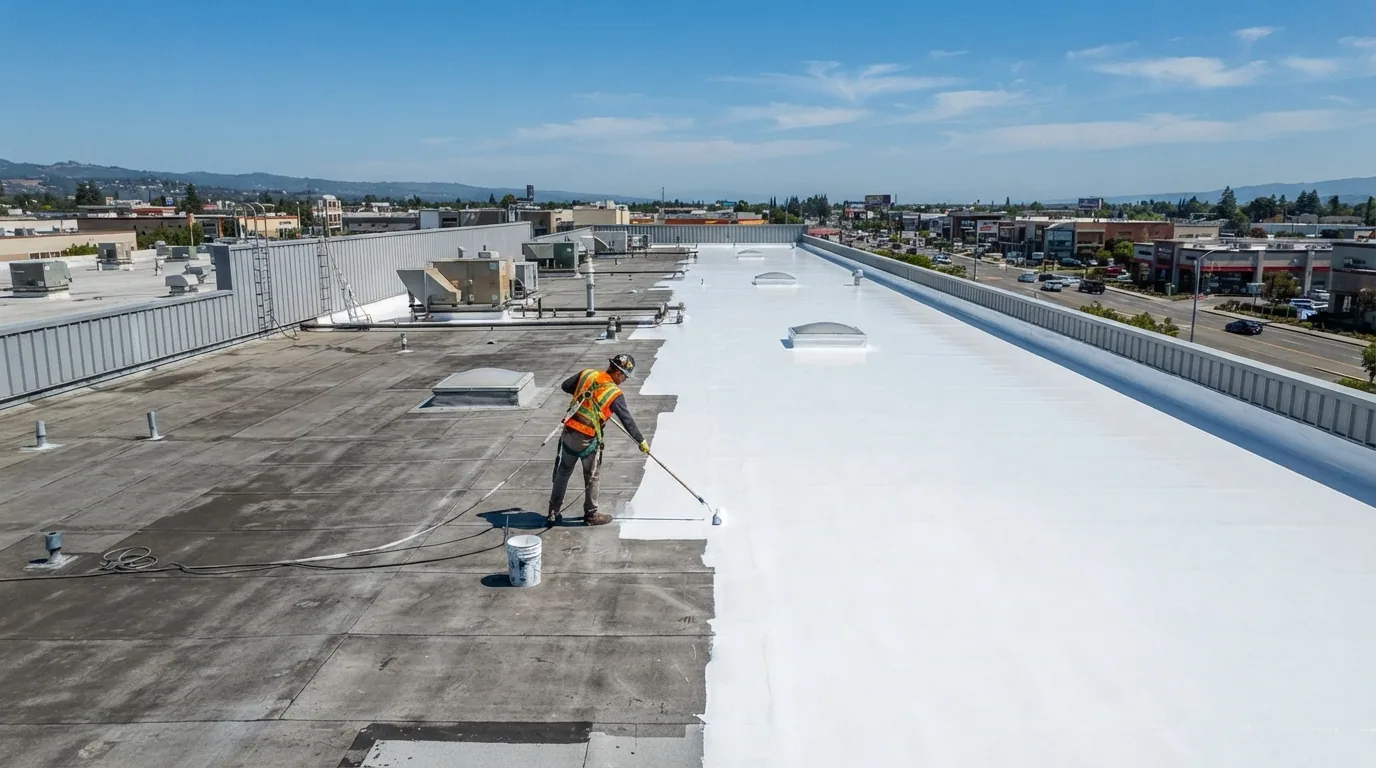
A black membrane soaks up a summer in which Temple's August highs reach about 95F and the thermometer clears 90F on some eighty days. Surface temperature on a dark roof climbs well above the air temperature, and splice adhesives and sealants age faster under it. A white-coated or light-colored EPDM reduces the load, as does a reflective acrylic coating over a sound surface, and the scope offers both options with the finding that favors each.
The other side of the cycle is a short one. Roughly 26 nights a year fall below freezing, and EPDM stays flexible through them, which is why it has a record in cold climates. The stress here is the sum of the two: a long hot season and a handful of cold snaps working on the same splice. A splice that was cleaned and primed properly handles it, and one that was not eventually peels.
Is a ballasted EPDM roof safe in a wind event?
Many EPDM roofs are held down by stone ballast instead of adhesive or fasteners, and the stone is the system's weak point in high wind. On May 22, 2024 an EF-2 tornado struck Temple, and that evening a weaker EF-1 tornado formed near Little River-Academy. Estimated straight-line winds ran at 80 to 90 mph across town. Ballast that is thin at the corners and edges can scatter in winds like those, and it becomes a hazard to people and vehicles below.
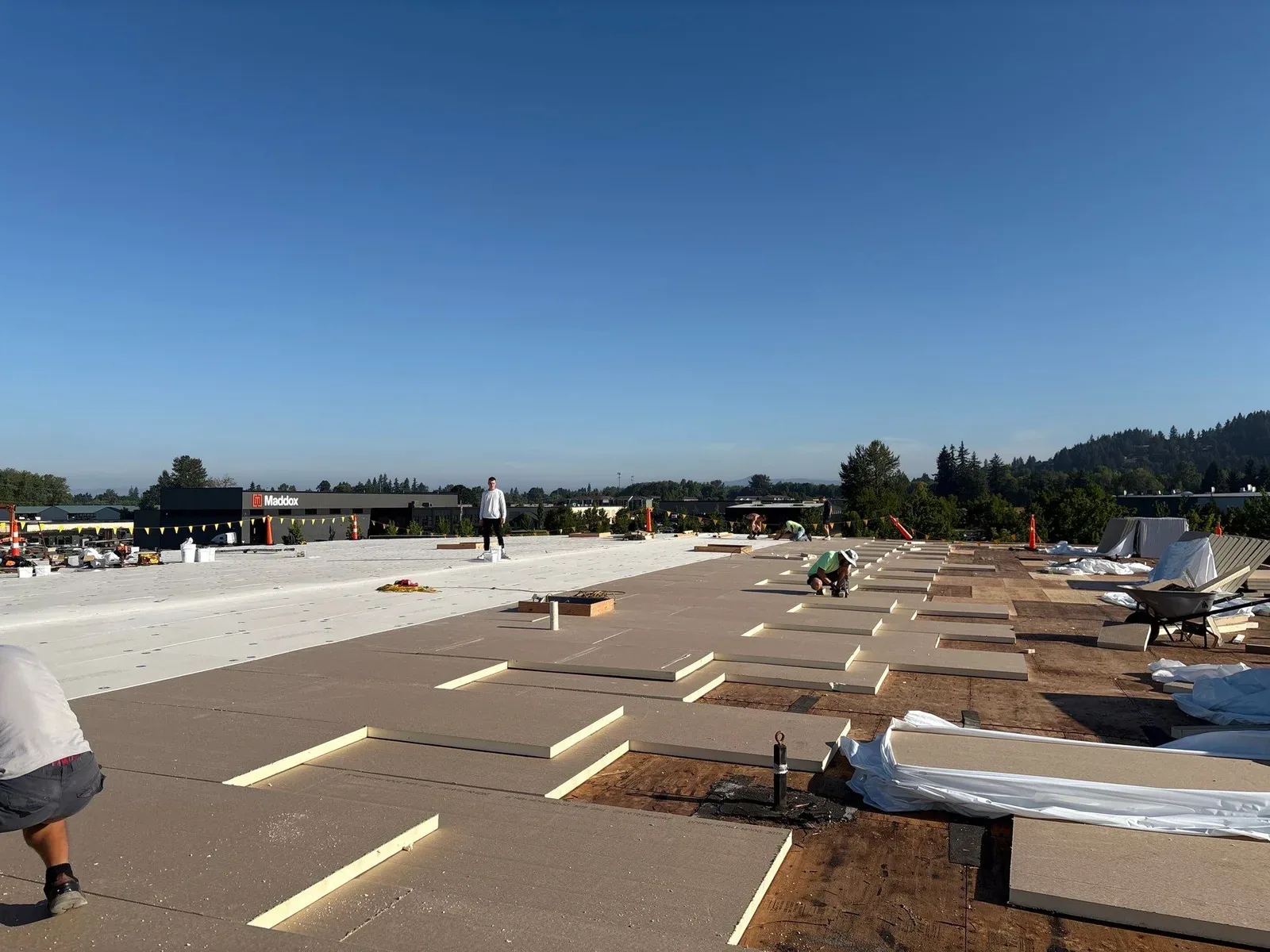
The inspection measures ballast depth at the corners, edges and field, and checks the stone size against the wind exposure of the building. Where the ballast is thin, the plan redistributes or replaces it. Where the roof cannot carry more weight, a fully adhered system may be the better answer, and the scope states why. A wind damage roof repair after a storm starts with a ballast survey. Stone that has blown off is also a finding about the roof's past: bare patches show where the membrane has been exposed to sun and traffic, and they get the closest look.
What does a moisture survey add on an EPDM roof?
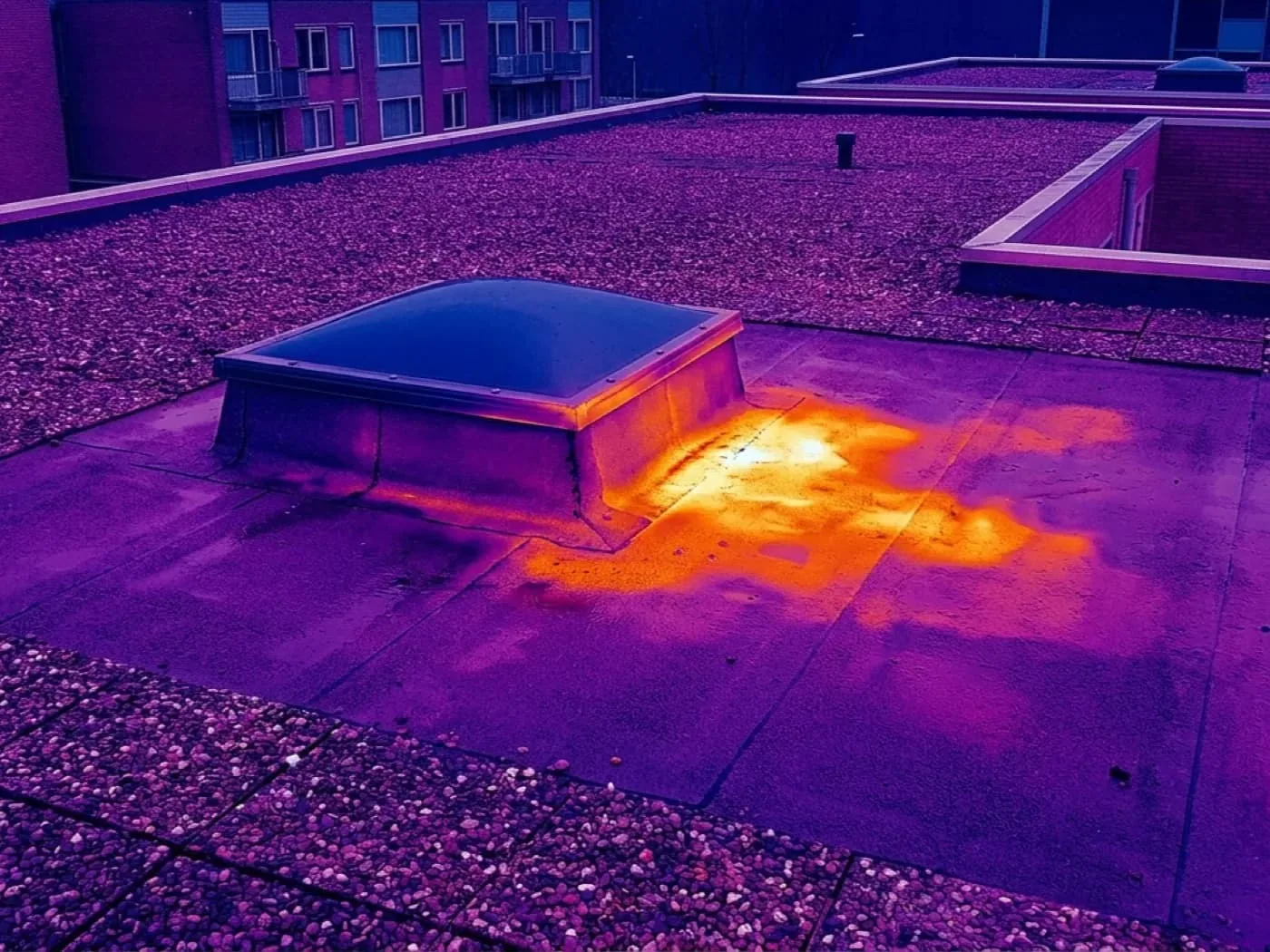
Ballast and black membrane hide water well. A leak can travel under the sheet and show itself far from the entry point, so the visible stain tells little about the source. An infrared moisture survey backed by core cuts draws the wet insulation on the plan. That map is the difference between replacing a section and replacing a roof.
May is the wettest month in Temple, at 5.4 inches of a roughly 39-inch year, so spring rain is the likely test of any repair. We schedule the survey before the wet season when possible, and the repair list goes to the asset manager with enough time to fund it. Core cuts also tell us the thickness of the membrane and whether the sheet was mechanically fastened or adhered, which sets how a replacement will be attached.
What does a holding repair on EPDM look like?
It is a defined patch, a re-adhered corner, a new boot or a strip of splice tape over an opened seam, with the expected service period written down. EPDM takes repairs well when the surface is clean and dry, which is why the work waits for dry weather or happens under a temporary shelter. A holding repair over wet insulation is labeled as a bridge and dated for review.
The decision left to the asset manager is whether the roof has another cycle in it. The record shows the sheet's shrinkage, the number of patches already on it and the moisture results, and the recommendation follows from them. A repair crew works from the low side to the high side, closes each patch with a probe check and leaves a photograph of the finished detail next to the before image.
Where do EPDM roofs sit in a portfolio ranking?
EPDM suits large, simple roofs, and an industrial or storage owner in the Temple Industrial Park or the Belton Business Park may find it on a building there. The ranking weighs ballast condition, shrinkage and moisture results, and it ranks the buildings by what a failure would cost in inventory and downtime. A warehouse roof with active leaks over product comes first.
The ranking also names the alternatives to a like-for-like replacement, such as TPO, and states what each would change about weight, wind performance and cost. Where a ballasted roof sits over a deck that can carry the weight, the plan notes it, since removing stone also means disposal and a crane day that belong in the budget.
Commercial Roofing Questions
Why do EPDM roofs leak at the wall instead of the field?
Because the sheet shrinks slightly with age and is fixed at each wall. The strain collects at the termination, and a small gap there admits more water than a field defect would.
Can an old EPDM roof be coated?
Only if the surface is clean, the seams are sound and the insulation is dry. Many EPDM roofs need splice repairs and a moisture survey before a coating is considered, and some are better replaced.
How much ballast does a roof need?
The building's height, location and wind exposure set it, and the amount is highest at corners and edges. We measure what is on the roof, compare it to the requirement and propose a correction where it falls short.
Is EPDM suitable over a restaurant or a kitchen exhaust?
Grease and oils attack EPDM, so a different membrane is usually a better fit near kitchen discharge. The scope compares options for those areas.
Can EPDM be repaired in cold weather?
Some repairs can, if the surface is dry and adhesives are kept within their temperature range. When conditions do not allow it, we place a temporary seal and schedule the permanent repair.