PVC Roofing
The first question on a failing PVC roof is whether the membrane has stiffened, because a stiff sheet cracks at the very details that keep it dry. Over years in the sun, PVC loses some of the plasticizer that makes it flexible, and the first symptoms are hairline cracks at corners, around curbs and along fastener lines. In Temple, TX the asset manager who gets that call has an hour to decide whether the building needs a make-safe patch or a full survey.
We answer with a short triage: where the crack is, how far the stiffness runs and what sits under the roof. The permanent scope comes after the walk, not before it.
Why do owners choose PVC over other single-ply sheets?
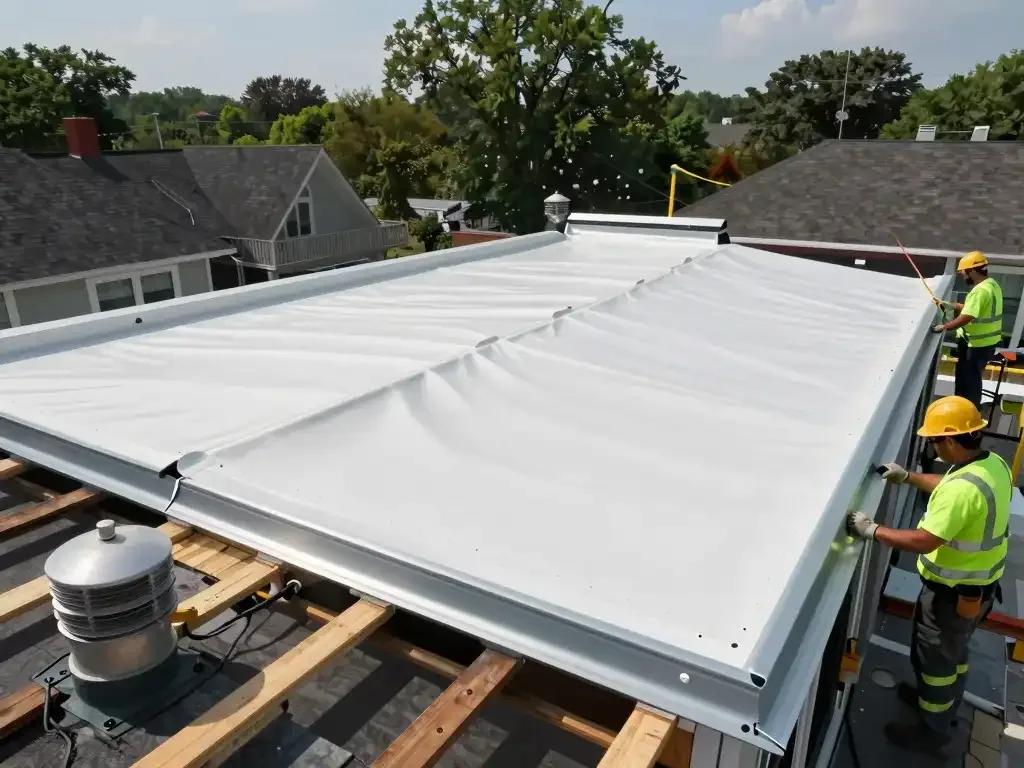
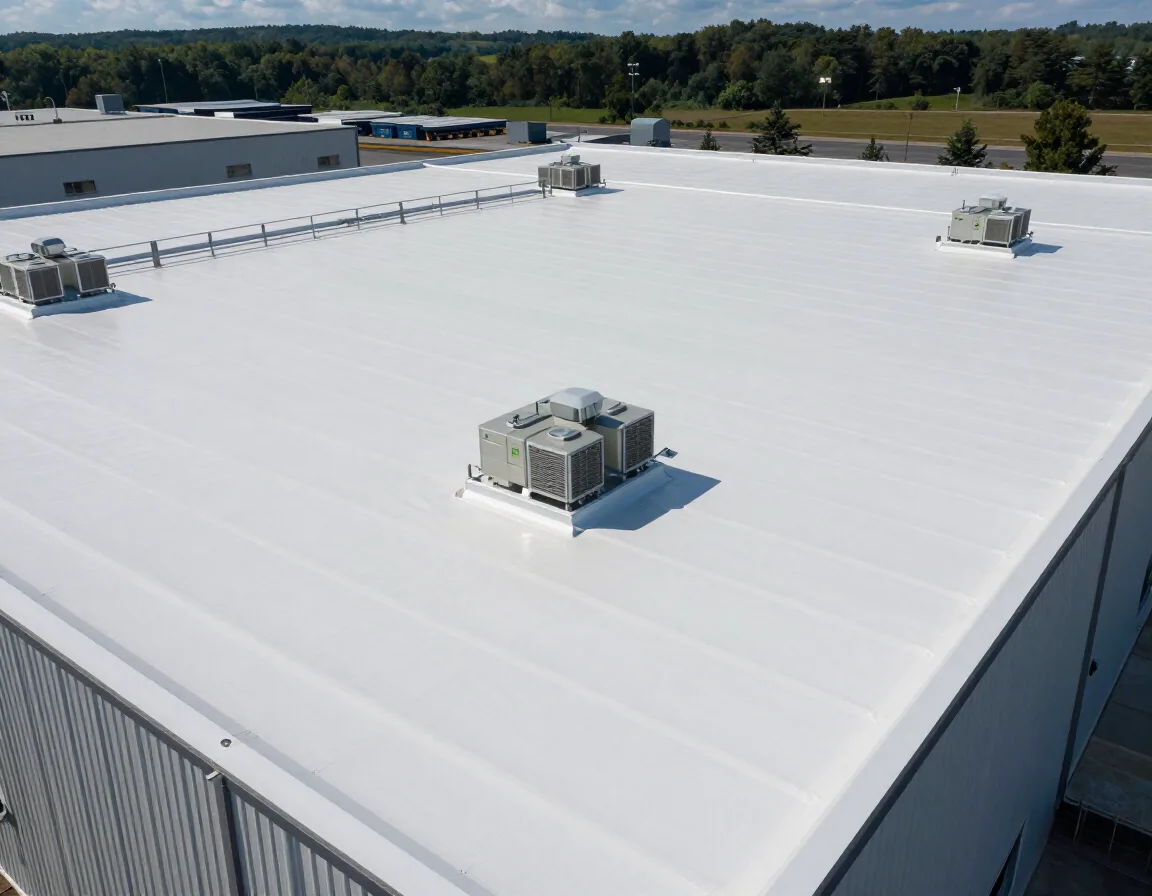
PVC resists grease, oils and many chemicals that break down other membranes, and it is inherently flame-retardant. Its seams are heat-welded into a continuous sheet, and the welds are typically stronger than the membrane beside them. Those traits make it a sound candidate over kitchens, laboratories, mechanical rooms and process exhaust.
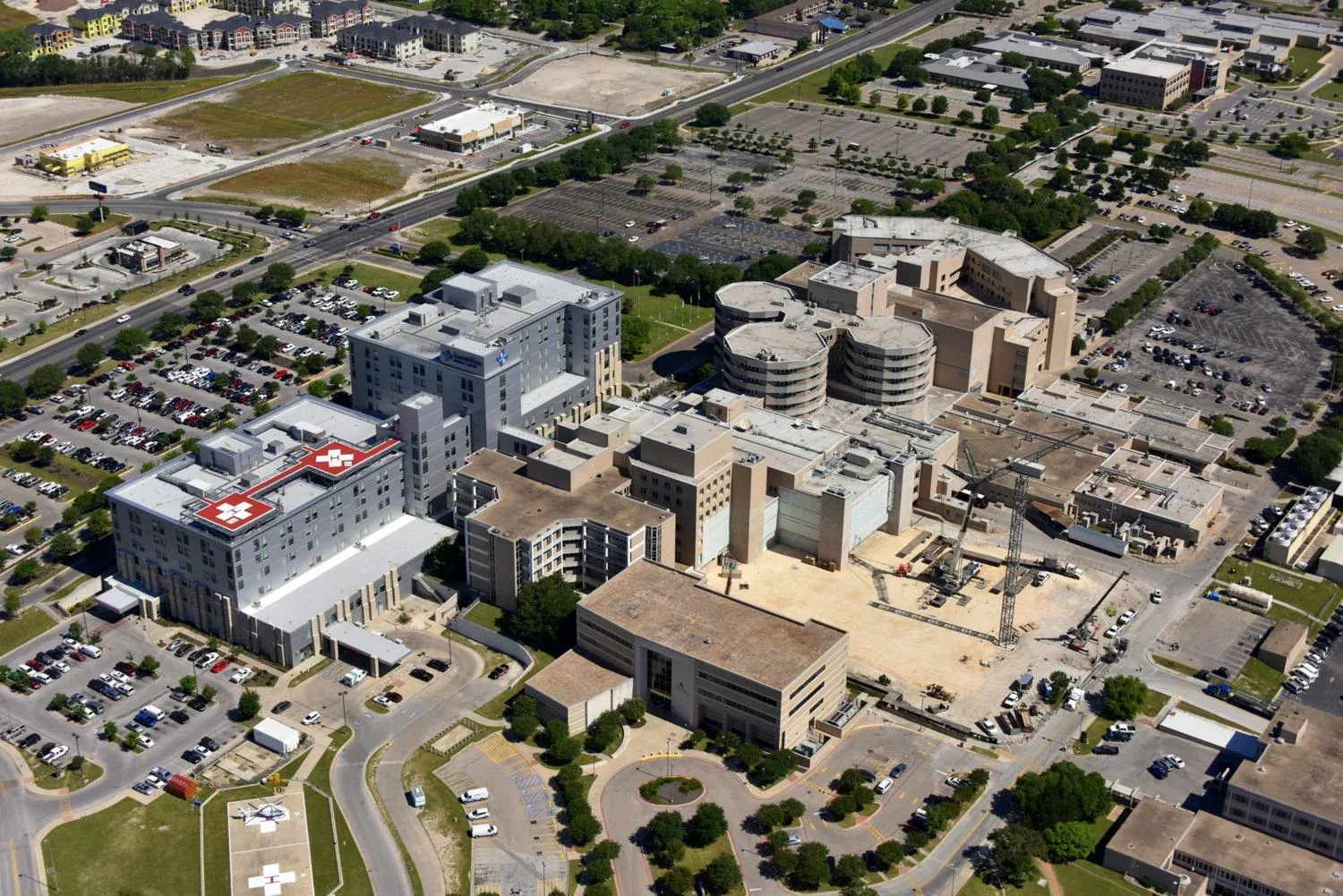
Temple has plenty of roofs where that matters. Healthcare campuses lead the city's building stock, with Baylor Scott & White Health and the Central Texas Veterans Health Care System among the largest employers. A hospital or clinic roof carries air handlers, exhaust and sometimes kitchen discharge, and a membrane that tolerates those exposures is worth pricing beside the alternatives for any hospital roof. The same reasoning applies to a restaurant pad or a plant with process exhaust, where the downwind area of each fan gets its own entry in the survey.
How do we read an aging PVC membrane?
We bend a cut sample and watch for cracking, press the surface near exhaust and measure thickness against the original specification. A sheet that stays flexible and has most of its thickness left can be repaired and cleaned. A sheet that cracks on a gentle bend has reached the end of the line, and patches placed on it will crack beside the patch.
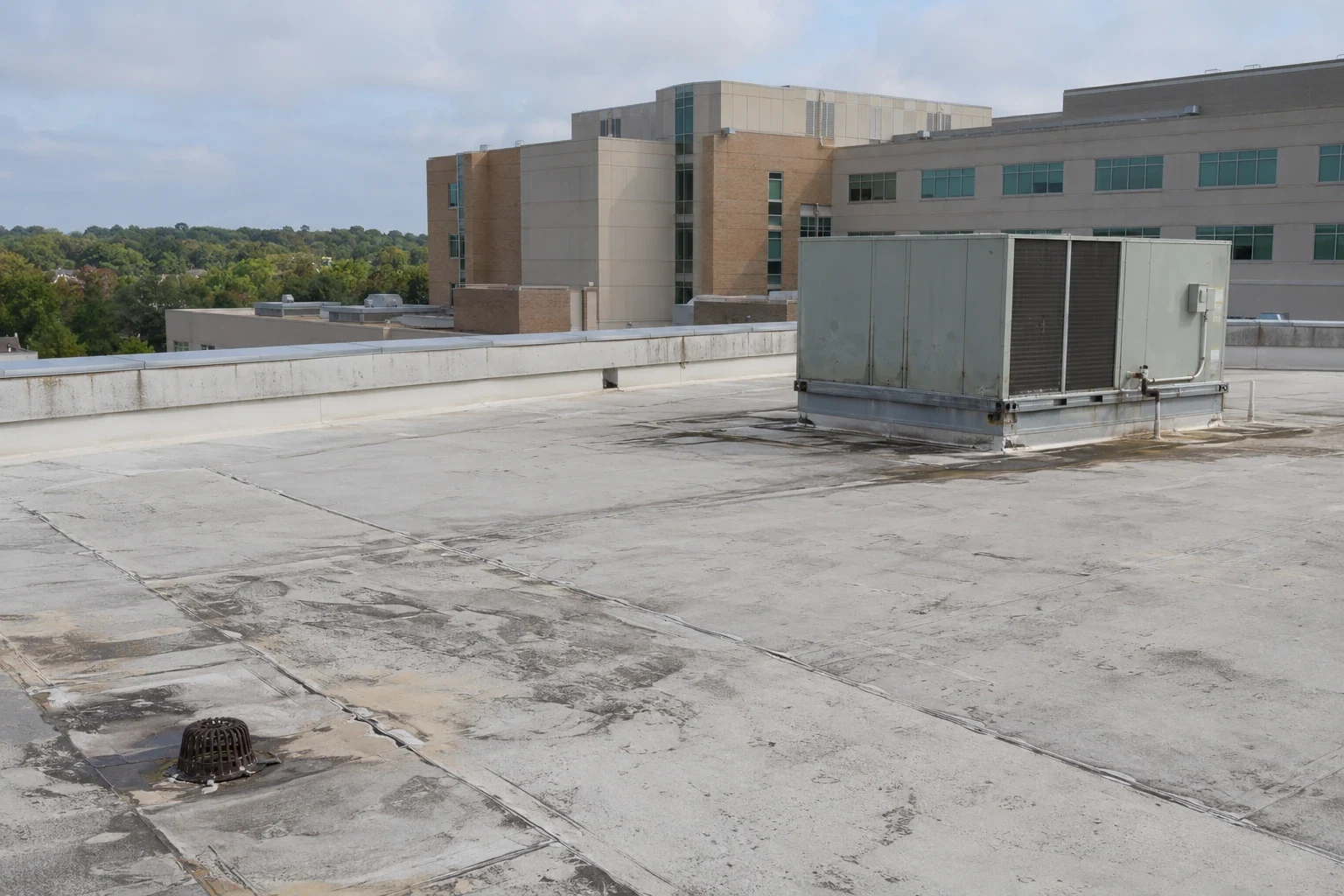
The intake record notes every crack, every weld edge that lifts and every spot where grease or chemical residue has built up. Photographs go on the roof plan with numbers, so the repair list matches the roof item for item. Where the cause is a failed flashing, the scope rebuilds that detail instead of sealing over it. Where grease or chemical residue is present, we test it with a small cleaning patch and re-measure the surface, since some residue can be removed and some has already done its work.
What does a freeze do to PVC?
February 2021 brought 9 days at or below freezing to Central Texas, Killeen included, and Temple sees about 26 freezing nights in an ordinary year. PVC gets stiffer in the cold, so an aging sheet is most likely to crack during or just after a hard freeze. That is the moment a latent defect becomes a leak.
The same temperature sensitivity affects installation. Welding and adhesive work in cold weather needs a dry surface, controlled seam temperatures and a pause when conditions fall outside the manufacturer's limits. We place winter work where the schedule allows it and keep a heated storage plan for adhesives. After any hard freeze, a short walk of the high-risk roofs is part of the dispatch window.
How is a PVC roof installed on an occupied building?
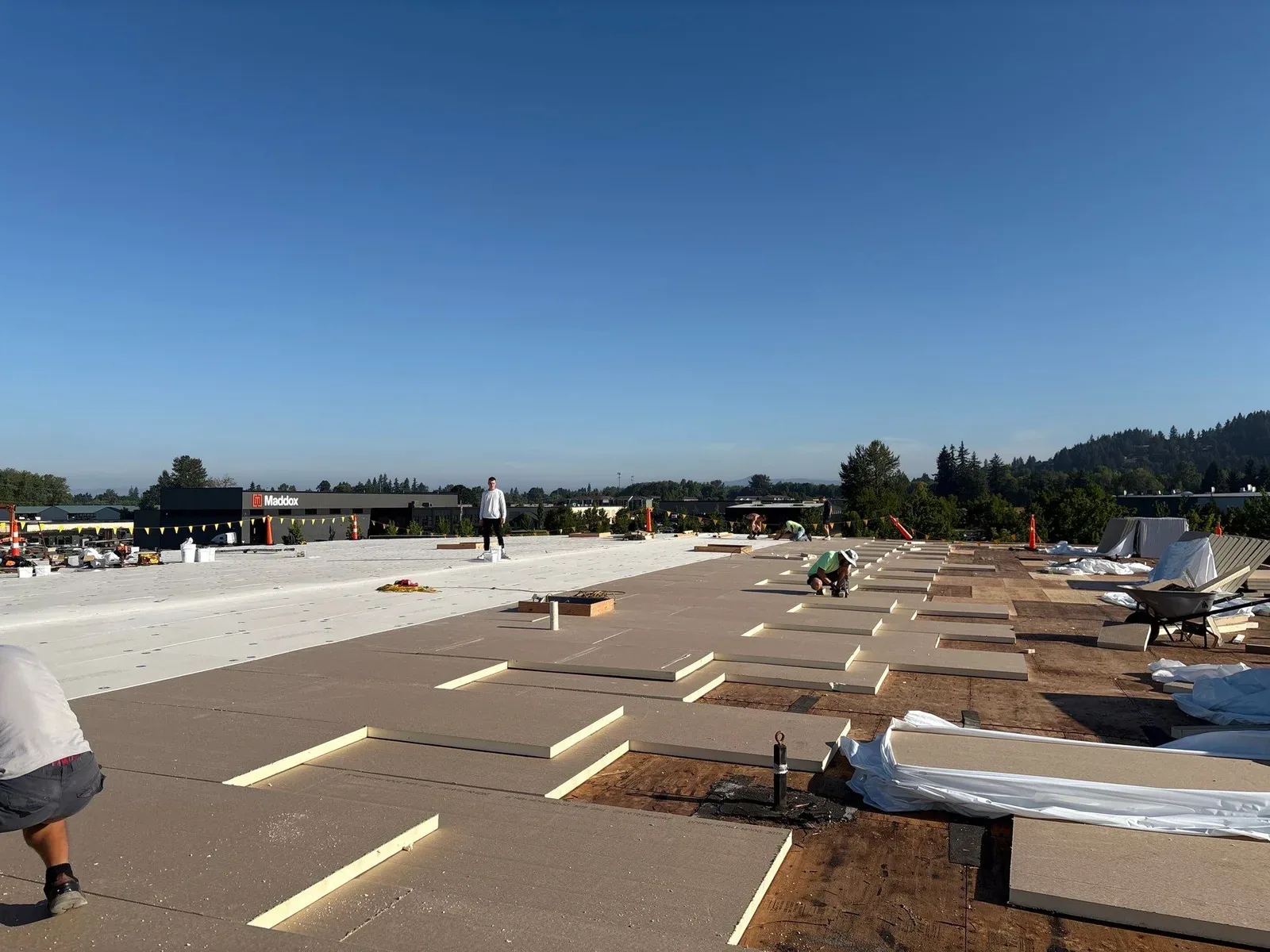
The sequence runs in a fixed order: access and staging, tear-off in sections, deck inspection, insulation and cover board, membrane, welded seams and flashing, then a probe test of every weld. Each section is dried in before the crew leaves, with a temporary seal at any open termination. Crane picks and material hoists are placed away from air intakes, ambulance routes and loading docks.
On a working campus, the hold points matter. The make-safe step is separate from the permanent scope, the hot-work and fume controls are agreed with the facility team in advance, and the dispatch window for the crew is set to the building's quiet hours. If a tenant or department needs a section kept closed on a particular day, the plan moves that section later and says so in writing.
Is the insulation under the PVC dry?
Water from a roughly 39-inch Temple year, with 5.4 inches in May alone, travels into the insulation through a cracked PVC sheet. A moisture survey with core cuts maps the wet area. If the wetness is confined, the plan cuts out the wet boards and patches in new insulation and membrane. If it is widespread, a commercial roof replacement becomes the rational choice.
For roofs with dry insulation and a sound but dirty surface, cleaning and spot repair can hold for a defined period. The record states how long, and what finding would end it.
What is a holding repair on a PVC roof?
It is a defined, short-term fix for a roof that will be replaced or restored later: a re-welded seam, a new cover strip over a crack or a rebuilt corner at a curb. We label it as a holding repair, list the date it should be reviewed and photograph it so the next visit starts from a known baseline.
Emergency work after a storm follows the same principle. Wind that lifts a PVC edge, a real risk in a city that took the May 22, 2024 tornado, calls for a make-safe step first. The permanent scope follows, separately priced, so the stabilization cost is not buried in the long-term decision. The wind damage roof repair after such an event is written as its own phase.
Where does PVC rank in a capital plan?
PVC roofs cost more per square foot than some alternatives, and their value shows over a long life if the sheet is kept clean and the seams intact. The portfolio ranking therefore weighs remaining thickness, flexibility and the exposure of each building. A PVC roof on a lab building near the Temple Medical and Education District may rank higher than a similar roof on a storage building, because the consequences of a leak differ.
Owners also see the alternatives: TPO for budget and reflectivity, KEE for tougher chemical exposures. The ranking ends with a recommended next decision and a date. Reports are written so a lender or insurer can read the ranking cold, with each line tied to a dated photograph and a reading from the roof.
Commercial Roofing Questions
How can an owner tell whether a PVC roof has stiffened?
Look for hairline cracks at corners, curbs and fastener lines, and have a sample cut and bent. A sheet that cracks on a gentle bend has lost its flexibility, and repairs near it will not hold for long.
Does grease from a kitchen exhaust damage PVC?
PVC tolerates grease better than many membranes, but heavy buildup still needs cleaning and a containment tray. We check the downwind area on every visit and add the cleaning to the maintenance list.
Can PVC be installed in winter?
Yes, within limits. The surface must be dry, seam temperatures controlled and adhesives kept warm. Work pauses when conditions fall outside the manufacturer's limits and resumes when they return.
Is a PVC recover possible over an older roof?
When the existing insulation is dry and the deck is sound, a recover with a separation layer can work. Core cuts and a moisture survey confirm those conditions before anyone prices it.
What documentation helps with a warranty or claim?
A dated photo set tied to the roof plan, the thickness readings and the repair list. It shows the condition before and after each visit.