College and University Roofing
A lab ceiling stains on a Monday, and the department chair wants to know whether research equipment is at risk. That is the first hour on a campus roof leak, and the person who makes the call is rarely the person who owns the roof. On a college or university campus in Temple, TX, the roof record has to serve three readers at once: the facilities office that dispatches the crew, the department that occupies the room, and the capital planner who funds the fix.
What fails first on a campus roof?
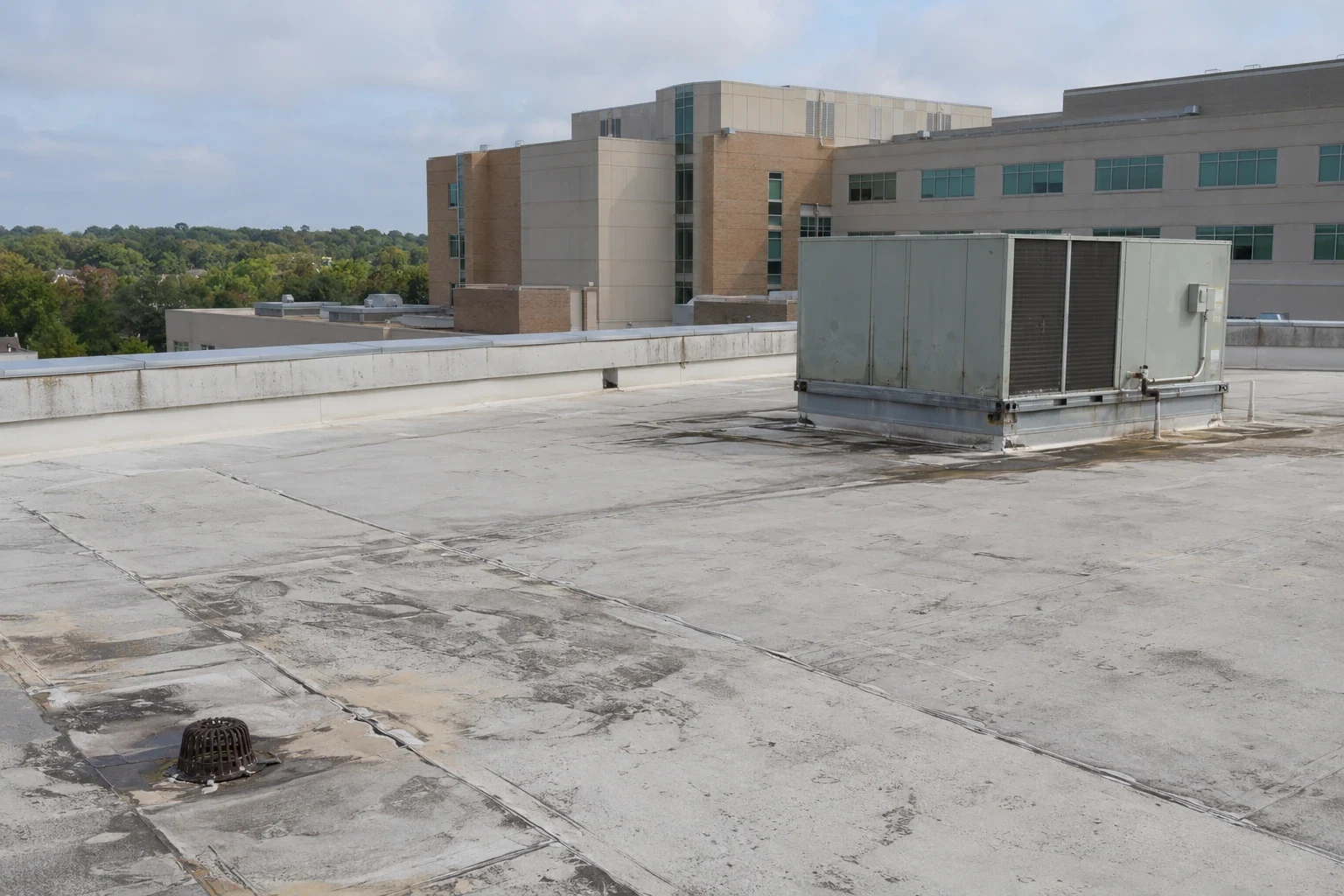
Campus roofs are a patchwork. Older halls sit beside newer additions, with tie-ins where one roof meets another. Those tie-ins, along with parapet walls, expansion joints, and rooftop mechanical equipment, are the usual failure points. A leak in a modern lab wing often traces back to a flashing detail where the original building meets an addition from a later decade.
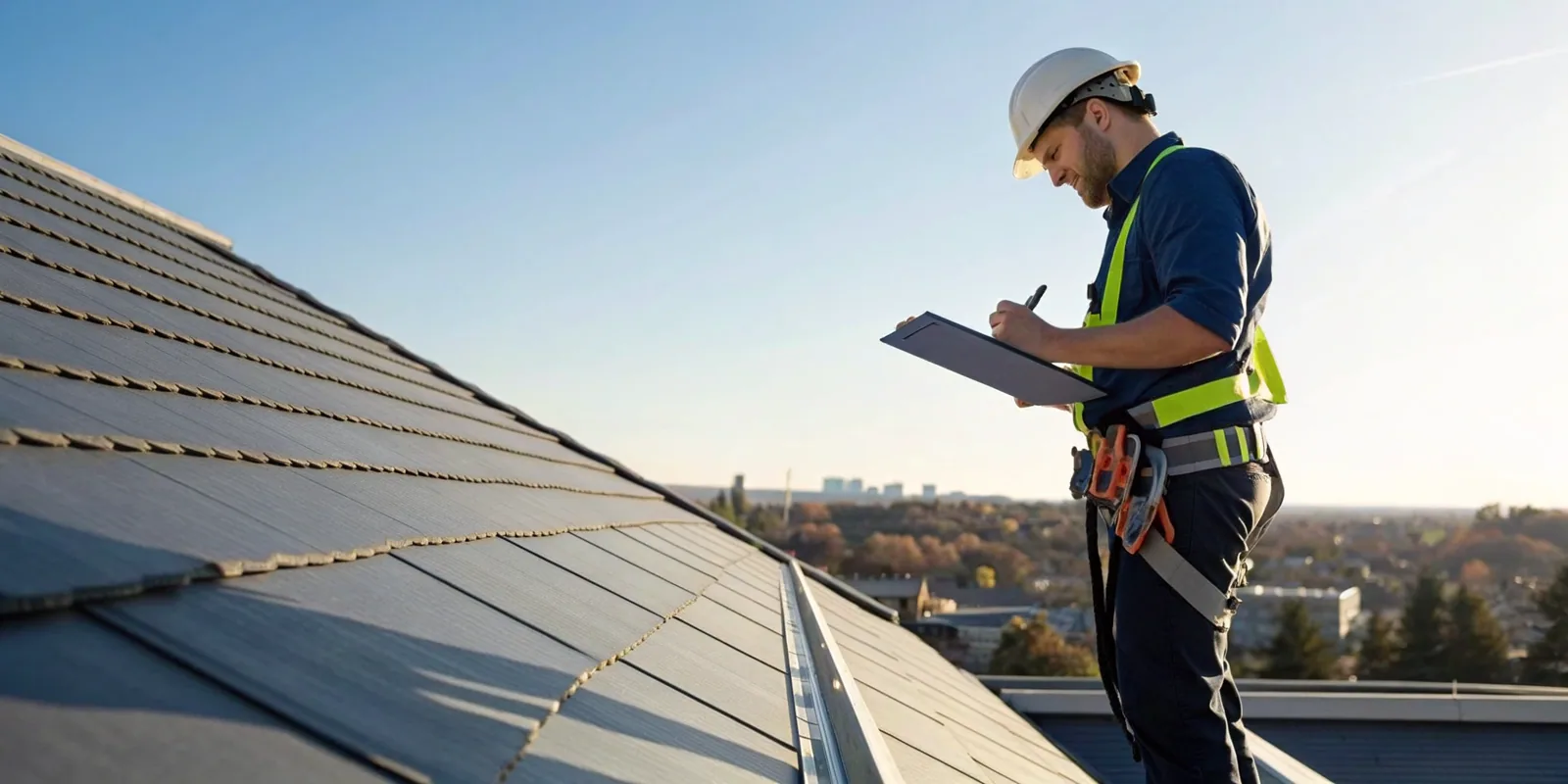
On the first walk we number every roof section on a campus map and treat each as its own roof. Seams, flashings, and drains are logged with photographs. We also record the transition between old and new construction, because water finds those joints faster than anything else. Sealants and single-ply seams get a hard summer in Temple, where August afternoons near 95F and about 80 days over 90F are normal, so the walk is timed before and after that season.
What does the Temple education district mean for roofs?
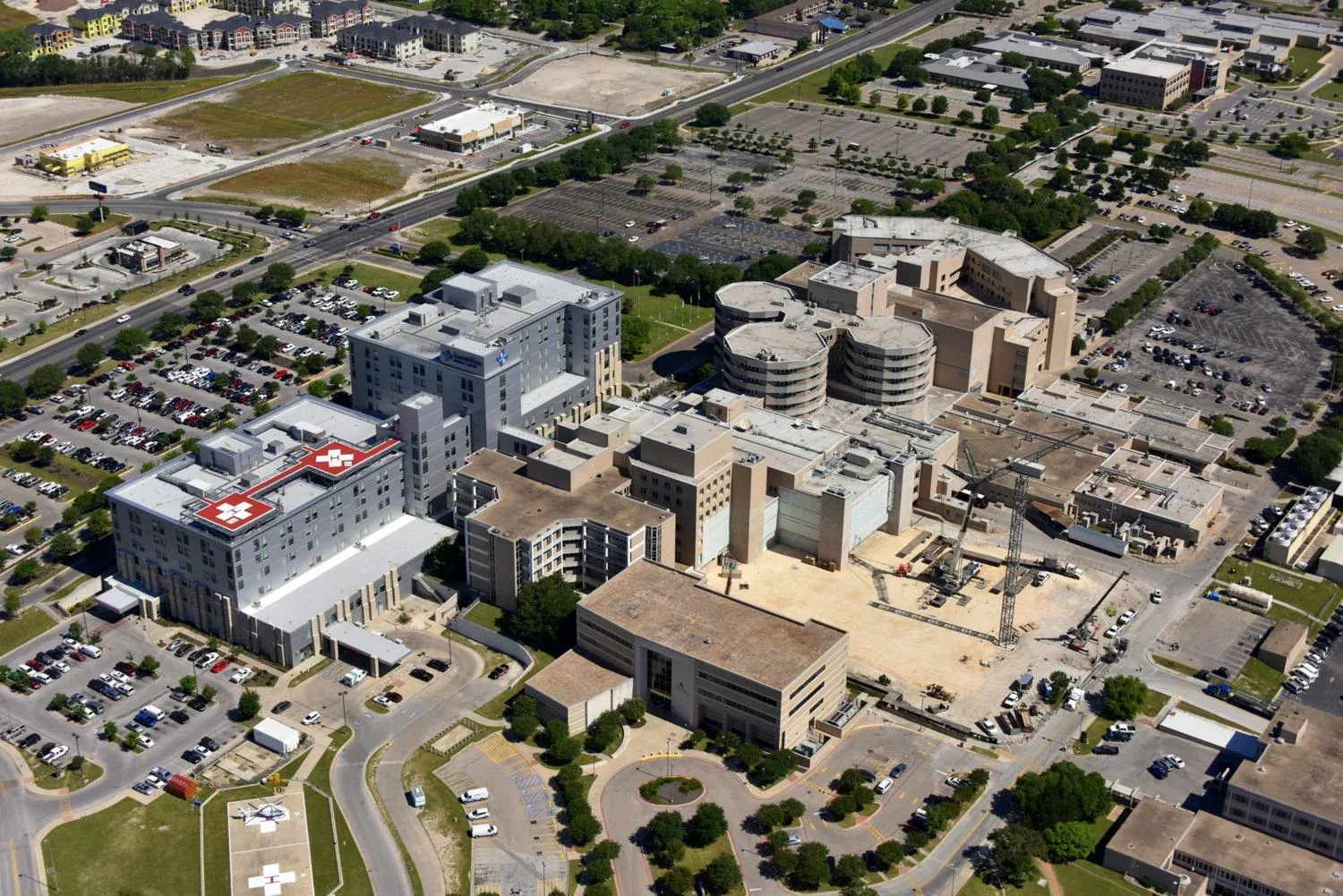
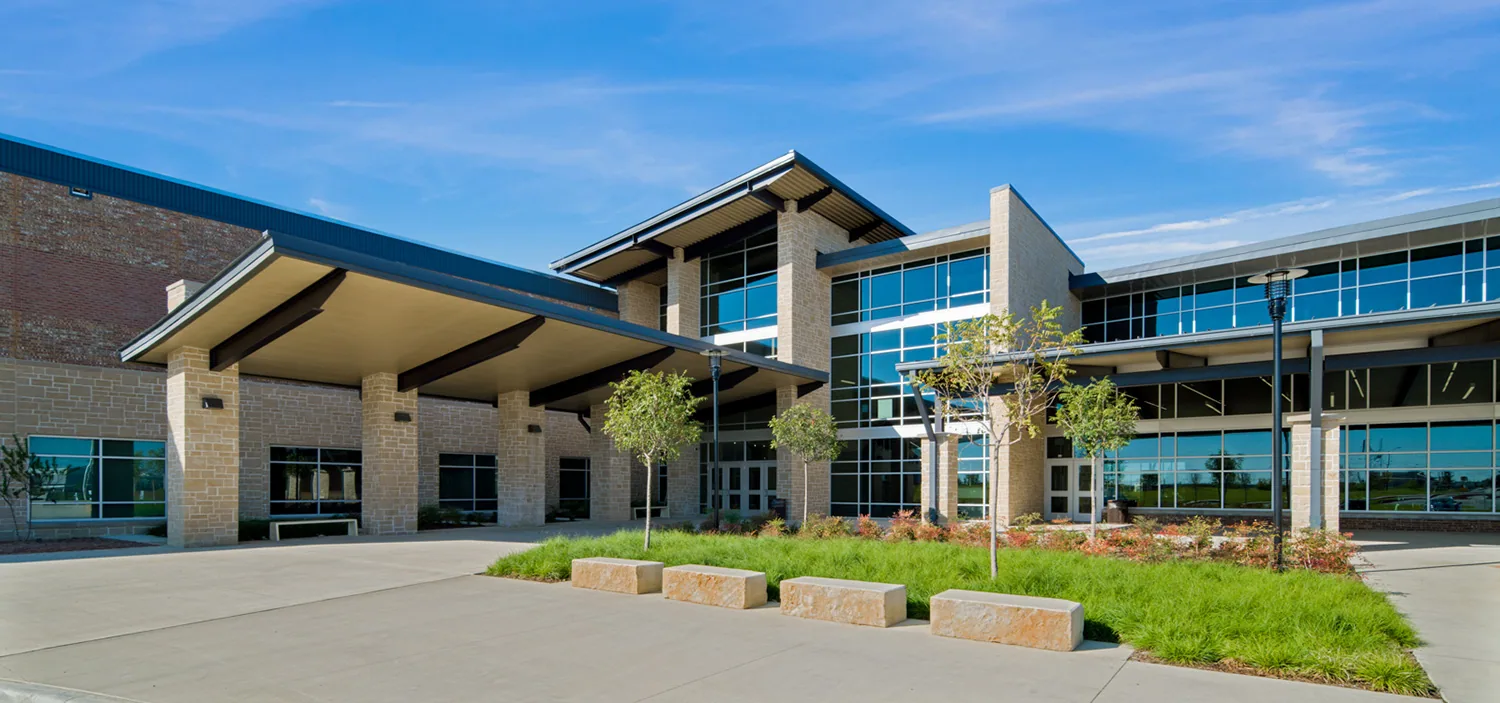
The Temple Medical and Educational District sits adjacent to downtown and covers roughly 2,000 to 2,240 acres. Temple College is one of its principal institutions, alongside a hospital campus and a school district science academy. In Belton, the University of Mary Hardin-Baylor has enrollment near 3,900, and the Bell County Expo Center is also located there. An institution like that has a facilities department answering for many buildings at once.
The point for a roofer is scale and mix. A campus is never one roof. It is dozens of sections with different systems, different ages, and different occupants below them. The first deliverable is therefore a campus-wide condition survey with a consistent rating scale, so one residence hall can be compared with one science building. Work in the Temple education district and in Belton follows the same format.
What does make-safe look like inside an academic building?
The make-safe step depends on what sits below the opening. Over a classroom, a temporary dry-in and a bucket line are enough. Over a laboratory, library stacks, or a server room, the priority is protecting equipment and materials, and the facilities staff may need to cover or move contents while the roof crew works above. We photograph the opening before covering it and tag the location on the campus map.
A holding repair then stops active water entry and buys time until the permanent scope can be scheduled for a break between terms. It is labeled as temporary in the intake record, with the date and the materials used. After a storm, the same sequence applies to edges and rooftop equipment. A campus that checks its edge metal before spring is better placed than one that waits, since estimates after the May 22, 2024 storm put straight-line winds at 80 to 90 mph across Temple.
How are wet roofs found without closing a building?
An infrared scan on a clear evening reads roof surfaces without anyone entering the rooms below. Warm, damp areas show up as thermal patterns, and core cuts confirm the findings. The resulting map marks wet and dry insulation, so the repair covers only what needs it. The work happens on the roof, outside class hours, and the interior is not disturbed.
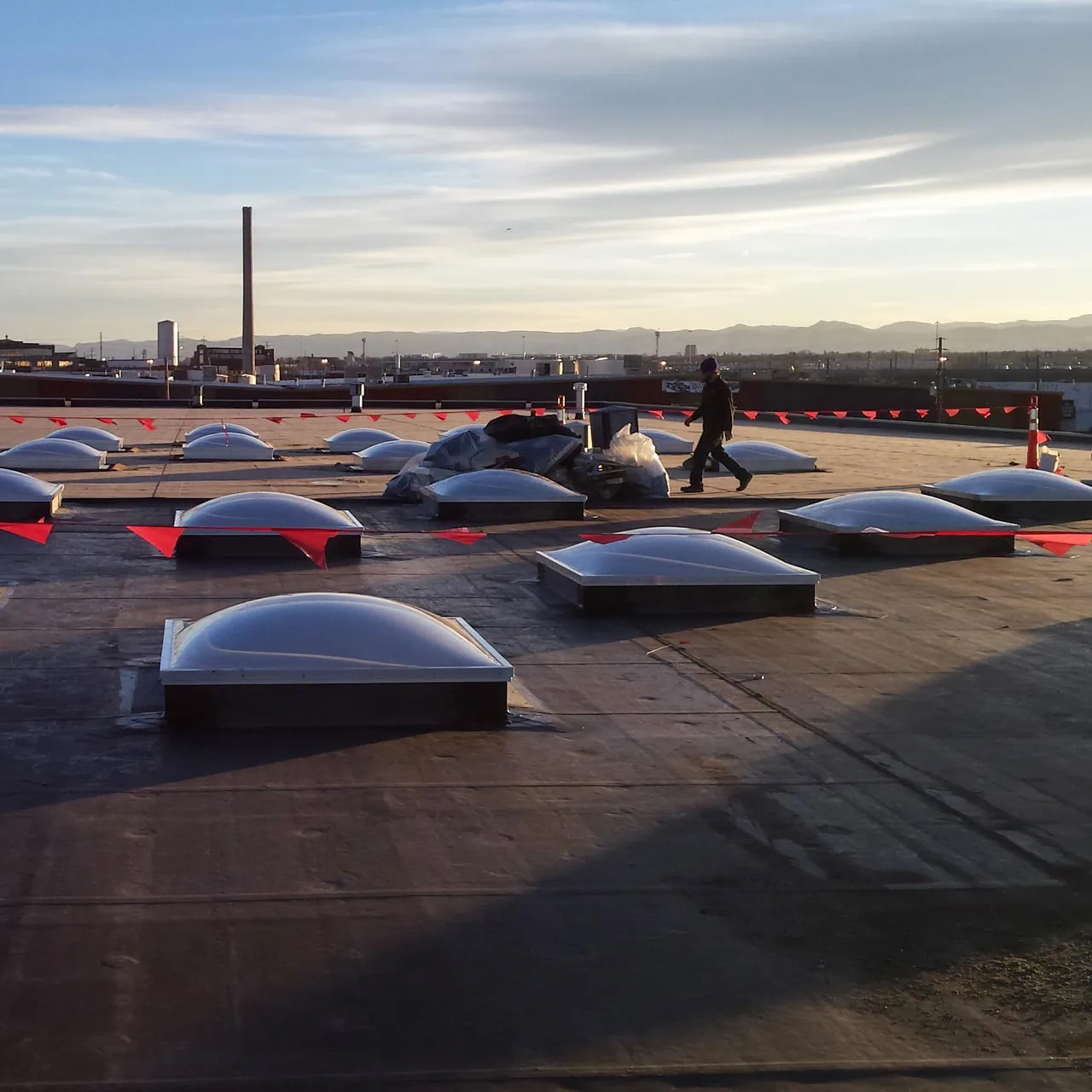
Roof drains and interior piping are checked at the same visit. A slow drain can back up and flood a roof area while the building below sits quiet. Skylights, hatches, and penetrations are catalogued, since each is a candidate for flashing failure, and units like skylights and penetrations are common on academic buildings with atriums and stairwells.
How does a campus rank its roofs for the capital plan?
The survey rates each section on membrane condition, seam and flashing condition, drainage, and moisture. Sections sort into three groups: repair now, monitor, and plan for replacement. Each group carries a recommended timing window and a cost-driver description. That ranking is the working tool for a capital planner. It replaces a vague sense that some roofs are old with a list that says which ones are failing and why.
For institutions managing many buildings, roof capital planning turns the ranking into a multi-year schedule. Roofs that test dry and sound are monitored with photographs. Roofs with repeated failures move up. When a renovation or a new addition changes a building, the roof record is updated, and the planner sees the effect on the portfolio.
When can reroofing happen around terms and events?
The window between spring and fall terms is the main one, and campus events fill the calendar around it. We write the scope with measured quantities and a phasing plan, so contractors can price it and the work can be split across summers if needed. For buildings that cannot be vacated, sections are torn off and dried in the same day, with entrances and pedestrian routes kept clear.
A reroof needs a permit, and the permit office will say which edition of the International Building Code governs the project. A campus beside a hospital, as in the Temple district, or a school faces tighter access and noise rules, and those go into the plan before the first day on the roof.
What decision is left for the campus?
With the make-safe done and the survey in hand, the decision still open is capital timing. A roof asset management approach keeps the records current so that decision gets easier each year. The owner sees what has been repaired, what has been monitored, and what is coming due. A roof that holds its readings earns a longer interval. One that does not moves up the list.
Commercial Roofing Questions
How should a campus order its first roof surveys?
Begin with buildings that hold research equipment, archives, or residential occupants, and with sections that have already leaked. Those carry the highest cost of failure. The rest follow on a schedule that fits the budget cycle. Each survey uses the same rating scale so the results combine into one ranking.
What does a holding repair accomplish before summer?
It stops active water entry and keeps the room usable. A sealed patch or temporary flashing buys months, and the file records exactly what it covers and what it leaves open. The permanent scope is then bid in the normal cycle, and the institution avoids rush pricing.
Can roof work happen near labs with sensitive equipment?
Yes, with a plan. Dust, vibration, and odor are controlled, air intakes are shielded, and the schedule avoids critical experiments. The department head and the facilities office agree on the plan in writing. Moisture surveys and core cuts are done without entering the lab at all.
How do roof records help with a renovation or addition?
They show what lies under the existing roof, how thick it is, and how it ties into adjoining sections. Designers use that to detail new flashings correctly. A dated record also shows the roof's condition before construction began, which settles questions if a leak appears afterward.
What happens when a storm damages several buildings at once?
We triage by exposure. Buildings with active water entry over sensitive spaces are made safe first, then the rest are walked in order. Each gets an intake record with photographs. The campus then has a documented priority list for permanent repair and for any insurance discussion.