School Roofing
A ceiling tile drops in a hallway on the first wet morning of the term, and someone in the facilities office has to decide what happens in the next hour. Close the corridor? Move the class? Send a crew to the roof? That decision is the part of school roofing nobody plans for, and it is the reason a district needs a roof record before the leak, not after it. In Temple, TX, the record starts with a walk of every roof section and ends with a ranking the facilities director can take to the board.
What fails first on a school roof?
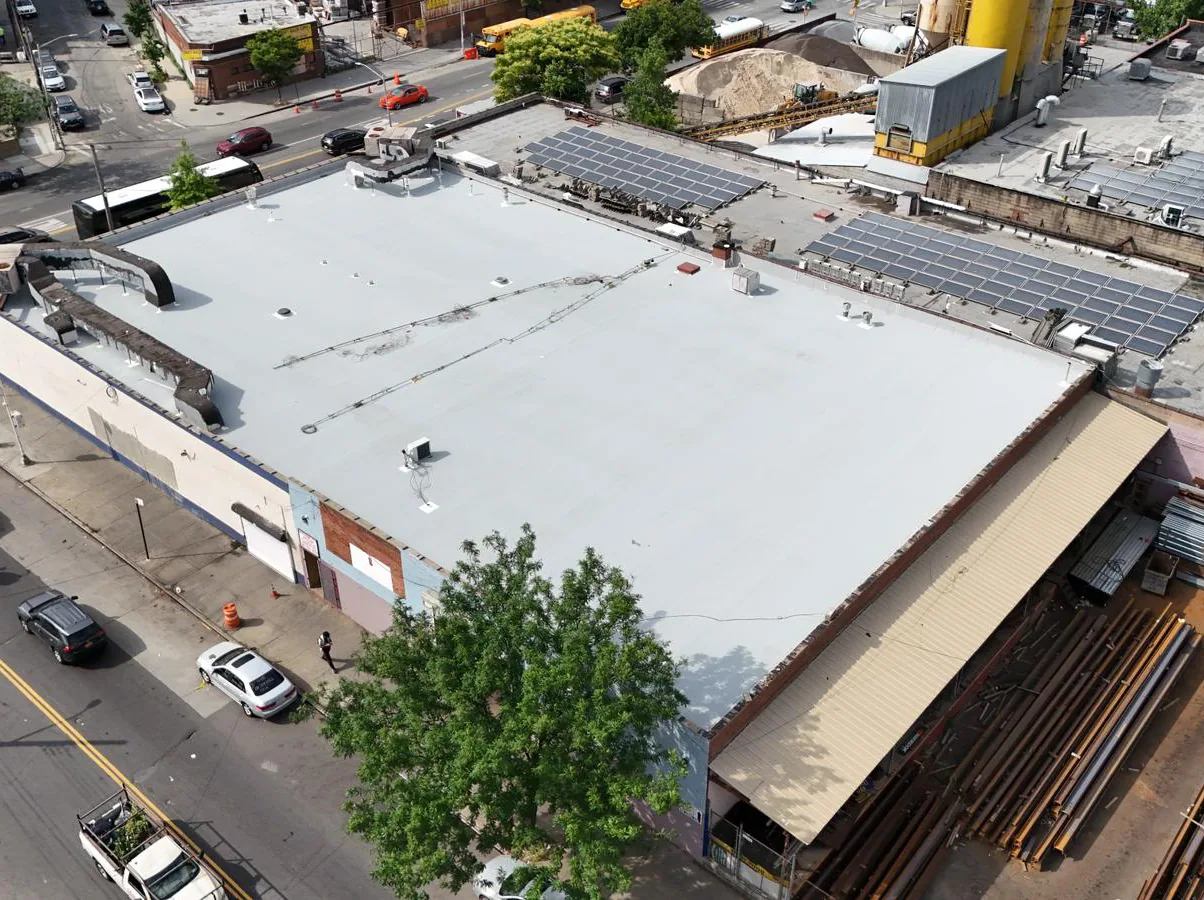
Seams, flashings, and drains, in roughly that order. School buildings tend to be sprawling, with low-slope roof areas at different heights, many penetrations for exhaust fans and rooftop units, and long runs of parapet and edge metal. Every one of those transitions is a failure point. A gym roof can look fine while the corridor roof next to it pools water at a drain that has silted over.
The first walk logs each section as its own roof. We photograph seams, probe sealants, count drains and note which ones hold water, and mark rooftop units with their curbs. A hallway stain that shows up after rain is traced to the section overhead before anyone prices a repair. From May on, a Temple summer wears on sealants and thermoplastic seams, with August highs close to 95F and some 80 days a year past 90F, so the walk happens before the heat has done its work and again after the hot months.
What is the make-safe step when a school roof leaks?
Water is the only urgent question. If water is entering over students or equipment, the make-safe crew stops it first with a temporary dry-in, a sealed patch, or a tarp fastened to the deck rather than just weighted. The facilities team handles the interior: buckets, barriers, moving furniture. We record where the water came in, photograph the opening before it is covered, and tag the location on the roof sketch.
That intake record is what the permanent scope is built from. A holding repair buys time until the work can be scheduled for a break, and it is labeled as temporary so nobody mistakes it for the fix. After a wind event, the same sequence applies to edge metal and rooftop equipment covers, and an emergency crew photographs both before touching either. A district preparing for the next spring storm season wants edges and covers checked in advance, because straight-line gusts of 80 to 90 mph were estimated over Temple the evening of May 22, 2024.
How do we find wet insulation under a dry-looking roof?
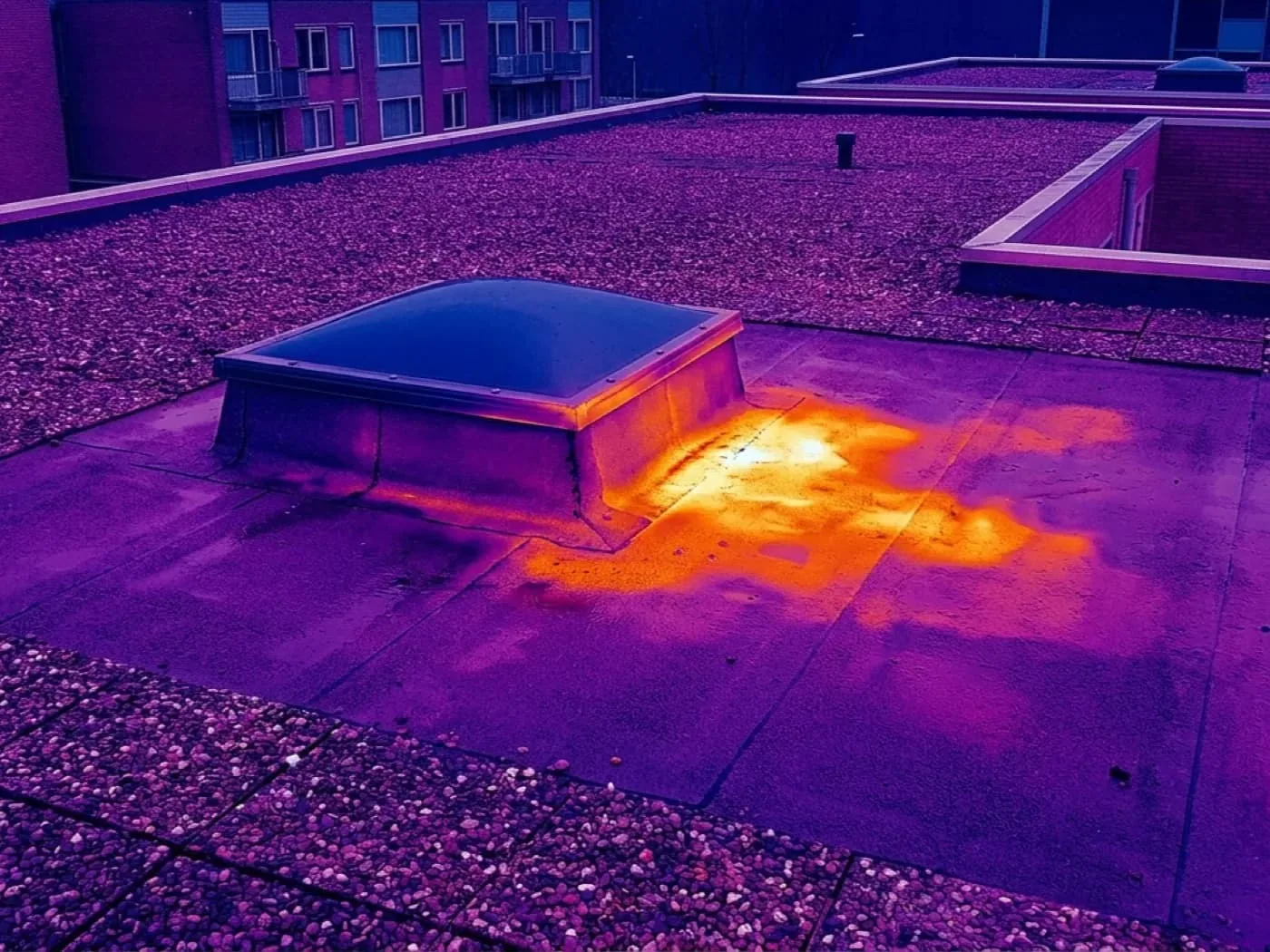
A school roof can leak for a long time before anything shows below. Water that enters at a flashing runs along the deck, soaks the insulation, and travels. An infrared moisture survey on a clear evening maps the warm, wet areas. Core cuts confirm what the scan suggests and show how many layers of roofing sit on the deck.
The resulting moisture map is a decision tool. A section with limited wet areas can be cut out and patched. A section with widespread moisture moves toward replacement. The map goes into the district's file with the date, and a later survey shows whether any section has changed. That is how a facilities director avoids replacing a roof that only needed targeted repair, or repairing one that has already failed.
How does a district rank its roofs?
Temple ISD's Travis Science Academy is one of the principal institutions in the Temple Medical and Educational District, and Belton ISD operates three high schools, four middle schools, and nine elementary schools. Those numbers are buildings, not roofs, and a district with many campuses holds many roof sections of different ages. The question is which ones to fund first.
The survey rates every section on the same scale: condition of membrane, seams, flashings, drains, and moisture. Every section ends up on one of three lists: fix now, watch, or schedule for replacement. The result is a multi-site roof program ranking that ties spending to evidence. When the board asks why one gym roof is funded before another, the photographs and readings answer it. The same record format supports Belton and Temple's education district alike.
Can a school reroof happen around the school year?
Summer break is the easiest window, but it is short, and materials have lead times. A district that finishes its survey in the winter has time to bid in spring and start in June. The scope carries measured quantities and a phasing plan, which lets contractors price on the same basis and lets the work split across two summers if one is not enough.
When work cannot wait for break, occupied-building reroofing methods apply: sections torn off and closed in the same day, noisy tasks timed for off hours, walkways covered, and air intakes shielded. Temple's Building Department handles plan review, and the permit office states which code edition governs the design. Fall protection, roof access, and staging near playgrounds and bus lanes are written into the plan the district signs. The same planning logic carries over to a college campus or a municipal building, where occupants cannot leave either.
What decision is left for the district?
Once the emergency step and the survey are behind it, the district has one question left: when to spend capital. Dry, sound roofs can be repaired or coated and stay in service. Repeated failures plus wet insulation make a roof a replacement candidate. The district decides, with the evidence in hand. A roof condition report pulls the photographs, moisture maps, core results, and rankings into one document that a board or a lender can read without visiting the roof.
Tornado exposure belongs in that conversation too. In May 2024 an EF-2 tornado struck Temple, damaged restaurants, shops, banks, and strip malls, and reached winds near 120 mph, which is context for edge and attachment review and says nothing about any school. Findings after a tornado-damaged roof inspection are recorded edge by edge with dated photographs.
Commercial Roofing Questions
Which roof sections should a district survey first?
Start with sections that have leaked before, sections over occupied spaces that cannot be moved, and sections with the most rooftop equipment. Those carry the highest cost if they fail. Once the first survey exists, the rest of the portfolio can be added on a schedule that fits the budget and the summer calendar.
What does a holding repair buy a school before summer?
Time and dry classrooms. A holding repair stops active water entry with a sealed patch or a temporary flashing, and it comes with a note of what it does not fix. The permanent scope is bid in the normal cycle, so the district avoids paying rush rates for work that can wait for break.
How are noise and safety handled with students on site?
Tear-off and fastening are scheduled for periods when classes are not in the area below, and the plan marks the corridors, entrances, and play areas that stay clear. Staging sits away from bus lanes. The facilities director signs the plan before work starts, and daily records show the sections opened and closed.
Does a survey help if the roof is under a manufacturer warranty?
Yes. A dated record of condition shows the roof was maintained and documents any defect early, while warranty responsibility is clear. The district should read the warranty terms and send us the document, so the inspection checklist follows what the manufacturer requires.
How soon after a storm should school roofs be checked?
As soon as it is safe to reach them. Wind can loosen edge metal and equipment covers without causing visible leaks, and the first rain after the storm finds the gap. A quick perimeter and drain walk, compared with earlier photographs, catches those items while they are small.