Roof Capital Planning
A roof that fails on a Tuesday night forces a capital decision on Wednesday morning, and the asset manager makes it with the worst possible information. Capital planning moves that decision earlier. Instead of choosing between a patch and a full replacement while water is dripping into a corridor, the manager reads a schedule that was set months before. The Temple, TX schedule has to account for a long hot summer and for wind that arrives with little warning, as it did when a tornado crossed the city on May 22, 2024.
The plan we build is a table with a reason attached to every row. It names the roof, its failure points, the interim step, the permanent scope and the year it belongs in.
What feeds the plan?
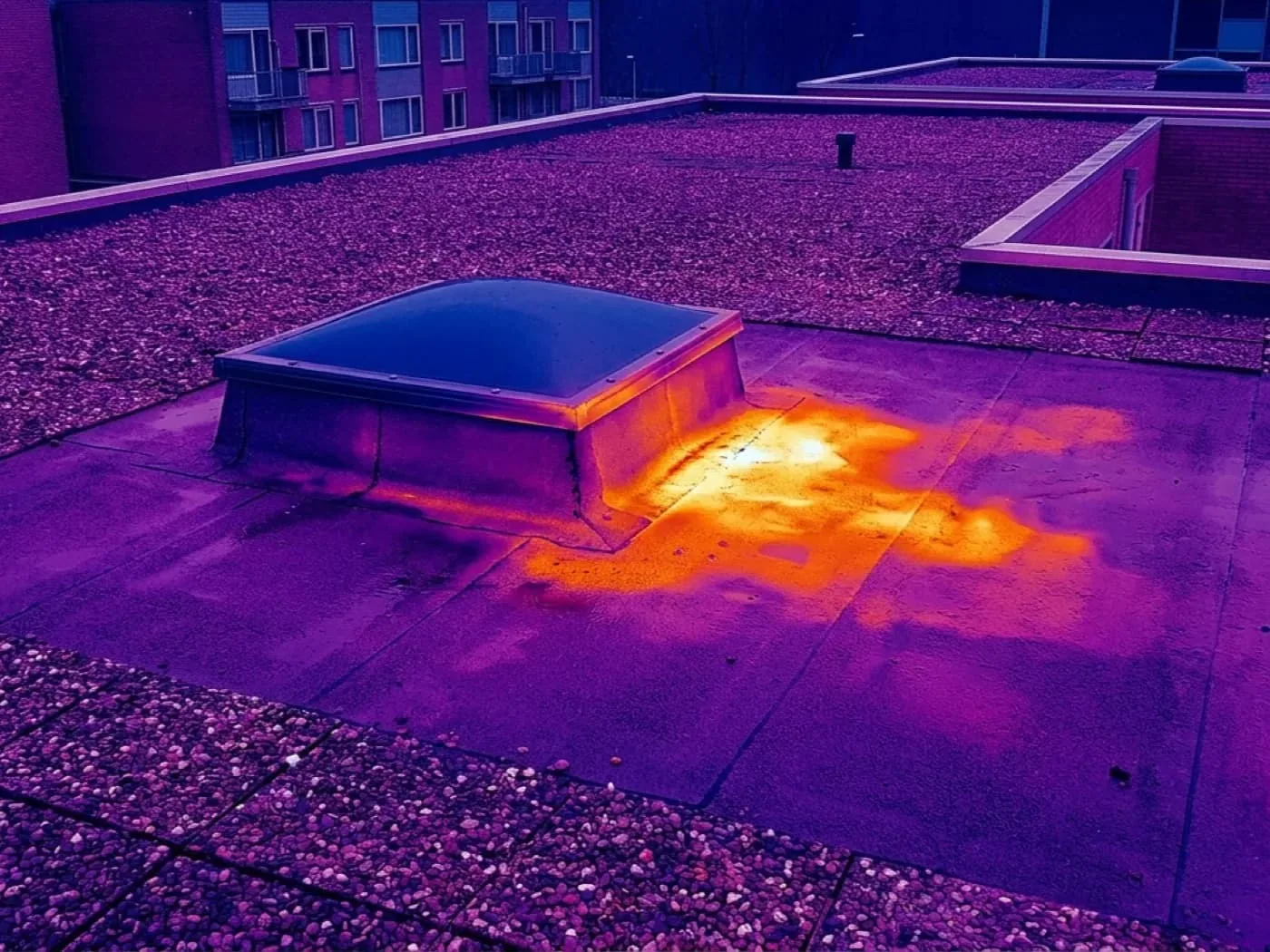
Three inputs matter. First, the findings: seam condition, membrane wear, flashing failures and the moisture map from an infrared moisture survey. Second, the building: what it holds, who works under it and how much downtime a failure would cost. Third, the owner's calendar: refinance dates, lease expirations, sale plans and budget cycles. A roof in good shape can still be scheduled early if the building is about to be sold, and a worn roof can wait if the building is slated for redevelopment.
We do not guess at remaining service life from age alone. A roof that sat in shade with good drainage can outlast a younger roof that ponded for years. The record decides.
The calendar input deserves a closer look, since it is the one most often missing. A plan built without lease dates will put a replacement into a year when the tenant has the right to leave, and a plan built without a refinance date will miss the moment a lender asks for a roof opinion. We ask for those dates at the start and write them into the schedule next to the roof they affect.
What does a holding repair buy?
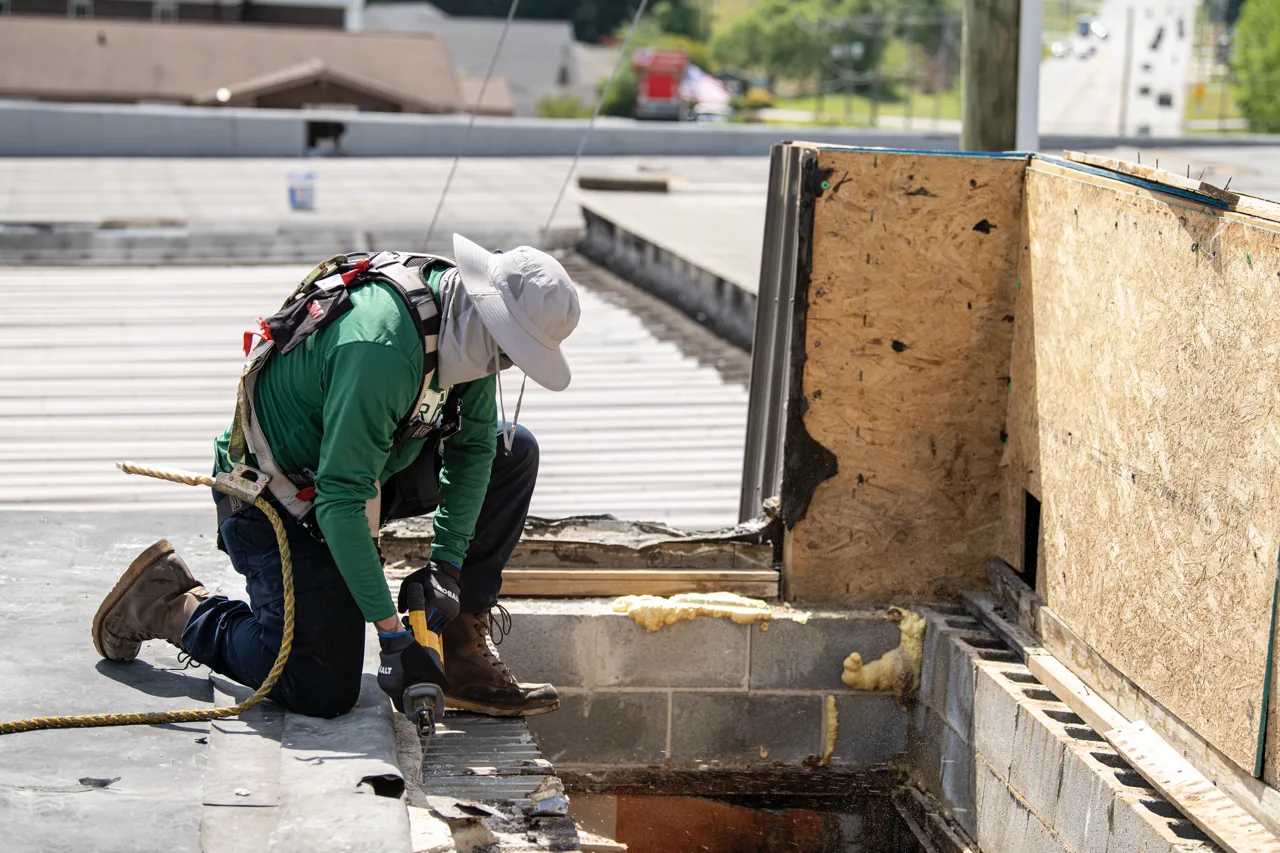
Between a failure and a permanent scope sits the holding repair. It is a bounded, documented fix that keeps water out and protects the interior until the long-term work is funded. A patched seam, a re-flashed curb or a replaced drain bowl are typical examples. We state in writing what the holding repair is expected to cover, what it will not, and the date by which the roof should be rechecked.
This distinction matters in a capital plan because holding repairs and permanent scopes belong in different budget lines. When they are mixed together, owners overspend on temporary work or underestimate the permanent job. Our commercial roof repair crews do the holding work, and roof replacement or a recover becomes the permanent line.
Replace, recover or restore?
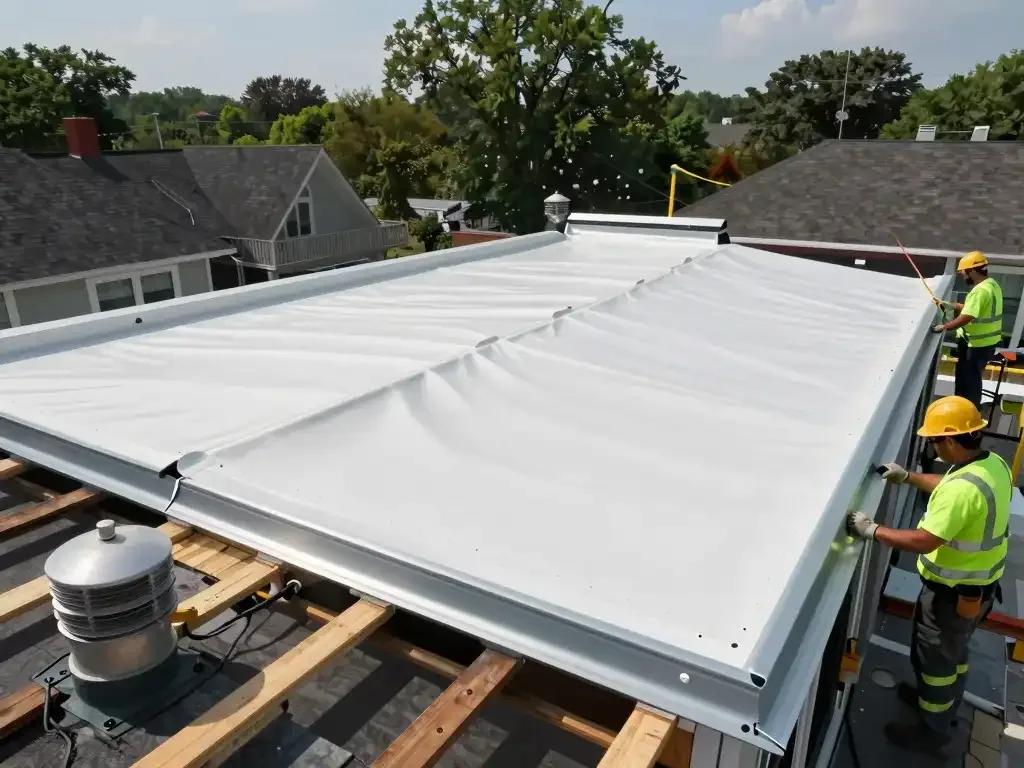
The plan assigns each roof to one of three paths. A dry deck with sound insulation and a sound membrane might take a coating through roof coating restoration, stretching the roof's life at a lower cost than replacement. A roof with dry insulation but tired membrane might be recovered. A roof with wet insulation across a wide share of the field has to come off. The moisture survey is what separates the second case from the third, and skipping it is the usual way owners end up paying twice.
Cost drivers are worth naming even without figures: roof area, access, the number of penetrations, tear-off depth, insulation thickness, edge metal and the need to protect an occupied interior. Each of these is written into the scope line so that bids can be compared on the same terms.
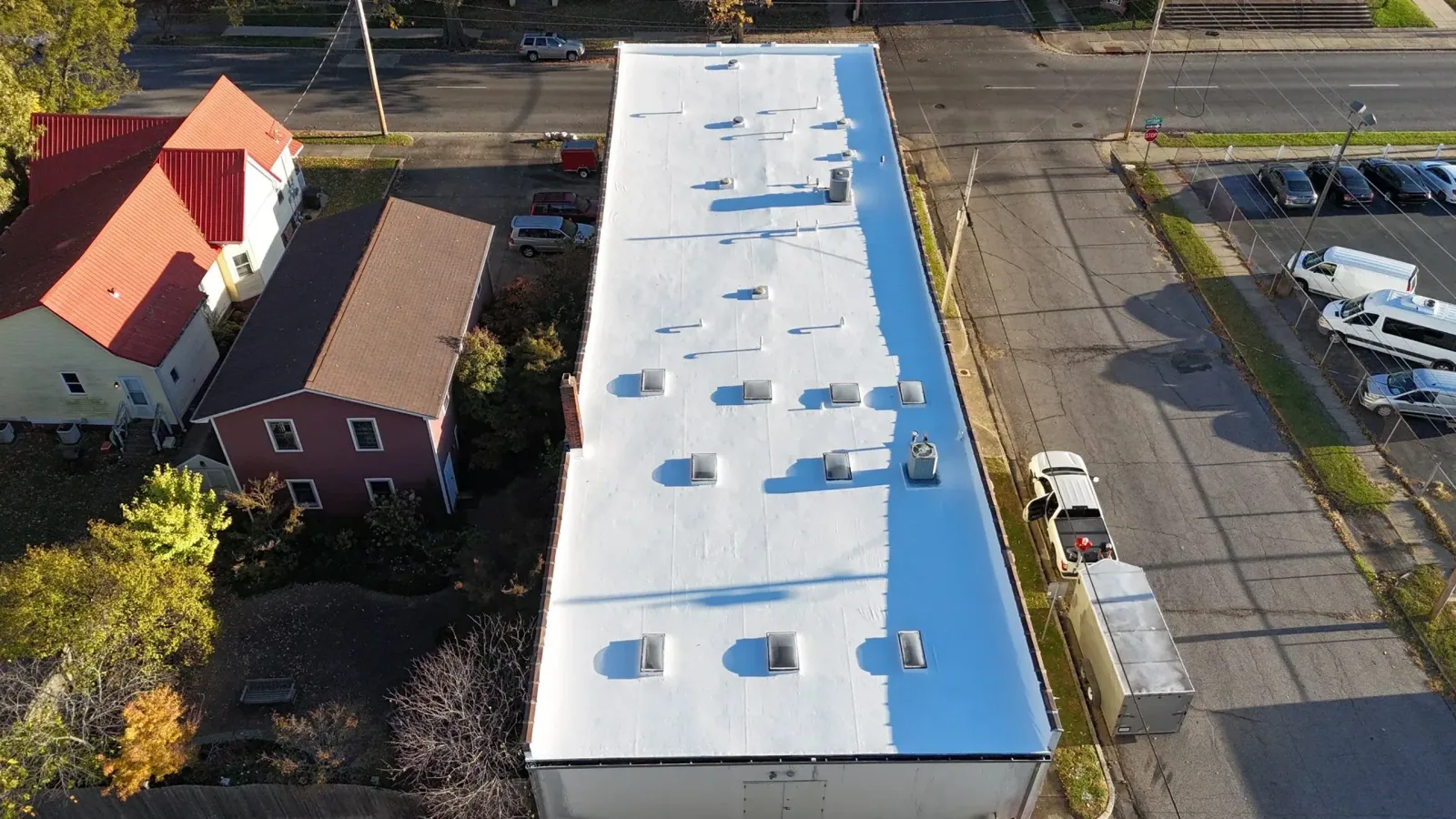
Roofs on the same route, whether along Interstate 35 or the Loop 363 ring, can share a mobilization. Roofs with the same edge detail and the same age can be scheduled together, which lets a crew mobilize once for several buildings and keeps the interim repairs consistent from one address to the next.
How should a storm reserve be handled?
Temple's tornado and wind record argues for a reserve line that is separate from planned replacements. We suggest sizing it by exposure, not by a flat percentage of the portfolio. Roofs with older edge metal, large parapet runs or lots of rooftop equipment sit higher on that exposure list, and healthcare and distribution roofs, where an interior loss is expensive, sit higher still. Healthcare campuses and rail-served industrial buildings sit on opposite ends of that spectrum, so a reserve for the Temple Industrial Park buildings looks different from one for a campus near the medical and education district.
The reserve is not a prediction. It is a statement that some portion of the budget will be spent on a day nobody chose. Writing it down in advance means the first-hour call can be made without waiting for an approval chain, and the record of what was spent and why goes straight back into the plan.
How do rail and distribution roofs fit in?
BNSF and Union Pacific mainlines both pass through Temple, and a BNSF rail yard and locomotive maintenance facility sit in the city. The Rail Park at Central Pointe adds a 168-acre industrial distribution development with rail spurs. Roofs in a district like that have a particular planning problem: large uninterrupted areas, many dock doors and equipment that cannot always be shut down for a day.
The capital plan for those roofs separates the work that needs a shutdown from the work that does not. Curb flashing and drain work can often be done in short windows, while tear-off and new membrane need a longer one. Writing that into the schedule lets operations plan their own calendar around the roof, not the reverse.
When does the plan get revisited?
A plan that is never revised stops being a plan. We reopen it after each inspection cycle and after any weather event that damaged roofs in the area. A hold point whose recheck date has arrived triggers a visit. A roof that took storm damage moves up the list, and the interim and permanent scopes are updated. The asset record supplies the data and the condition reports supply the language a finance committee can read.
Commercial Roofing Questions
How many years should a roof capital plan cover?
Five years is the working horizon for most owners, because it matches typical budget cycles and still allows a roof to be scheduled before its failure points multiply. Roofs with a hold point inside that window are flagged with the recheck date.
Can a plan include roofs we have never inspected?
They can be placed in the schedule as unknowns and given an inspection line. Until a survey is complete, an unknown roof should be treated as a risk and not as an asset in good shape.
What changes in the plan if a roof leaks before its scheduled year?
The triage call decides it. If a holding repair can bring the roof safely to its scheduled year, the schedule stands. If the failure has spread, the roof moves forward and the roof it displaces moves back.
Who signs off on the plan?
The asset manager, with the owner or a committee above. We supply the findings, the options and the cost drivers, and the manager decides which row goes in which year.
Does the plan consider building code?
Texas cities work under the International Building Code, and a local government can adopt a later edition. Temple's Building Department applies the IBC in plan review, so a replacement scope is checked against the edition in force before it is priced.