Distribution Center Roofing
Which bay goes down for repair and which keeps running is the decision that cannot wait once a distribution center roof starts to leak. A fulfillment building moves on a clock of trailers, shifts and carrier pickups, and a stain on a ceiling above a conveyor or a sorter is a failure point that threatens throughput as well as stock. In Temple, TX the people who make that call hold portfolios of large buildings, and their first question is how little of the operation the repair will touch.
Our triage answers it in order: the make-safe step, the record of what failed and the bay-by-bay plan for the permanent scope.
What makes a distribution center roof different?
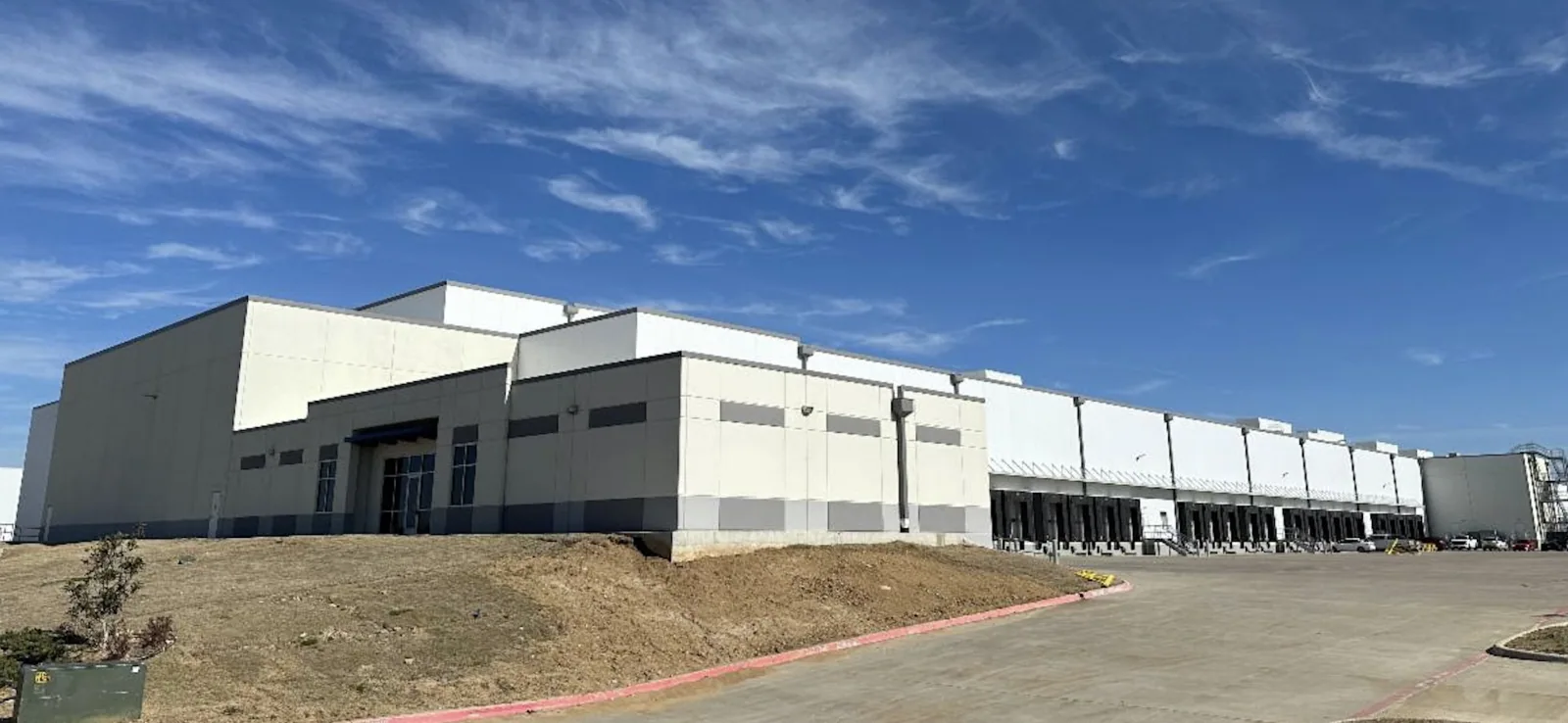
Scale and operations. The city's economic development office lists an H-E-B retail distribution center and a Walmart distribution center among Temple's major employers, each at about 2 million square feet, and McLane Company, headquartered in Temple, operates a network of more than 80 distribution centers. The intake record takes nothing about the roof from floor area: it counts drains, curbs, skylights and expansion joints, and it measures the roof itself.
Large roofs have long drainage paths, deep sumps and many penetrations, and a small defect at any one of them can pour water onto a sorter. Working on them means working in phases, with crane picks on the apron side, staging away from trailers and a defined route for materials. Roofs of this size also carry rooftop equipment for offices, break rooms and dock areas, and each unit has to be shut down for a defined period when its curb is reflashed, so the schedule includes the facility engineer from the first meeting.
Where do large distribution roofs fail first?
At expansion joints, curbs, drains and parapet terminations. A big roof moves more than a small one, and the joints that allow for it age first. Rooftop units serving offices, break rooms and dock areas sit on curbs that need flashing. Scuppers and overflow outlets on tall parapets clog with windblown debris, and the water backs up against the wall.
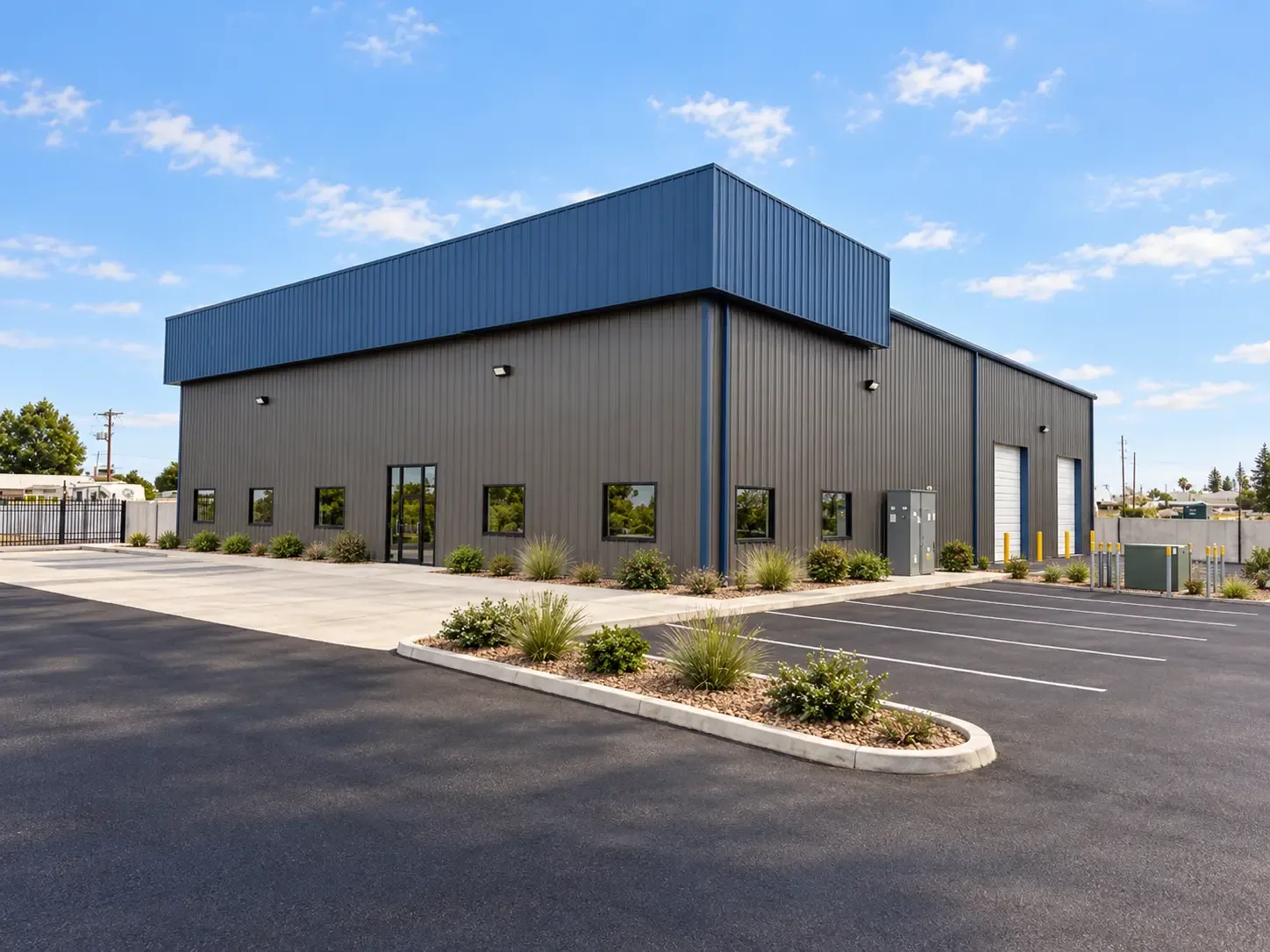
The membrane in the field fails more slowly. Ponding, foot traffic along service routes and fastener back-out show up over years. We mark the service routes on the plan and look for wear, because those paths carry most of the foot traffic on the roof. An unprotected route is a punctured membrane waiting to happen. A smaller building in Airport Park at Central Pointe gets the same checklist at a smaller scale.
How is a roof of this size surveyed?
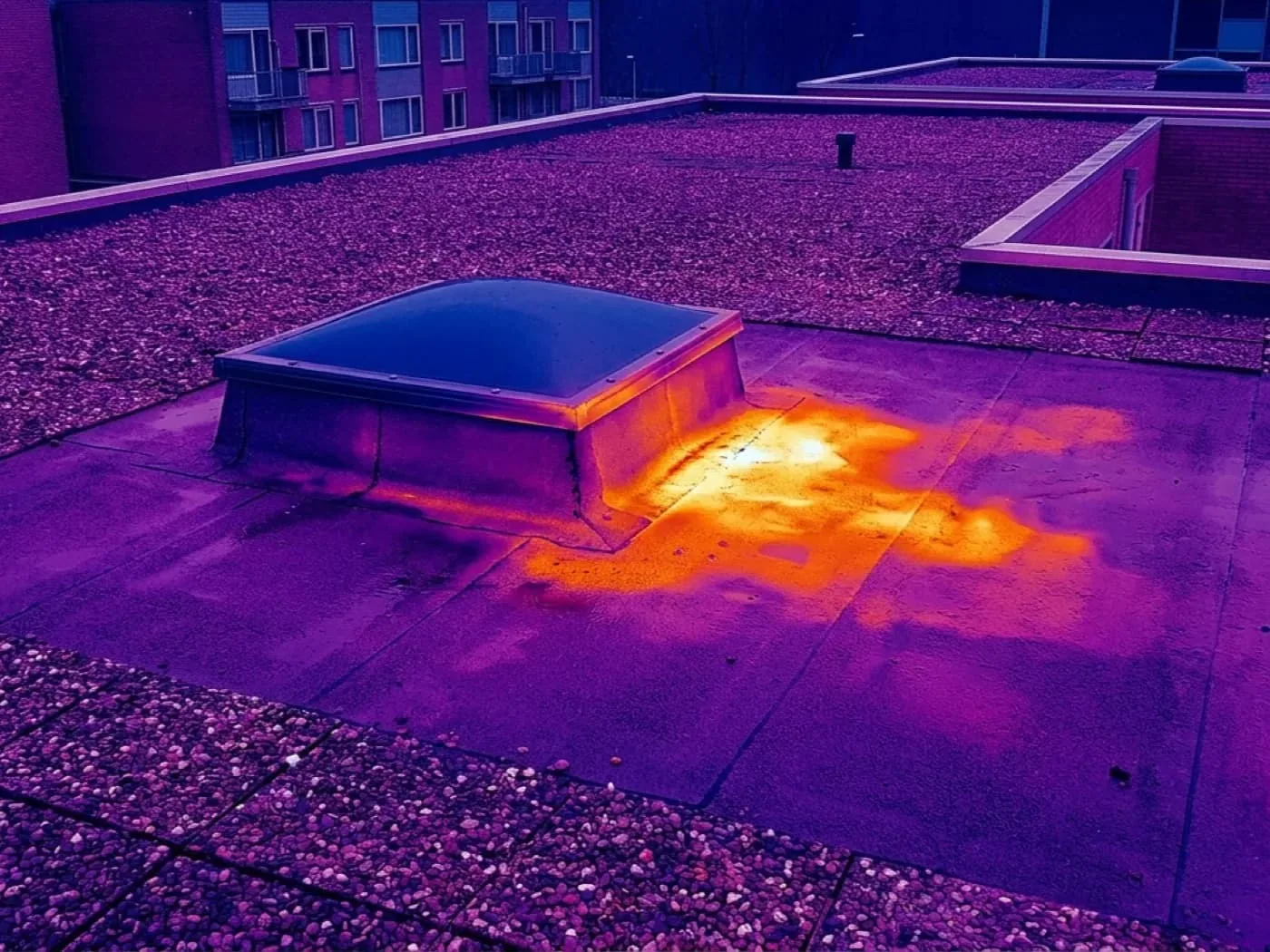
Drone imagery and infrared scanning cover the field quickly, and walking inspections verify what the imagery shows. A drone roof inspection gives a complete photographic record; an infrared moisture survey maps wet insulation, and core cuts confirm both. The result is a roof plan that divides the building into numbered bays tied to the interior column lines.
That grid makes the repair plan operational. The operations team knows that bay 6 is over the returns area and bay 14 is over receiving, and the repair order follows operational risk, not roof geometry. It also supports phased replacement, with each bay dried in before the crew moves on. Every bay gets a one-page summary: the findings, the photographs, the moisture readings and the recommended action, which the site manager can read between trailers.
How does the dispatch window work around trailers and shifts?
The dispatch window is set with the site manager. Trailers arrive and leave, dock doors cycle and night shifts continue, so the crew plan names the entry gate, the lift and staging area, the hours for noisy work and the person who clears access. Crane picks avoid the dock face. Dumpsters and material pallets sit on the roof edge away from the apron or in a fenced staging area.
For a facility running around the clock, we propose night and weekend phases where the building allows them. Fire watch and hot-work permits are written into the plan. If the schedule slips, the call-back window is defined, so operations know when the next update will come. On a large roof, a daily roll call confirms who is on the roof, where they are working and when the section will be closed, and the foreman signs the closure before leaving.
What does the rail and interstate corridor add?
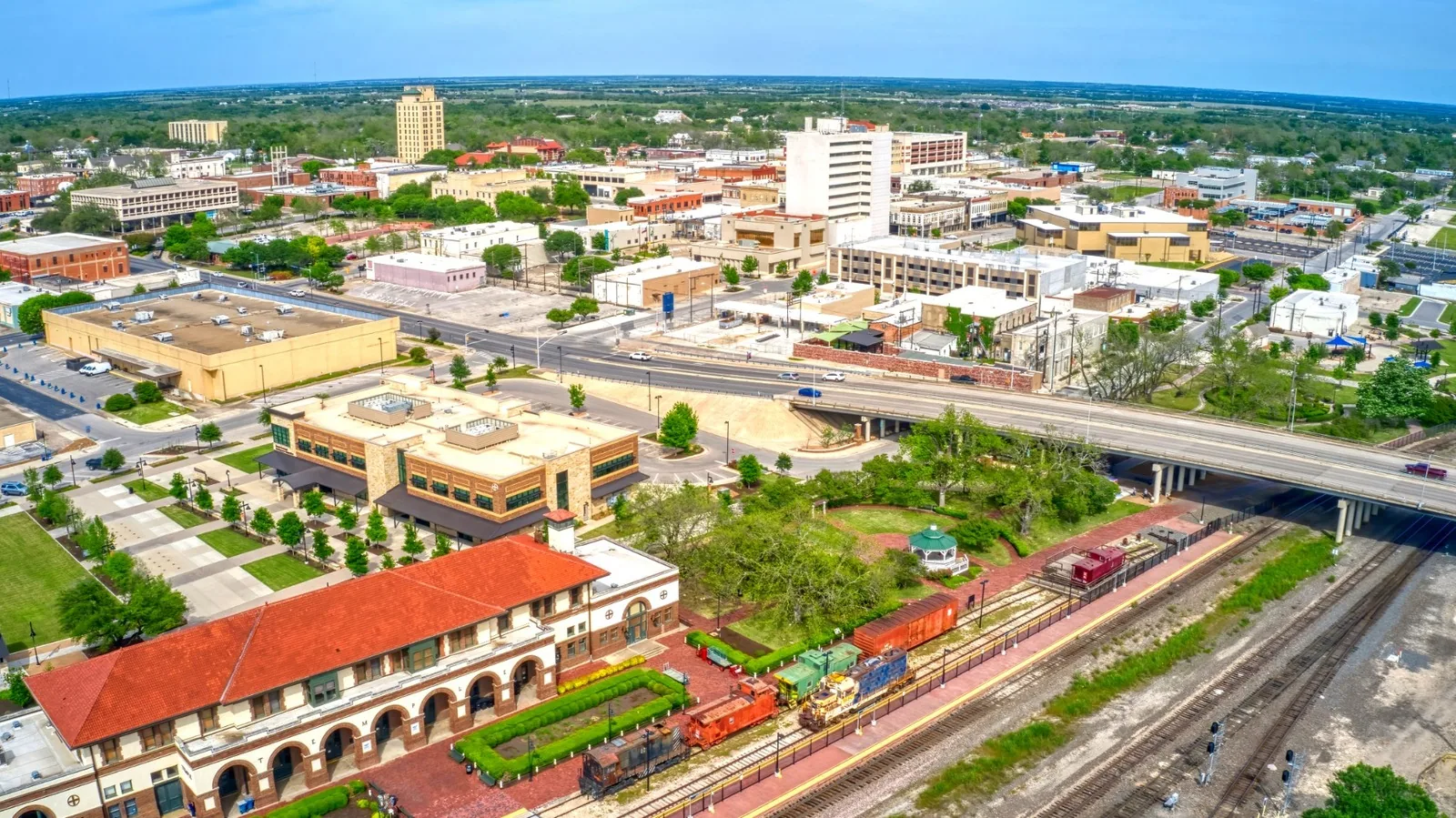
Within the Rail Park at Central Pointe, the Railhead is a 168-acre distribution development on BNSF service, and rail spurs are finished in its 68-acre first phase. Interstate 35 runs through the city and Loop 363 encircles it. Buildings along those routes see steady truck traffic and rail activity, and the roof job has to share the corridor.
That means haul routes planned for tractor-trailers, crane positions that stay clear of spur tracks and staging areas that do not block truck courts. A Rail Park at Central Pointe building with rail service has its own access rules, and the plan names them. Truck routes are checked against the building's own yard rules, since an overlong trailer waiting at the gate blocks more than one lane.
What does Temple's heat do to a distribution roof?
Summer peaks near 95F in August and temperatures clear 90F on roughly eighty days a year, and a large dark or aged roof soaks that in. The heat works membranes, adhesives and sealants hard and raises the temperature inside the building under the deck. A reflective surface or a coating can lower roof temperature; whether it pays back depends on how the building is conditioned. The scope offers both, with the finding that favors each. Where a coating is chosen, the file records the product, the thickness readings and the recoat date, so the next survey starts from known numbers.
How are distribution roofs ranked?
By what the failure would cost, in stock, throughput and contract penalties, and by what the survey shows. Active leaks over sorters come first. Roofs with saturated insulation next. Sound roofs with aging surfaces go on the maintenance schedule. The same ranking can cover a warehouse roof and a cold storage roof in the same portfolio, and a preventive maintenance visit schedule keeps the sound ones sound. The report ends with the next decision and a date, and every line in it links back to a photograph, a bay number and a reading that the asset manager can check without a site visit.
Commercial Roofing Questions
Can part of a distribution center roof be replaced while operations continue?
Yes, in bays. Each bay is opened, worked and dried in before the next, with crane picks and staging away from the dock face. The plan matches the operation's quiet hours.
Is a drone survey enough to scope a roof of this size?
It covers the surface quickly, but it needs infrared data and core cuts to show what is under the membrane. The three together give the bay map and the quantities.
What is the main risk of working over a sorter?
Water or debris falling onto equipment. Interior protection goes up first, the work above it is done in small sections and the section is closed before the crew leaves.
How are expansion joints handled?
They are inspected at every visit and re-flashed with materials that move with the joint. A failed joint is one of the most common leak points on a large roof.
What does the written record give the asset manager?
The bay plan, the numbered defects with photographs, the survey results and the repair costs by bay. It supports capital requests, warranty claims and insurance reviews.