Gym and Fitness Center Roofing
A drip falls onto a basketball court or a row of treadmills, and a facility manager has to decide in the first hour whether the floor closes, whether members are told, and who goes up to look. Fitness and recreation buildings are large, humid, and busy, and their roofs carry heavy rooftop equipment. In Temple, TX, a gym roof leak is a customer-service problem at the same moment it is a roofing one, and the record has to answer both.
What fails first on a fitness building roof?
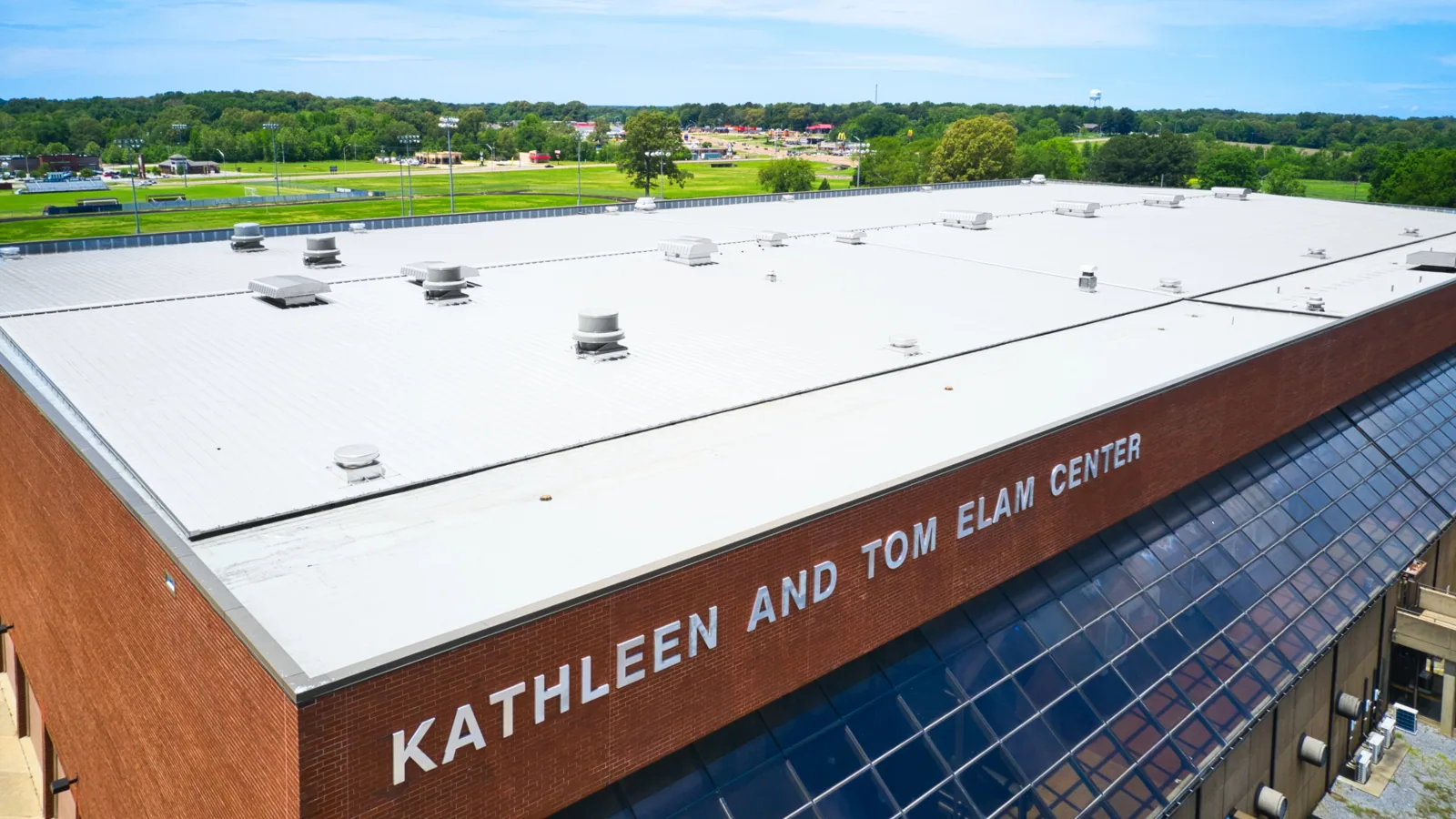
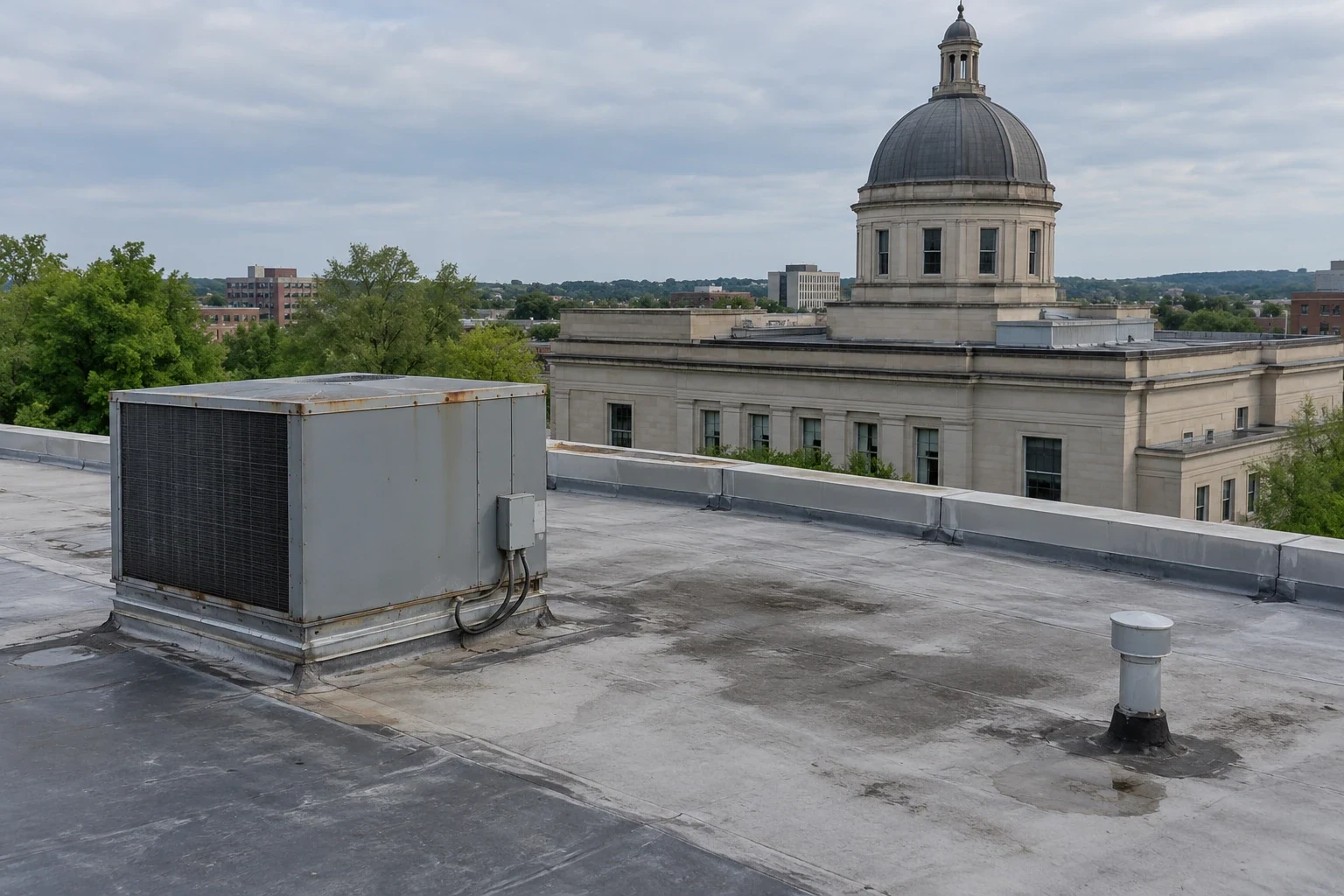
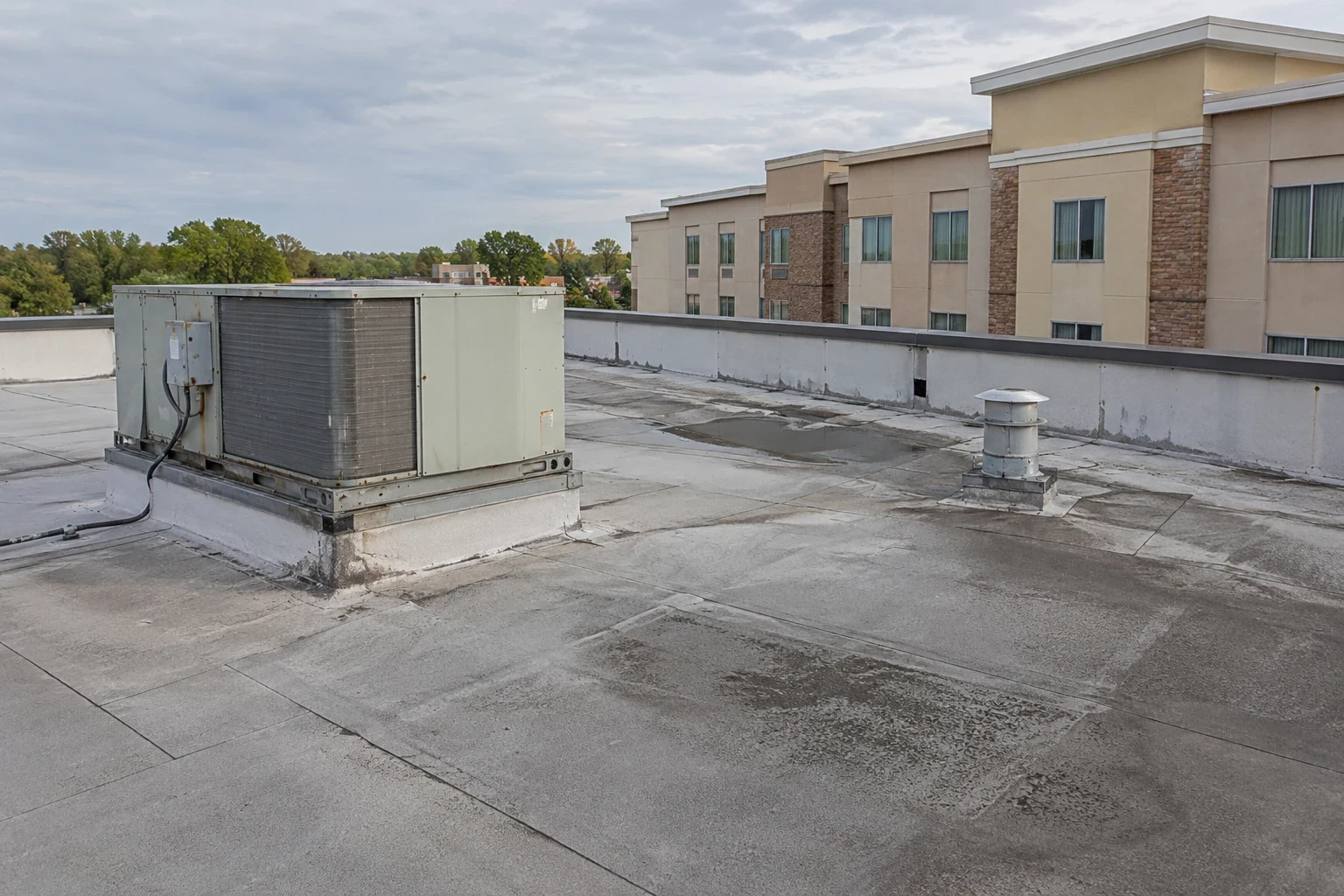
Rooftop equipment connections and drains. A gym or recreation center needs a lot of air handling, and the units that provide it sit on the roof with curbs, ducts, and condensate lines. Heat and humidity are constant loads inside, and the roof is the surface where that moisture can condense. Large flat or low-slope areas collect water at a small number of drains.
The first walk starts at the equipment. We photograph each curb and flashing, trace condensate lines to their discharge, probe sealants, and count drains. Air handling and roof surfaces both labor under a Temple summer that tops 90F on some 80 days a year and runs near 95F in August, so inspections happen before and after it. The sketch ties each roof section to the room below, so a leak over the weight room and one over the locker room have their own entries.
Pool halls and wet areas add a second layer. Moist air pushes up through the ceiling assembly toward the roof, and any gap in the vapor control lets it condense in the insulation. Exhaust fans from locker rooms and pool areas discharge warm, wet air at the roof, and the membrane near those fans ages faster. We note staining, swelling, and soft spots near each exhaust and flag them for the mechanical trade and the roof scope both.
What is the make-safe step over a gym floor?
Roof-side work happens without anyone stepping onto the floor. A sealed patch or temporary cover stops the drip, while facility staff close the affected area, mop, and move equipment. We photograph the opening before covering it, record the room beneath it, and note the materials used. A wet wood floor is a safety hazard and a costly repair, so speed matters, and so does a clean record of when the water stopped.
Whatever goes on is dated and labeled temporary, with a plain statement of what it covers. The intake record helps the facility's incident documentation. Permanent scope follows the survey, and the owner or operator makes that call. A member who slips on a wet court is a liability question, so the record also shows the time of the first report and the time of the dry-in. Emergency stabilization and the permanent decision stay separate in the file.
Is it a leak or condensation?
Fitness buildings produce moisture, and some drips are not leaks at all. A cold duct in a humid room sweats. A poorly sealed roof deck lets humid air reach cooler insulation, which condenses. A leak follows rain and shows at consistent spots. Condensation appears on humid days and often covers a wider area. The distinction matters because the repairs are different.
We compare the date of each drip with the weather record, trace the path, and take moisture readings above and below the roof. If the roof is dry and the stain persists, the cause is inside, and the finding saves a pointless roof repair. If the roof is wet, an infrared scan maps the wet insulation, and core cuts confirm it. The map is dated and filed.
What does the 2024 storm record mean for a fitness facility?
Temple's storm history includes the May 22, 2024 EF-2 tornado, whose peak winds near 120 mph damaged restaurants, shops, banks, and strip malls, as the National Weather Service confirmed. The same evening an EF-1 tornado began near Little River-Academy, and the weather service put straight-line gusts across the city at 80 to 90 mph. That is regional context and not a finding about any facility.
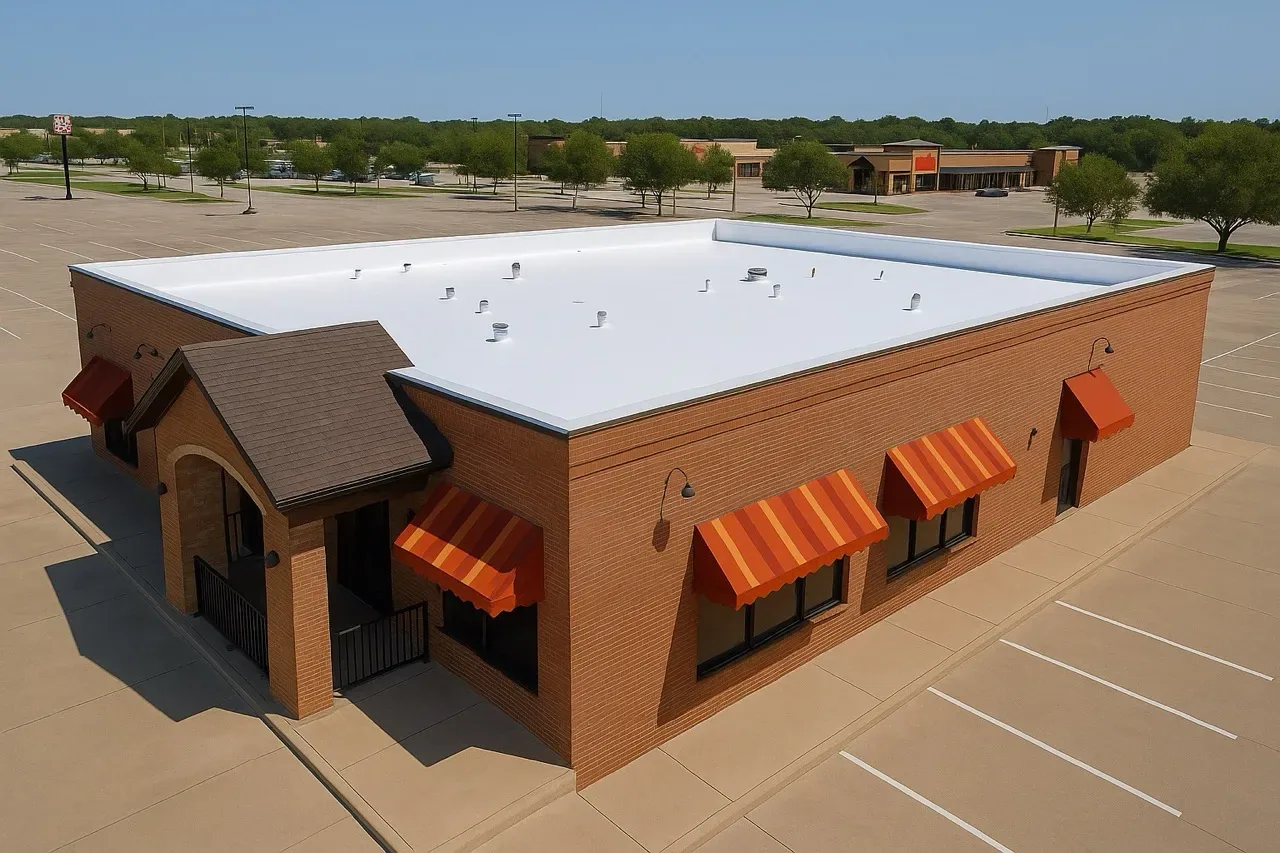
A fitness building often has a large, wide roof with heavy rooftop units, and the review concentrates on the edges and the equipment. Coping, fascia, and the membrane edge are tested for loose fasteners. Unit covers, straps, and supports are checked, along with the skylights or clerestory windows that some gym roofs carry for daylight. Those curbs and glazing seals are catalogued with the rest of the penetrations, since they leak at corners and gaskets as the heat cycles the frames. After a storm our comparison with earlier photographs shows what moved. Temple has Interstate 35 running directly through it and Loop 363 encircling it, and a facility on either frontage is visible to traffic all day.
Which roof systems suit a humid, equipment-heavy building?
Reflective single-ply membranes over insulation are common. PVC performs well where exhaust and moisture are present, and the insulation and vapor control below it are chosen with the interior humidity in mind. A cover board adds puncture resistance on paths where technicians walk to rooftop units, the kind of detail an insulation and cover board layout settles.
For a facility that cannot close, a recover over a dry, sound roof avoids tear-off noise and debris. If insulation is wet, tear-off is the practical path. The scope gives the reasons and lists the cost drivers: area, penetrations, wet insulation to remove, equipment to lift, access, and hours. The city's building department reviews plans under the International Building Code during permitting, and the permit office names the edition currently in force.
How does an operator rank several locations?
A fitness operator or a parks department with several buildings needs one rating sheet. Membrane condition, equipment curbs, condensate discharge, drains, and moisture are scored together, and each building lands in one of three groups: repair now, monitor, or plan for replacement. The photographs travel with the ranking. A municipal recreation center belongs to the same list as other government buildings, and a school gym belongs with school roofing.
A hotel with a pool and a fitness room, as in hotel roofing, adds humidity to the same roof. Facilities in Temple and along the highways are compared on the same sheet.
Commercial Roofing Questions
How can a gym tell condensation from a roof leak?
Match the timing to rain. A leak follows rainfall and returns at the same spots. Condensation appears on humid days and often covers a broad area. We confirm with moisture readings above and below the roof and a look at the vapor control.
Can the facility stay open during roof work?
Generally yes, in phases. Each section is opened and closed within the day, noisy tasks avoid peak hours, and member entrances stay clear. Areas below the work are protected, and the facility manager agrees the plan first.
What is a holding repair for a gym?
It is a temporary measure that stops water at one spot. The record gives the room, the materials, and the date, and says what is still open. Permanent work comes after the survey.
Who handles the rooftop equipment during roof work?
The facility's mechanical contractor handles the units, and we coordinate timing so shutdowns are short. We check curb heights and flashing before a unit is lifted or replaced and photograph the curb before and after.
How often should a facility's drains be checked?
Before the heat season, after the storm season, and any time heavy rain is forecast. Drains over a large flat roof carry a lot of water, and a clear log shows whether the interval suits the building.