Senior Living Roofing
Water is coming through a corridor ceiling in a senior living building, and the first question is not about the roof at all. It is where the residents are, which hallway is slick, and who on the care staff has to be told. Only then does the question turn to the roof. In Temple, TX, a senior living operator needs a roofing partner that works from the roof, stays out of the care floor, and leaves a record the administrator can use in the next hour.
What fails first on a senior living roof?
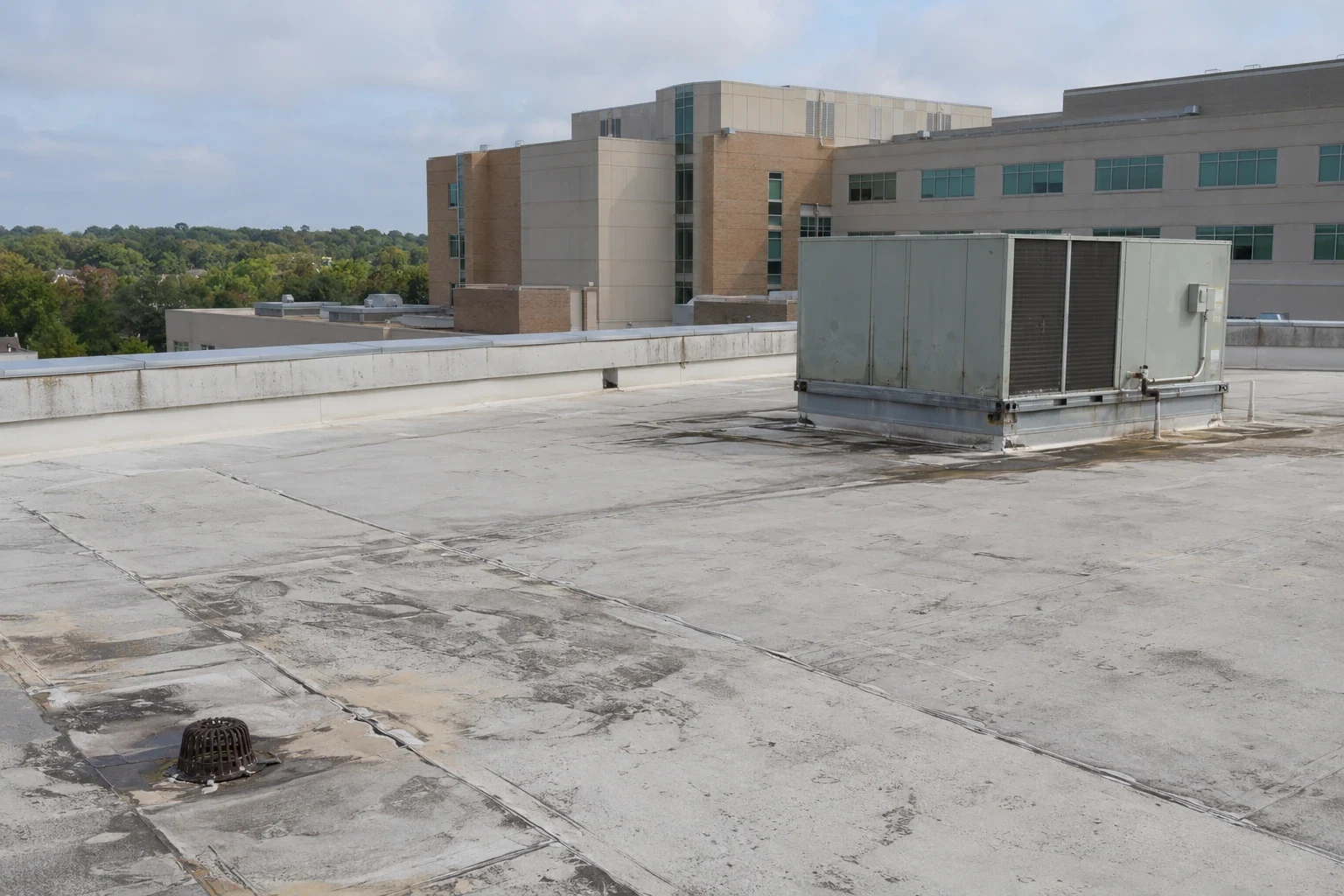
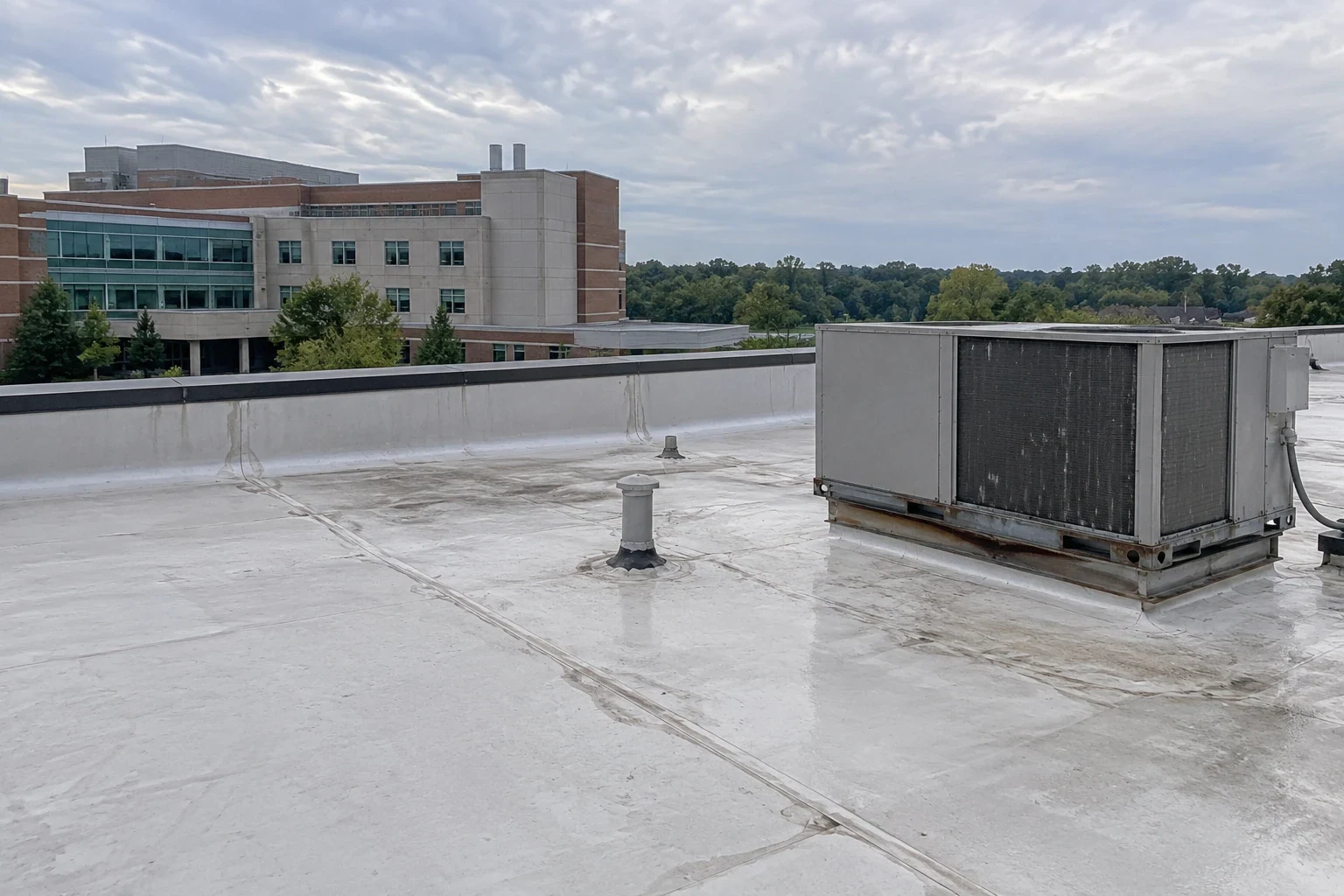
Flashings, drains, and the rooftop equipment that keeps the building comfortable. A senior living community often has air handlers, exhaust fans, kitchen exhaust, and generator or emergency equipment on the roof, along with covered walkways and entry canopies that are low-slope and exposed. Each is a junction where the membrane is cut, and each opens up over time.
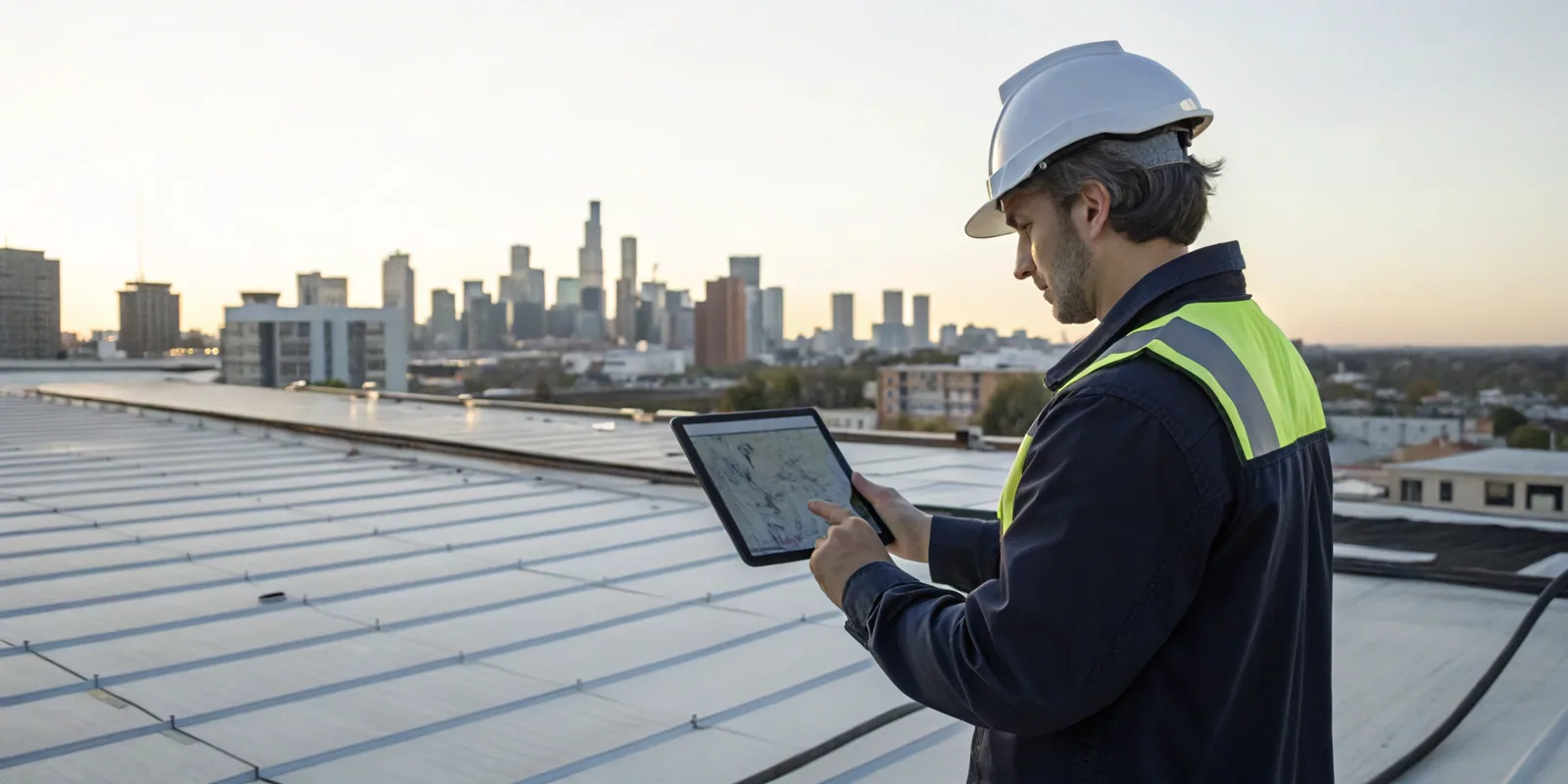
The first visit gives every roof section its own entry in the record. We photograph seams and flashings, probe sealants, count drains, and match the wing or hall below to the roof above. Sealants and seams tire from May onward, and cooling equipment runs hardest in the same stretch, when Temple's August afternoons reach 95F and the thermometer clears 90F about 80 days a year. We inspect before and after the hot months so a developing problem is caught while the building is still comfortable and dry.
What is the make-safe step with residents inside?
Roof-side crews stay off the care floor. A sealed patch or temporary dry-in stops water entry, and the care staff handle the interior: barriers, signs, and moving residents if needed. We photograph the opening before covering it, record the wing and room beneath it, and note the materials used. Noise is kept to what the task needs, and heavy work waits for the administrator's go-ahead.
The intake record helps the community's own incident documentation. The file marks a holding repair as temporary and records its date and what it leaves open. The permanent scope comes later, after a survey, and the decision about it belongs to the asset manager or administrator. Emergency stabilization and permanent scope stay separate in the file.
Generator and emergency equipment get a line of their own. A roof-mounted exhaust or intake that leaks into its curb can put a critical system at risk, so those curbs are checked on every visit and flagged for the facility engineer if the flashing shows wear. We do not touch the equipment itself. We record its condition at the roof and pass the finding on.
How do we find hidden moisture without disturbing residents?
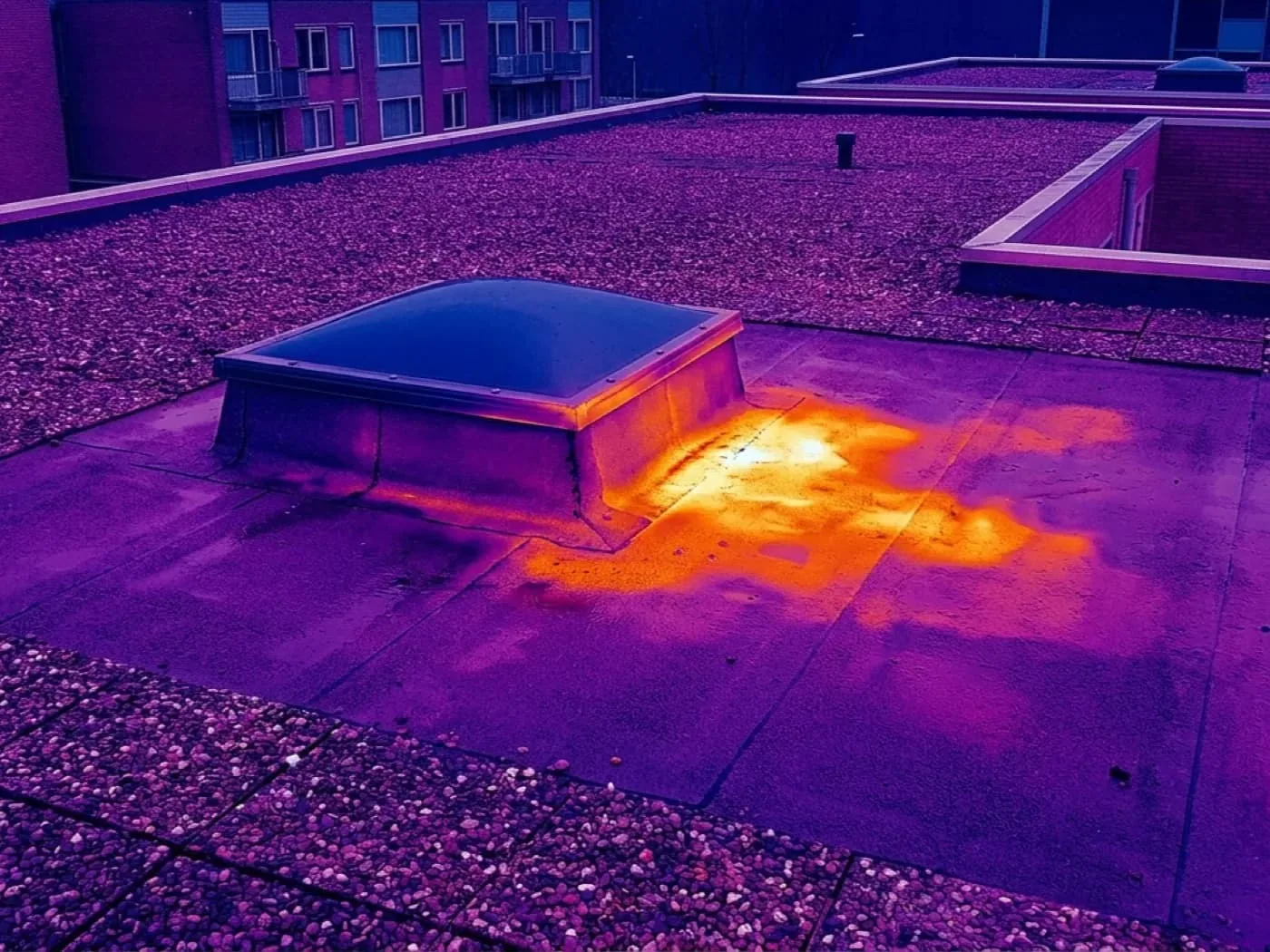
The survey happens outside. An infrared moisture survey is carried out from the roof on a clear evening, leaving the care floor undisturbed. The scan shows warm, damp areas, and core cuts confirm them. The map is dated and filed with the wing and room numbers affected.
Small wet areas are cut out and replaced with matching insulation. Widespread moisture points to a larger scope. For a senior living community the early catch matters more than usual, because moisture that reaches a ceiling can lead to mold concerns and air quality questions that a care operator must handle with care. The map gives the administrator a basis for deciding when and how to act. Entry canopies and covered walkways get the same treatment, since a leak at an entrance is seen by every visitor and every resident who uses it.
How does Temple's healthcare setting affect planning?
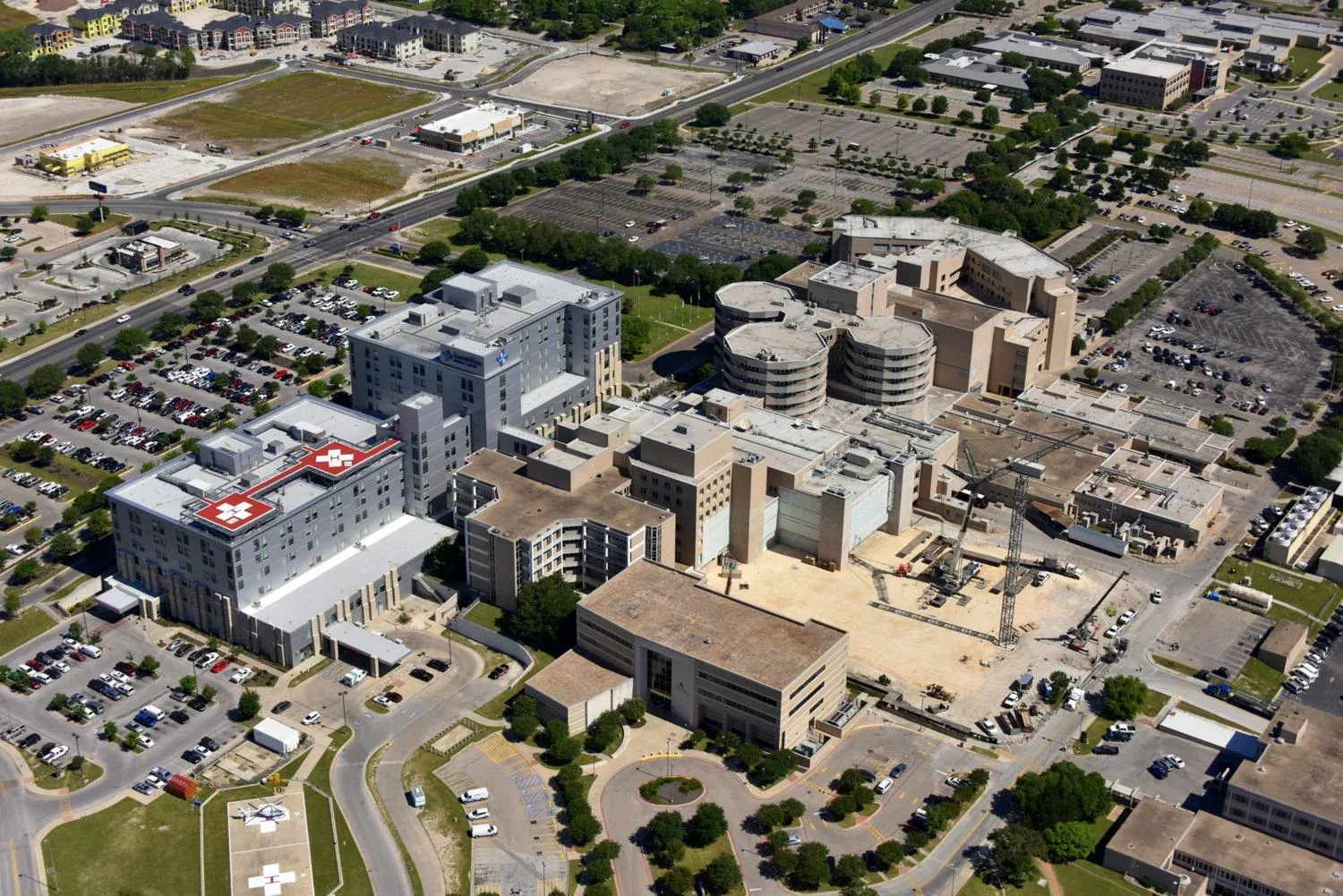
Temple's building stock is led by healthcare campuses, and the Temple Medical and Educational District adjacent to downtown covers roughly 2,000 to 2,240 acres. A senior living building is a residential care setting, and the infection control, noise, and documentation habits of the nearby hospital world carry over to it.
We borrow the practices used for a hospital roof: barriers, restricted access, dust control, and written phasing. A community in the Temple medical and education district or elsewhere in Temple gets the same plan format, and the administrator signs it before work starts. A reroof here goes through Temple's permit office, which states the code edition in force.
What does the 2024 storm record mean for a care community?
A regional storm record supports an edge review ahead of the season. Temple's May 22, 2024 tornado was rated EF-2 by the National Weather Service, and the survey logged peak winds near 120 mph along with damage to businesses of several kinds. An EF-1 tornado also began near Little River-Academy that night, and straight-line gusts of 80 to 90 mph were estimated across Temple. None of that describes a particular community.
For a senior living roof, the context justifies an edge and equipment review before storm season. Coping, fascia, and canopy edges are tested for movement, and rooftop units and generator exhausts are checked for straps and covers. A care operator also needs a plan for the hours after a storm: who gets called, in what order, and what the roof crew does first. The record we keep answers those questions in advance.
How does an operator rank several communities?
An operator with several communities needs the same sheet at each. Membrane condition, flashings, drains, and moisture are scored on one scale, and communities fall into fix-now, watch, and replace-soon groups. The ranking supports spending decisions, and photographs travel with it, so an executive reading it in another city sees the same hallway the on-site team sees. The same record fits a healthcare system that runs both clinics and residential care.
Phased reroofing keeps residents comfortable, with sections opened and closed the same day, noisy work timed for hours the administrator picks, and entrances left clear. A roof condition report collects the findings for the board. For a building with apartment-style units, the plan matches the approach in apartment roofing, with notice rules added.
Where residents live in the building for years, the notice rules in the record matter as much as the roof findings, and a calm, dated account of each step is part of how the operator reassures families.
Commercial Roofing Questions
How is noise kept down around residents?
Heavy tasks such as tear-off are scheduled for hours the administrator chooses, and work is staged so the area above resident rooms is the last to be opened. Quiet methods such as adhesives replace mechanical fastening where the system allows. The plan names the quiet hours and the crew follows them.
Will the crew enter resident areas?
Not for roof work. The survey, make-safe, and repair happen from the roof. If an interior inspection is needed, the administrator arranges access with care staff present. Access routes, parking, and staging are marked on the plan before the first day.
What does a holding repair accomplish for a care community?
It stops active water entry so the area can stay in use. The record states the wing and room beneath, the materials used, and the date, and it says plainly what the repair does not cover. The permanent scope is scheduled once the survey is done.
How do we decide between repair and replacement?
The moisture map and core cuts decide it. Limited wet areas and an intact membrane point to repair or coating. Widespread moisture, repeated failures, or a membrane that no longer bonds point to replacement. The report lists the readings behind whichever way it leans.
Do you coordinate with the community's maintenance staff?
Yes. The maintenance lead receives the roof sketch, the drain log, and a list of items the staff can check between visits, such as clearing strainers after storms. Anything beyond that is reported to us. The shared record prevents duplicate work and missed items.