Apartment and Multifamily Roofing
A resident reports water on a bedroom ceiling, and the on-site manager has until the end of the day to decide who goes up, who goes in, and who gets told. Multifamily roofing runs on that clock. In Temple, TX an apartment property can hold many buildings with many roofs, each tied to a set of units, and the first hour is spent matching a stain to a roof section before anything is opened. The better the record, the shorter that hour.
What fails first on an apartment roof?
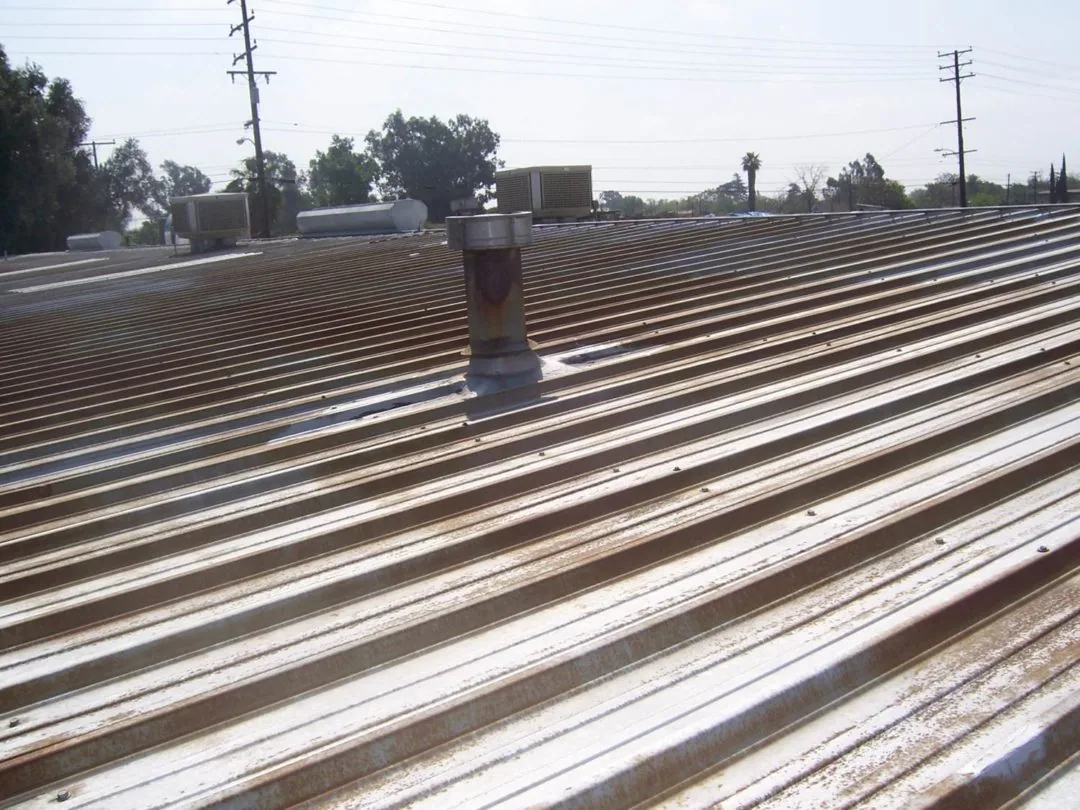
The details that repeat on every building. Flashings at walls and chimneys, vent and pipe penetrations, drains and gutters, and the junctions where one roof plane meets another are the usual failure points. When a manager has a dozen buildings built from the same plan, a defect at one is a warning for the rest. A breezeway roof, a balcony overhang, and a pitched section above a flat one each have their own seams.
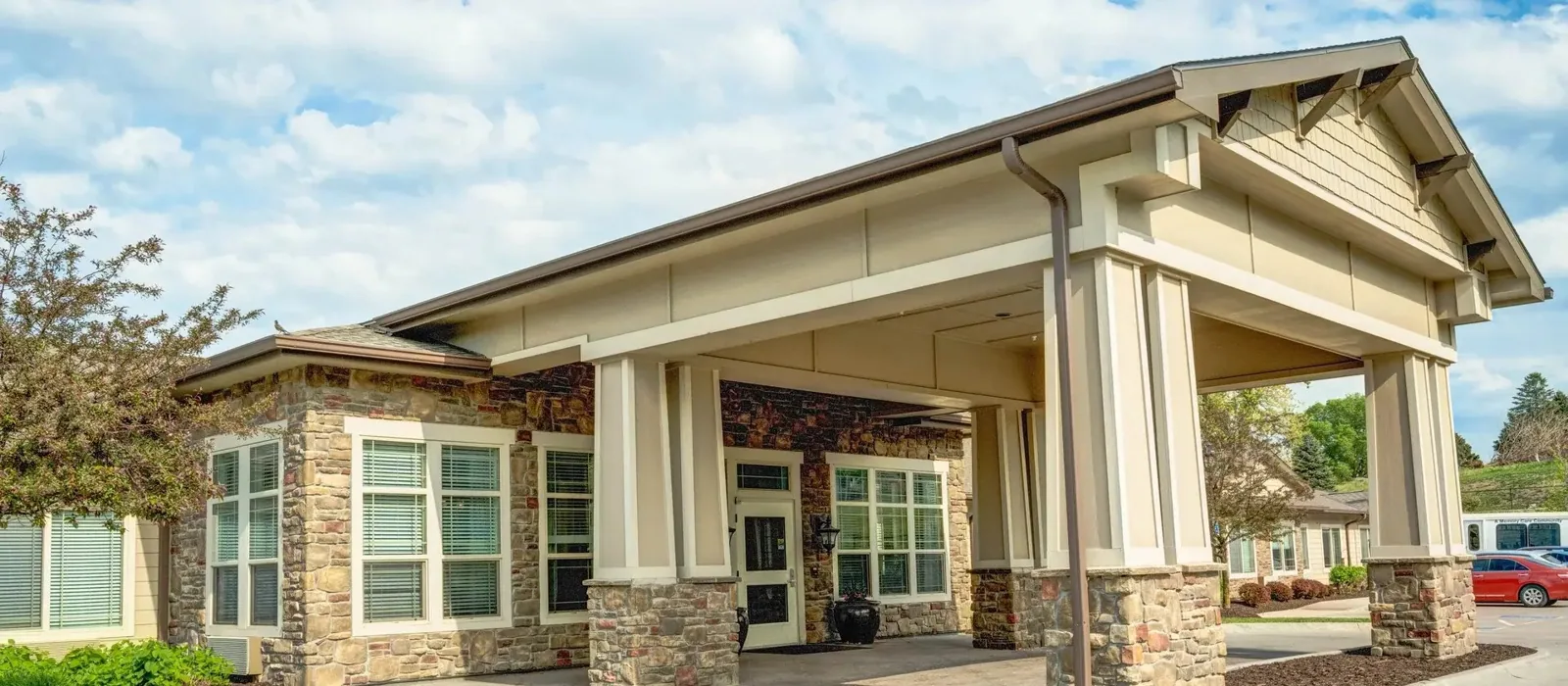
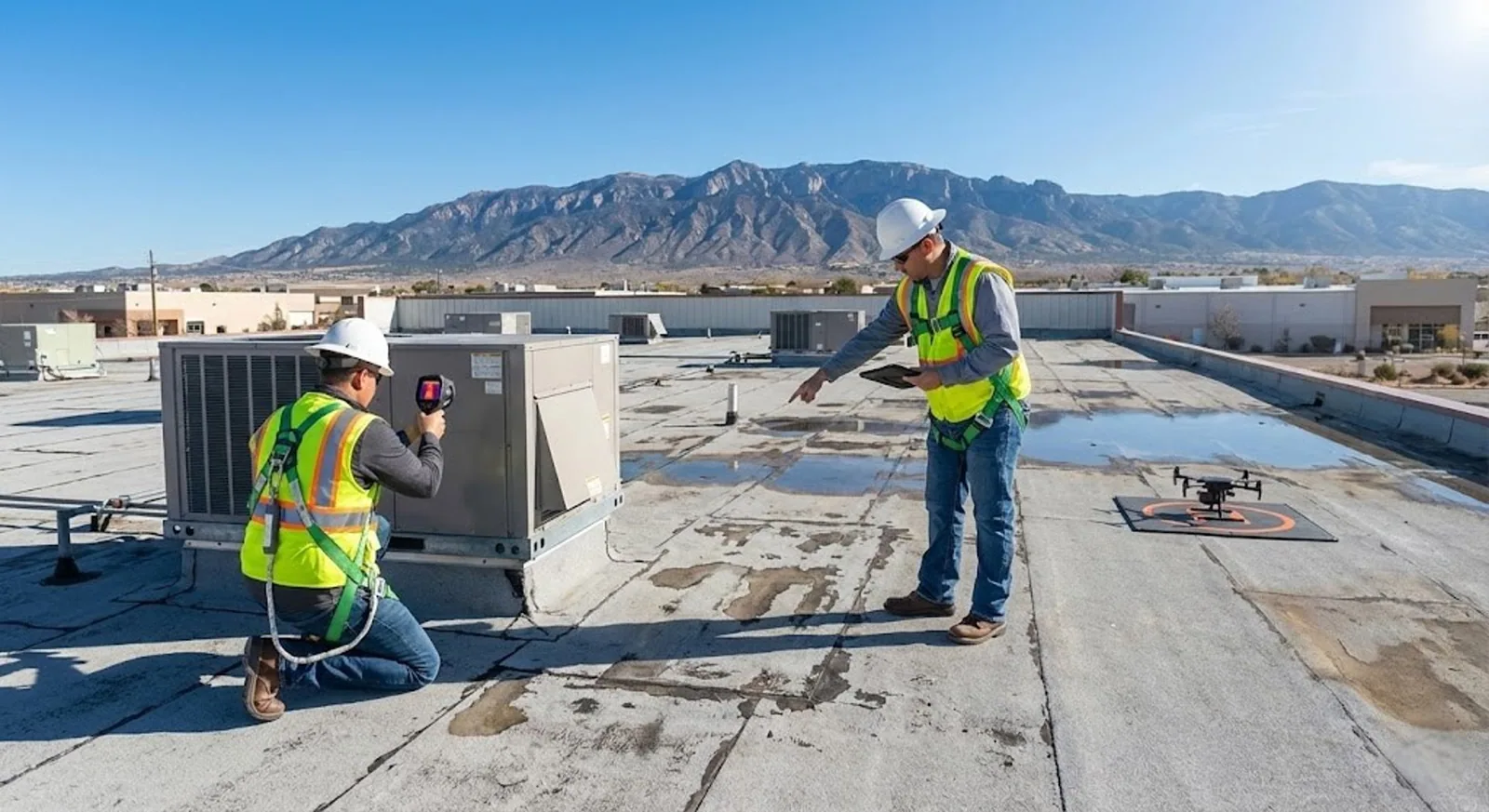
The first walk takes each building as its own roof and logs every section with photographs. We count penetrations, probe sealants, and check drains and gutters. Unit numbers are matched to the roof section above them. Sealants and thermoplastic seams bake from May on in Temple, where August afternoons reach about 95F and roughly 80 days a year pass 90F, so the walk is repeated once the hot season ends. Defects that repeat from building to building are flagged as a pattern. Where residents live under the roof for years, as in a senior living community, the plan adds notice rules and quiet hours to the same record.
Gutters and downspouts are logged as well. A gutter that overflows at a breezeway or a balcony floods a walkway, and a downspout that discharges at a foundation sends water where nobody wants it. We clear what can be cleared, refasten loose runs, and record where each downspout lands, so the next storm leaves a comparison.
What is the make-safe step for a leaking unit?
The roof crew stops the water; the management office handles the resident. We install a temporary dry-in or sealed patch over the opening from the roof, without entering the unit, and photograph the area before covering it. The record notes the unit number, the building, the date, and the materials used. The office moves belongings, informs the resident, and decides whether the unit stays occupied.
That record is also the maintenance file. The holding repair is labeled temporary, with a plain statement of what it covers and what it leaves open. The permanent scope comes after a survey of the building, and the decision about it belongs to the asset manager, not to the on-call maintenance technician.
How do we trace a stain to the roof and not the plumbing?
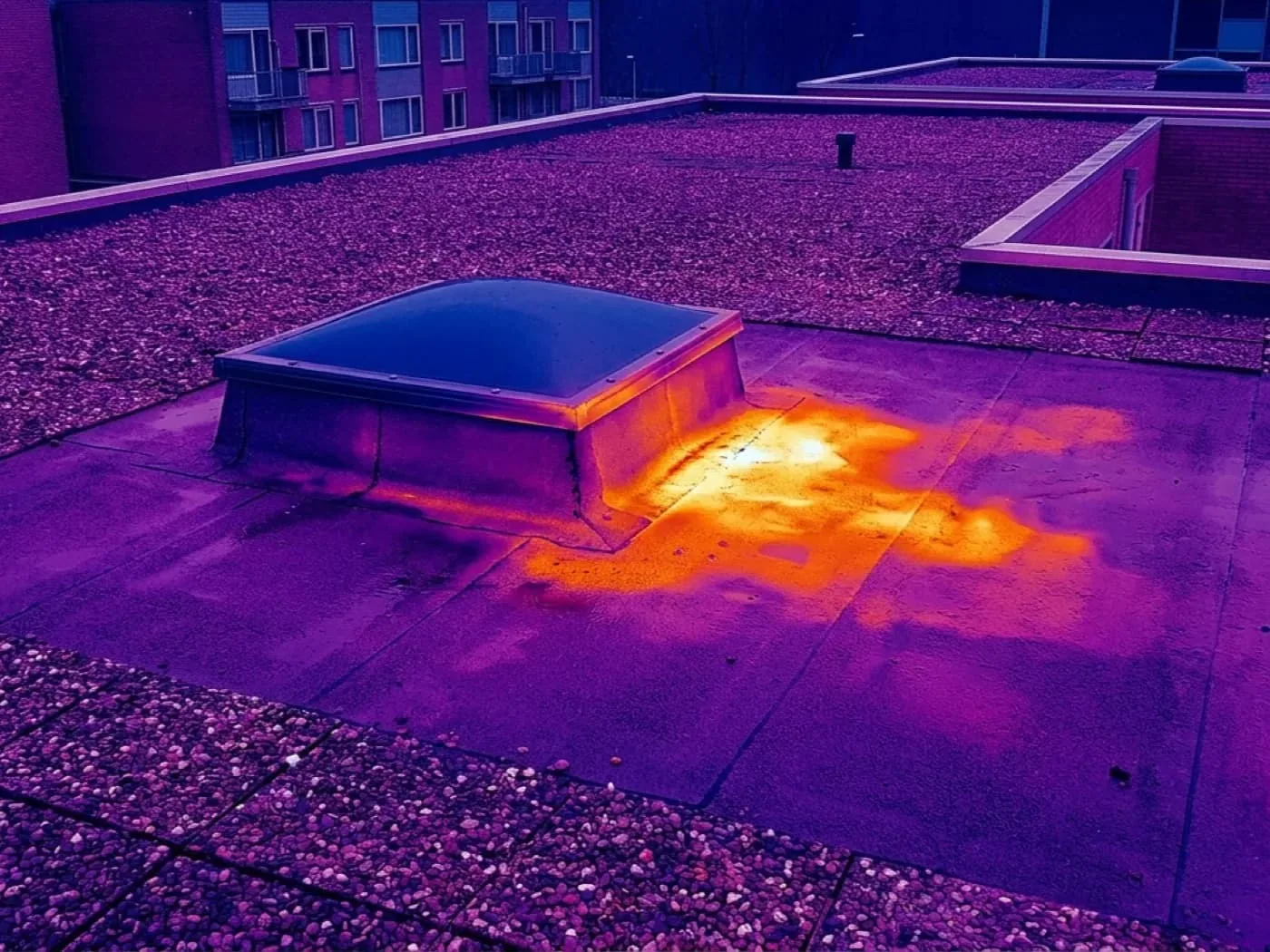
A ceiling stain can be rain, a plumbing line, or condensation from an air handler. The weather record answers the first question: does the stain appear after rain? An infrared moisture survey and core cuts show whether the roof insulation above is wet. If the roof is dry, the cause is elsewhere, and that finding saves a pointless roof repair.
When the roof is the source, the map shows the boundary of wet insulation. A small area is cut out and replaced. A larger area points toward a bigger scope, and the map shows which units sit below it so the management office can plan notices. The moisture map is dated and filed with the unit numbers affected, and a later survey tells the manager whether the repair held or the boundary moved.
What does the 2024 storm record mean for multifamily?
Temple took an EF-2 tornado on May 22, 2024, which the National Weather Service rated at peak winds near 120 mph; restaurants, shops, banks, and strip malls were among the damaged buildings. Gusts estimated at 80 to 90 mph blew in straight lines across Temple, and a weaker EF-1 tornado formed near Little River-Academy that evening. That is regional context, and it says nothing about any particular property.
On an apartment roof it translates into a perimeter and attachment review: drip edge, gutter straps, ridge and hip details, and rooftop equipment. After a wind event, our comparison with earlier photographs shows what moved. A property with many similar buildings can use one damaged building as a signal and check the others for the same detail. The process for a wind-damaged roof starts with life safety and active leaks.
How does a manager rank buildings across properties?
Each building is rated on membrane or shingle condition, flashings, drains, and moisture, using the same scale at every property. The result is three bins: fix now, watch, or schedule for replacement. The ranking is the budget tool for property management companies and for owners who answer to investors.
An investor or lender also wants to know what a roof will cost soon. A due diligence roof survey before an acquisition documents each building, estimates remaining life, and lists near-term repairs. Owners in Temple and nearby cities can use the same record format, so a portfolio can be compared across markets. Real estate investors use that data to price a deal.
What about conversions and older buildings?
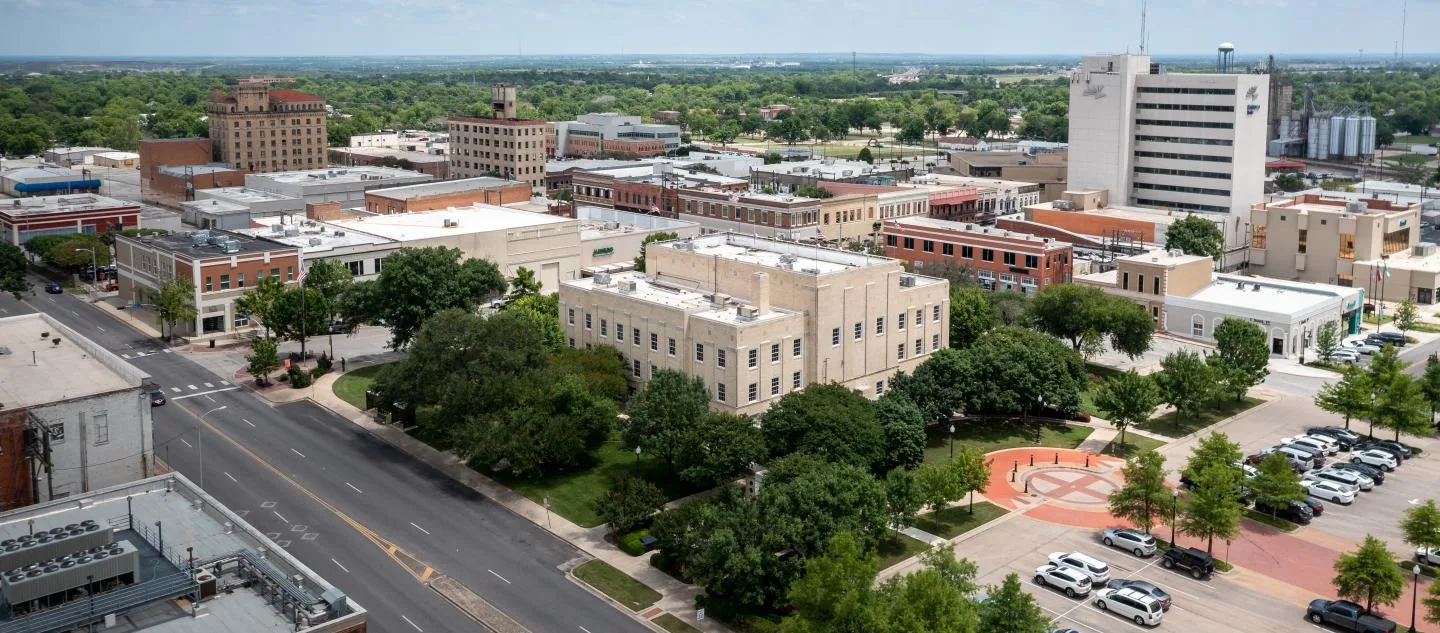
Downtown Temple's City Center project covers the Hawn Hotel, Arcadia Theater, and Sears Building, a redevelopment of about 85,000 historic square feet into residential and retail space. A conversion of that kind puts residential use under a roof that was built for another purpose. The project says nothing about the roof assembly, so an inspector treats it as a reason to ask what lies on the deck.
Core cuts show the layers and the condition of the structure. Parapet masonry is probed for loose mortar. Drains, which may serve a larger roof than the new use expected, are traced and tested. The result is a scope that fits the building as it is, not as a standard apartment plan assumes. The same walk applies to any converted building in downtown Temple, and the rating scale matches the one used for a hotel.
Commercial Roofing Questions
How can a manager tell whether a stain is a roof leak?
Check whether it appears after rain and whether it recurs in the same spot. A leak follows weather. A plumbing or condensation stain does not. An infrared survey and a few core cuts settle the question, and a dry roof saves the cost of a repair that would not have helped.
Can residents stay in their units during a reroof?
Usually. Work is done from the roof, in sections closed the same day, with advance notice to residents and noisy tasks timed for daytime hours. Where a section is open, the units beneath are protected. The management office and the crew agree on the plan before work starts.
What does a holding repair do for a multifamily building?
It stops active water entry and keeps the unit usable. The record states the unit, the materials, and the date, and says what the repair does not fix. The permanent scope is priced and scheduled separately, so the owner can plan it in the capital cycle.
Should we repair the same detail on every building at once?
If the same defect appears on several buildings, yes, it is usually cheaper to batch the work. The ranking shows which buildings have the problem now and which are likely to. Batching also reduces mobilization and gives residents one disruption, not many.
What documents help with an acquisition?
A survey with photographs of every roof, a moisture map, core results, a drain log, an estimate of remaining life, and a list of near-term repairs. It is written for a reader who has not seen the property, so a lender or investor can use it directly.