Shopping Center and Strip Retail Roofing
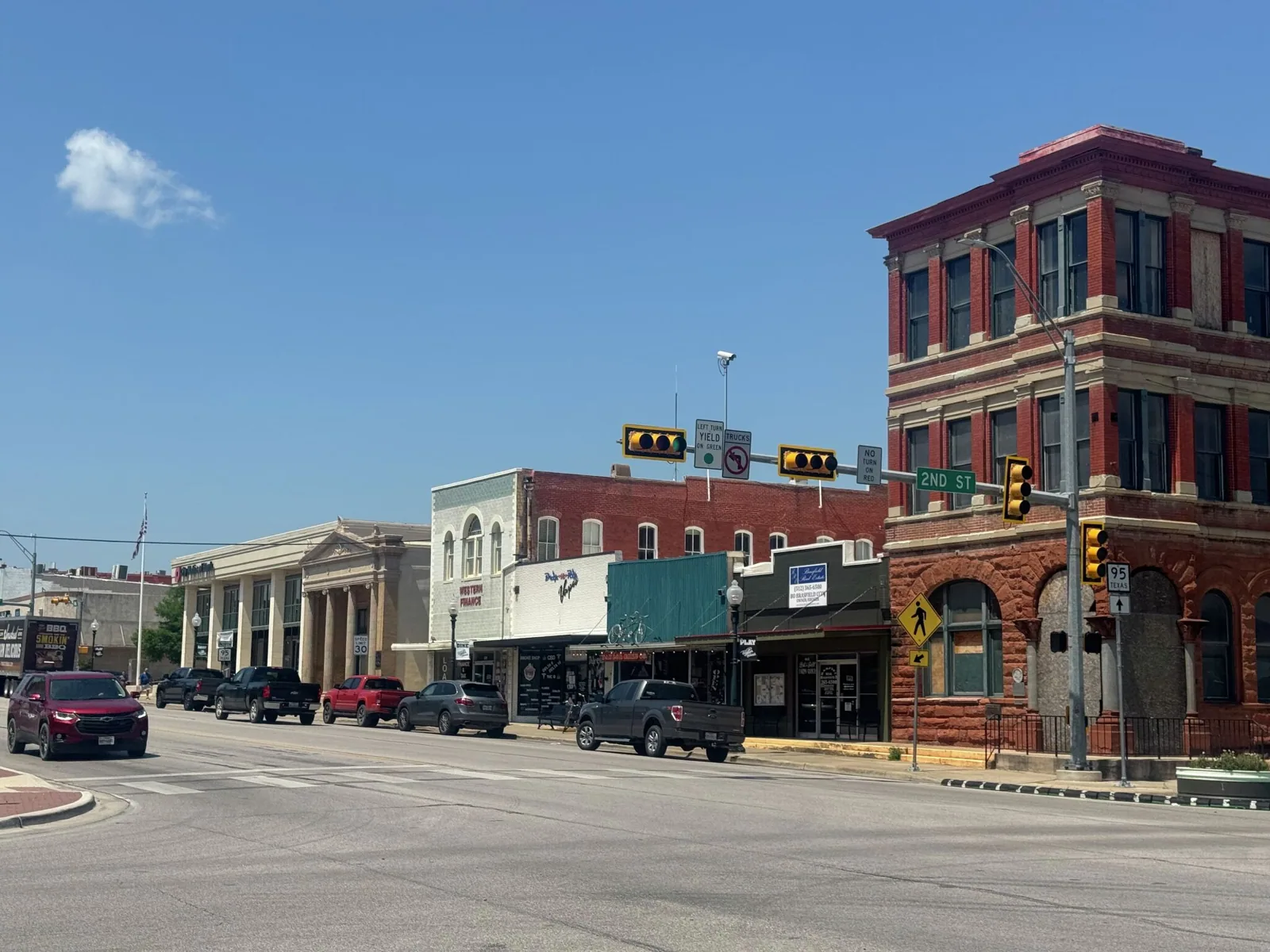
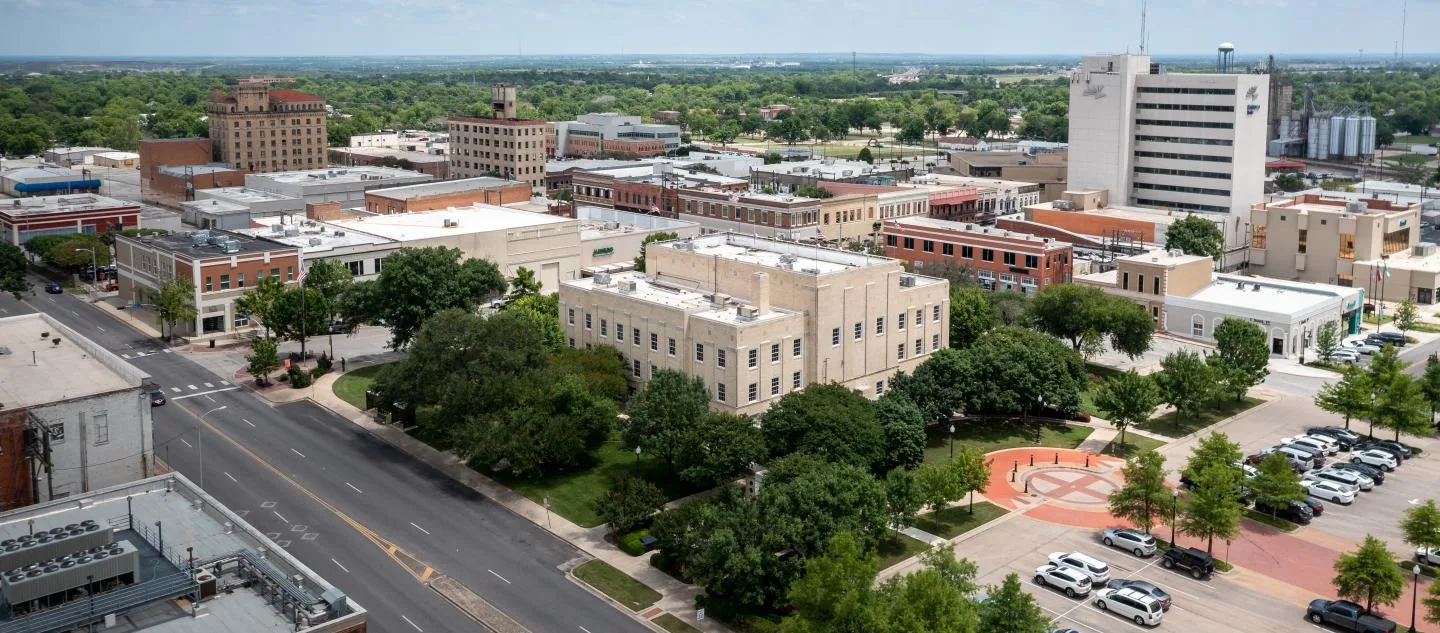
Water drips onto a sales floor on a Saturday, and the tenant calls the landlord, who calls the property manager, who calls us. Three phone calls later, the roof is still open. A strip center turns that chain into the main problem: one roof, many bays, many tenants, and an owner who has to decide in the first hour whether the leak is a patch or a symptom. In Temple, TX, strip malls were among the buildings the May 22, 2024 EF-2 tornado damaged, which makes the question more than theoretical.
What fails first on a strip center roof?
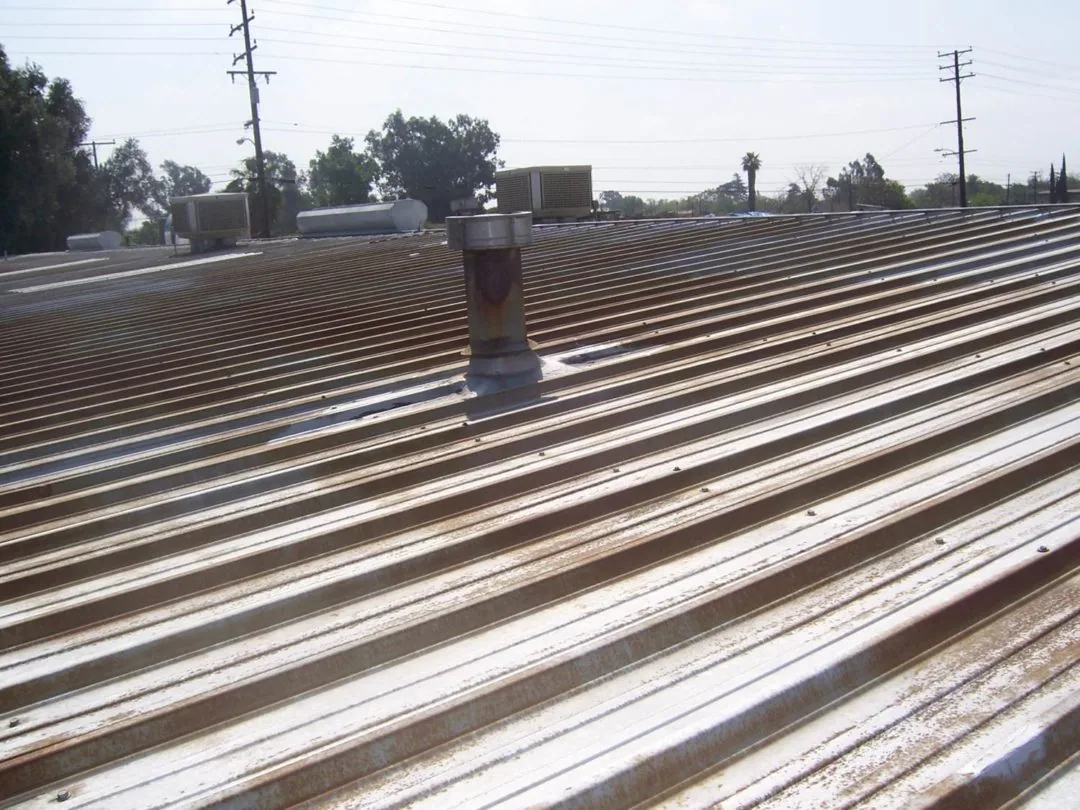
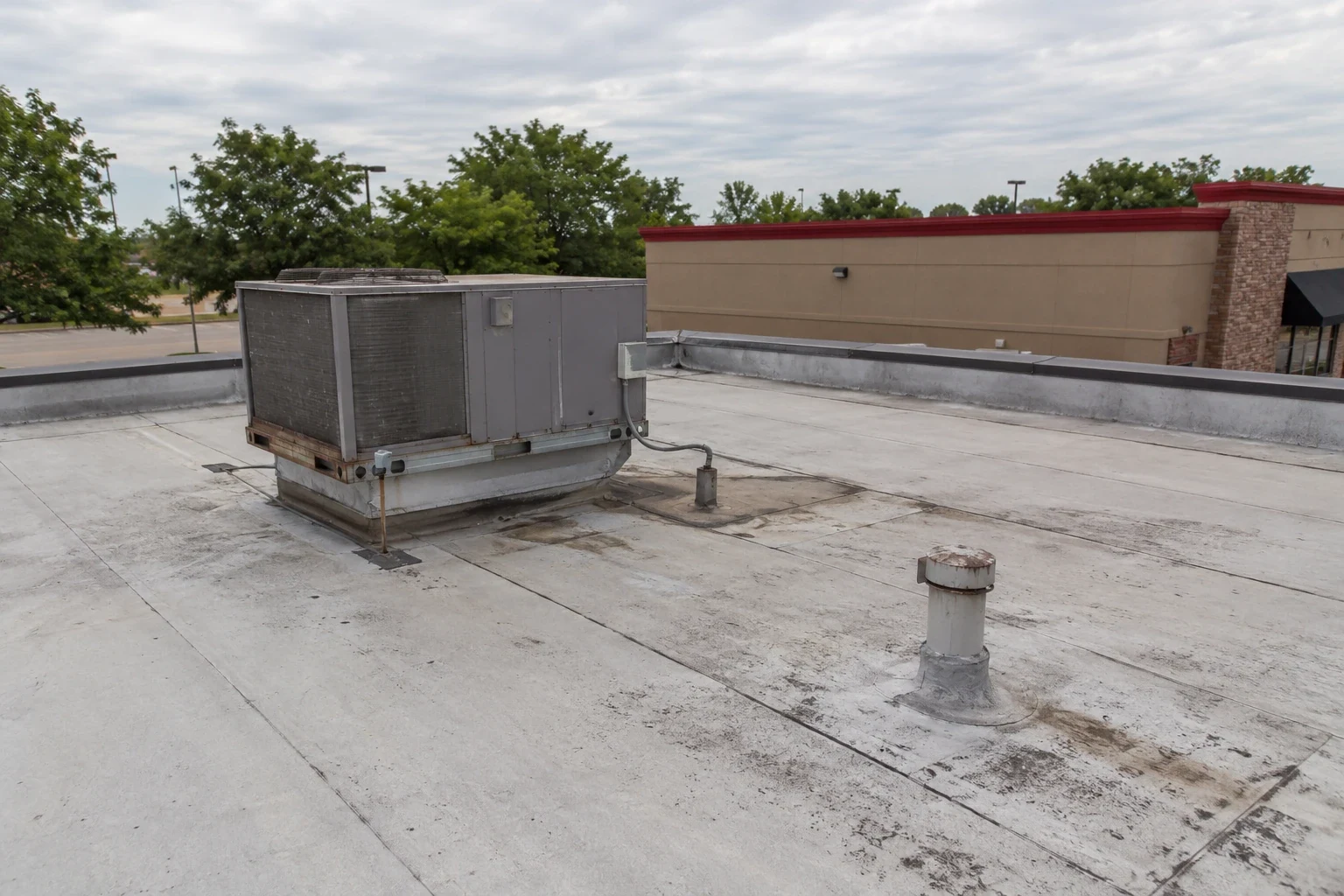
Shared roofs fail along their shared features. Demising walls between bays carry parapets and flashings that run the length of the building. Rooftop units serve individual tenants and bring curbs, condensate lines, and electrical conduit to the surface. Scuppers and downspouts at the rear drain a long roof into a few outlets. Any of those can be the source of a leak that appears in a different bay.
On the first walk we number every bay on the roof sketch and log the drains, rooftop units, and wall transitions that belong to each. Photographs of seams and flashings are tagged by bay. In a Temple August the highs near 95F, with some 80 days a year past 90F, cook sealants at those transitions. A leak that seems to start in a tenant's ceiling is traced through the roof to its true source, which is often one bay over.
What did the 2024 storm teach about retail roofs?
An EF-2 tornado crossed Temple on May 22, 2024, and among the buildings it damaged were restaurants, shops, banks, and strip malls, the same family of building as a strip center. Peak winds reached near 120 mph, and a weaker EF-1 tornado began near Little River-Academy that evening. Straight-line gusts across Temple were estimated at 80 to 90 mph. For an inspector that is a reason to read a retail roof's edges closely, not a statement about any particular center.
What it does justify is a close look at the edges. Parapet caps, fascia, coping, and the membrane edge are where wind begins. A loose cap on a long front parapet can lift in a gust and drop onto a walkway. After a wind event, our perimeter walk compares the edge against earlier photographs and marks what moved. On a tornado-damaged roof life safety and active leaks come first, and anything cosmetic waits.
What is the make-safe step for a leaking bay?
The first move is to keep the tenant selling. A temporary dry-in over the opening, a sealed patch, or a secured tarp stops water entry, and the property manager handles interior barriers. We photograph the opening before it is covered and record the bay number, the date, and the materials used. That intake record is the basis for the permanent scope and for any conversation with the tenant's insurer or the landlord's.
A holding repair buys time while the owner decides on a permanent fix. For a shared roof, the decision often involves more than one party: the landlord owns the roof, the tenants pay through common-area charges, and the lender may want a report. The record separates what was done on the day from what is still open, and that clarity matters when responsibilities are split.
Why do rooftop units cause so many leaks?
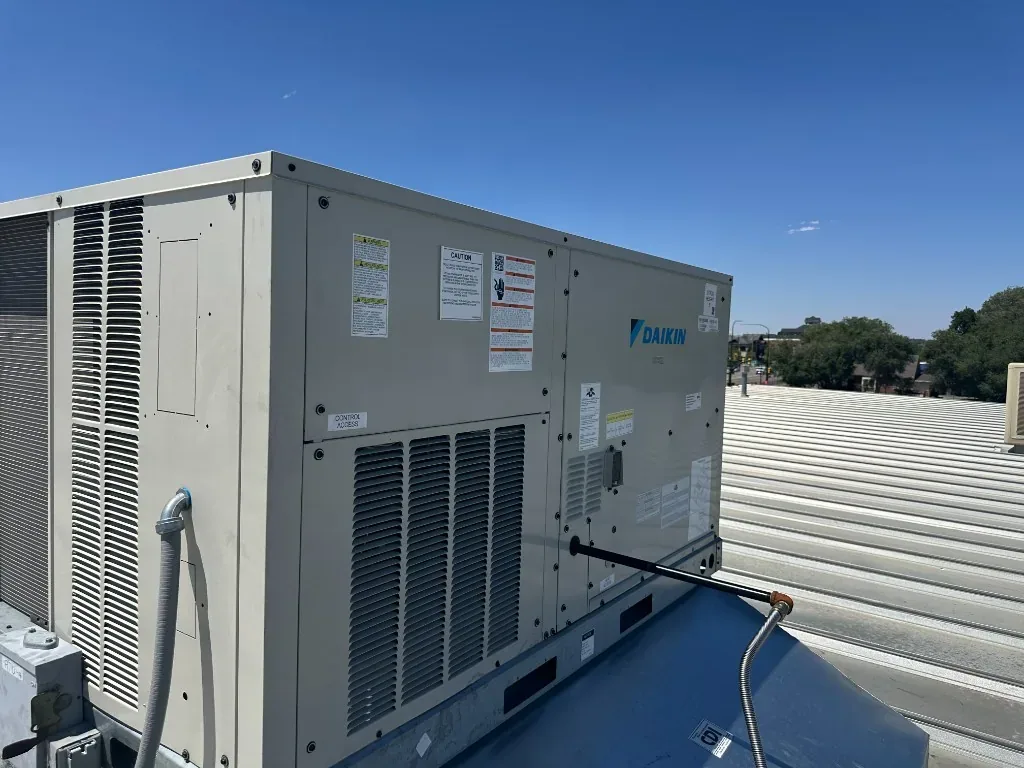
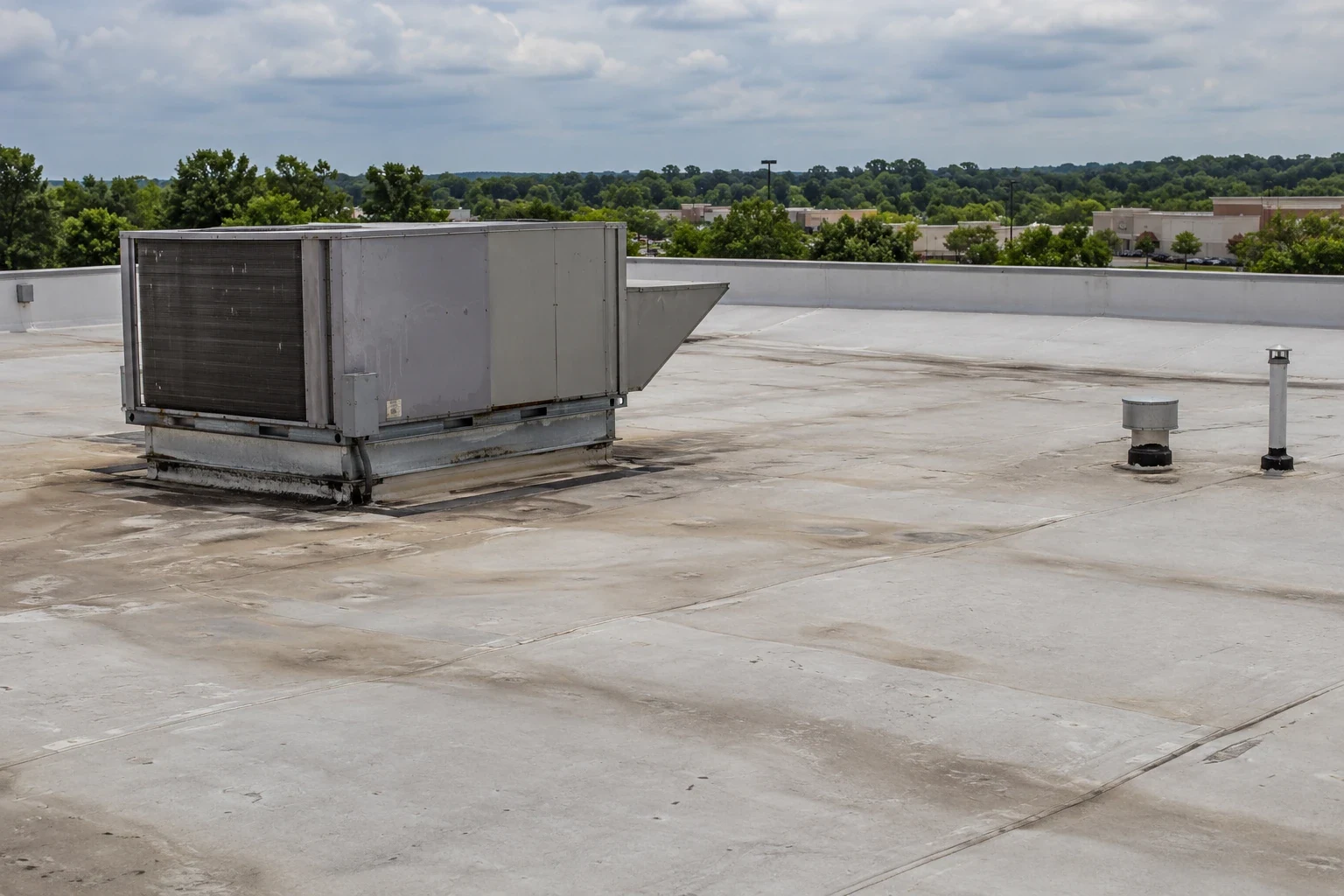
Each tenant's unit has a curb, flashing, and connections, and tenants change over the life of a roof. A replaced unit that does not match the old curb leaves a gap. A condensate line that discharges onto the membrane keeps one spot wet. Service technicians walking to a unit wear a path in the surface. Each of those details sits at a rooftop equipment curb, and every shopping center inspection covers them.
We log the curb height, flashing condition, and condensate discharge for every unit, and we add walk pads where service traffic has worn the surface. When a tenant's unit is being replaced, the curb is checked before the new unit arrives. That avoids sealant-heavy patchwork on a roof that took years to age.
How does an owner rank several centers?
An owner with more than one center needs a ranking that shows which roof to fund first. The rating covers membrane and seam condition, flashings, drainage, and moisture on one scale. Roofs showing repeated leaks or wet insulation move up. A restaurant bay with a kitchen exhaust gets its own line, because grease on the membrane near the fan is a separate wear mechanism, as with any restaurant roof. Roofs with clean readings stay on a monitoring schedule. The ranking is the portfolio tool, and it turns a pile of tenant complaints into a plan.
A center along the Loop 363 corridor and one elsewhere in Temple get the same rating sheet. A retail chain or a landlord with several properties can also compare a center against a big-box store and see where the money is best spent.
What does the permanent scope involve?
Permanent scope follows the readings. A dry roof with a worn surface may need only repairs and a coating. A roof with wet insulation in several bays needs cut-out and replacement of that insulation, and perhaps a recover or full replacement. Cost drivers get named plainly: how much roof there is, how many penetrations, how much insulation has to come out, access, and which hours tenants will tolerate.
Work is phased by bay so entrances stay open and tenants keep operating. Noisy tasks are timed away from peak shopping hours, and the loading zones behind the building stay clear for deliveries. Scaffolding or lift positions are marked on the site plan, so nobody parks in the work area and the tenant behind the building can still receive stock. Plan review sits with the Temple Building Department, which applies the International Building Code; the permit office says which edition is current. A retail chain tenant may have its own requirements for work above its space, and those are collected before the schedule is final.
Commercial Roofing Questions
Which party decides whether a bay leak gets a patch or a bigger fix?
The owner of the roof decides, usually the landlord, after hearing from the property manager and sometimes the lender. We supply the findings and the cost of each path. One clear cause with dry insulation points to a patch; a leak that returns, or insulation that is wet across bays, points to something larger.
Can a tenant call about a leak directly?
The call should go through the property manager so the record stays in one place, but in an emergency we will answer from any party and make the building safe. The intake record then goes to the owner. That keeps the roof file complete and avoids duplicate repairs.
How is a parapet cap checked after a wind event?
We walk the full length of the parapet, test fasteners at intervals, and look for lifted corners and open joints. Photographs are compared with earlier ones where they exist. Loose caps are secured or removed for safety, and the finding goes on the sketch with a recommended repair.
What if the center has an older roof that has been patched many times?
The patch history is part of the evidence. Core cuts show how many layers sit on the deck, and a moisture map shows how much insulation is wet. If patches are spread across the roof and moisture is widespread, the record supports a recover or replacement.
Do you work during store hours?
Roof work can proceed while stores are open, with covered walkways, clear entrances, and noisy tasks scheduled away from peak hours. Sections are closed the same day. Where a tenant needs quiet at a certain time, the plan names the window and the crew follows it.