Big-Box Retail Roofing
A drain backs up above the garden center after a hard rain, and a store manager phones the regional office before phoning anyone else. The roof belongs to a portfolio, the decision belongs to someone who has never seen the building, and the first hour belongs to whoever can make the opening safe. Big-box retail in Temple, TX runs on that structure. The roof record has to be good enough for a regional facilities manager to act on it from a desk in another state.
What fails first on a big-box roof?
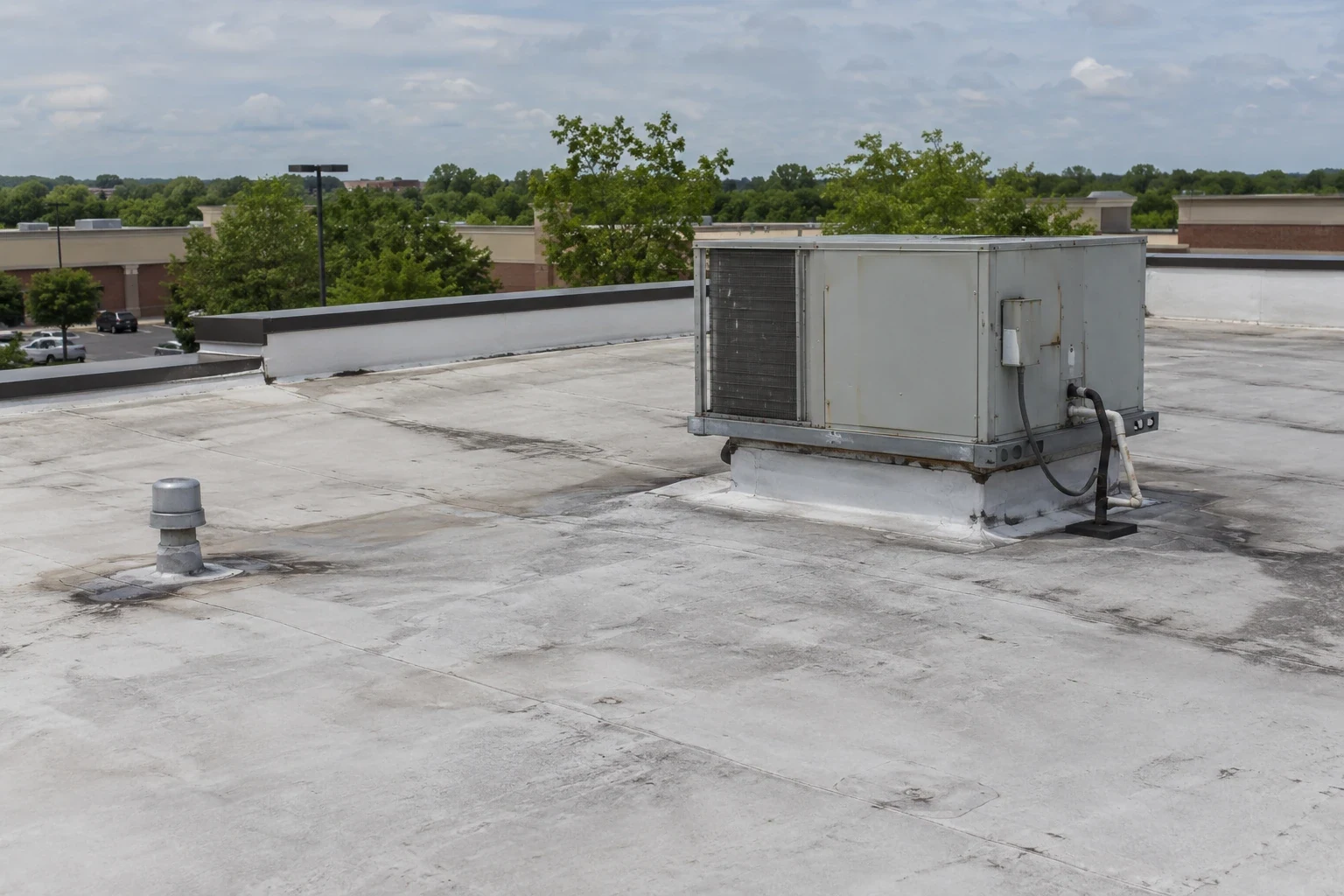
Drains, seams, and the long runs of flashing at walls. A large retail roof is mostly open membrane with a ring of parapet, a scatter of rooftop units, and interior drains that carry water through the building. A drain that silts up leaves a pond that pushes on seams for days. A parapet flashing that opens lets water run down the back of the wall. Rooftop units punch the surface with curbs and conduits.
The first walk starts at the drains and works outward. Each drain is photographed, its bowl and strainer checked, and the depth of standing water noted. Seams get probed along the paths where technicians walk. Thermoplastic seams and sealants take a beating through a Temple summer, when August afternoons close to 95F and roughly 80 days above 90F arrive each year, so inspections run before and after the hot months. A store floor area tells nothing about a roof, so every roof is measured separately.
How does make-safe work above an open sales floor?
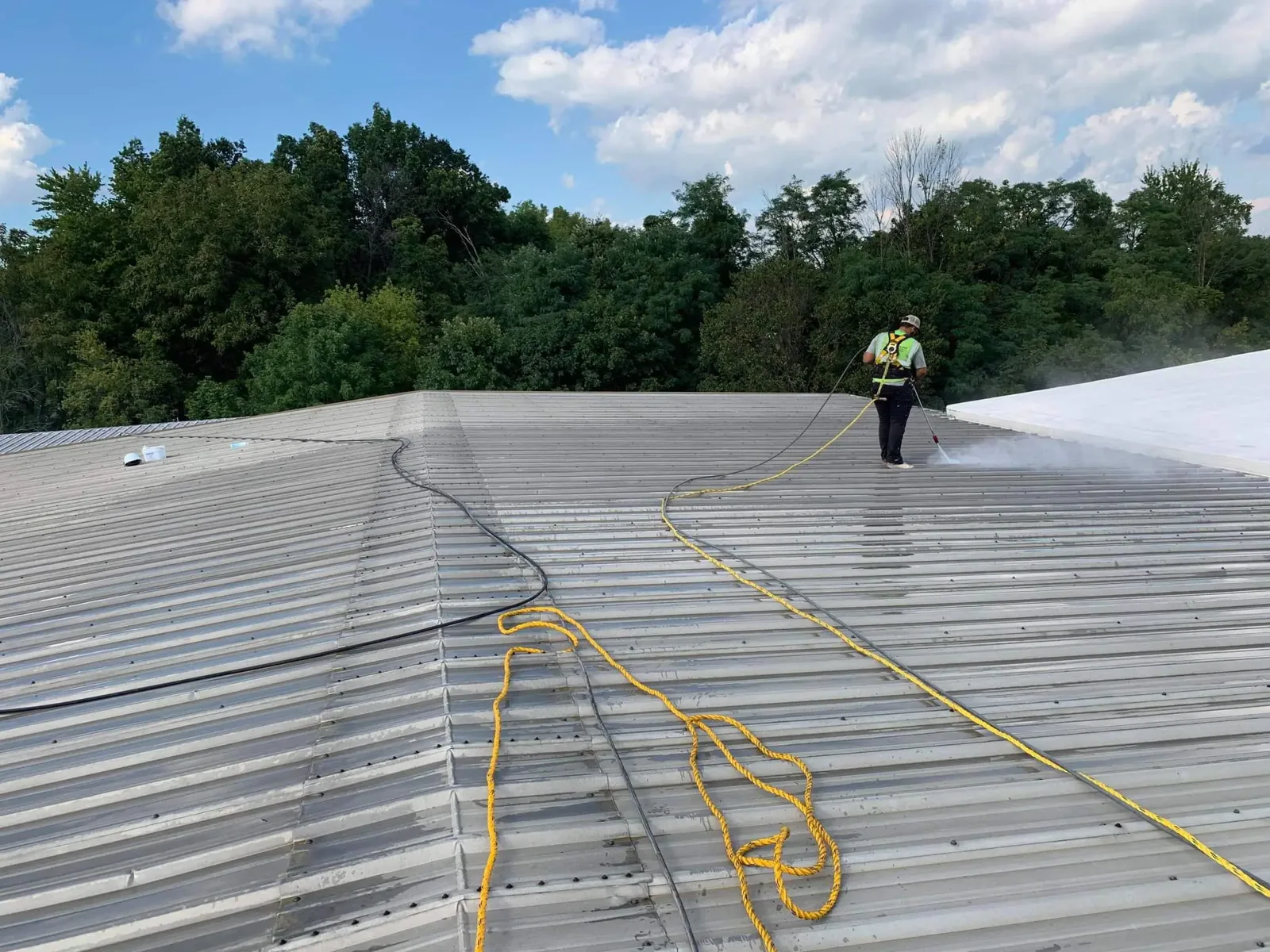
With the store open, safety comes first. The dry-in crew works from the roof and does not enter the sales area. Temporary tarps or sealed patches stop water above the leak, and store staff place barriers and signs below. We photograph the opening before covering it and record the bay or department it sits above. If water is damaging merchandise, the store shifts the stock, not the roofer.
The holding repair is documented as temporary, with the date, the materials, and the part of the roof it covers. It buys time for the permanent scope to be priced and approved through the retailer's normal process. That separation, emergency stabilization on one side and permanent scope on the other, keeps a rush job from being mistaken for the fix.
What does the 2024 tornado mean for a retail roof?
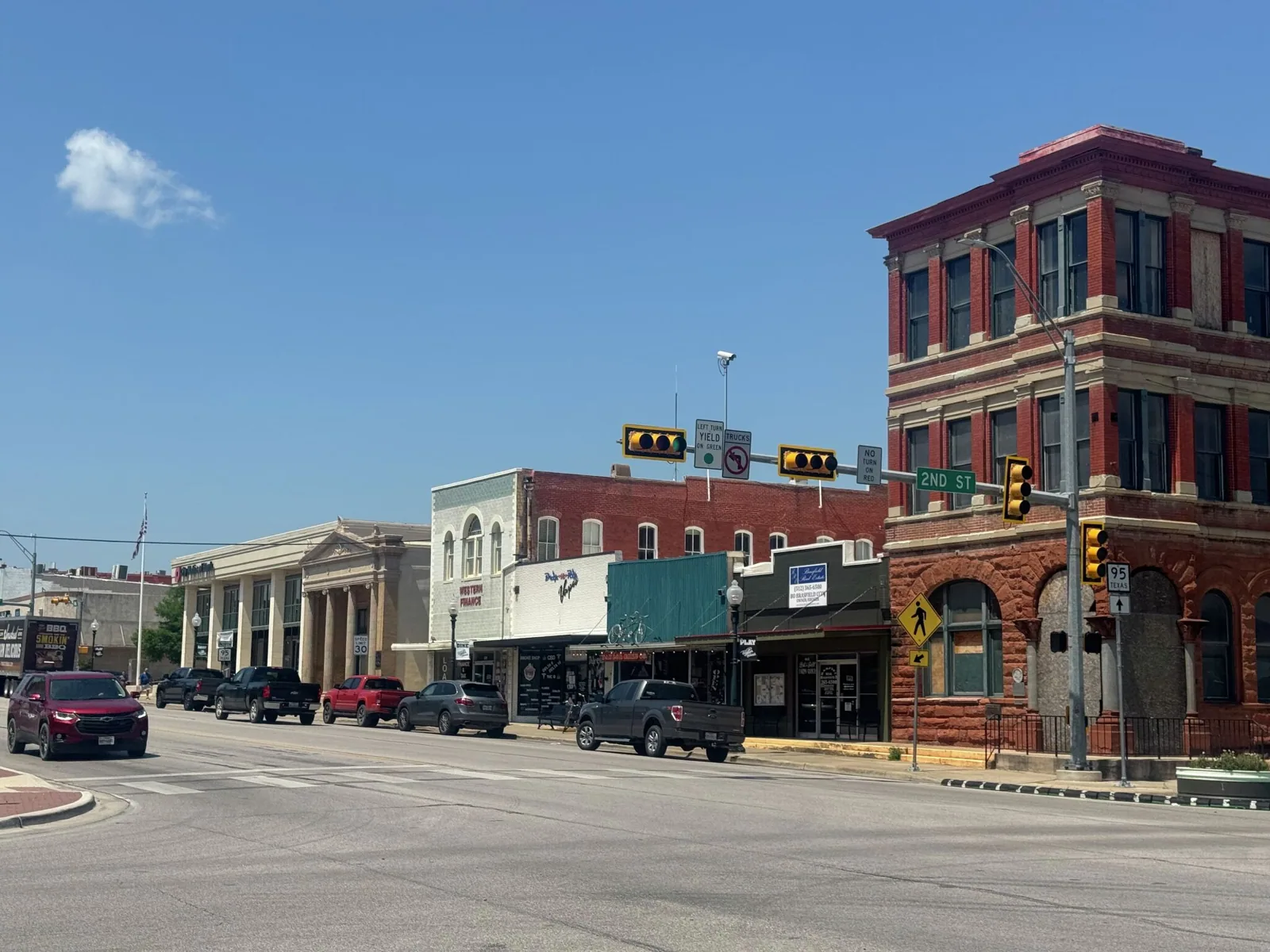
An EF-2 tornado confirmed by the National Weather Service struck Temple on May 22, 2024, with peak winds near 120 mph. Restaurants, shops, banks, and strip malls took the damage, and the survey put the straight-line gusts at 80 to 90 mph across the city. Near Little River-Academy, a second and weaker tornado, rated EF-1, formed the same evening. This is inspection context, not proof of damage on any specific store.
For a retail roof, context translates into an edge review. Coping, fascia, and the membrane edge are examined for lifted corners and loose fasteners. Rooftop unit covers and conduit supports are checked for latches and straps. After a wind event, the comparison with earlier photographs tells us what moved. Tall parapet walls get a close look for movement, since they take wind loads that a low parapet does not, and the same review applies to a strip center with a long front wall. Edge details are the first place wind finds a way in.
How do we find wet insulation on a large roof?
A large roof cannot be cored everywhere, so the survey does the work. An infrared scan reads the whole surface in a single evening and maps the warm, wet areas. Core cuts at those locations confirm the readings and show the number of layers on the deck. The result is a moisture map that sizes the repair to the wet area rather than the whole building. The map is dated and filed, so a repeat survey after the next heavy rain shows whether any boundary has moved, and a repair that was cut too small gets caught early.
For a retailer, the map matters because it lets a small repair stay small. A store with a few wet patches near a drain can be fixed with a cut-out and a patch. A store with moisture across half the roof needs a different conversation. When the evidence supports a roof recover, the store avoids the noise and debris of a full tear-off. If it does not, the readings say so, and the scope moves to replacement.
How does a regional manager rank stores?
A chain with stores in several cities needs a consistent record. Each roof is rated on membrane and seam condition, flashings, drains, and moisture, using the same scale everywhere. Stores sort into repair now, monitor, and plan for replacement. The ranking becomes the basis for the capital plan, and the photographs travel with it, so the regional manager sees what the local team sees. A store whose roof has been patched repeatedly in the same area rises on the list even if its membrane looks acceptable, because repeated patches point to a cause nobody has fixed.
That is the purpose of a multi-site roof program. A store on the Loop 363 corridor in Temple can be compared directly with one elsewhere in Central Texas. For a retail chain the ranking is a budget instrument, not a maintenance chore.
What does the permanent scope include?
The permanent scope follows the readings and lists cost drivers in plain terms: roof area, penetrations, wet insulation to remove, drainage corrections, access, and work hours. Work is phased so the store stays open, with sections torn off and closed the same day, and noisy tasks timed away from peak shopping periods. Loading docks and fire lanes stay clear. A store with a grocery department raises extra constraints around refrigeration and delivery windows, covered the way a grocery store roof is planned.
Preventive work between big projects is where the money is saved. A preventive maintenance visit before the heat season and another after it keeps drains clear and seams closed. Permit review follows the International Building Code through the city's building department, and its permit office names the edition in force before design is final.
Commercial Roofing Questions
What makes a big-box roof different from a small commercial roof?
Scale of drainage and the number of stakeholders. A large roof moves a lot of water to a few interior drains, and a failed drain can flood a section quickly. The decision often sits with a regional office, so the record has to be clear enough to act on remotely.
Can the store stay open during roof work?
Usually. Sections are opened and closed in the same day, work areas are screened from customers, and entrances and loading docks stay clear. Noisy tasks are timed away from busy periods. The plan is agreed with the store manager before the first day on the roof.
What does a holding repair cover?
It stops active water entry at one location and nothing more. The record states the spot, the materials, and the date, and says plainly what the repair leaves open. The permanent scope is priced separately, so the chain can approve the real fix through its normal cycle.
How often should drains be checked?
At least twice a year, before the heat season and after the storm season, with a quick pass before any forecast storm. A drain that sits clear on one visit can fill with debris by the next, and the log shows the interval that suits the building.
How is a retail roof surveyed without disturbing customers?
The work happens on the roof, outside the sales area. Infrared scans run in the evening, and core cuts are patched the same day. Store staff do not need to move product for a survey, and the results arrive as a written summary with photographs.