Built-Up Roofing
Gravel pushed aside on a built-up roof usually marks a spot where water has already been working. The surfacing stone shifts, the felts beneath dry out and a crack opens where the roof once looked solid, and the owner who sees the bare patch has to decide in the first hour whether to send someone up. Built-up roofing, or BUR, is the oldest multi-ply system still in service on commercial buildings, and in Temple, TX it falls to asset managers holding buildings that were roofed a long time ago.
We triage the bare patch before anything else: what is exposed, what is wet and what the building needs to stay dry this week.
What is a built-up roof made of?
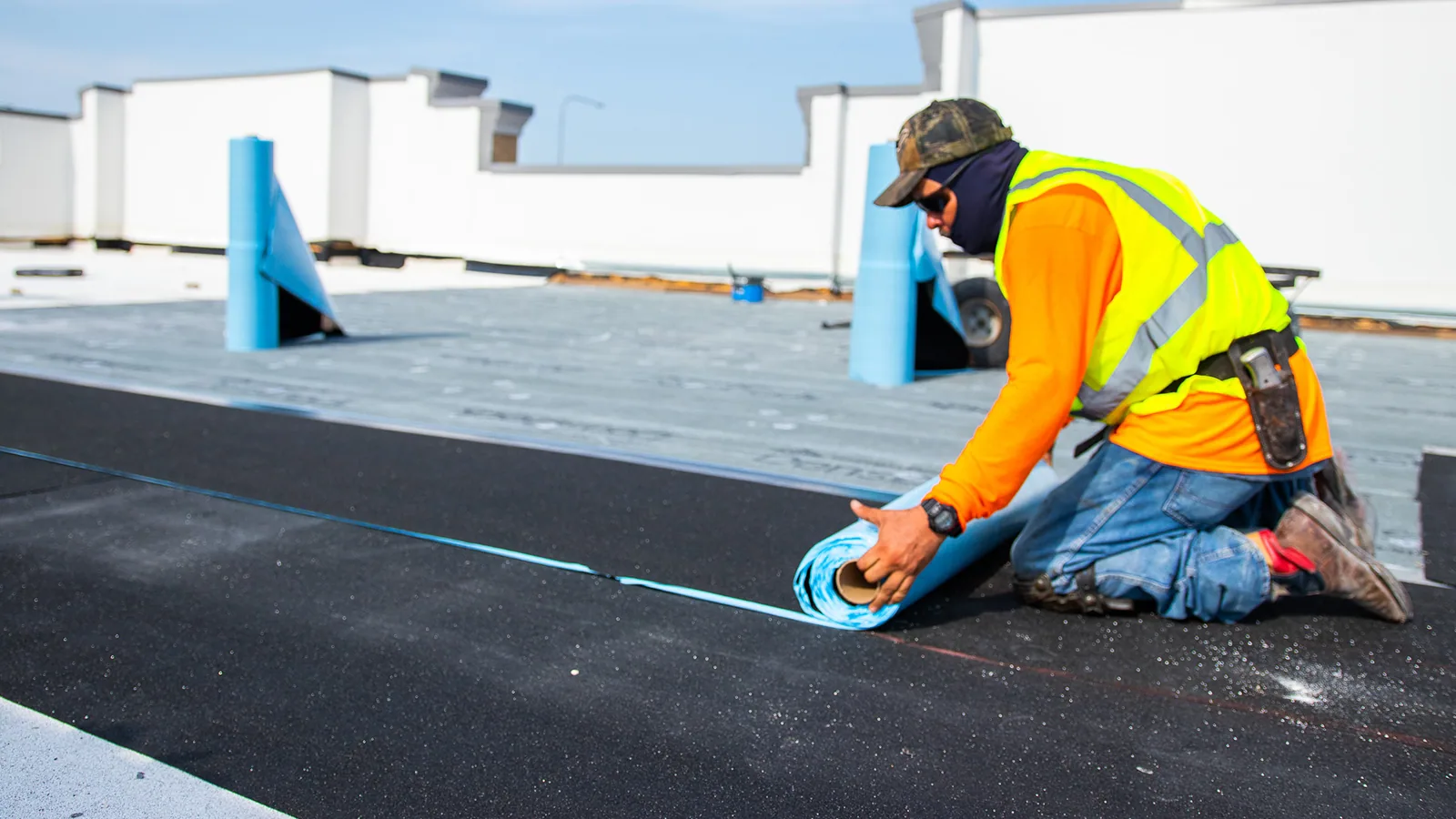
A BUR roof is a stack of reinforcing felts, historically organic or fiberglass, bonded with layers of hot asphalt or coal tar and finished with a flood coat and gravel or a cap sheet. Three or four plies are typical, and the layers act together as a thick, continuous membrane. The surfacing protects the asphalt from sun and foot traffic.
Its strength is redundancy and mass. Damage to one ply seldom opens the whole roof, and the gravel gives some protection from wind-blown debris. Its weakness is weight, odor during installation and the hot work involved, which is why new BUR is less common than single-ply and why most BUR roofs still in service are older ones. In Downtown Temple and other older commercial districts, a BUR roof may sit under a parapet where the wall flashing and the roof edge share a single detail, and that detail is where the intake record spends the most time.
How do built-up roofs fail?
Through ridges, blisters, splits and flashing. Felts absorb moisture during their life, the roof warms in the sun and the trapped water expands, lifting the plies into blisters or ridges. A ridge over a deck joint often marks structural movement. Alligatoring, a pattern of cracks in the flood coat, shows that the asphalt has aged and the protective surface is going.
Flashings are the usual entry point. The base flashing at a wall, the counterflashing above it and the sealant between them all move at different rates. Asphalt softens under a summer that peaks near 95F in August and puts roughly eighty days above 90F on the calendar, and freezing nights, about 26 in a year, stiffen it again. That cycle is hard on any flashing joint, and each one is photographed and numbered on the intake record. A crack that runs across the full width of a ply, rather than along a lap, is logged as a split and checked for matching movement in the deck beneath.
Why do gravel and drains matter so much?
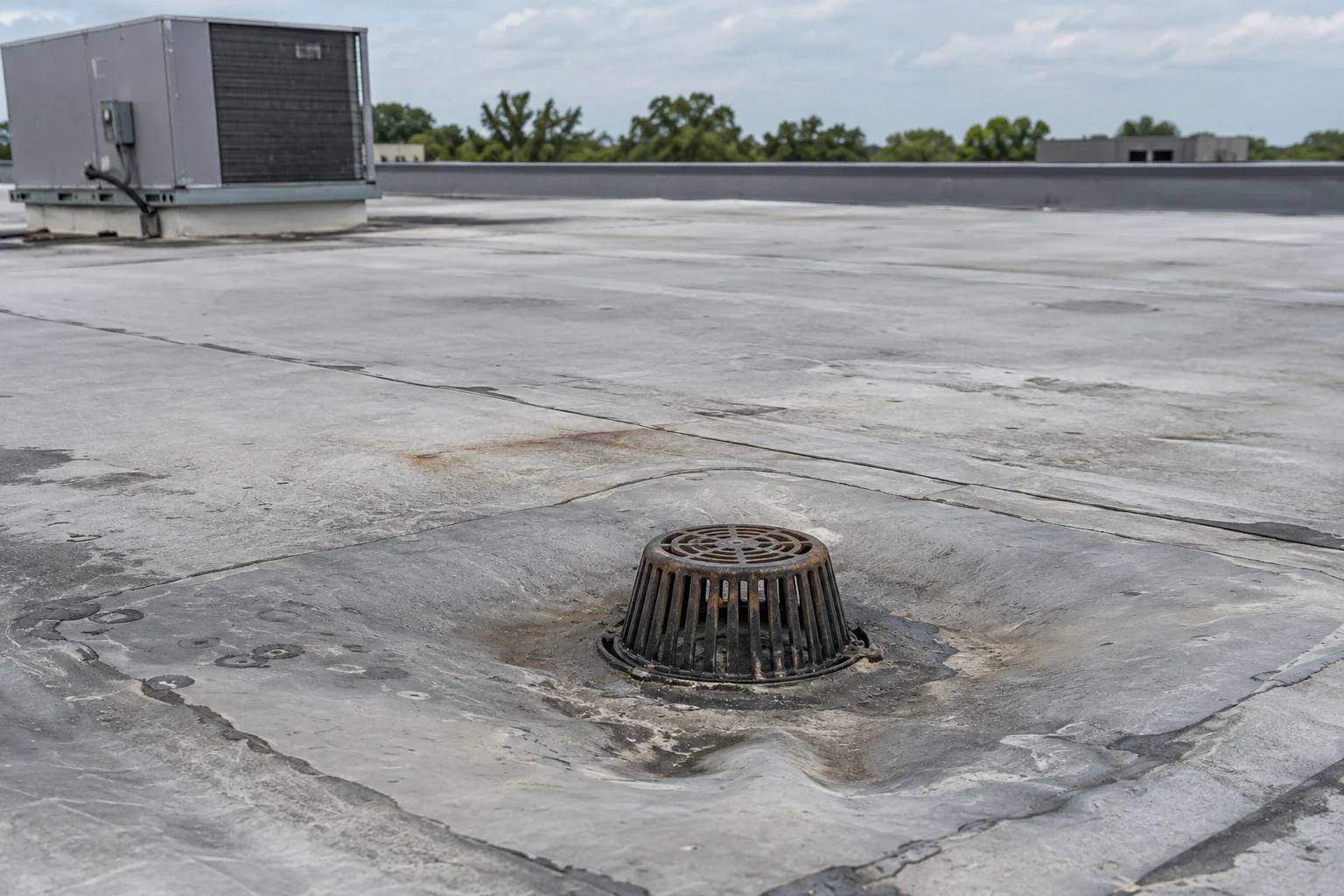
Gravel scours toward drains in heavy rain, leaving bare spots in the field and piles around the outlets. The piles clog strainers, and the bare spots expose asphalt to sun. Rain totals about 39 inches in a typical Temple year, and May is the wettest month, so the spring rains are the annual test of the drains.
We clear and log each drain, measure ponding with a level and mark the bare areas. A drain and scupper correction is one of the cheapest items on a BUR repair list, and one of the most valuable. Re-graveling a bare area with a flood coat is the follow-up, and the record shows how much gravel was moved and why.
Can a built-up roof be recovered?
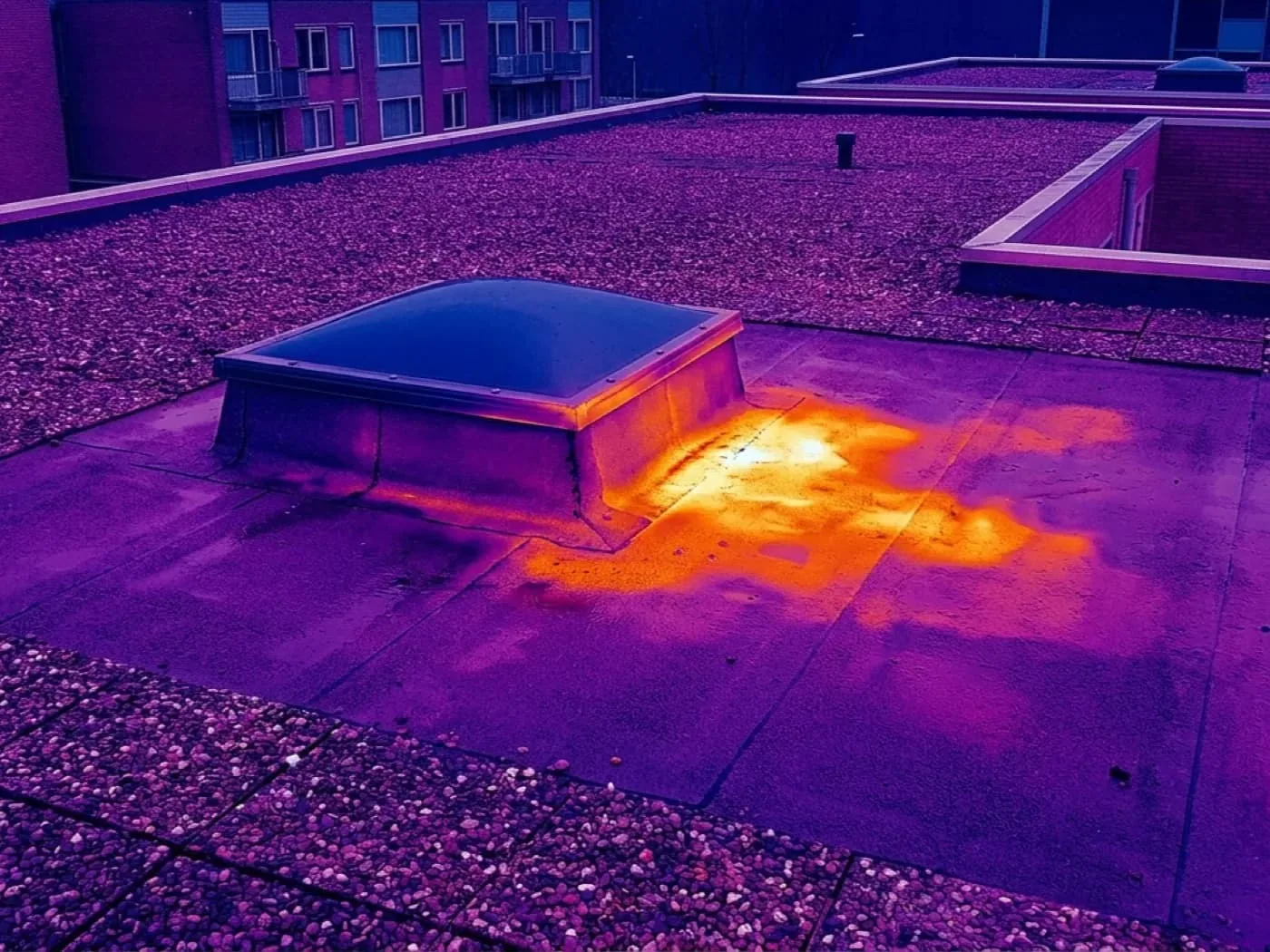
Sometimes. A moisture survey and core cuts decide it. If the insulation and felts are dry, a new membrane over a cover board can add years. If the felts are saturated, the wet plies come out first. Core cuts also show the number of plies, the type of insulation and the deck beneath, and they set the weight limit for anything added.
On an older building, the roof structure may have limits that a recover would exceed, so the scope states the weight of the current system and the proposed one. Where tear-off is required, gravel disposal and hot work planning are part of the cost, and the plan lists them. The result goes to the asset manager as a pair of numbers: the area that can be saved and the area that has to come out, each with a photograph and a core reference.
What does a rail-served building change?
Union Pacific and BNSF mainlines pass through Temple, a BNSF rail yard sits in the city, and Amtrak's Texas Eagle stops here. Industrial and storage buildings sit along the rail lines and Interstate 35, and some of them may carry a heavy BUR roof. The survey records what is actually up there, whatever the street address suggests.
For a building near the tracks, access and noise matter. Staging, haul routes and crane positions are planned with the rail corridor in mind, and hot work gets a permit and a fire watch. A warehouse roof near the Rail Park at Central Pointe is planned around dock traffic and deliveries first.
What does a holding repair buy on a BUR roof?
It buys time to plan. A holding repair on BUR might be a flashing strip, a ridge cut and sealed, or a flood coat over a bare patch, and it is priced and written as a bridge. The record states how long the repair should hold and what would end it.
After a wind event, the make-safe step comes first. When the May 2024 storm crossed Temple, the National Weather Service found damage at restaurants, shops, banks and strip malls, and a gravel-surfaced roof in winds like that loses stone at its edges and lifts flashings. We secure edges, close open flashings and document the damage with dated photographs, then price the permanent scope separately.
Where does a BUR roof rank in the capital plan?
Age matters less than condition. A BUR roof with dry felts, intact flashing and clear drains may outlast a younger roof with ponding and wet insulation. The portfolio ranking weighs the survey results and the number of earlier repairs, and it lists the alternatives, such as modified bitumen, TPO or a restoration coating, with the finding that favors each. Roofs that are dry and sound but visibly aged are marked for a restoration review instead of replacement, and the review date is entered in the file so that the capital plan does not forget them.
Commercial Roofing Questions
Why does gravel matter on a BUR roof?
It protects the asphalt from sun and traffic. Bare patches age faster, so moved gravel is a finding, and the repair restores the flood coat and stone.
Is a blister on a BUR roof an emergency?
Not always, but it is a finding. A blister that is intact is watched. One that has broken lets water into the plies and is repaired promptly. A moisture survey shows which kind a roof has.
Can torch or hot asphalt be used on an occupied building?
Only with a hot work permit, a fire watch, odor controls and the owner's approval. If any of those cannot be arranged, cold-applied or single-ply alternatives are priced beside the hot option.
How heavy is a built-up roof?
Heavier than most single-ply systems, especially with gravel. A core cut gives the actual build-up, and the scope compares its weight with the proposed replacement.
What does the written record include?
Dated photographs, the numbered roof plan, moisture results, core cut data and the repair list. It supports budgeting, warranty discussions and any insurance claim.