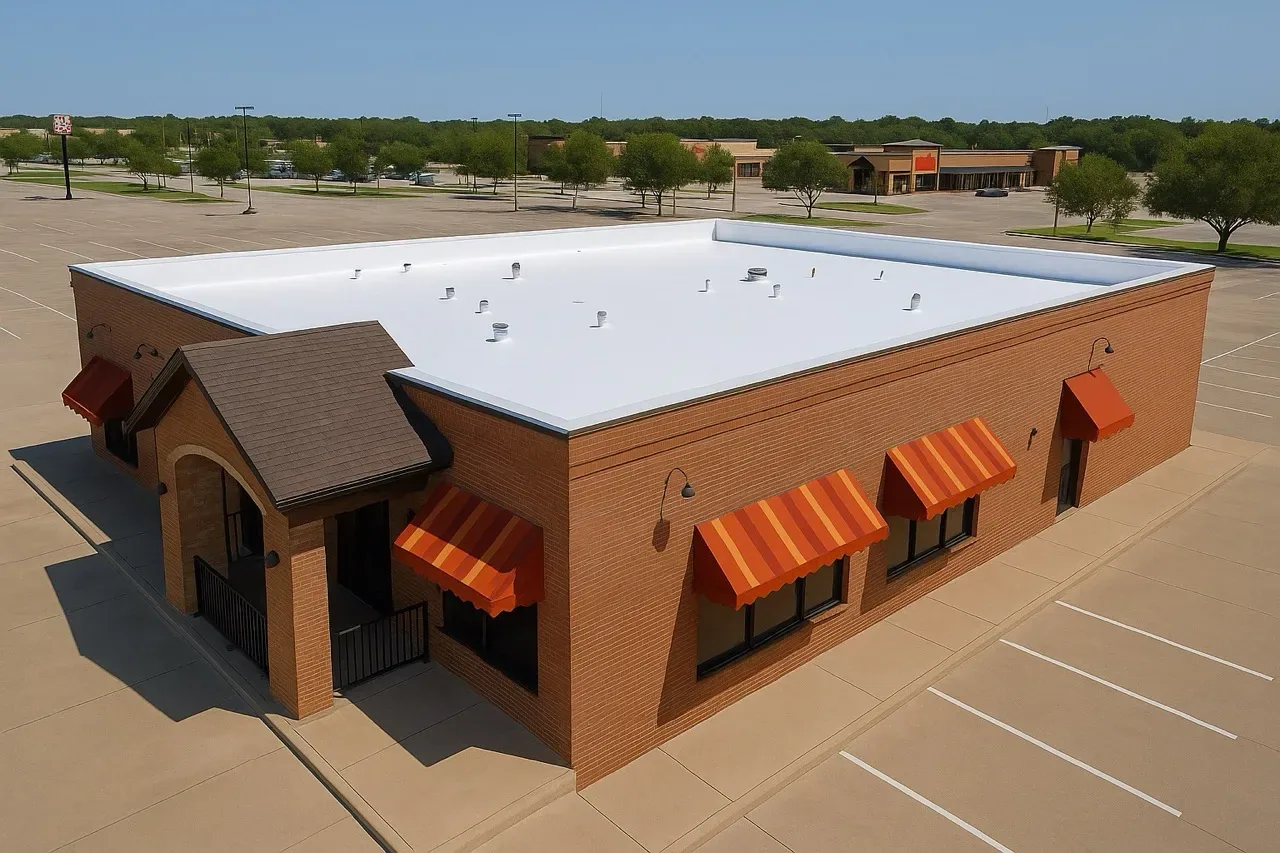
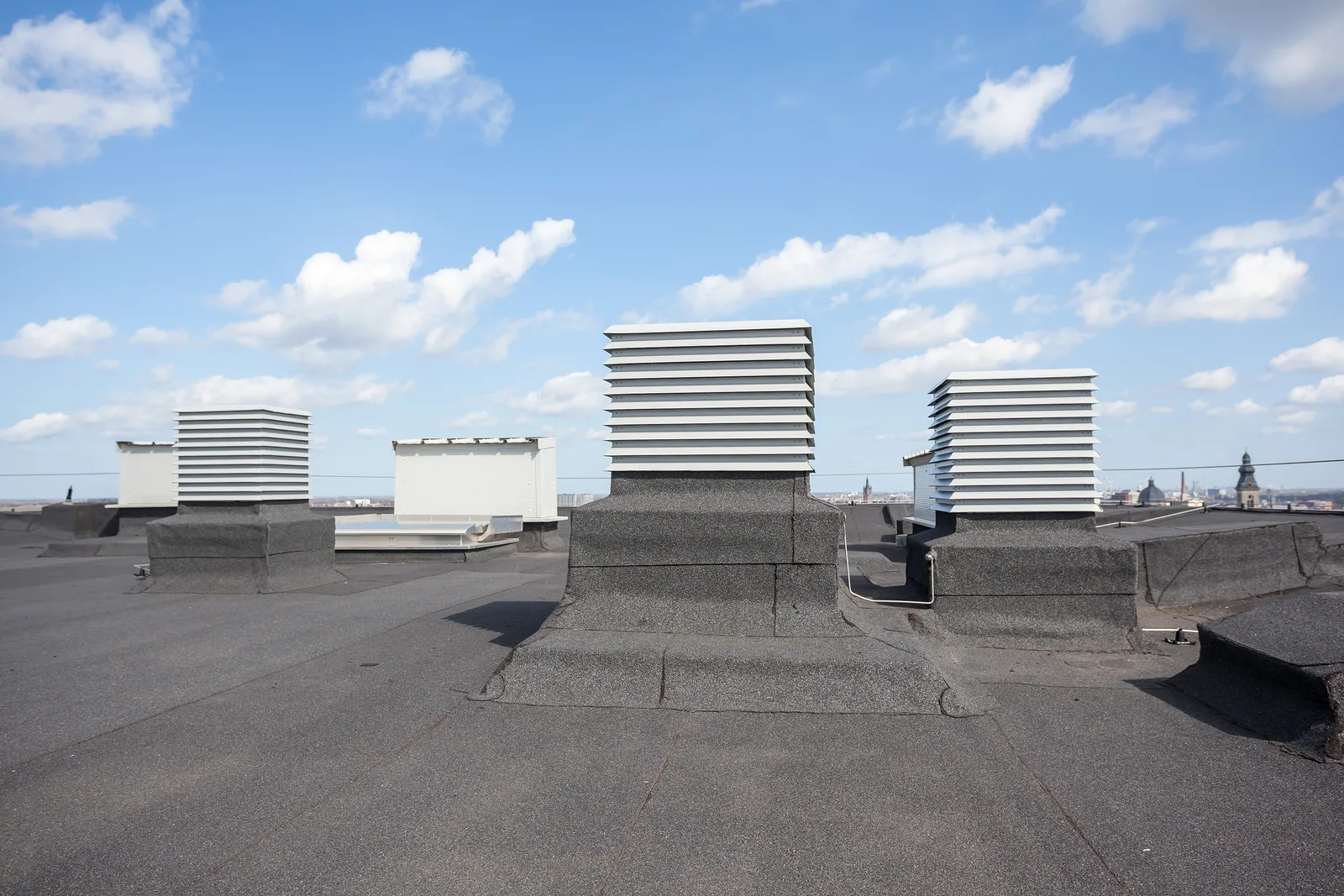
TPO Roofing
A TPO seam that has opened along a wall is a failure point with a clock on it, and the person who decides what happens in the first hour is usually the asset manager, not the roofer. Water follows the open lap into the insulation below. That is the common failure on a TPO roof in Temple, TX: a white single-ply roof that looked fine from the lot, with a seam that has let go where the membrane meets a curb or a parapet.
We treat the call in two parts. The make-safe step keeps the building dry today. The permanent scope, priced after a proper walk, decides whether the roof is repaired, recovered or replaced.
Where does a TPO roof fail first?
At the seams and at the terminations. TPO is a thermoplastic sheet whose laps are joined by hot-air welding, and a weld that was cool, dirty or rushed can look sealed and still peel when pulled. Terminations at walls and curbs add a second weak line, because the sheet is cut, folded and held by a bar or an adhesive that has to survive movement.
Temple supplies the movement. August highs run near 95F and the city sees about 80 days a year above 90F, so a dark-gray field of membrane and a white one both expand and contract through a long summer. Then roughly 26 freezing nights a year pull the sheet the other way. The weld lines carry that cycle every year, and a marginal one eventually opens. Seams that run parallel to the roof's long dimension take the most strain, and a lap that crosses a drain sump or a low spot takes the most water. Those two locations are where we probe first.
What goes into the intake record?
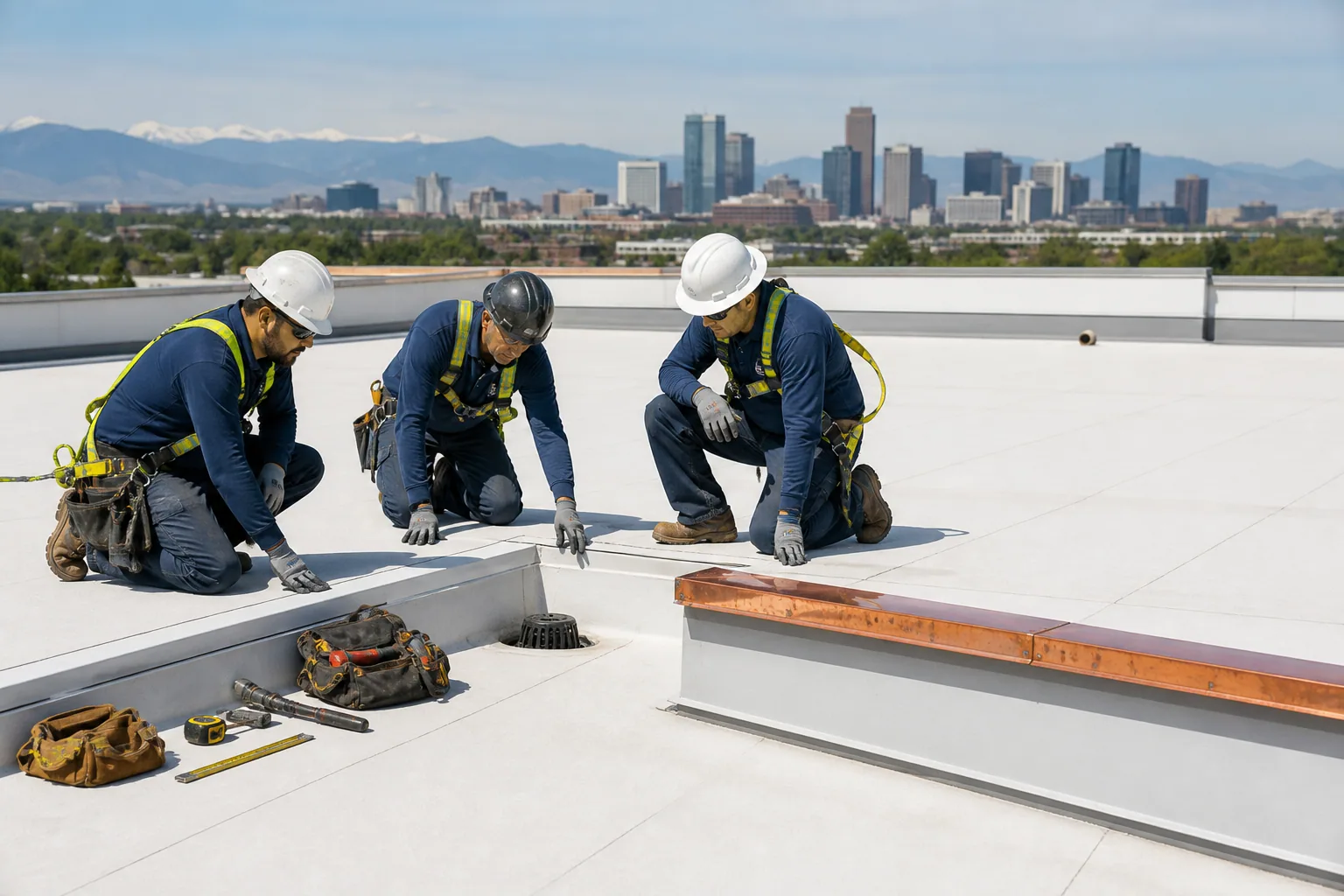
The intake record starts on the roof, not in the office. We probe each seam with a blunt tool and mark the ones that lift, photograph the weld edge and note the membrane thickness at a cut sample. Chalky or crazed surface suggests aging, while exposed reinforcing scrim at a seam suggests a worn or over-welded lap.
The record also lists terminations, drains, penetrations and ponding. Standing water is measured with a level and marked on the plan, since a roof that holds water for more than a day or two ages faster and loads the deck. Every item gets a number and a photograph, and the list becomes the work order and the file the owner keeps. A seam failure repair is written as its own line.
Does the insulation under the TPO still work?
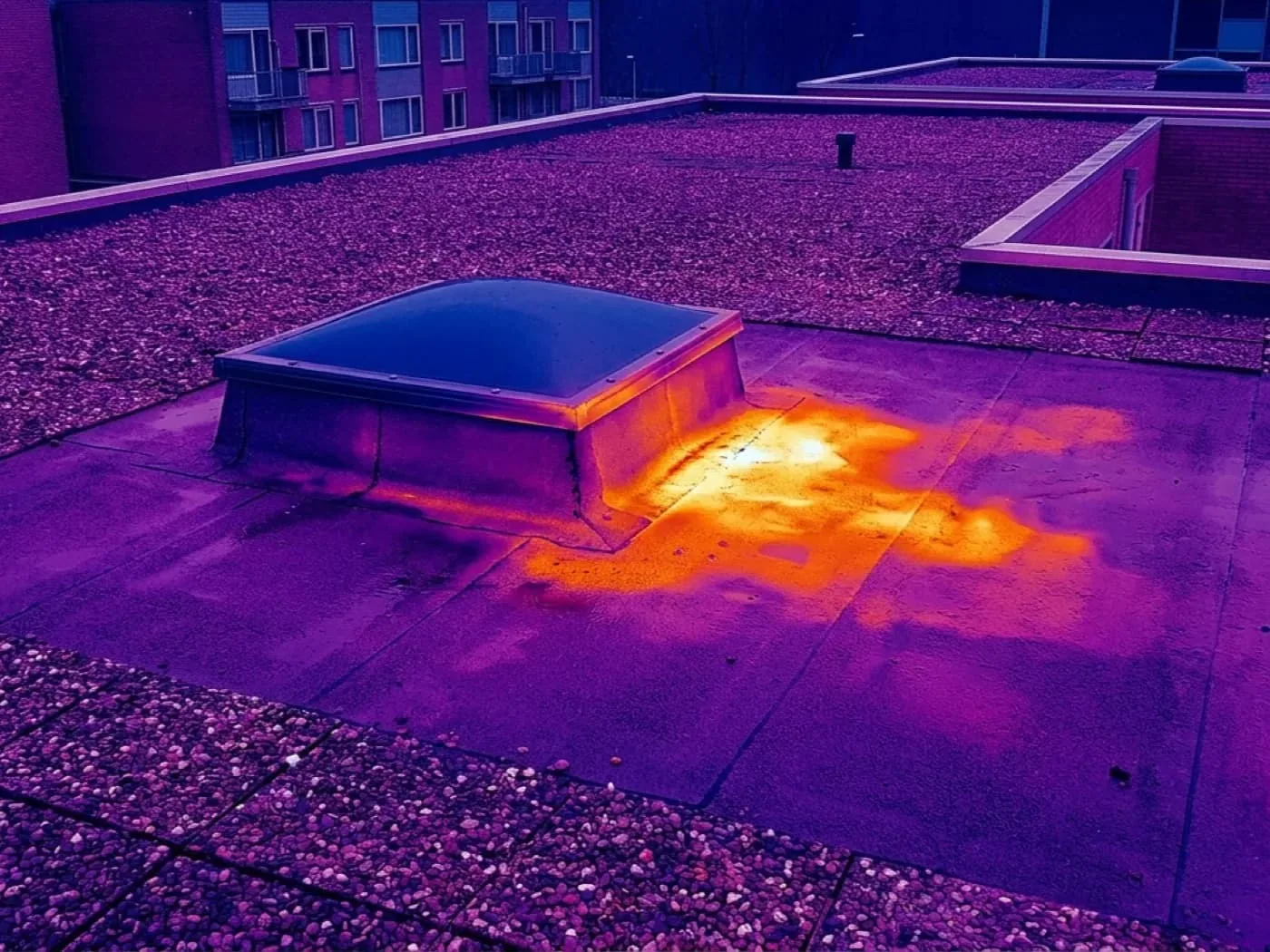
A sound-looking membrane can sit on wet insulation, and a wet board changes the decision. An infrared moisture survey, checked against core cuts, locates the wet area before anyone prices a recover. If the survey shows a few small areas, the plan removes and replaces those boards and patches the membrane. If it shows wetness across a section, the scope moves toward replacement.
Core cuts also reveal what is under the roof: the number of layers, the type of insulation and the deck. That information sets the fastening pattern for any new system, and it tells the asset manager whether a roof recover is even available.
What does a holding repair buy on TPO?
A holding repair buys a defined period of dry weather in the building while the owner makes a capital decision. We re-weld the open seam, replace a split flashing or add a cover strip, and we write down the expected service period and the conditions that end it. A repair over wet insulation or brittle membrane is labeled a bridge, and it carries a date for the next review.
Wind is the other trigger. The May 22, 2024 EF-2 tornado damaged restaurants, shops, banks and strip malls in Temple, and the National Weather Service put straight-line winds at 80 to 90 mph across town. A TPO edge that lifts in that kind of event starts as a make-safe job: secure the edge, close the seam, photograph it with the date. The record names who authorized the make-safe step and which items remain open, so the permanent scope starts from a documented list instead of a phone call.
When is TPO the right system to install?
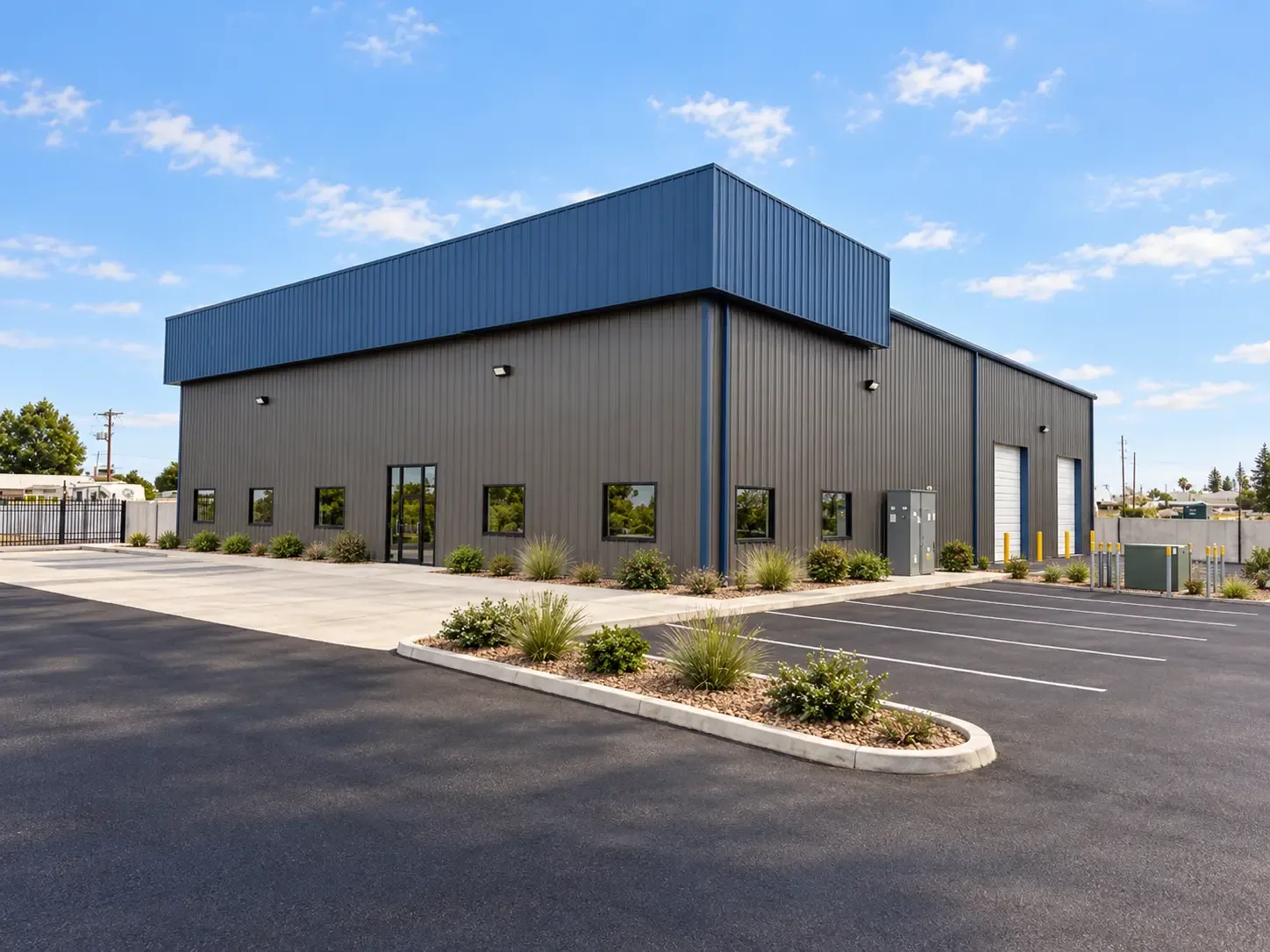
TPO fits low-slope roofs where a white reflective surface, a heat-welded seam and a moderate budget make sense. It is a common choice on warehouse roofs and on distribution buildings of the kind planned in the Rail Park at Central Pointe, where a large, simple field suits a single-ply sheet. Fully adhered, mechanically attached and ballasted assemblies each suit a different deck and wind exposure, and the choice follows the core cuts and the wind uplift requirements for the building.
Where grease, chemical exhaust or heavy rooftop traffic is part of the building's use, a different membrane may serve better. The scope lists the alternatives, such as PVC or EPDM, with the finding that favors each. The installation sequence matters as much as the sheet: the deck is cleaned and dried, the insulation and cover board are fastened to the uplift pattern, the sheet is rolled out and welded in a set order, and each weld is probed before the crew leaves the section. A day's work is closed with a temporary seal at every open edge, because a shower on an unsealed termination undoes the whole day.
How does TPO rank in a portfolio?
Owners with several TPO roofs get a portfolio ranking. Active leaks come first, then roofs with open seams and wet cores, then roofs with aging surfaces and sound seams. The ranking uses the intake record and survey results, not the age on the invoice, so the roof in the worst condition is funded first.
The same ranking covers the neighbors: any building in Downtown Temple or the Temple Industrial Park that shares the same system and the same exposure. A single detail that fails on one roof is checked on all of them, and the next decision is left to the asset manager with the evidence in hand. Where a roof is a candidate for a coating rather than replacement, the ranking says so, and the survey data that supports the call is attached.
Commercial Roofing Questions
How long should a TPO seam hold?
The weld quality sets it. A clean, fully fused lap can last for the life of the membrane, while a cold or dirty weld may open within a few seasons. A probe test and a pulled sample show which kind of weld a roof has.
Can an open seam be fixed without replacing the roof?
Yes, if the membrane around it is flexible and the insulation is dry. The seam is cleaned, re-welded and covered with a strip, and the repair is recorded on the plan with a photograph.
Is white TPO worth it in Central Texas heat?
A reflective surface lowers roof temperature during a long summer, which eases the cycle on seams and flashing. Whether it justifies the cost depends on the building's cooling load and the energy rules the owner follows.
What happens to TPO after a tornado warning or a high-wind event?
We walk the roof for lifted edges, torn flashing and displaced equipment covers. Open areas are made safe first, and the dated photographs go into the file for the permanent scope and any insurance claim.
How does the intake record help with a warranty question?
It documents the condition at each visit with dates and photographs. A manufacturer or insurer can see what the roof looked like before and after a repair, which keeps the discussion on facts.