KEE Roofing
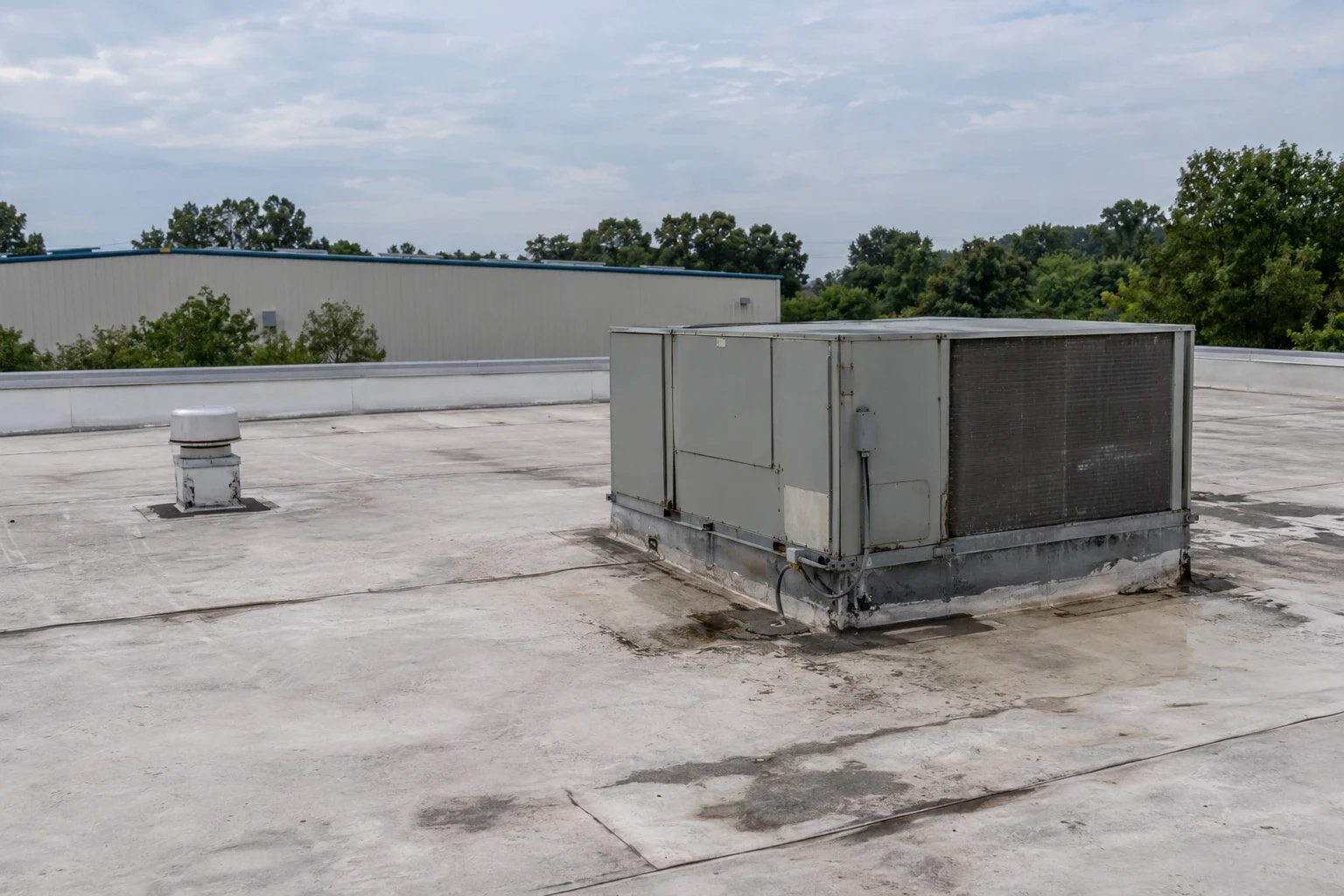
A roof beside an exhaust stack tells the story of what the building discharges, and the first question on a KEE membrane is whether the residue around that stack has been left to build up. KEE, a PVC-based sheet blended with a ketone ethylene ester, was developed for roofs that see oils, fats, solvents and process vapors. In Temple, TX the people who need to weigh it are plant engineers, facility directors and asset managers with a roof that keeps getting damaged in the same place.
We begin with the failure point: where the sheet is stained, softened or lifted, and how far that area extends from the source. The permanent scope follows the walk.
What does KEE do that ordinary single-ply does not?
Standard single-ply sheets can swell, soften or lose their plasticizer when oils, fats or certain chemicals sit on them. KEE membranes resist that exposure, which is why they appear on restaurant roofs, food and packaging plants, laboratories and buildings with process exhaust. The sheet is heat-welded at the seams like PVC, and the welds make a continuous surface.
It is not a cure for neglect. A KEE roof with a clogged drain or a pile of residue still ages, and the seams still need inspection. The advantage is that chemical exposure that would ruin another sheet becomes a maintenance item instead of an emergency. That difference matters on a roof where a replacement would shut down production. Seam failure is the usual way a chemical-resistant roof lets go, so the weld lines get a probe test at every visit and any seam failure repair is logged against the plan number of the lap.
Where do Temple's plants put pressure on a roof?
Temple's manufacturing and packaging base includes Wilsonart, Novolex, Reynolds Consumer Products, Texas Hydraulics and E.R. Carpenter, and Reynolds invested $3.2 million in 2018 in a new plastic film production line in the city. Roofs on plants of that kind sit under fans, ducts and stacks. What each of those buildings discharges is a question for the intake record, which asks what each exhaust source emits and how often.
That answer sets the membrane choice. A manufacturing plant roof with oily discharge suggests KEE. One with only conditioned-air units may do fine with a cheaper sheet. The roof plan states the finding that drives the choice and shows both options. Rail and truck traffic around a plant can add their own dust and diesel residue to the roof, so the survey notes those as separate findings from the process discharge itself.
What goes into the intake record for a KEE roof?
The record lists each exhaust source with its position on the roof plan, the stain pattern downwind and the condition of the membrane around it. Seams are probed and sampled, thickness is measured and the surface is tested for softness. Drains near exhaust are checked for clogging, since residue travels to low points and plugs outlets.
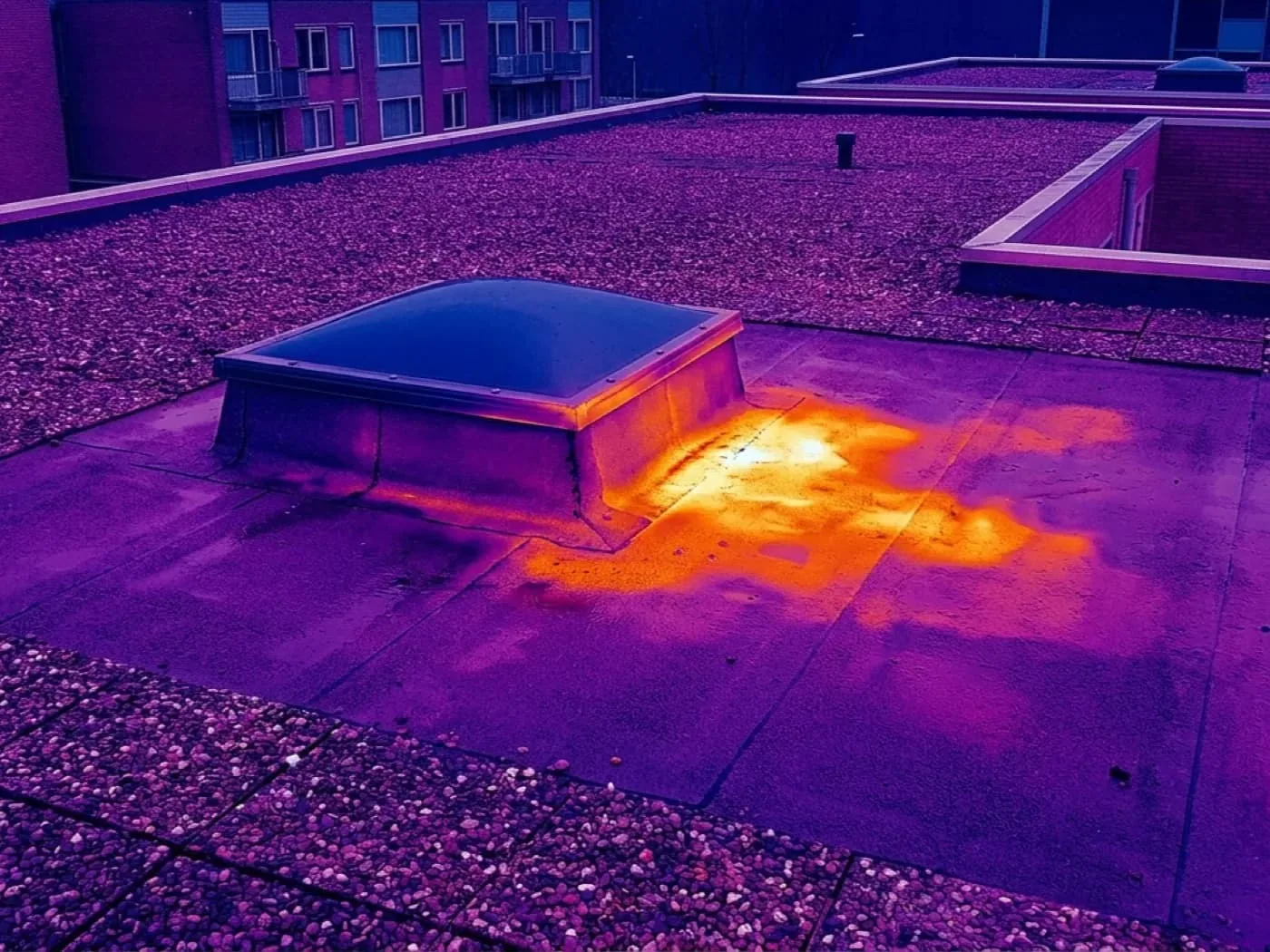
A moisture survey follows. An infrared moisture survey with core cuts shows whether leaks have wetted the insulation. KEE protects the sheet from chemicals, but a punctured or open seam still lets water in, and wet insulation needs replacement whatever the membrane is. Photographs are taken at fixed distances from each source, so the next visit can show whether the stained zone has grown, shrunk or stayed put since the last record.
How do heat and freezing nights affect a KEE roof?
Summer in Temple peaks near 95F in August, temperatures clear 90F on roughly eighty days, and about 26 nights a year freeze. February 2021 added 9 days at or below freezing across Central Texas, Killeen included. Like PVC, KEE is stiffer in the cold, so welding and handling in a freeze follow manufacturer limits and need a dry surface.
Plant roofs add their own heat. An exhaust discharge can warm the membrane around it far beyond the ambient temperature, and the downwind surface ages faster. We measure surface condition at several distances from each source and report the pattern. Where a roof is cleaned on a schedule, the record shows the surface returning to a baseline after each cleaning, which is the clearest evidence that the sheet is holding up under its exposure.
What does a holding repair on KEE involve?
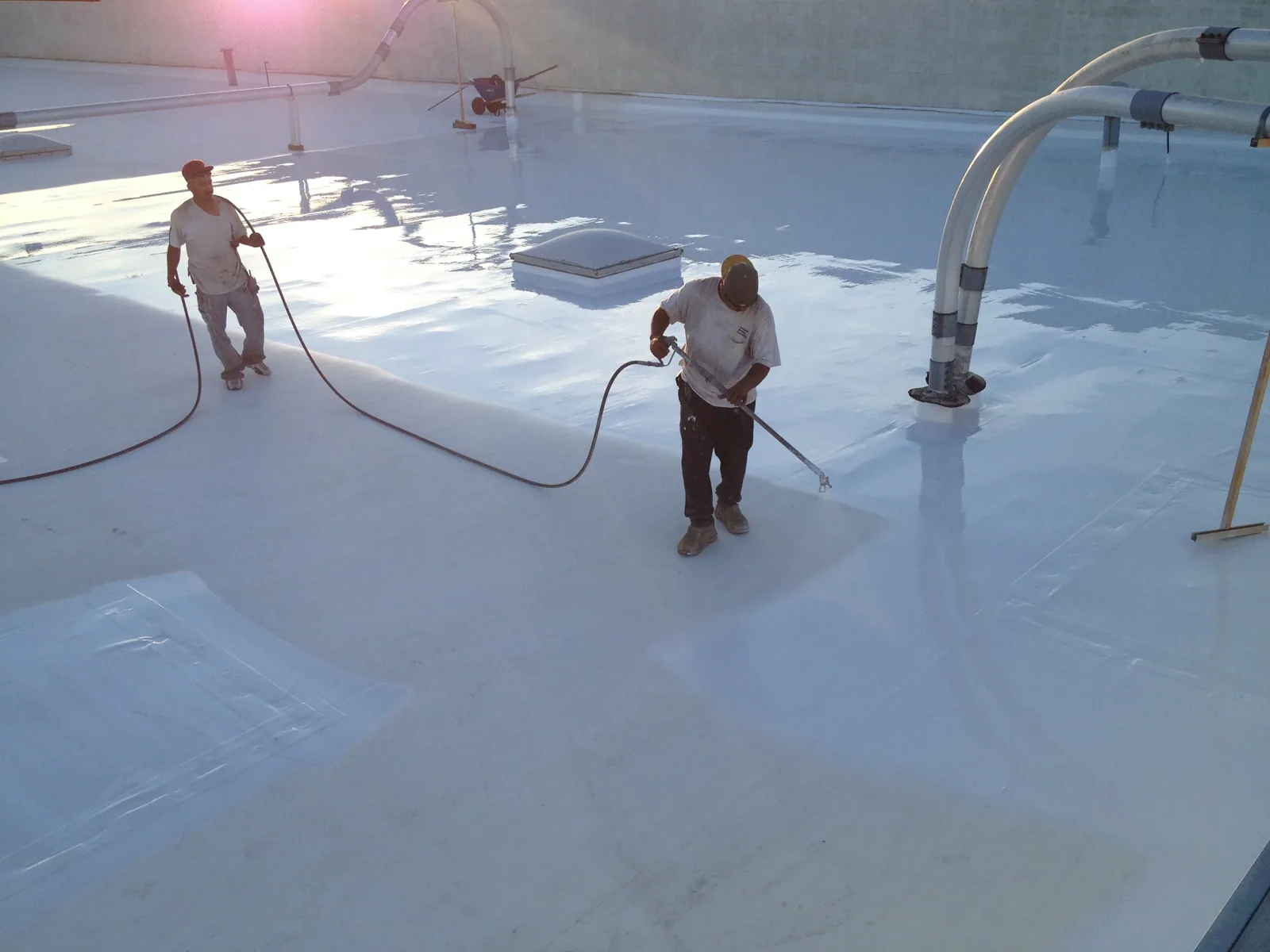
A holding repair replaces or covers the failed area with compatible material and welds it into the surrounding sheet. KEE repair needs clean surfaces and matching material, because residue prevents a weld. We clean the area, test a small weld, then complete the repair and probe it. The record names the date of the next review.
If the membrane is soft or crazed over a wide area, a patch is a bridge. The repair is written that way, and the scope for the permanent solution is priced separately. Cleaning residue before a repair is not optional, and the plan carries a line for solvent selection so that the cleaner itself does not harm the sheet.
When is KEE the right replacement?
When exposure is known and ongoing, KEE earns its price. It sits beside PVC in any comparison, since the two share welded seams but differ in chemical tolerance, and beside a silicone coating where the existing sheet is sound. On a plant roof where a replacement must happen during a short outage, the install sequence follows the hold points: crane pick, tear-off by section, dry-in at the end of each shift and a probe check on every weld.
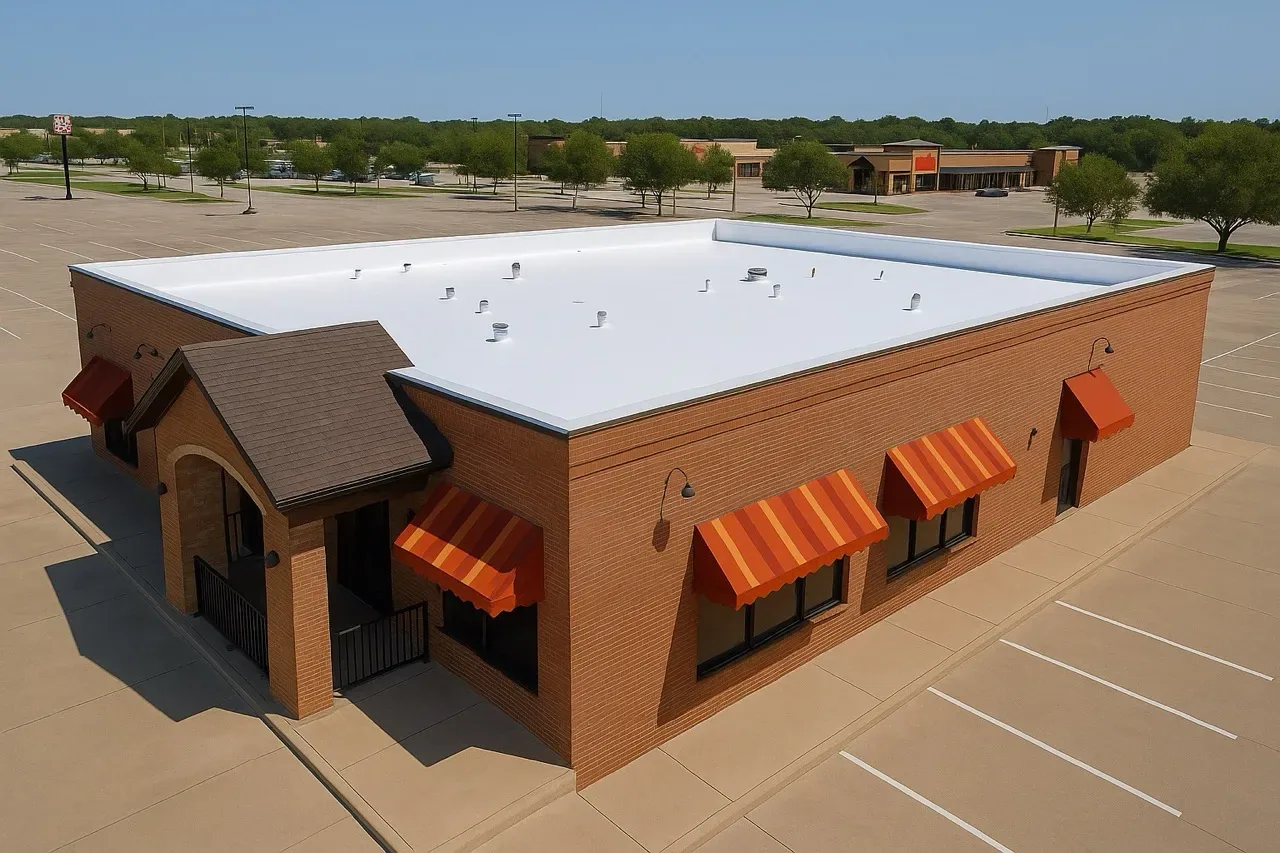
For a smaller building with kitchen discharge, in Downtown Temple or elsewhere, a localized membrane change around the exhaust and a cleaning plan may be enough. The scope shows that choice beside a full replacement, with the finding that favors each.
How does the portfolio ranking treat exhaust exposure?
Roofs with known chemical or grease exposure rank on the speed of damage as well as the age of the sheet. A newer roof under heavy discharge can fail before an older roof in a clean setting. The ranking lists each building's exhaust sources and the condition around them, and it puts the worst combination first.
Owners with buildings across the area, including the Temple Industrial Park, receive one format for all of them, so a facility manager can compare a plant roof with a warehouse roof without a translation step. Roofs that need only a cleaning cycle and a seam check are marked as maintained, so capital goes where the failures are.
Commercial Roofing Questions
Is KEE the same as PVC?
It is a PVC-based membrane with an additive that resists oils, fats and many chemicals. Seams are welded the same way, but the formulation tolerates exposures that would damage plain PVC.
How can an owner tell if a roof needs KEE?
Check what the building discharges and where. If the exhaust carries oils, fats or solvents, or the existing sheet is softening or staining downwind of a source, a chemical-resistant membrane is worth pricing.
Does KEE need cleaning?
Heavy buildup should be cleaned on a schedule, and drains downwind of exhaust should be checked often. A cleaning plan is part of the maintenance list for any roof with a discharge source.
Can KEE be installed during a plant outage?
Yes, if the outage is long enough for the section being replaced and the weather allows. The phasing plan sets the sections, and each is dried in before the crew leaves.
What happens if a KEE seam opens?
We make it safe with a temporary seal, then clean and re-weld it with compatible material. The repair is probed, photographed and dated, and the surrounding seams are checked for the same cause.