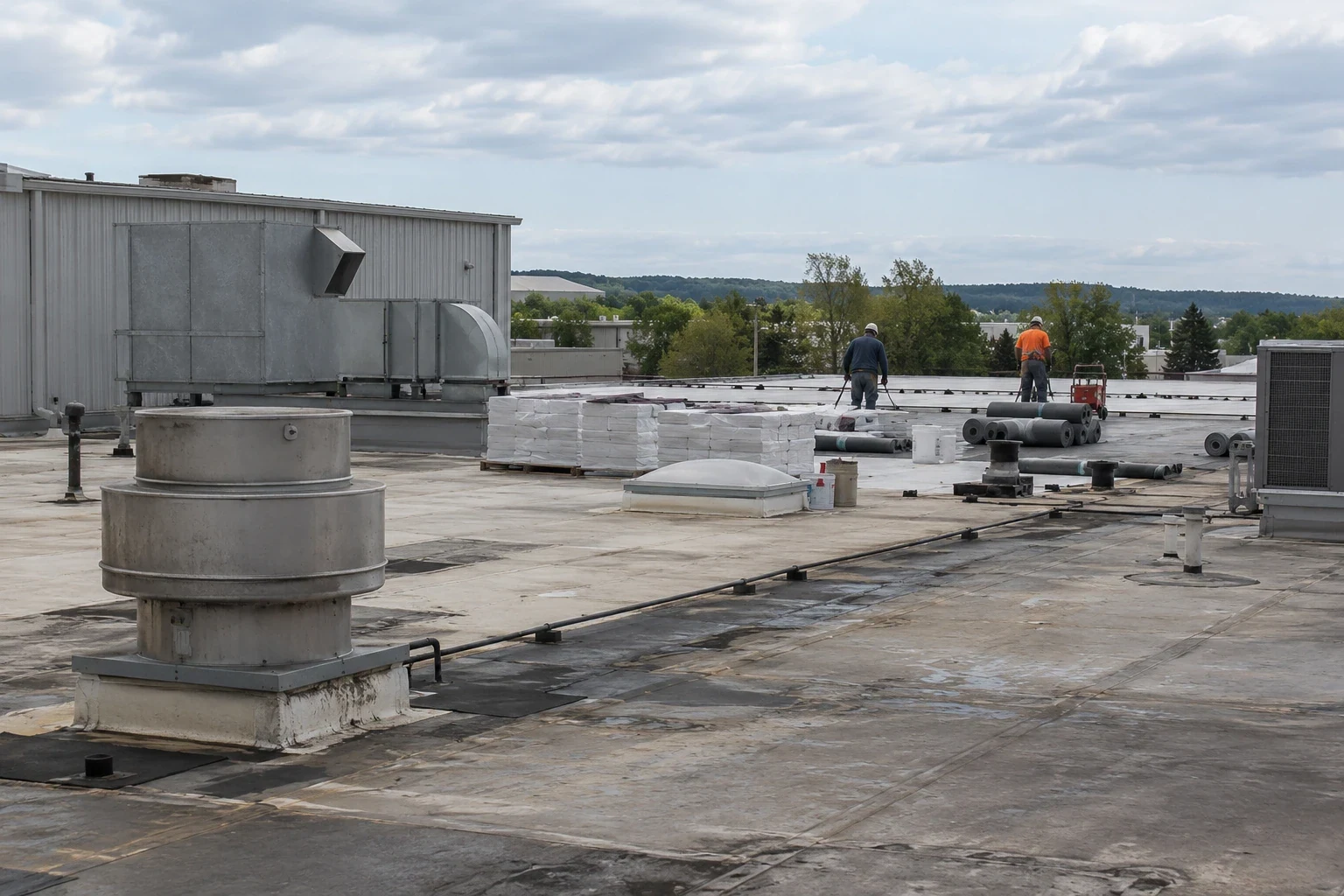
Manufacturing Plant Roofing
A plant roof that leaks over a line is a failure point with a production cost attached, and the first decision belongs to whoever can stop or reroute the line. Water over electrical gear, packaging stock or a process vessel is a safety event first and a repair second. In Temple, TX plants such as Wilsonart and Reynolds Consumer Products, with Novolex, Texas Hydraulics and E.R. Carpenter alongside them, make up part of the industrial base, and a plant manager in that base has a roof to plan around the production calendar.
Our triage call has a fixed order: make the area safe, record what failed and set the scope against the plant's outage calendar, not against the weather.
What fails first on a plant roof?
Penetrations, exhaust zones and drainage. Plant roofs carry stacks, fans, ducts, vents and piping, and every one of them is a flashing. Equipment is added over the years, curbs are cut and re-cut, and the old sealant stays behind. Exhaust discharge can also change the roof surface near its source, and a membrane that softens or stains downwind needs a different decision than one that is simply old.
Drainage is the third. Plant roofs often have heavy equipment on supports that block flow, and a few clogged drains can load a deck that carries more than its share already. The intake record maps each source and each outlet on the roof plan, with photographs, and asks the plant what each source discharges and how often. Storage and warehouse space attached to the plant, such as a warehouse roof or a flex industrial roof over offices and light assembly, is surveyed as its own section, because its risks differ from the process areas.
What does a plant require before a crew steps on the roof?
Orientation, permits and a named escort. Most plants require safety training for outside contractors, a site-specific job hazard analysis, lockout and tagout coordination and hot work permits. We collect those requirements first and schedule the crew's training before the dispatch window opens, so nobody waits at the gate with a truck of material.
The make-safe step often needs a fast path through the same rules, which is why the orientation is planned ahead for the crews who might be called. The record states who authorized each step, when hot work began and ended, and who confirmed the area was clear. For plants with process exhaust, the roof plan marks each source and the shutdown it needs before work begins nearby. Contractor safety training is repeated whenever crews rotate, and the plan names how many people have completed it and who maintains the list at the gate. A crew member who has not completed orientation does not go up, whatever the weather window says.
How does the survey avoid disturbing the plant?
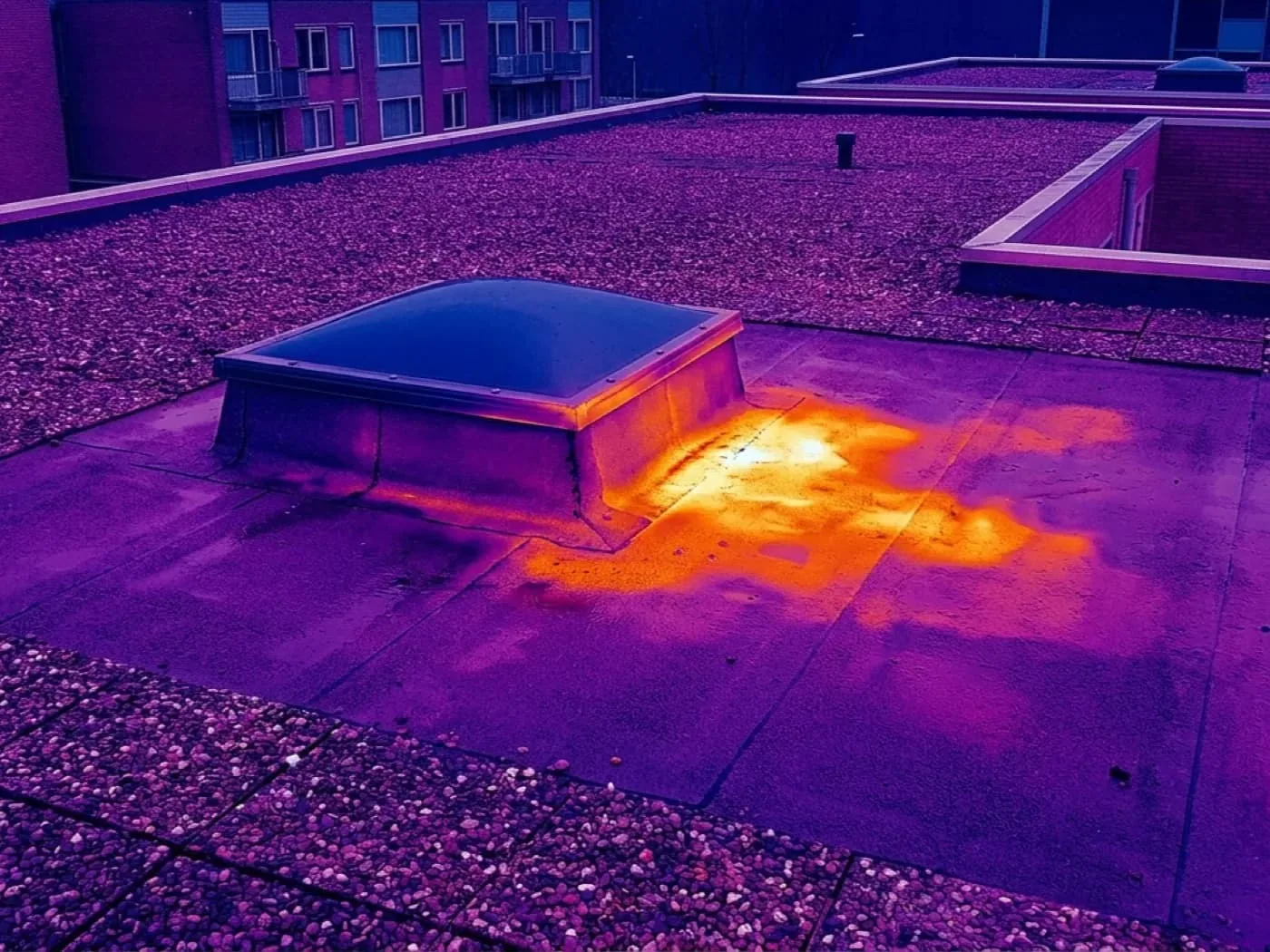
Most of the survey runs from above. A drone roof inspection gives a photographic record without anyone walking on a fragile surface, and an infrared moisture survey run at the right time of day maps wet insulation. Core cuts verify what the scan shows and are patched the same day. The plant's engineer sees the results as a roof plan with numbered areas.
Roofs near the Temple Industrial Park, where Temple EDC set out to buy 147 acres supplied with roads, water, sewer and railroad access, share exposure with their neighbors, and the survey notes which findings repeat across buildings. The survey summary also lists roof areas that carry loads from equipment, ducts or piping, so a repair that adds weight or moves a support is flagged for the plant's engineer before anyone orders material.
How is a re-roof fitted into an outage window?
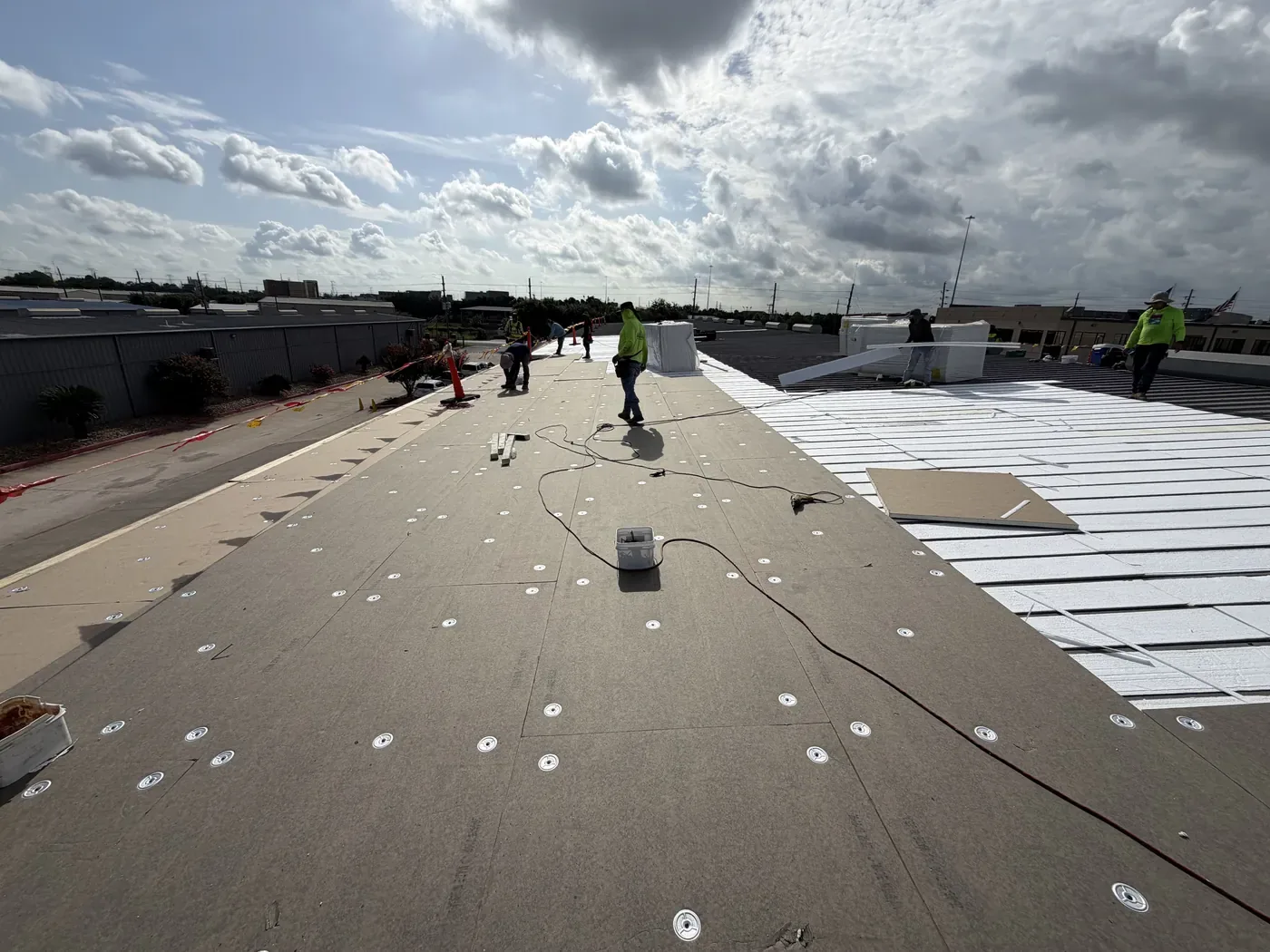
Backward from the date the roof has to be dry. The plan lists crane picks, material staging, tear-off by section, deck repair, insulation, membrane and flashing, and a dry-in time for each section, with a hold point at the end of each shift. Long-lead items such as membrane, insulation and metal accessories are ordered against the outage date. The schedule says plainly which steps need the plant to be down and which can run while it operates.
If the outage moves, the phasing plan moves with it, and the call-back window is defined so the plant manager hears about slippage in time to adjust. Where the plant cannot stop at all, roof work is done in small sections with the process protected below. A second plan covers the weather: what is open at any hour, what is tarped and what is sealed, so a shower during the outage does not undo the sections already finished.
How are fumes, flame and dust controlled?
With a written plan. Torch work needs a hot work permit and a fire watch, and adhesives and coatings need air intake controls so fumes do not enter process areas. Debris is contained at the roof edge, and dust from cutting or tear-off is kept away from product lines. Plants that manage flammables or sensitive product add their own rules, and we build them into the sequence.
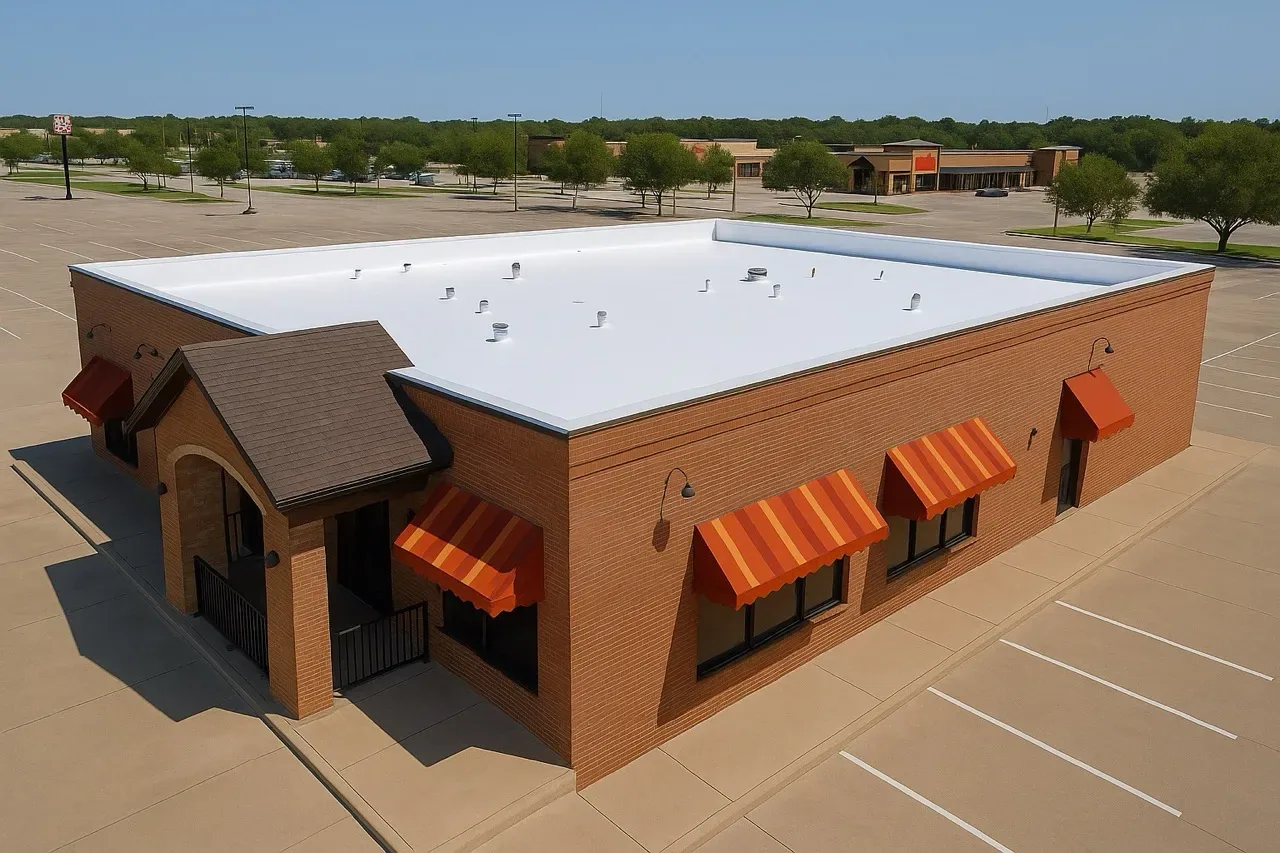
Membranes chosen for exhaust-heavy roofs are discussed with the plant's engineer. A KEE membrane or a PVC membrane can suit a roof with oily or chemical exposure, and the scope compares them with cheaper sheets. After each shift the foreman walks the work zone with the plant's safety contact and signs off that tools, fuel containers and loose material are off the roof.
What does a holding repair buy a plant?
A defined period of dry operation while the outage is planned. It could be a re-flashed curb, a new boot, a drain correction or a patch, with the date it should be reviewed. A plant with pipes and equipment on the roof should have its penetrations and drains checked after any hard freeze, such as the one in February 2021 that held Central Texas at or below freezing for nine days. The record also states which repairs can wait for the outage and which cannot, with the reason for each in plain terms.
How are plant roofs ranked?
By production exposure first, then by condition. A leak over a line ranks above a worse roof over storage. Plants with several buildings get one ranking, and a manufacturing owner with sites in Belton Business Park or elsewhere in the region sees them together. The report ends with the next decision and a date. Roofs that serve a single process line carry a note about what the line produces and what its downtime costs per shift, supplied by the plant, so the ranking reflects the plant's own numbers.
Commercial Roofing Questions
How far ahead should a plant order roofing materials?
As far ahead as the longest lead item requires, counted back from the outage date. We list the lead time for membrane, insulation and metal accessories and tell the plant when each order must be placed.
Can roofing proceed without a full plant shutdown?
Often yes, in small sections with the process protected below. Some steps, such as work directly over an exposed line or exhaust, need a shutdown, and the plan names them.
What does a plant need to tell the roofing crew?
What each exhaust source discharges, which equipment cannot be shut down, the contractor orientation requirements and the hot work permit process. With those, the crew plans the sequence.
How are leaks over electrical gear handled?
The area is made safe, power rules are followed and a temporary cover goes on the roof first. The repair is scheduled for the earliest safe window, and the record names who authorized each step.
What proof helps with a warranty or insurance question?
A dated photo set, the numbered roof plan, the survey results and the make-safe log. They show the condition before and after each step.