Silicone Roof Coatings
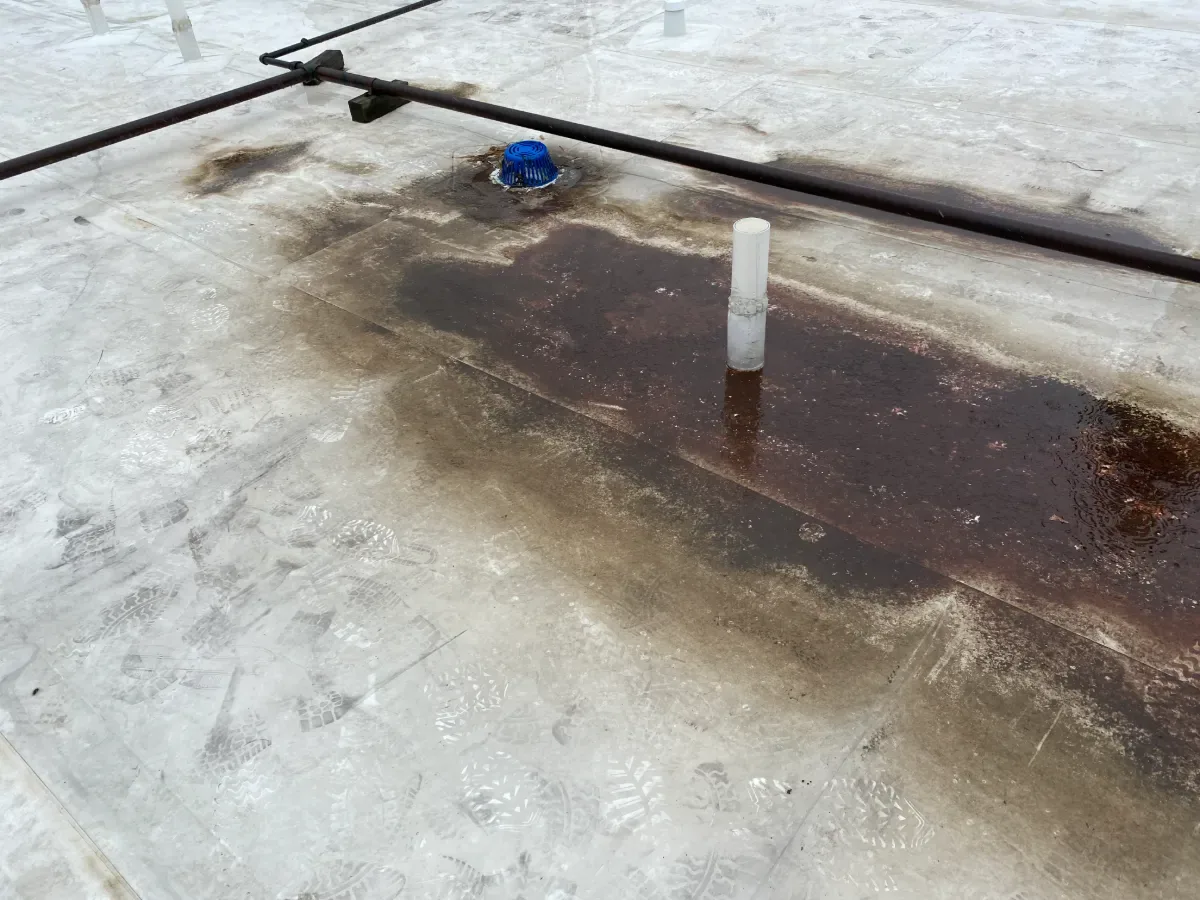
Standing water on a roof that is otherwise intact is the usual reason a silicone coating comes up, and the first decision belongs to the asset manager: coat the roof, or replace it. Silicone is a liquid-applied membrane that cures into a flexible, waterproof skin. It tolerates ponding better than most coatings and stands up to ultraviolet light, which is why it is considered for low-slope roofs with drainage problems in Central Texas. In Temple, TX the question can arrive after a wet spring, when puddles that sat for days have left stains and softened seams.
We triage the roof before we talk about coating: what is wet, what is loose and what the surface will accept.
What does a silicone coating do for a roof?
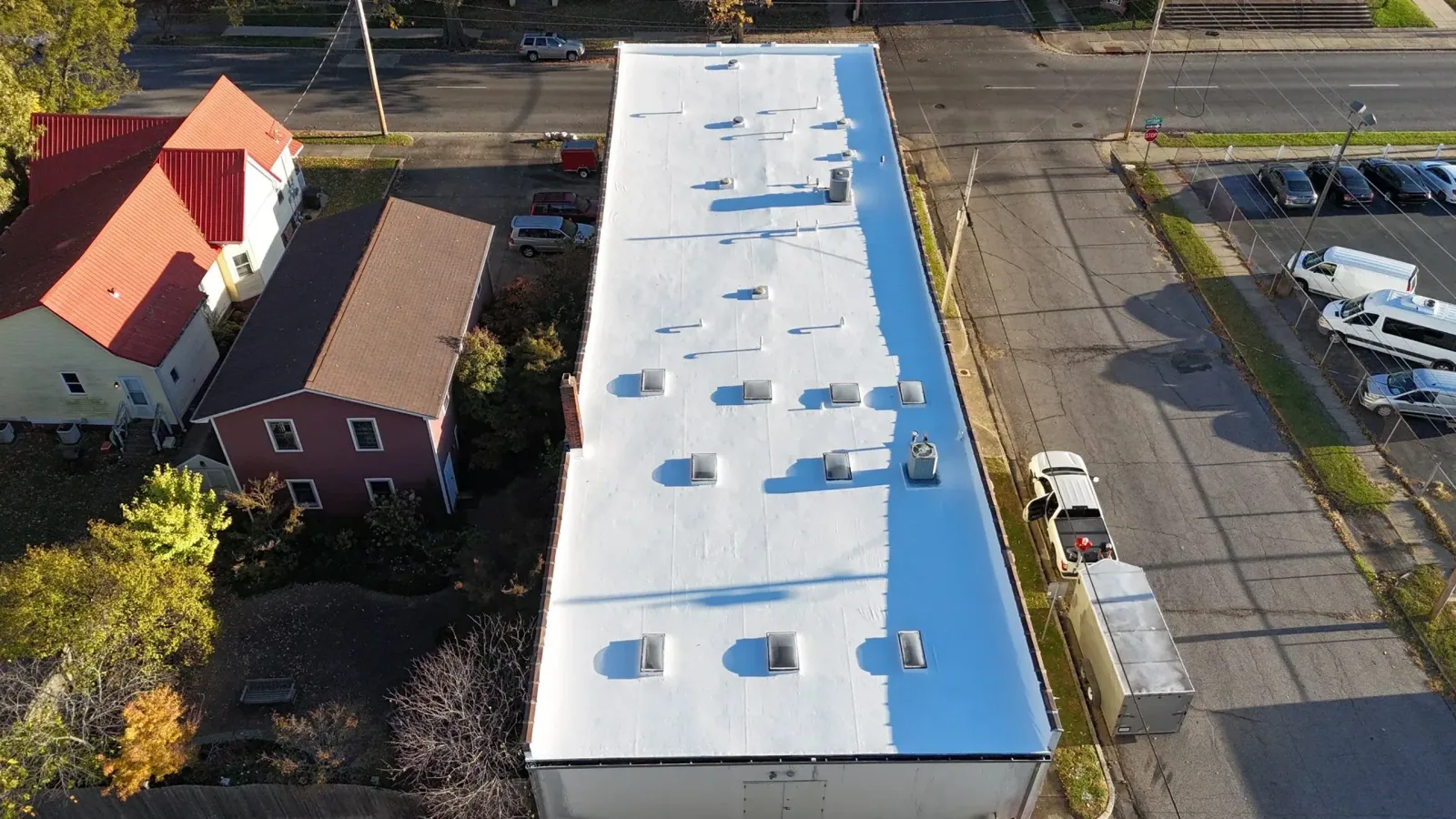
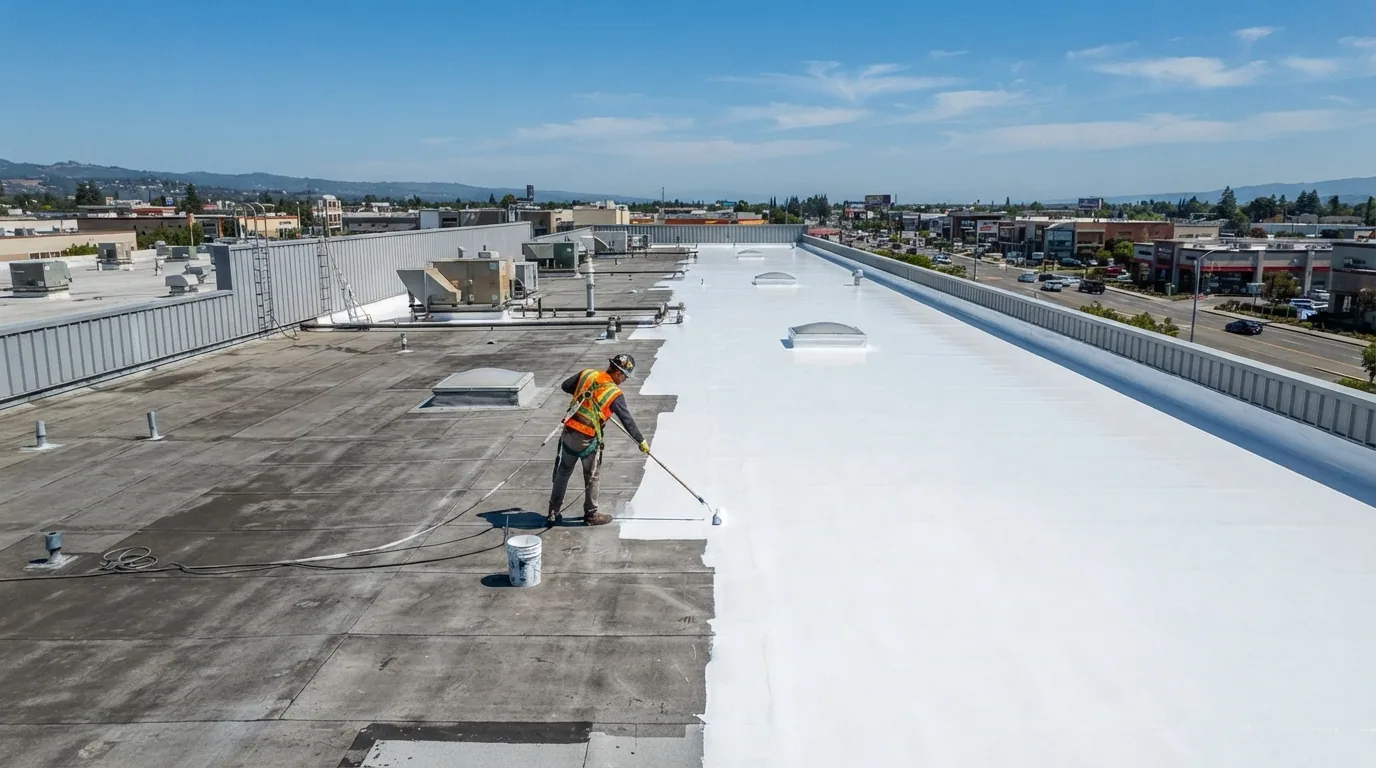
It seals small cracks and open laps, bridges minor movement and adds a reflective, weatherproof layer over an existing roof. It is applied by spray or roller in one or two coats, and the cured film is typically thick enough to seal fastener heads and seam edges. Because it is liquid, it conforms to curbs and penetrations that are hard to flash with sheet goods.
It does not repair a failed roof. A coating over wet insulation traps moisture, a coating over a loose membrane will not hold it down and a coating on a surface that will not accept it peels. The choice is a restoration decision, and the survey data decides it, not the product literature. Seam treatment comes first on most roofs: open laps are re-welded or taped, fastener heads are sealed and a reinforcing fabric is embedded at details that move, so the coating has a stable base.
Will the surface accept silicone?
Adhesion is the central question. Silicone bonds well to many existing membranes, metal and some foam, but it needs a clean, dry, sound surface, and certain substrates need a primer or a compatibility check. We clean a test area, apply a small patch of the coating and run an adhesion test after cure. The result goes on the intake record with a photograph.
Surface contamination ruins adhesion: oils, grease, chalking, mildew, old coatings and dirt. The prep plan lists the cleaning method, the rinse and the dry time. If a past coating has been applied, we check that the new one will bond to it. Silicone also leaves a surface that later coatings of other types may not bond to, so the owner is told that recoats will generally need to be silicone. Pull tests are repeated at several points across the roof because a surface can vary from one section to the next, especially where earlier repairs used different materials. The adhesion results decide where primer is needed and where it is not.
Does silicone solve ponding?
It tolerates it. In a Temple year of about 39 inches of rain, with 5.4 inches in May, a roof with low spots holds water through the days that follow. Silicone is formulated to resist degradation under standing water, which makes it a sound choice over a roof that cannot be re-sloped. Tolerance is not a cure, though, and standing water still loads the deck and attracts dirt.
The plan measures the ponding with a level, marks the depth and extent on the roof plan and addresses the cause where it can be corrected: a clogged drain, a sagging deck, a missing outlet. A ponding water repair that adds a drain or tapered insulation can be paired with the coating, and the scope shows each as a separate line. Silicone holds up in standing water, yet dirt that collects in the puddle can dull its reflectivity, so the maintenance list includes a washdown at the low spots.
What must be dry before the coating goes on?
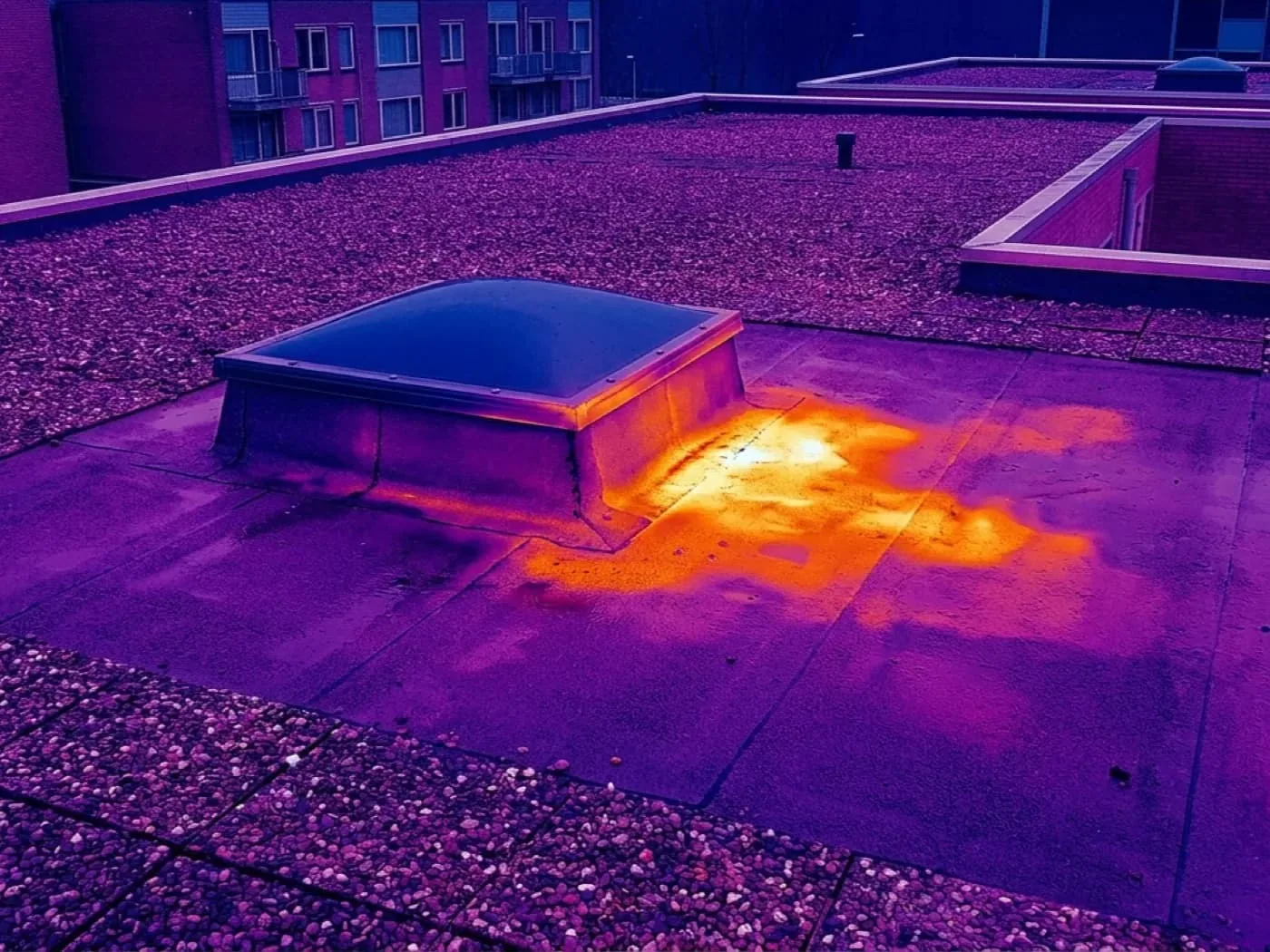
The insulation under the existing roof. An infrared moisture survey with core cuts maps the wet areas. Wet insulation is removed and replaced before the coating, because a sealed roof traps whatever is inside it. If the survey shows widespread wetness, the scope moves toward replacement, and the coating is dropped from the list.
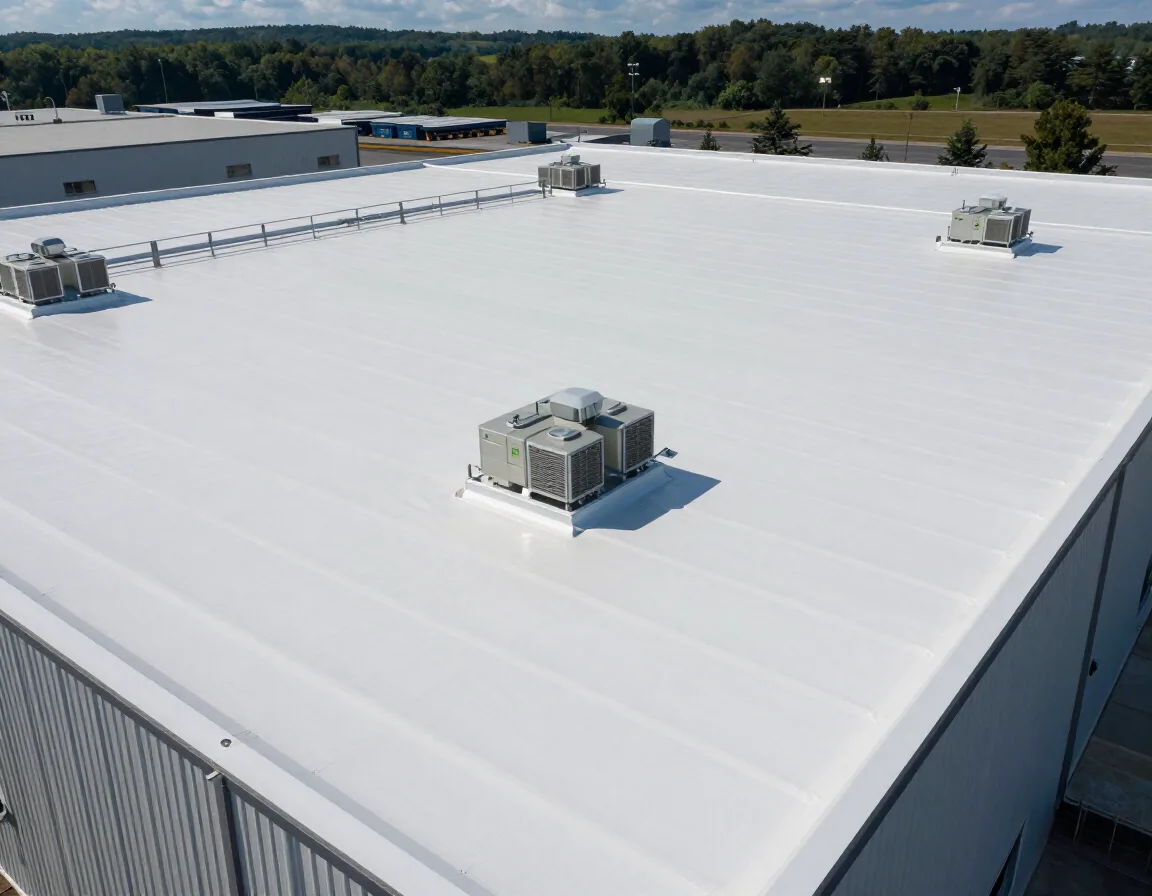
For roofs that pass, the coating restores a worn surface and extends service. A roof coating restoration gives the owner a defined period of protection and a recoat date in the file.
How do heat and weather shape the application?
Roof surfaces in Temple run hotter than the air, which reaches about 95F in August and passes 90F on some eighty days a year. Silicone is cured by moisture in the air and tolerates warm conditions, but it must be applied to a dry surface with no rain forecast during the cure window. Cold-season work is limited by about 26 freezing nights a year, and the freeze of February 2021 held Killeen and the surrounding area at or below freezing for 9 days.
Before each pass the crew reads surface temperature, dew point and the forecast. Overspray is controlled with wind limits and shields, and vehicles and intakes are protected. After cure, a film thickness check at set points confirms that the coating meets the specified mil thickness. Roof traffic is kept off the coating during cure, and the schedule names the day service technicians can return to equipment. Walkway pads are installed on routes to rooftop units so that the finished film is not worn through by routine access.
What is a holding repair before a coating?
It is the make-safe work that gets the roof ready: closing open seams, fixing flashings, replacing punctured membrane and clearing drains. Each item is photographed and dated. After a wind event on the scale of the May 2024 tornado, we walk coated roofs for peeling, lifted edges and impact damage. The record lists each item with its location, the material used and the date, and it names the repairs that must be finished before coating can begin. The asset manager sees the whole sequence, from make-safe work to recoat date, in one document.
Where do coated roofs rank in the capital plan?
The ranking sets coating candidates beside replacement candidates. A building in the Temple Industrial Park and one along Interstate 35 go into one list, ranked by condition. A roof with a good coating is low on the list. One with failing film and ponding is high. The report names the next decision and its date, such as a recoat in two years or a replacement review, and compares the choice with acrylic coatings, a new TPO sheet and a metal roof retrofit where the roof is metal.
Commercial Roofing Questions
Can silicone be applied over any roof?
Not safely. It needs a sound, dry, clean surface and a compatibility check. An adhesion test on a small patch shows whether it will bond, and wet insulation or loose membrane must be corrected first.
How thick should the coating be?
As thick as the product specification requires. We measure film thickness at set points after cure and record the readings in the file so the owner can confirm it.
What happens when the coating wears out?
It is cleaned and recoated before the substrate is exposed. Because later coatings of other types may not bond to silicone, recoats are generally silicone.
Does a coating make a roof last indefinitely?
Not by itself. It extends service for a defined period and needs inspection each year. The file lists the recoat date and what would bring it forward.
Can a coating be applied in winter?
In some conditions. The surface must be dry, temperatures within the product's range and no freezing expected during cure. When conditions do not allow it, the work waits.