Bartlett
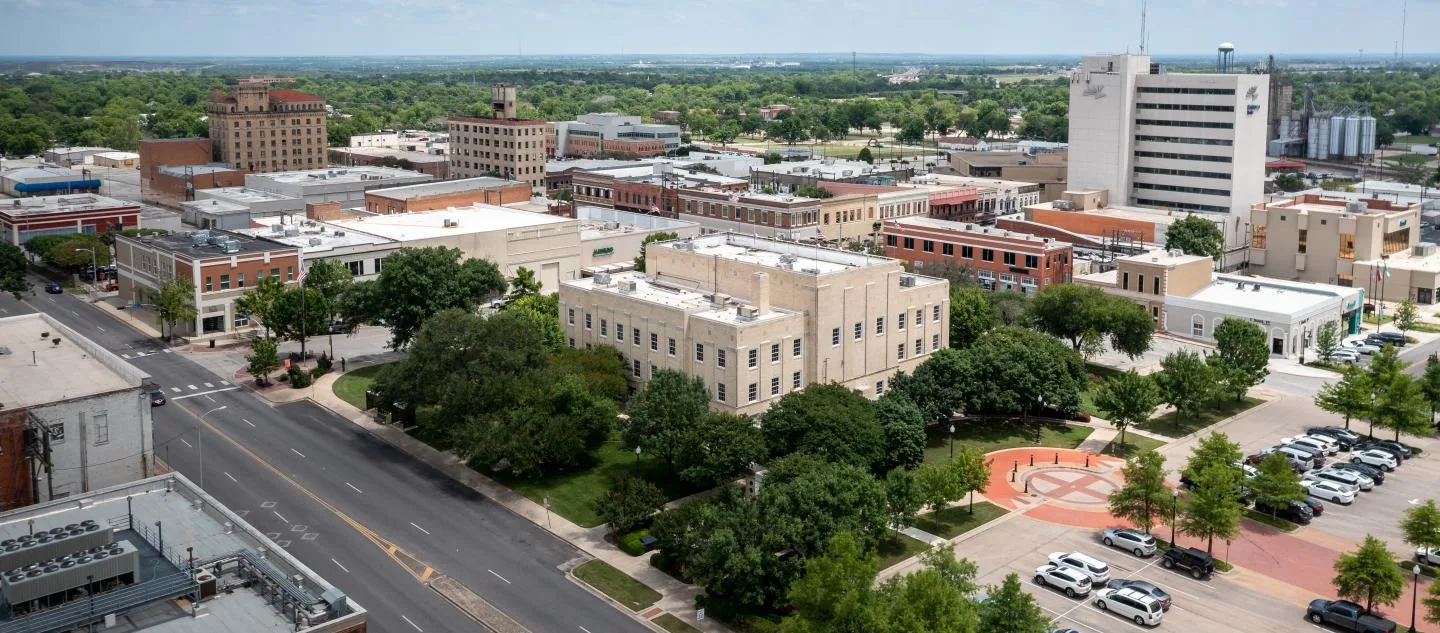
Which water is yours when two buildings share a wall? On an older commercial block the first failure to trace is often at the line between roofs, and the first decision belongs to whoever can speak for both. Bartlett had 1,633 residents at the 2020 census, lies in Bell and Williamson counties with the center mostly in Bell County, and holds the Bartlett Commercial Historic District, which carries late nineteenth and early twentieth century architecture.
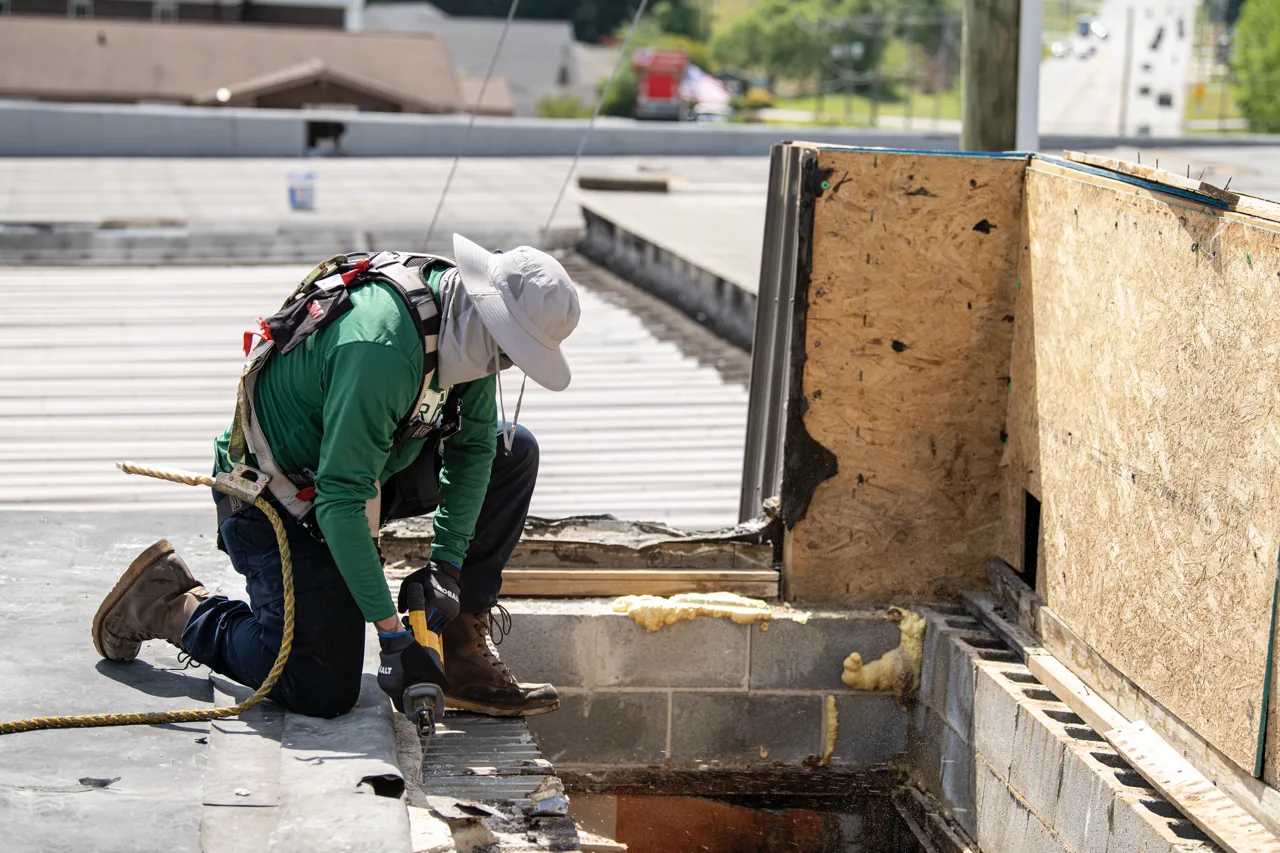
We walk each building, identify what is there and record the details that matter on a block of older commercial buildings: parapets, copings, scuppers, wall flashings and the junctions between neighboring roofs. The findings go to the owner, and where a joint belongs to two owners, they go to both.
Where do older commercial roofs leak first?
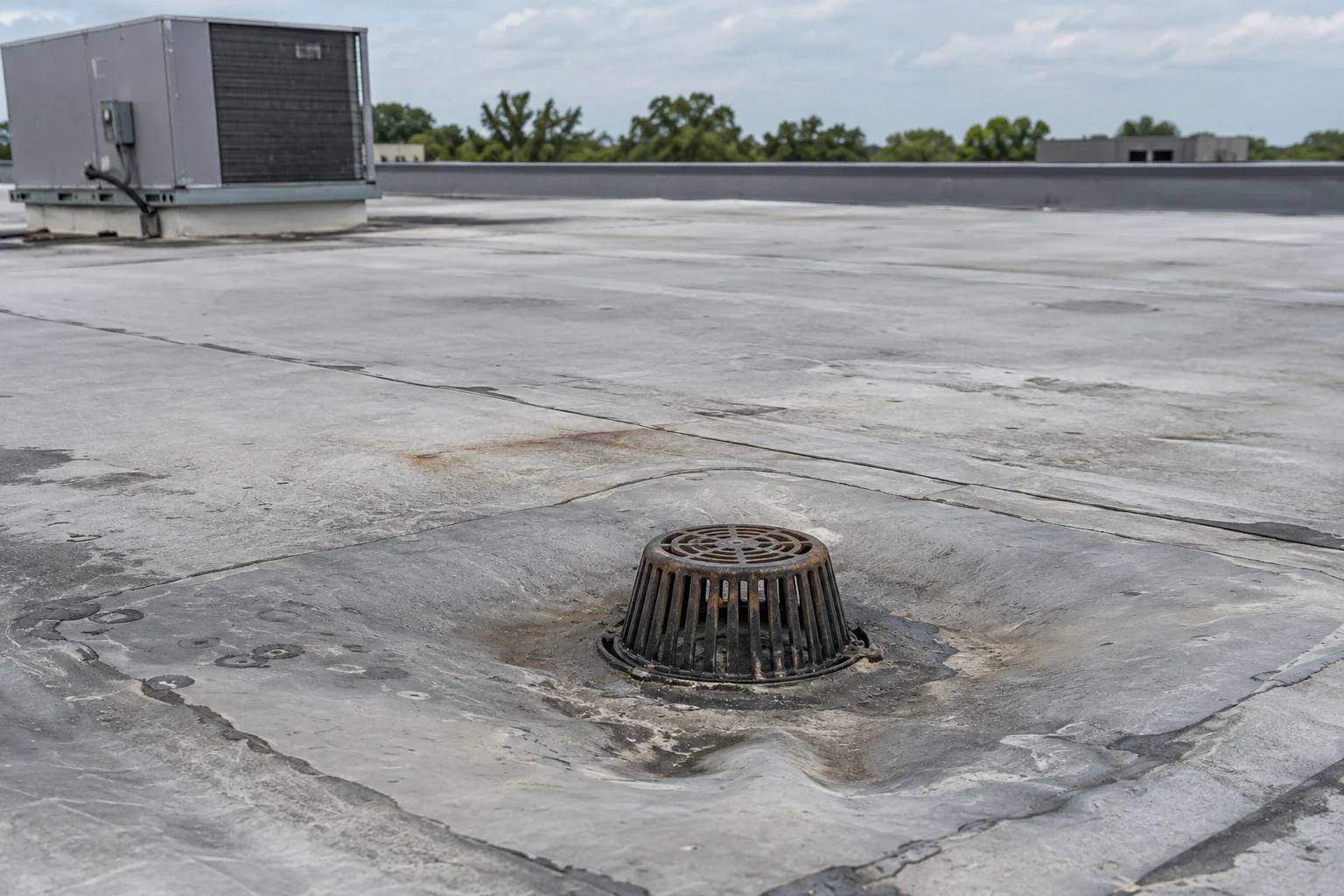
On a low-slope roof behind a parapet, water has few places to go. It collects against the wall, it finds the base flashing and it follows the wall down. The first checks are the cap or coping on top of the parapet, the joints in it, the flashing at its base and the scuppers or drains that carry water out. A cap with an open joint lets rain into the wall. A flashing that has pulled away lets it behind the membrane. A scupper that is blocked or set high makes a pond, and clearing roof drains and scuppers comes before any patch.
We photograph each of those, measure any standing water and probe the base of the wall for softness. A historic building is not automatically masonry, so the walk identifies what is there and the report names it.
What changes when buildings share a wall?
Where adjacent roofs meet at a shared wall, the flashing at the junction serves both. A failure there can wet either side, and responsibility depends on ownership, leases and agreements that the roofer does not know. We record the condition of the junction with dated photographs, note which side shows staining and tell both owners what we found. If a repair is needed, we recommend that the owners agree on who pays before the work is scoped.
The record helps. A dated photograph of the flashing before a leak settles whether the condition was already there. A moisture reading on each side of the wall shows where the water went. And a short note on the junction detail, how it was made and how it has aged, gives the next inspector a starting point.
What does the intake record hold for an older block?
The record starts with the address, the building use and the roof sections, then lists what we could identify and what we could not. Parapet height and cap type go in. So do the number and location of scuppers, the drains, the penetrations and the junctions with neighboring roofs. Photographs are tagged and dated, and a sketch fixes each position.
Moisture readings are taken along the base of each parapet and around each drain. If the wall shows staining below, we check the roof above it first. The record separates what is visible from the street from what is hidden, since the first group may need approval and the second usually does not. It ends with the open questions and who must answer them, each with a date, so that the permit step, the approval step and the repair step do not wait on one another.
Which permit office covers the address?
Bartlett straddles two counties, which raises a practical question for any project that needs a permit: who issues it? Texas applies the International Building Code in every city but lets local governments adopt later editions, so the authority and edition for the address must be confirmed. The owner confirms with the office that covers the property, and the file notes who answered and when.
If a permit is required, the lead time goes on the schedule. If the building is in the historic district, the owner also checks whether any review applies to visible changes. We sort the scope into changes that restore what is there and changes that alter how the building looks, and we flag the second group for confirmation before work is scheduled.
What does Central Texas weather ask of an older roof?
Temple, the market city, receives about 39 inches of precipitation a year, with May the wettest month at 5.4 inches, and has roughly 26 freezing nights. Summer adds August highs near 95F and about 80 days a year past 90F. Together those mean spring rain on a roof that has just come through winter, and summer heat on one that has just come through spring.
An older roof with many joints feels both. Water enters small gaps and freezes. Heat then stiffens sealants and opens the same gaps wider. The spring walk locates open joints, seals them and clears the drains. A late-summer walk compares the photographs. The differences are the findings, and they set the order of work.
How does the 2024 storm record matter here?
May 22, 2024 brought an EF-2 tornado to Temple, with straight-line winds of 80 to 90 mph estimated across the city. These events are regional context for an owner in Bartlett, not a finding about any roof in town. They explain why caps, copings and rooftop items are the first things checked before spring, and why a pre-season record matters.
Storm response keeps one order: stop the water, make the record, set the holding repair, then price the permanent work. A displaced cap is a make-safe item. Matching an older material means a wait for supply, so the holding repair is built to last and the report says for how long. Nearby Temple and Rogers owners follow the same order.
What are the options, and what drives the cost?
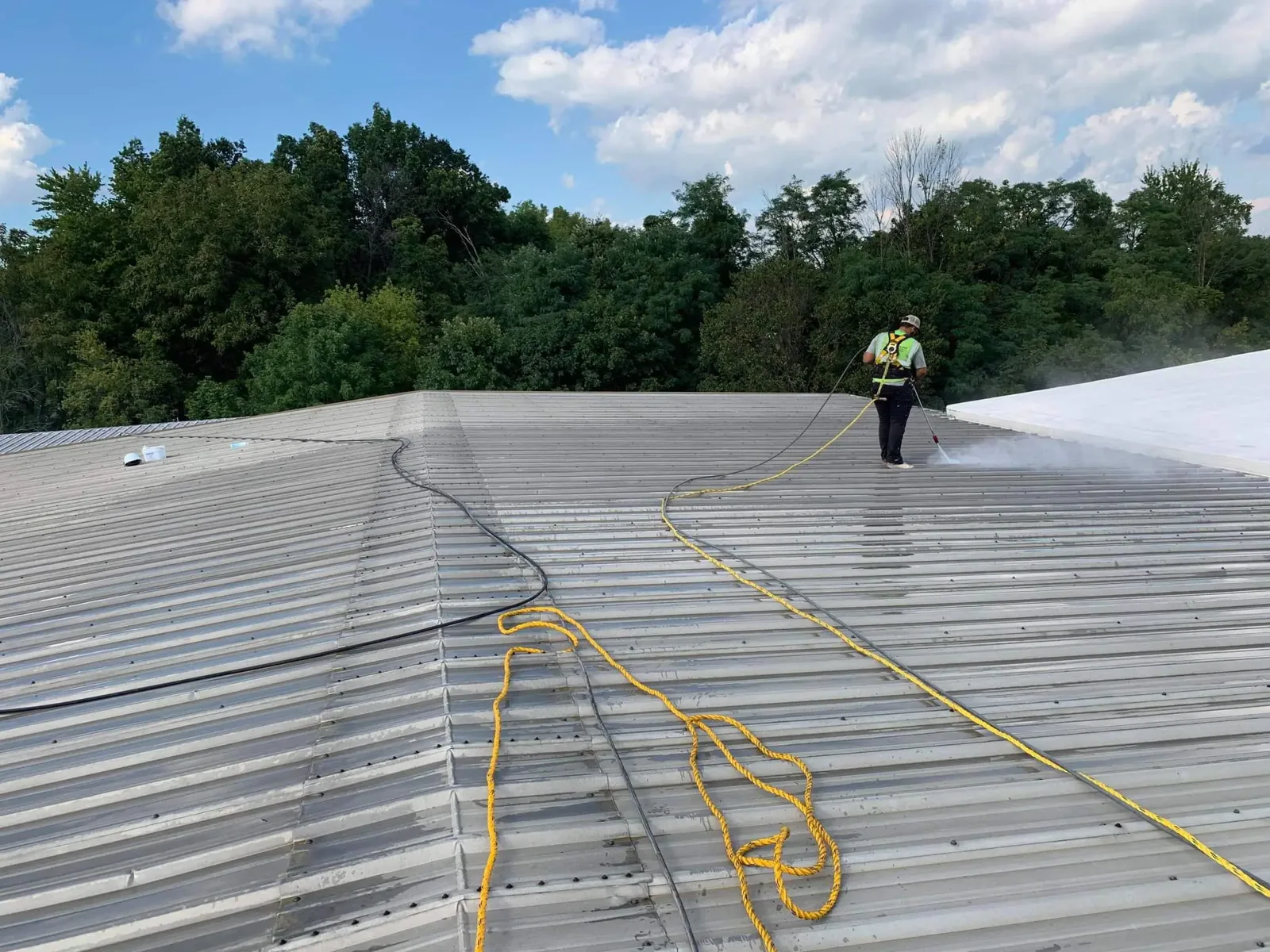
The findings decide. Local defects with dry insulation call for commercial roof repair. A sound membrane may be coated. A base that can carry a second membrane may take a recover. Replacement fits roofs with wide wet areas. Cost follows area, material, access and whether visible changes need approval. The recommendation lists each option with its price and the finding behind it, and the decision stays with the owner.
For a block of older buildings, a shared walk with both owners present settles who holds which joint before any scope is priced.
Commercial Roofing Questions
Who is responsible for a leak at a shared wall?
We record the condition with dated photographs and moisture readings on both sides and report to both owners. Responsibility turns on ownership and agreements we do not see, so the owners should agree on who pays before work is scoped.
Is a historic building roof always masonry or slate?
No. Age does not tell us the material. The walk identifies what is on the roof and what is in the walls, and the report names each.
Why do parapets matter for leaks?
They hold water against the wall. An open cap joint, a pulled base flashing or a blocked scupper each lets water in, and all three are checked on the first walk.
Which permit office applies to a property that is near a county line?
The owner confirms with the office covering the address. We record the contact, date and answer and put any lead time on the schedule.
Can visible changes to a historic block be made without review?
Visible changes on a historic block may need review, depending on the property and the authority. We flag changes that alter appearance so the owner can check before work is scheduled, and the file shows the date of the question.