Manufacturers
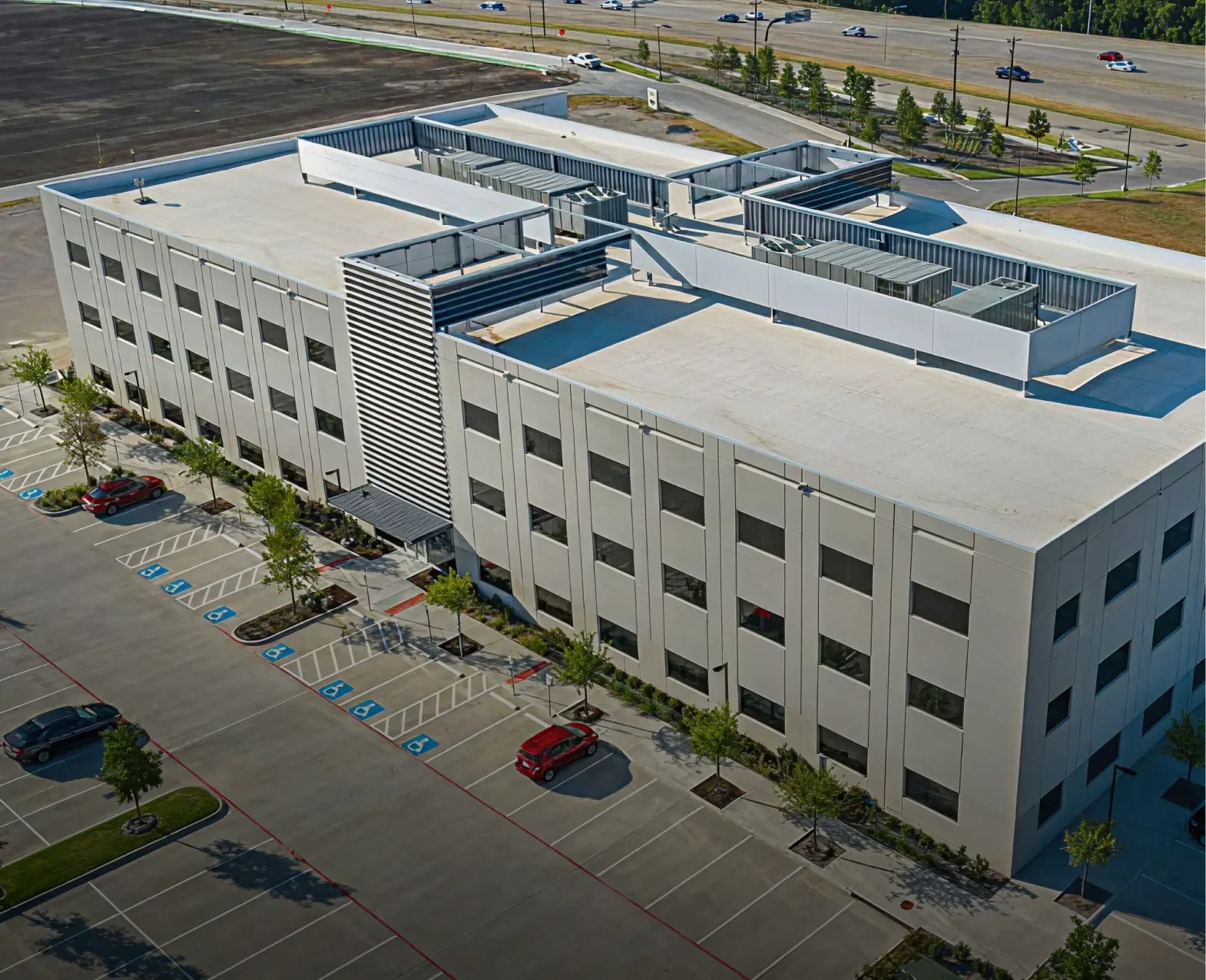
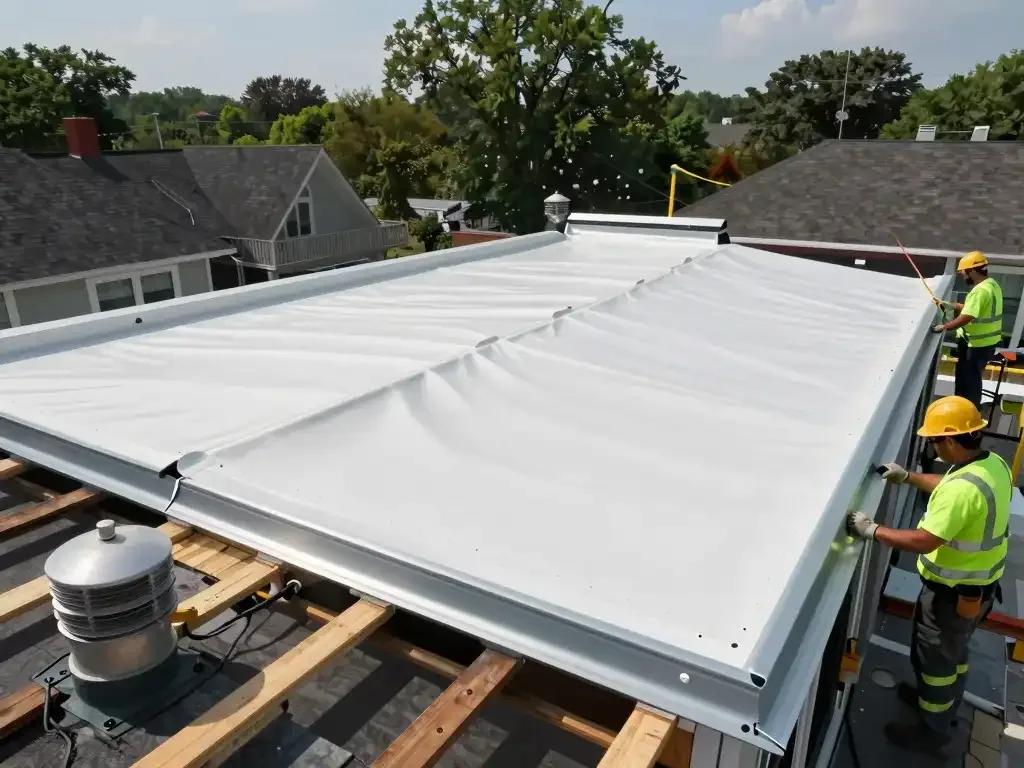
What does a leak over a production line cost per hour, and who has the authority to stop the line while the roof is fixed? A plant manager in Temple, TX faces that question. Plants that make and package goods in Temple include E.R. Carpenter, Texas Hydraulics, Reynolds Consumer Products, Novolex and Wilsonart, and roofs over plants of this kind commonly carry exhaust stacks, makeup air units, process piping and skylights. Each penetration is a place where water can enter, and each piece of equipment is a reason a crew cannot simply tear off a section.
We work the problem in the order a plant needs. First, the make-safe step that keeps water off equipment. Second, the intake record that names the failure point. Third, the permanent scope, sequenced to the plant's shutdown calendar and priced once a moisture survey has drawn the boundary of the wet area. A holding repair buys the time to do all three properly.
What Fails First on a Plant Roof?
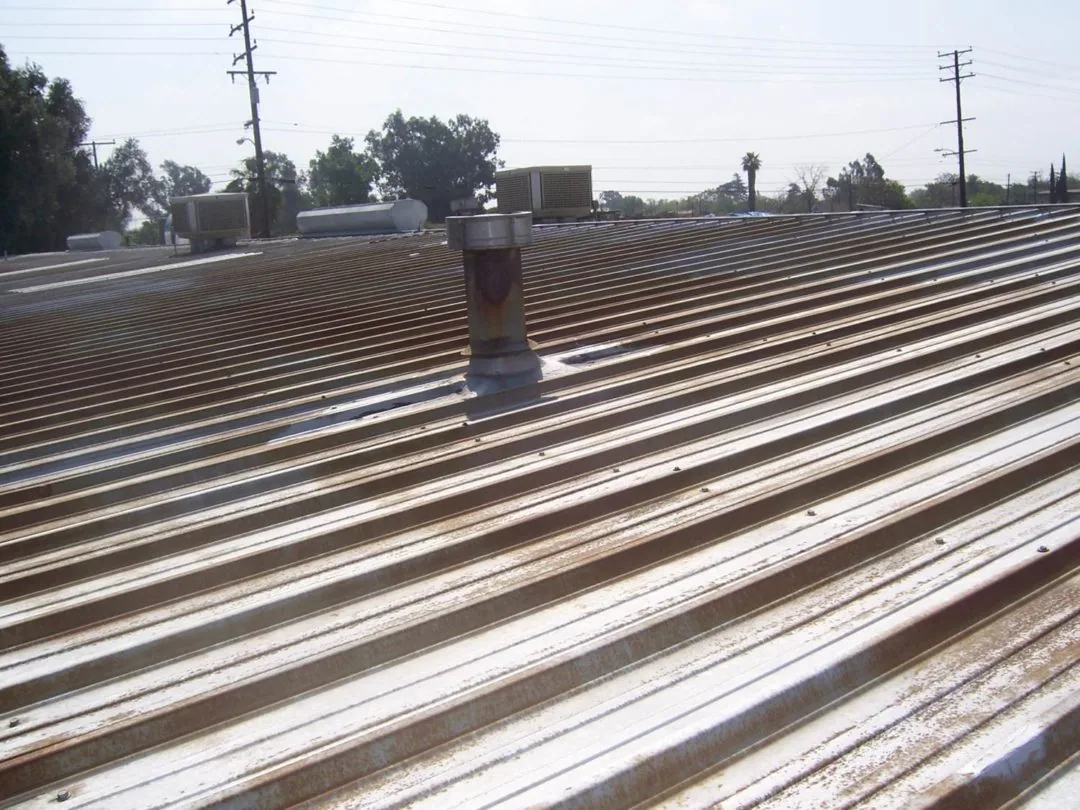
In plants, the first failure is usually at a penetration. Exhaust fans vibrate and loosen their curbs. Process piping moves with temperature and splits the boot around it. Skylight frames shrink away from their flashing. A roof field can be sound while a dozen small details leak, which is why our inspection walks every penetration and records its condition with a photograph.
The second most common failure is ponding. A long plant roof drains to a few outlets, and a blocked drain turns a dry roof into a pond within one storm. We check outlets first, measure depth where water stands and compare with the slope. About 39 inches of precipitation fall in a year, with May the wettest at 5.4 inches, so drains do real work.
Who Makes the Call in the First Hour?
The plant manager decides whether production stops, the facilities lead decides whether to cover equipment, and the roofer decides how to make the opening safe. We keep those three roles separate in the intake record. A crew arrives with tarps, temporary membrane and sealant, isolates the opening, protects the equipment below and photographs everything before it is covered. The record shows the time of each step and the person who approved it.
If the leak is over electrical gear, we ask for the lockout status before work begins and wait for confirmation. If it is over a chemical area, we ask for the permit. If it is over finished goods, we ask where they can be moved. No step is assumed, and each is recorded with the name of the person who answered.
After the opening is secured, the crew walks the roof around it in a ring, probing for soft insulation and looking for the next likely entry point. Water travels along the deck and under the membrane, and the place where it appears inside the plant is often a long way from the place where it enters. The ring walk finds the entry, and the entry is where the permanent repair belongs.
How Does Temple Heat Change Plant Roofs?
In Temple the hottest month is August, with highs near 95 F and some eighty days each year past 90 F. Inside a plant, heat rises to the roof deck, and the roof surface takes it from above and below. Membranes expand and relax every day, and the sealant around penetrations bakes, so a bead that was tight in spring may show a gap by September. A heat and UV damage inspection looks for shrinkage at walls, cracked flashing and blistered coatings, and a reflective cool roof surface can lower the temperature of the sheet and the load on rooftop equipment.
What Did the May 2024 Tornado Teach Plant Owners?
The EF-2 tornado of May 22, 2024 carried peak winds near 120 mph through Temple, and the weather service logged straight-line wind across the city that the survey put near 80 to 90 mph. The damage survey named restaurants, shops, banks and strip malls, not plants. The lesson for any large roof is general: wind attacks edges, corners and equipment, and a roof with tight edge metal and a documented attachment pattern does better than one without. An inspection after any severe wind should check those details first, starting at the corners of the building, where uplift is strongest, and working inward. Rooftop units are checked for movement on their curbs and for torn flashing at the base. Drains are checked for debris that the wind carried onto the roof, and for punctures made by that debris.
The same walk gives the plant a baseline for the next event, and it ties into a wind damage repair estimate if repairs are needed. A baseline taken before a storm is worth more than one taken after, because it shows what the roof looked like when it was whole.
How Is Work Planned Around a Shutdown?
A planned shutdown is the best time for roof work over sensitive areas. The plan names the sections to be replaced during the shutdown, the sections to be dried in after it and the interior areas to be protected. Crane picks are scheduled for quiet hours, and material is staged so it does not block forklift routes. Hot work, if needed, is covered by a permit and a fire watch. The schedule gives the plant manager a clear sense of which days the crew will be on the roof and which areas below need protection.
When no shutdown is possible, work is sectioned and dried in daily. The logistics operator and the property manager approach the same issue with different calendars.
What Belongs in the Permanent Scope?
A permanent scope for a plant lists the system, insulation, cover board, flashing at every penetration, edge metal and drains, with quantities. It also lists coordination items: electrical and mechanical disconnects, shutdown dates, hot work permits and inspections. Cost moves with area, number of penetrations, deck condition, access and the dry-in window. The plant's own engineers can review the scope, and we revise it as they ask. A replacement may be split into phases across budget years, with the worst sections first. The scope states which phase protects which area, so the plant can see what each year's money buys. For plants near the Temple Industrial Park, rail service and truck access often shape the delivery plan, and the haul route from Interstate 35 is drawn once and posted.
Each year's phase is tied to a shutdown date on the plant calendar, so the budget request reads as a schedule the plant already understands.
Commercial Roofing Questions
Can a plant roof be replaced while production runs?
Often yes, in sections, with interior protection and a daily dry-in. Areas over sensitive equipment are scheduled for planned shutdowns.
What does a holding repair buy?
It keeps water off equipment and goods until the permanent scope is priced and scheduled. It is documented separately so it does not become the permanent fix by default.
How are exhaust stacks and curbs handled?
Each curb is inspected, photographed and flashed or reflashed as needed. A mechanical contractor disconnects and reconnects equipment when a curb must be reset.
Which roof type suits a chemical or grease environment?
PVC and similar thermoplastics resist many oils and chemicals better than some other sheets. The choice depends on the exhaust and the surface exposure.
How soon can a moisture survey be done after a leak?
Soon after the roof is dry enough to read. Infrared works best in the evening, when wet areas hold heat longer than dry ones.