Heat and UV Roof Damage Repair
How many hot summers has this roof really taken, and what does the surface say about them? A commercial roof in Temple, TX sits in August heat near 95 F and about eighty days a year past 90 F, and year after year that sun ages it in recognizable ways: chalking, shrinkage, cracking and open seams. Heat and ultraviolet damage is slow, and it rarely announces itself with a leak until a weak detail finally lets go. The question for an asset manager is how much service life remains and what to spend to protect it. Dust and exhaust film from nearby roads and industry settles on a roof, and it adds to the damage the sun does by itself.
We separate the steps. A holding repair seals what has opened. The intake record documents the condition across the roof. After a moisture survey, the permanent scope prices a coating, a repair and a replacement side by side.
What Does Heat Damage Look Like on a Commercial Roof?
On a single-ply sheet, heat shows as shrinkage at walls and curbs, cracked flashing, chalky surfaces and welds that open at laps. On modified bitumen and built-up roofs, it shows as blisters, granule loss and cracks. On coated roofs, it shows as thin spots, chalking and loss of reflectivity. On metal, it shows as fastener back-out and sealant failure. We walk the roof, photograph each condition, mark it on the sketch and note how widespread it is.
The record is read as a trend, and the trend is the point. A single photograph says little; a series of them shows how fast a roof is aging, and where the aging is concentrated, such as the south-facing slopes of a parapet or the area around a rooftop unit that blows hot air across the sheet. A roof that shows chalking only is early. A roof that shows chalking, shrinkage and open seams is late. A roof that also holds wet insulation is near the end.
Photographs are taken at fixed spots, from fixed angles, so a visit next year can be compared with this one. We mark five or six reference spots on the sketch, including a corner, a seam, a flashing, a drain and a section of open field, and the same spots are photographed on every visit. Over three or four visits, the pictures show the pace of aging, and the owner can see whether the roof is slowing or accelerating.
What Happens in the First Hour of a Heat-Related Failure?
A heat-related failure usually arrives as a leak after a hot spell and a rain. We ask where the water is showing and whether there was recent rain after a stretch of heat. A crew then checks the nearest flashing, seam and penetration, seals what is open and photographs the area before and after. The owner's note lists the detail, the step taken and the risk that remains. The permanent decision waits for a survey. Heat-related leaks often show up after the first rain following a hot spell, because the sheet has shrunk and pulled flashing from the wall. A crew that visits within a day can sometimes see the gap before it closes again in cooler air, and photographs show it. Without that photograph, the next visit may find nothing, and the leak will return after the next hot spell and the next rain.
What Does Temple Heat Do Over Time?
A roof surface in August sun can be far hotter than the air, and a dark surface is hotter than a light one. Thermal cycling, daily expansion and night contraction, loosens sealants, opens seams and stresses flashings. About 26 freezing nights a year add a smaller reverse cycle in winter. Temple's 39 inches of rain peak in May at 5.4 inches, which means a roof weakened by summer meets heavy rain the following spring. The May 22, 2024 tornado reminded owners that a weakened roof is also easier for wind to damage, since an old, shrunken sheet has less grip on its fasteners and edges. The inspection therefore includes a fastener pull sample at corners and a check of the edge metal.
Coating, Repair or Replacement?
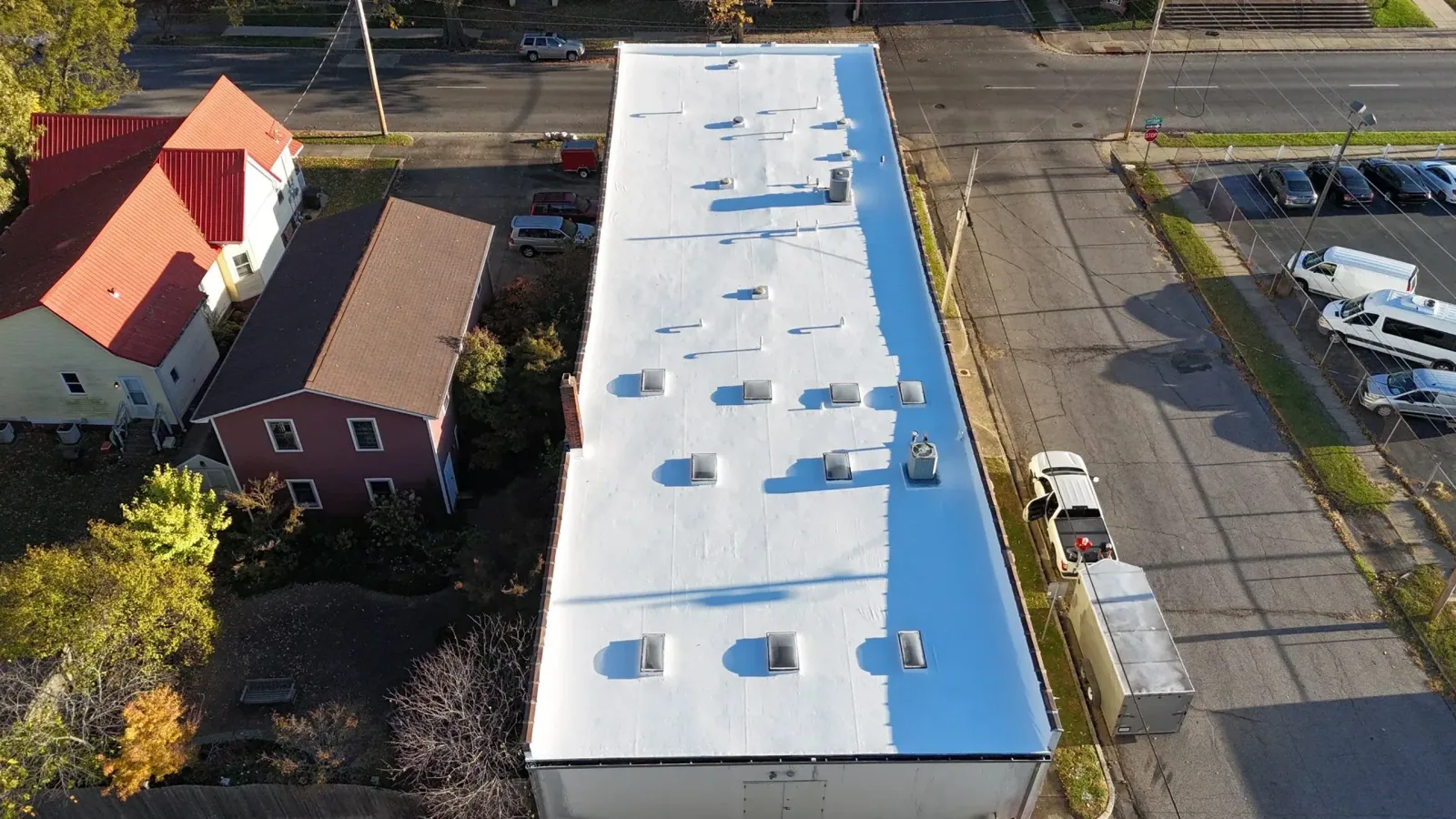
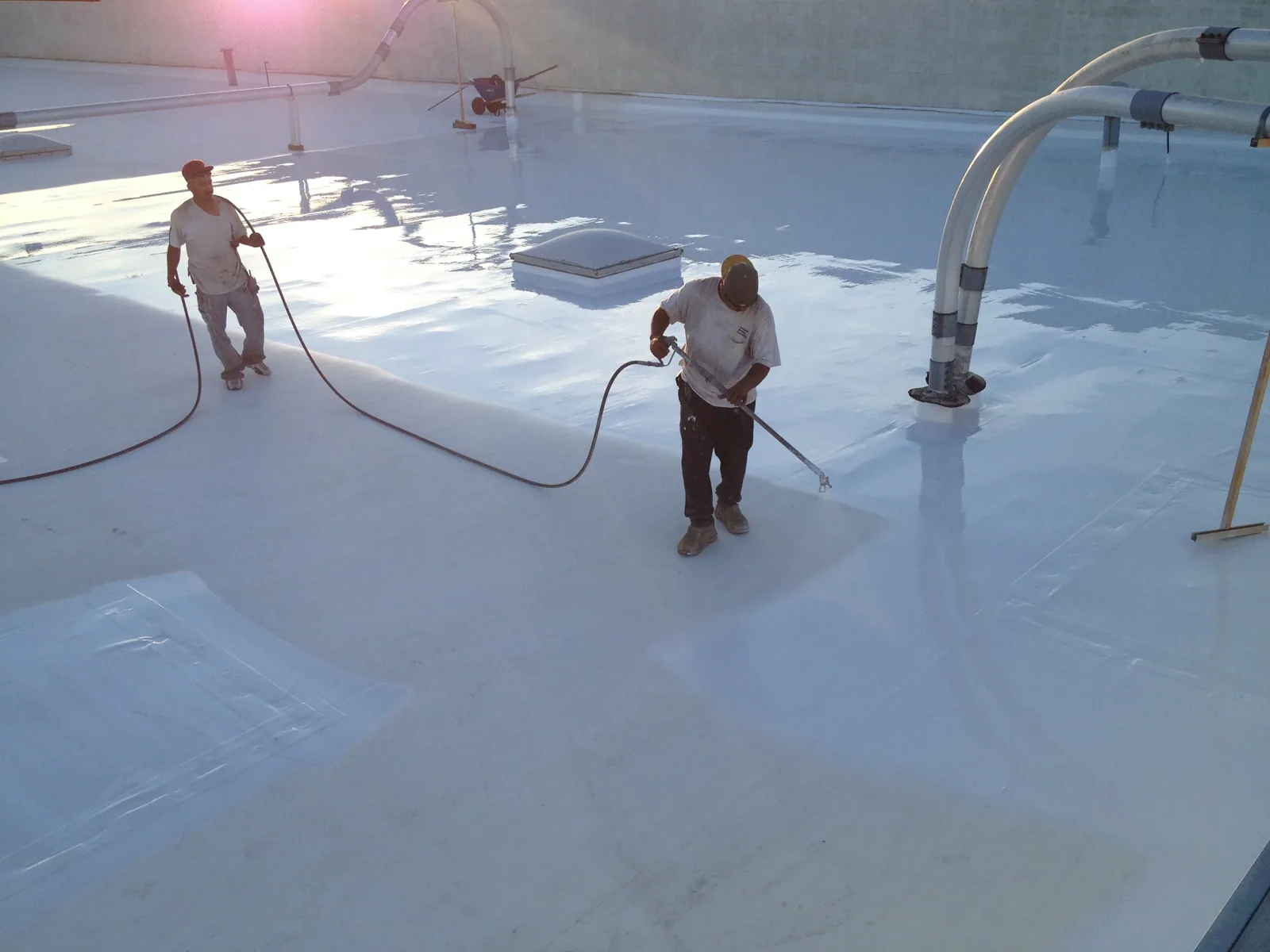
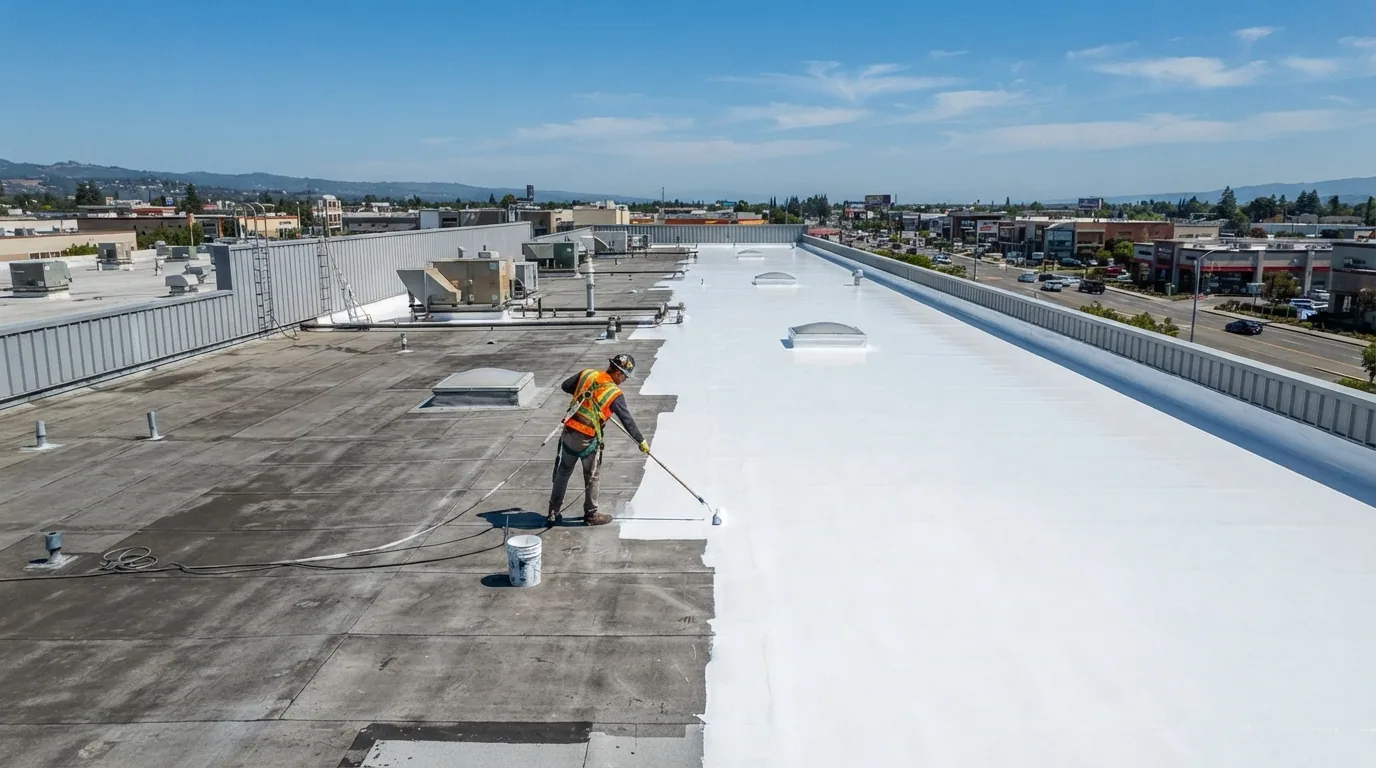
If the sheet is sound and the insulation dry, a roof coating can restore reflectivity, seal small defects and extend life. A silicone coating tolerates ponding better, and an acrylic coating costs less where drainage is good. Neither is a cure for a leaking roof, and both depend on the surface beneath. A coating applied over loose dirt, algae or a failed patch will peel, so cleaning, repair and primer come first and are priced as their own lines. If seams are open and flashing is cracked, repair comes first. If moisture has spread, replacement is the scope. Cost depends on area, penetrations, surface preparation and access, with cleaning and priming a sizable share of the price. A cool roof surface can lower rooftop temperature and the load on equipment.
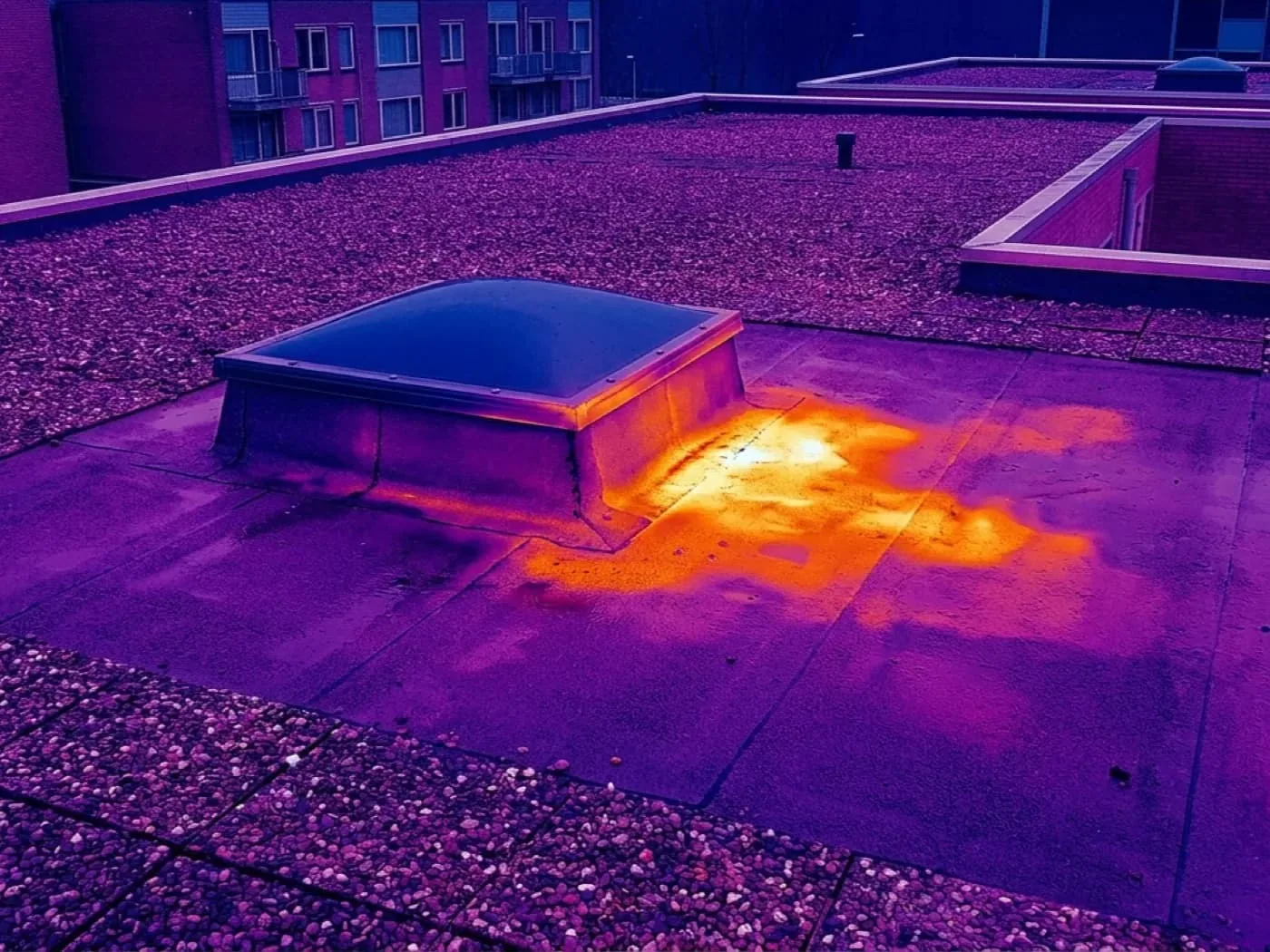
Why Survey Before Coating?
A coating over wet insulation hides the problem. An infrared moisture survey and probes show whether the insulation is dry. An adhesion test shows whether the surface will hold a coating. Seams and flashing are repaired first. The survey and the test go in the file, together with the weather and surface temperature on the day of each, since adhesion varies with both, and the coating specification states film thickness, cleaning and primer. A coating on a roof with ponding needs a product that tolerates standing water, and the specification names it. A coating on a roof with foot traffic needs a surface that resists scuffing, and walk pads protect the routes. Rooftop equipment pads, curb tops and drain sumps get an extra coat where wear is greatest, and the scope shows where.
A roof near the Temple Industrial Park or along Loop 363 may carry that film, and cleaning is then part of the scope.
What Does the Permanent Scope Include?
The scope lists repairs to seams and flashing, cleaning, primer, coating with thickness, and any section replacement. It sets a maintenance calendar with visits before the hot months and after storms. Each visit checks the coating for thin spots, scuffs and peeling, clears the drains and walks the seams, and a short report goes to the owner with photographs, a list of items by urgency and the date of the next visit, so the owner always knows what comes next. Owners can plan the coating cycle in the capital plan and see the next coating date. Related issues, such as a seam failure or a bent flashing, are priced as separate lines, so the owner sees which items protect the coating and which items stand alone.
On a roof close to the end of its service, the scope says so plainly and shows what a coating would and would not buy, so the owner can fund the right project.
Commercial Roofing Questions
How long does a coating extend a roof?
That depends on the sheet, the coating and the drainage. The scope states an expected range with the conditions that support it.
Can heat damage be reversed?
No, but it can be managed. Coatings, repairs and cooler surfaces slow the aging.
When is replacement better than coating?
When insulation is wet, seams are widely open or the sheet no longer bonds to a coating.
How do you check reflectivity?
By photographing the surface in full sun, noting color and chalking and comparing with earlier visits.
What is the next decision for the owner?
Whether to coat, repair or plan a replacement, and in which year. The record and survey support each.