Sika Sarnafil Roofing Systems
What does a welded seam look like when it has failed quietly? On a Sika Sarnafil roof, the answer is usually a thin dark line at a lap, a slight lift at a corner, and a probe that slips where it should stop. Sarnafil is best known for thermoplastic membranes, chiefly PVC, welded with hot air into a continuous sheet, and Sika also supplies liquid-applied products for flashings and waterproofing. A Sarnafil roof suits a Temple, TX building whose owner wants a dependable seam and a long service life, and the inspection record decides how long that life stays.
What does the maker supply for commercial roofs?
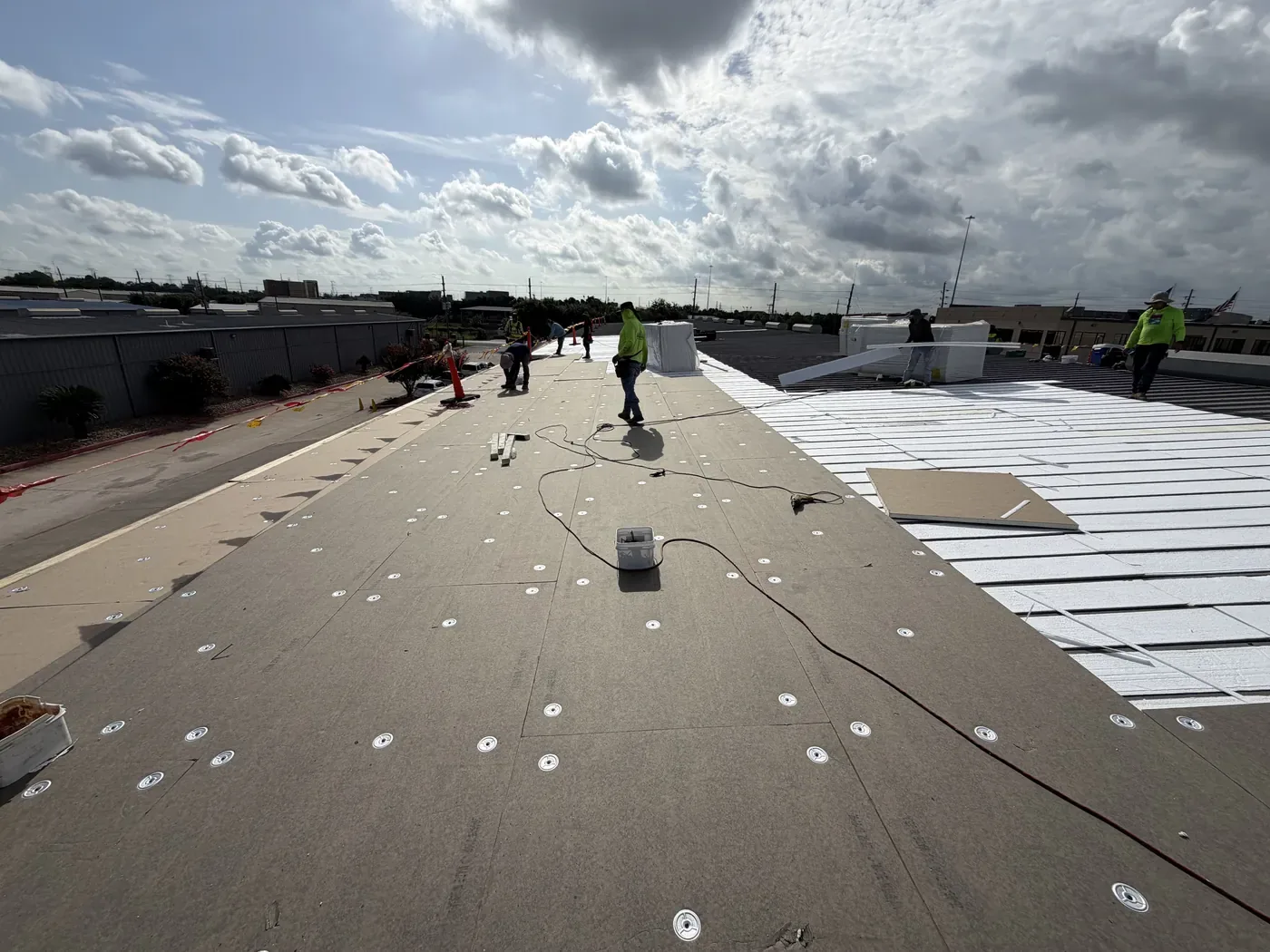
Thermoplastic single-ply membranes in PVC and TPO, reinforced for strength and weldable on site. Sika also makes liquid-applied resins used for flashing complex details, plus accessories such as prefabricated corners, pipe boots, and walkway pads. Insulation and fasteners complete assemblies in the field.
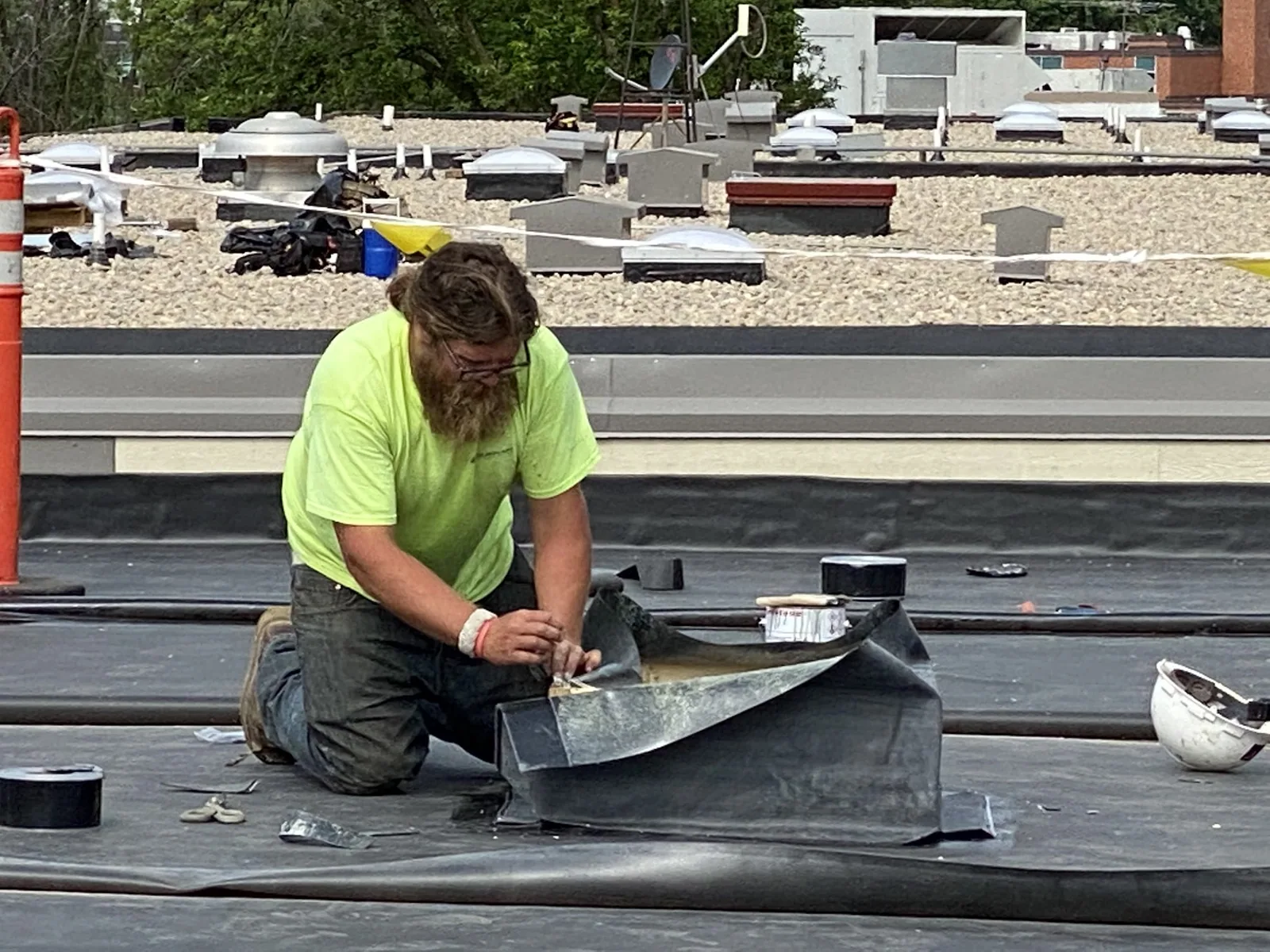
The point of the thermoplastic approach is the weld. Instead of tape or adhesive, hot air fuses overlapping sheets into one layer, and a probe confirms each seam. Details are formed from the same material, so a pipe boot or curb corner can be welded to the field sheet. That arrangement makes later repairs straightforward when the sheet is clean and still fusible, and it keeps the number of separate materials on the roof low, which simplifies stocking for the repair crew. It also makes identification important, since a patch of the wrong chemistry will not weld. A sheet from Carlisle SynTec beside a Sarnafil sheet on the same building may look alike and still behave differently under a hot-air gun, which is why the sketch labels each section.
How do we test a weld that looks fine?
A probe drawn along the lap edge, a visual check for a small bead of melted material at the edge, and a hand check for lift at corners and T-joints. T-joints, where three sheet edges meet, carry the most stress and are checked first. Each seam is logged by section, with open stretches marked on the sketch and photographed.
If a seam has opened, the repair is a hand-welded cover strip or a patch welded over the defect, after cleaning the aged surface. A test weld on the existing sheet shows whether it will fuse. Where it will not, the options are a mechanically fastened repair or a larger section replaced. The findings state which applies and why, so the owner can compare options on facts.
Why does PVC suit roofs near exhaust and kitchens?
Because the plasticizers in the sheet resist many fats, oils, and chemicals better than some other membranes do. A roof near kitchen exhaust, laboratory vents, or process stacks sees deposits that soften less resistant materials. PVC roofing is the usual answer, and the more resistant KEE roofing alloys give extra reserve where exposure is heavy.
Healthcare buildings, which lead Temple's stock, often have both exhaust and strict cleanliness needs. The inspection marks each discharge point and photographs the sheet around it. Where deposits have accumulated, a cleaning schedule goes in the plan. Where the sheet is stained or softened, the repair material is matched to the exposure, and the discharge is noted for the next visit. Walkway pads go where technicians travel, since a path worn through the top ply is a leak waiting to happen, and the pad layout is drawn on the sketch for later reference.
How does PVC age in Central Texas heat?
Slowly, if the sheet is thick and kept clean. August highs in Temple sit near 95F and about 80 days a year exceed 90F. White PVC reflects much of that heat, but sun and temperature cycling slowly draw plasticizers out of the sheet, and an older roof gets stiffer. Corners and fasteners show it first, with small cracks that start at fold lines.
We check flexibility by hand, look for crazing, and note where debris or foot traffic has abraded the surface. A cleaning and a maintenance visit each year keep reflectivity high. When stiffness is widespread, a coating is rarely a fit, and the findings point toward replacement. The preventive roof maintenance program tracks these changes from year to year.
What is different on renovated and historic commercial buildings?
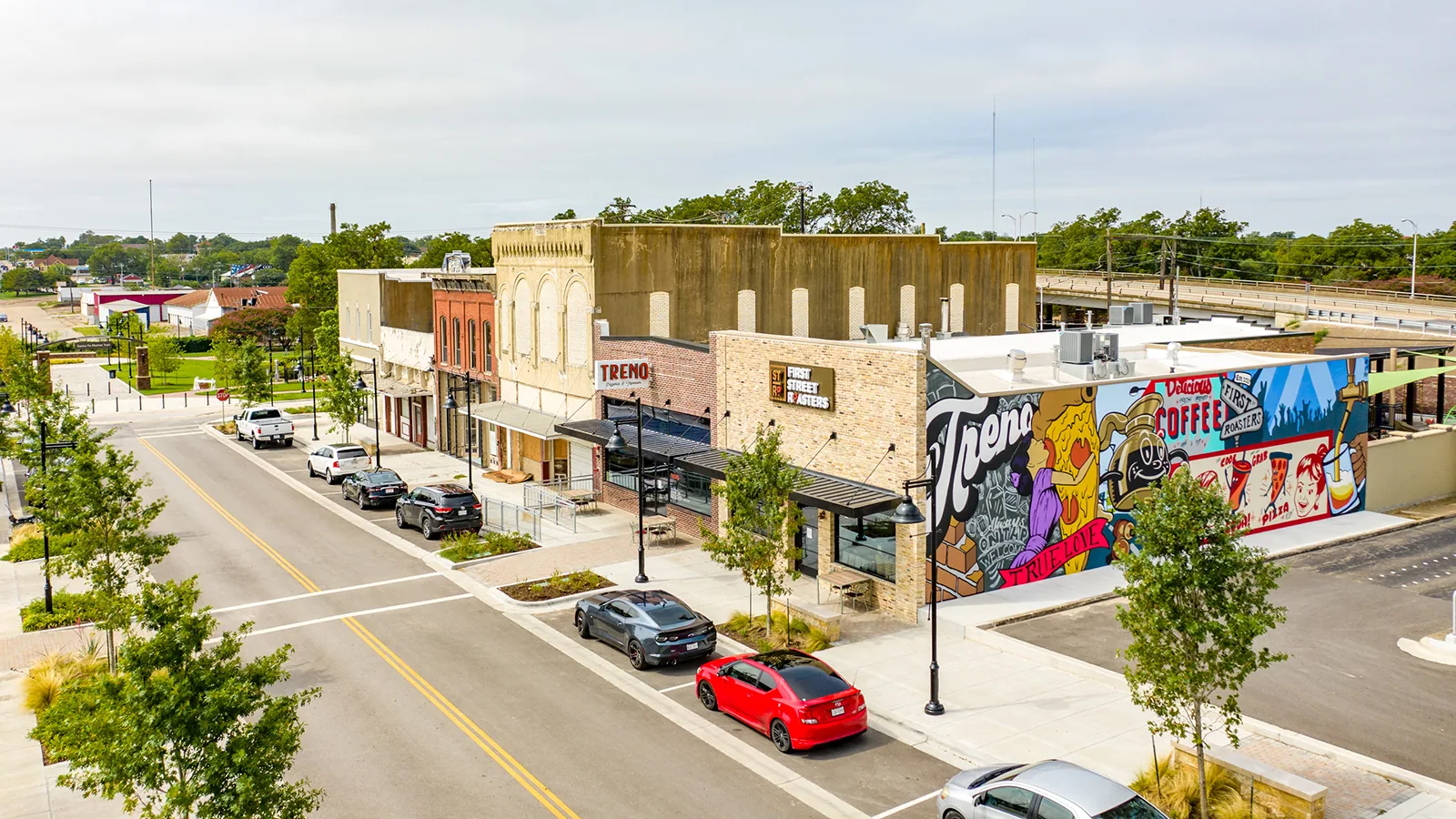
Downtown Temple's historic commercial buildings include the Hawn Hotel, the Arcadia Theater, and the Sears Building, and the City Center redevelopment is turning roughly 85,000 square feet of that history into residential and retail space. Renovation brings new roof work to old structures, with parapets, irregular roof shapes, and details that do not match a standard drawing.
Thermoplastic sheet and liquid-applied flashing suit complex details because they can be formed on site. We record each parapet, penetration, and transition with photographs, since old buildings hide surprises. Owners planning work in Downtown Temple receive a roof file that lists conditions found, and a scope that separates structural repairs from roofing. The same discipline serves owners in Killeen, where Historic Downtown is on the National Register of Historic Places and raises similar questions about what is under the existing surface.
What do wind and tornado exposure add?
On May 22, 2024 an EF-2 tornado tore through Temple with winds near 120 mph and hit restaurants, shops, banks, and strip malls, while straight-line gusts reached an estimated 80 to 90 mph. Welded sheet resists tearing, but attachment and edge detail decide how the roof behaves in wind.
After a storm we check termination bars, coping, and edge metal, plus any punctures from debris. A tornado damage roof repair scope comes from that record. Welded patches fix punctures quickly, and edge repairs follow the maker's published details for the system. Owners keep the paperwork in one file alongside neighbors on Soprema or other systems. The file also lists the date of the last seam probe for each roof section, so the next visit knows where to begin and which sections have gone longest without a hands-on check.
Commercial Roofing Questions
Can a PVC roof be repaired by welding even when it is old?
Often, after cleaning. Aged sheet may resist fusing if plasticizer has migrated out, so a test weld comes first. If it fuses, a welded patch or cover strip works well. If it will not, a fastened and sealed repair holds for the moment while a bigger scope is planned.
What are the signs of an aging thermoplastic roof?
Stiffness at folds, crazing on the surface, open laps, cracked corners, and chalky color. A hand flex test and a seam probe tell more than a glance. We photograph each condition and record it by section, so decline over several visits becomes visible.
Does liquid-applied flashing replace welded details?
It complements them. Liquid-applied resin is useful around odd shapes where prefabricated pieces do not fit. It must be compatible with the substrate and applied in suitable temperatures and dry conditions. We specify it where details are irregular, and record the product family on the sketch.
Why might downtown renovation roofs need extra documentation?
Older buildings have hidden conditions and varied construction, and renovation changes loads and drainage. Photographs of every parapet, drain, and transition, plus moisture readings, give the design team facts. The record also helps if an owner later needs to show what was found and fixed.
What should I check before authorizing a repair under a manufacturer warranty?
Read the terms for who may repair, what notice is required, and what maintenance is expected. Some warranties set conditions that a quick patch could break. We document the condition and the repair so the owner and manufacturer can compare notes if a question arises.