Auto Dealership Roofing
A drip lands on a vehicle in the showroom, and the general manager has two decisions in the first hour: move the car, and find out where the water is coming from. Dealerships make money from two spaces that dislike water, the showroom floor and the service bay, and both sit under roofs with different details. In Temple, TX, the first call is about the one section above the one expensive thing that is getting wet.
What fails first on a dealership roof?
Junctions between roof levels, canopy edges, and drains. A dealership building usually combines a showroom with tall glass, a service and parts area, an office wing, and a canopy at the delivery or service entrance. Each section has its own roof height, its own flashings, and its own drainage. Water that runs from the high showroom roof onto a lower service roof meets a transition that has to be flashed correctly to stay dry.
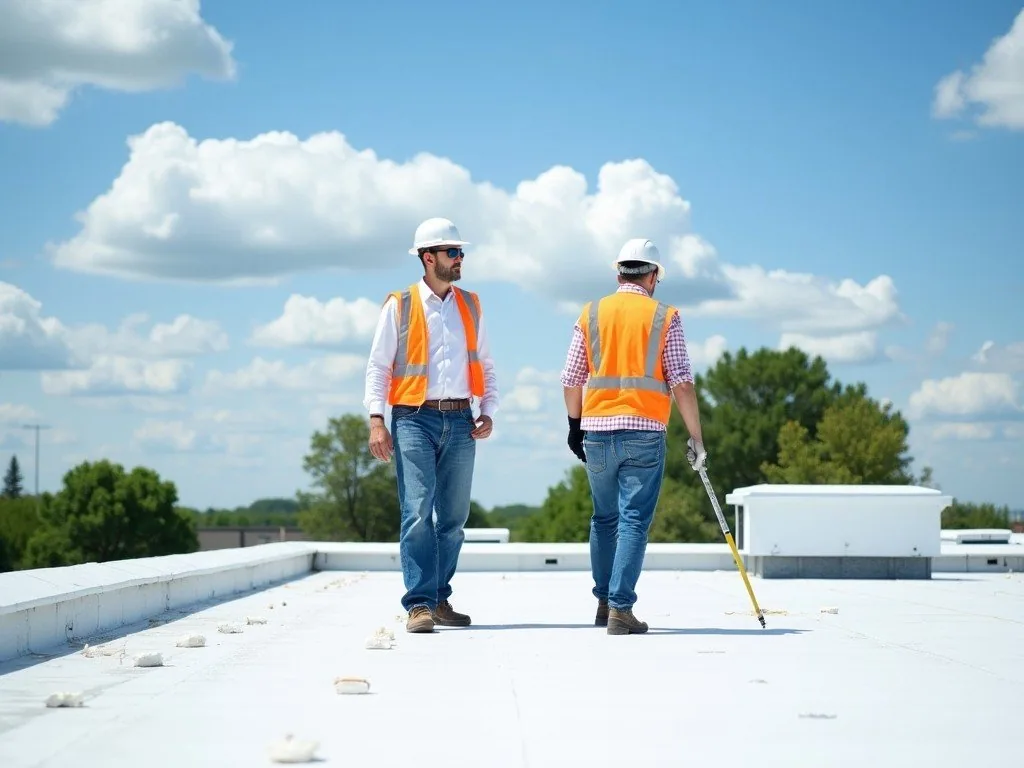
The first walk takes each roof section as its own roof. We photograph transitions, probe sealants, count drains, and check canopy edges and gutters. A big glass wall also throws reflected heat onto the roof beside it, and since August in Temple runs near 95F by day with some 80 days a year topping 90F, sealants and seams tire early. The sketch ties each section to the room below, so the showroom, the service bay, and the parts counter each have their own line.
Service buildings add their own details. Exhaust fans over the repair bays, makeup air units, and roof-mounted lighting all penetrate the membrane. Fumes and oil mist from the bays settle on the roof near vents, so we check the surface there for staining and softening. A bay that runs hot all day also heats the roof section above it, and sealants in that area age faster than the rest.
What is the make-safe step over a showroom floor?
The crew works from the roof. A temporary dry-in or sealed patch stops the water, and the dealership moves the vehicle, places barriers, and handles the floor. We photograph the opening before covering it, record the area beneath it, and note the materials used. Over a service bay, the crew coordinates with the service manager so lifts, tools, and customer vehicles are protected.
The intake record helps the dealership's own incident file and, if the damage touches a vehicle, supports a claim. Whatever goes on is dated and labeled as a stopgap, with a plain note on what it covers. Permanent scope waits for the survey, and the call belongs to the owner or the dealer group's facilities lead, not to whoever is on shift that night.
How are hidden leaks found above finished interiors?
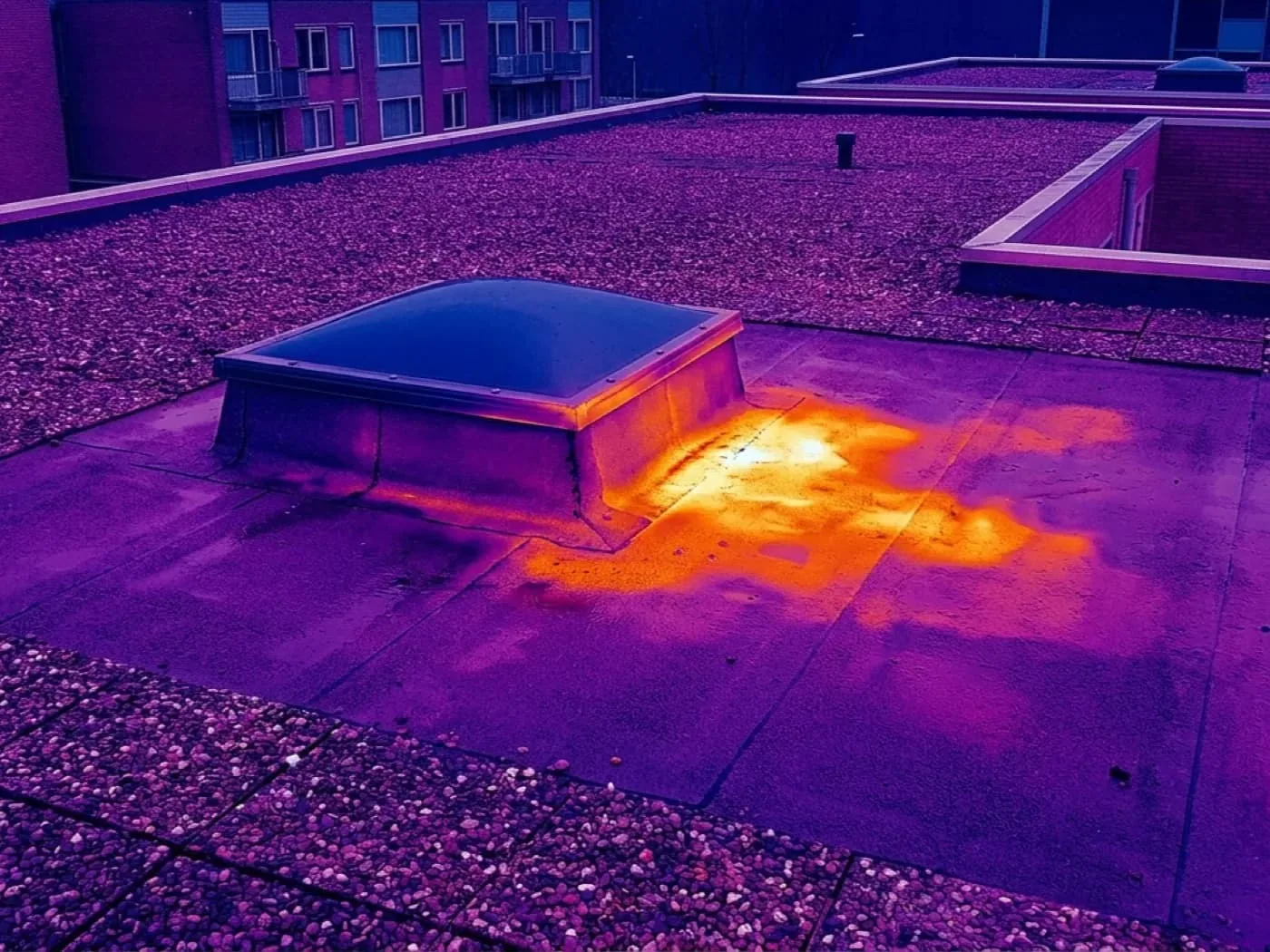
A showroom ceiling is a finished surface, often with lighting and signage hung from it, so a leak that goes unseen does expensive damage. An infrared moisture survey on a clear evening maps wet insulation from the roof side, and core cuts confirm the findings. Nothing inside the building has to move.
The map is dated and filed, with the showroom and bay sections identified. If the survey finds limited wet areas, the repair is a cut-out and patch. If it finds widespread moisture, the record supports a larger scope. Roof drains are tested and logged as well, since a slow drain over a showroom is the sort of finding that prevents a future emergency. A hose test at each drain shows how fast it clears, and a drain that backs up goes into the record with a photograph so the plumbing trade can be called before the next heavy rain.
What does the 2024 storm record mean for a dealership?
On May 22, 2024 an EF-2 tornado hit Temple with peak winds near 120 mph, according to the National Weather Service, which listed restaurants, shops, banks, and strip malls among the damaged buildings. Winds estimated at 80 to 90 mph blew in straight lines across the city, and a separate EF-1 tornado spun up that evening near Little River-Academy. That is regional context. It is not a finding about any dealership.
A dealership is often a wide, low building with a long frontage and canopies. The review concentrates on the edges: parapet caps, fascia, canopy edges, and the membrane edge, along with rooftop equipment. After a wind event we compare against earlier photographs and mark what moved. Interstate 35 runs directly through Temple and Loop 363 encircles it, and a dealership on either frontage is seen by traffic all day, which makes loose trim a visible matter as well as a roofing one.
Which roof systems fit a dealership building?
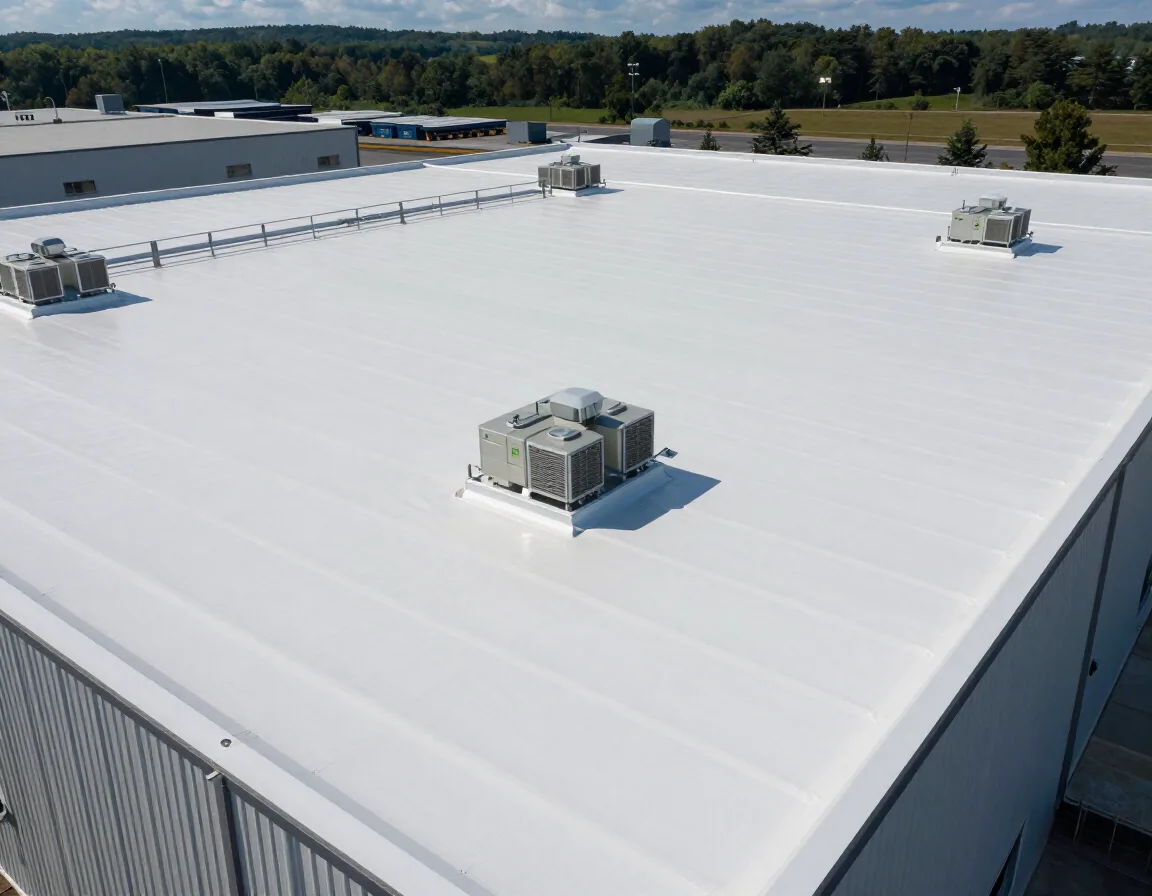
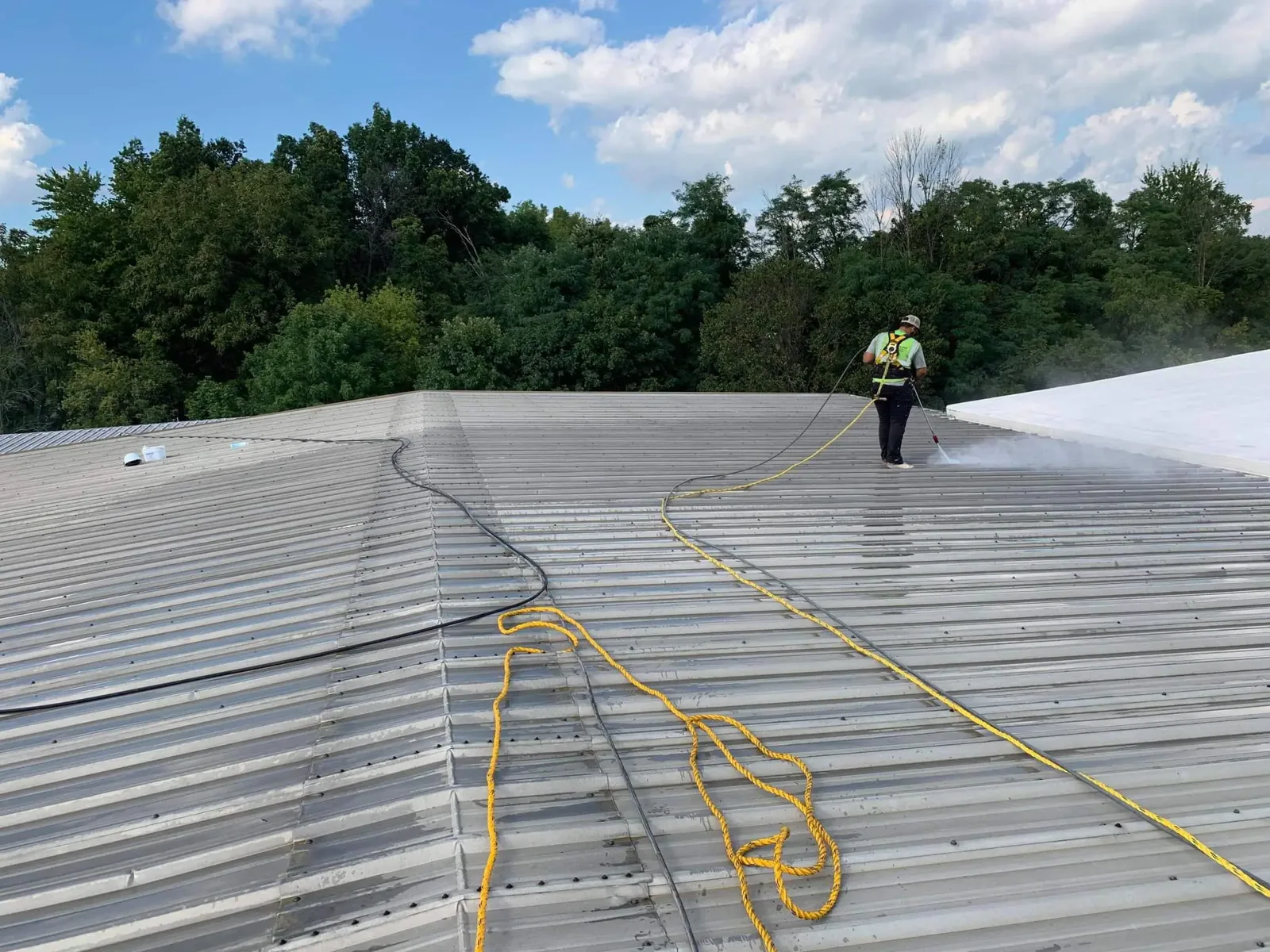
The common choices are reflective single-ply membranes such as TPO over insulation, or a metal roof on a service building. A white membrane helps with the heat load on a building with large glass walls. Seams are welded, and flashings are detailed at each transition between roof levels.
When a roof is sound but worn, a roof recover can add a new membrane over the old one, avoiding a full tear-off above a showroom that has to stay open. If the insulation is wet, tear-off becomes the practical path. The scope names the reasons and the cost drivers: area, penetrations, wet insulation to remove, access, and work hours. A manufacturer warranty on a new roof needs records, and roof warranty management keeps them together.
How does a dealer group rank its stores?
A group with several stores needs one rating sheet. Membrane and seam condition, flashings at transitions, canopy edges, drains, and moisture are scored on one scale, and stores sort into repair now, monitor, and plan for replacement. The photographs travel with the ranking, so a group facilities manager can see conditions without a visit.
Stores in Temple and along the Loop 363 corridor are compared on the same sheet. A dealership sharing a roof style with a big-box retail store follows the same plan, and one with a large service building reads like flex industrial space. Permits are handled by the city's building department under the International Building Code, and the permit office names the edition in force.
Commercial Roofing Questions
Who decides whether the showroom stays open during a leak?
The general manager, based on where the water is and what is below it. We report where the opening is, whether the dry-in is secure, and what weather would test it. If the area is clear of vehicles and customers, the showroom can stay open.
Can a dealership roof be replaced while the store operates?
Usually, in phases. Sections are opened and closed the same day, noisy tasks are timed away from peak hours, and customer entrances stay clear. Over the service bay, the plan protects lifts and vehicles. The dealership approves the plan before work starts.
What is a holding repair for a dealership?
It is a stopgap that keeps water out at one spot. We record the area, the materials, and the date, and we say what remains open. Permanent work comes later, after the survey.
Why do canopy edges matter?
Canopies at service and delivery entrances are exposed on three sides and take wind first. Their edge metal and drains also discharge water near customers. We check fasteners and gutters, and the record notes anything that needs securing.
Does a white roof help a glass-heavy building?
It reduces the heat load at the roof, which helps cooling equipment. It does not fix the heat coming through the glass. We record the surface temperature before and after, so the owner sees the change on that building.