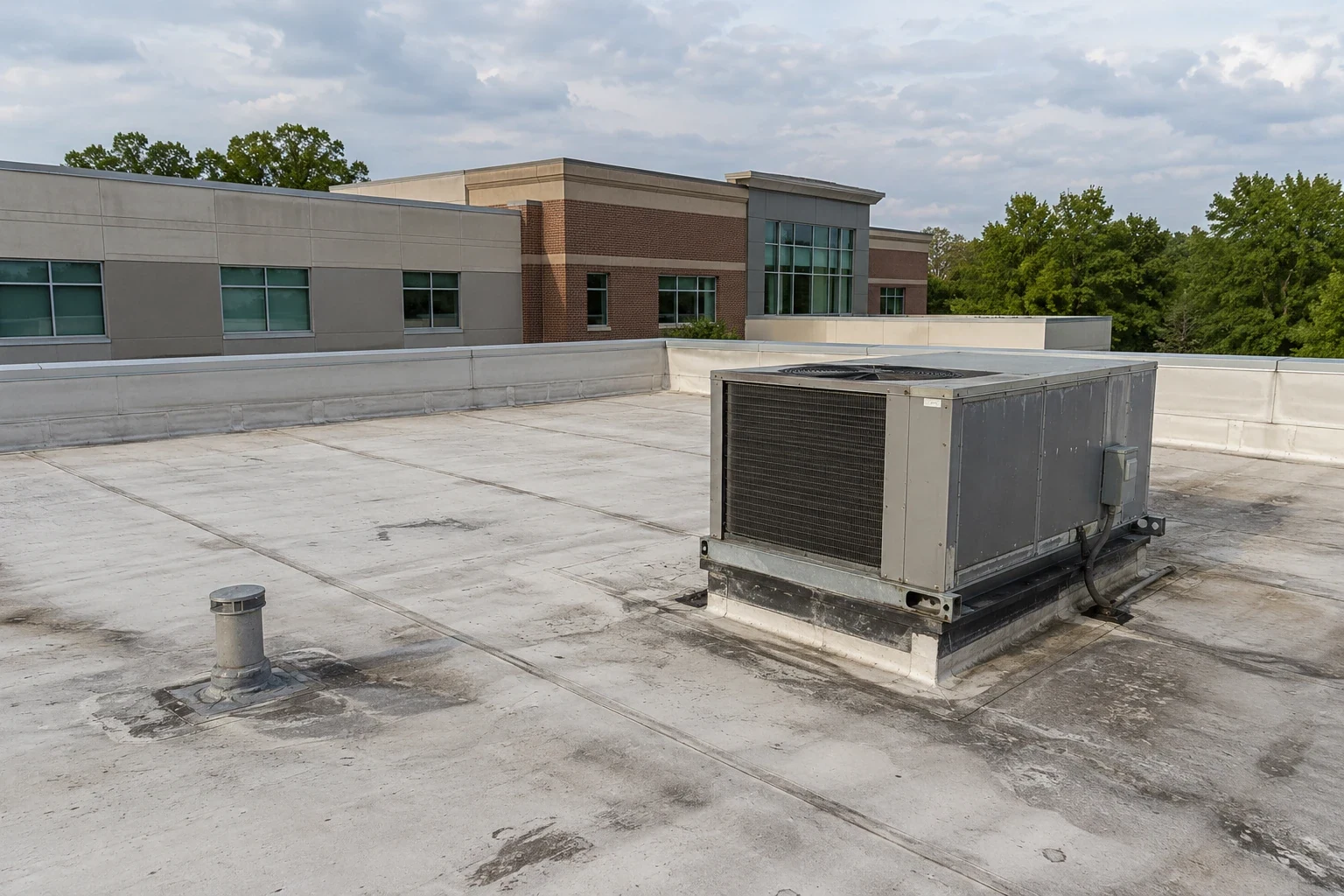
Office Building Roofing
A ceiling tile stained brown on the top floor is where an office roof problem usually reaches the manager, and the first decision is whether tenants stay in the suite or move out of the way. Office roofs are quiet until they fail. They carry the building's cooling equipment, and a leak at a curb can drip onto a conference table, a server closet or a tenant's furniture. In Temple, TX property managers and asset managers with office holdings are the people on that call, and the question behind it is who pays for what, tenant or landlord.
We triage in order: stop the water, record what failed and set the permanent scope against the lease calendar and the capital plan.
What fails first on an office roof?
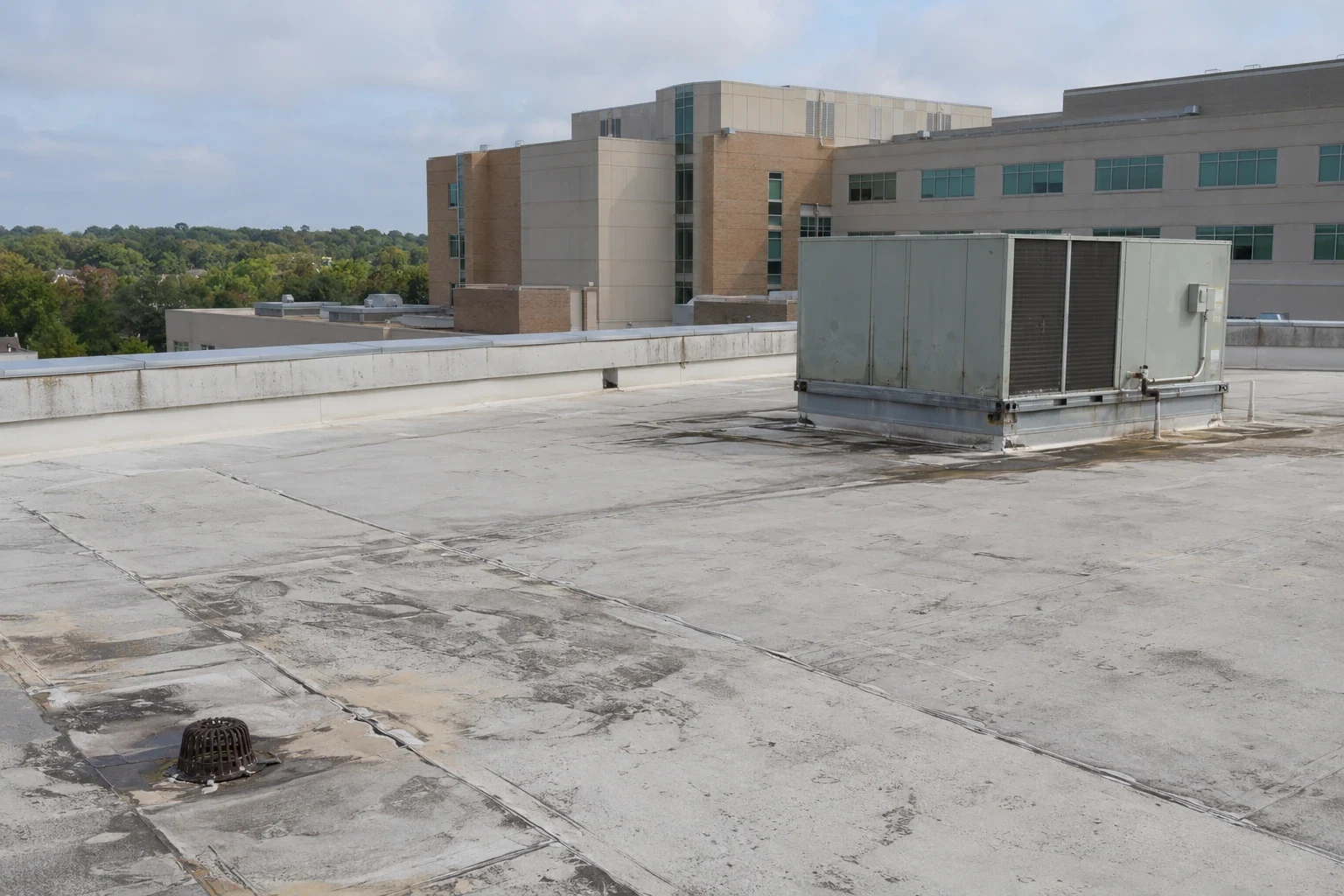
Rooftop units and their curbs. Every packaged air-conditioning unit sits on a curb, with refrigerant lines, electrical conduit and a condensate drain passing through the roof. Technicians service the units, tools are dropped, panels are removed and replaced, and the flashing around the curb works loose. A condensate line that drains onto the membrane stains it and wears a spot.
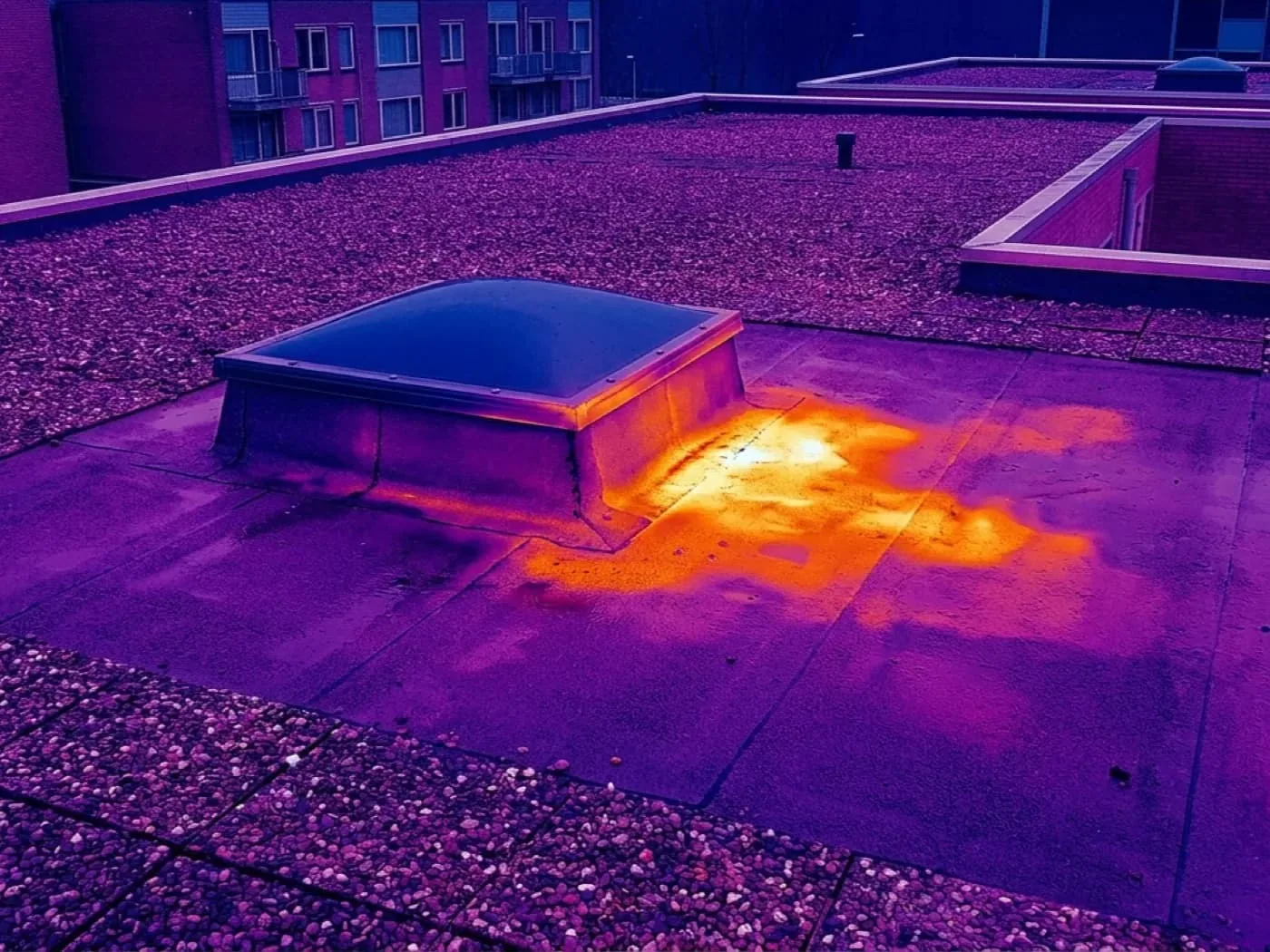
Drains and parapets are next. Many office roofs are low-slope with perimeter parapets and a handful of interior drains or scuppers, and a clogged outlet lets water pond against a wall. The intake record numbers each unit, each penetration and each outlet on the roof plan, with a photograph, and it ties the defect to the suite below when a stain gives a clue. Skylights over atriums or lobbies, where the building has them, are checked for cracked domes and failed curb gaskets, since a leak there lands in the most visible space in the building. A hospital roof and an office roof share many rooftop-unit details, but a hospital works under infection-control rules that an office does not.
How are tenants kept informed and protected?
Through the property manager, in writing, before the crew arrives. Notices go out with the dates, the hours for noisy work and the areas that may be affected. Interior protection goes up under open sections, and the crew keeps hoists and dumpsters away from the main entrance and the parking nearest the door.
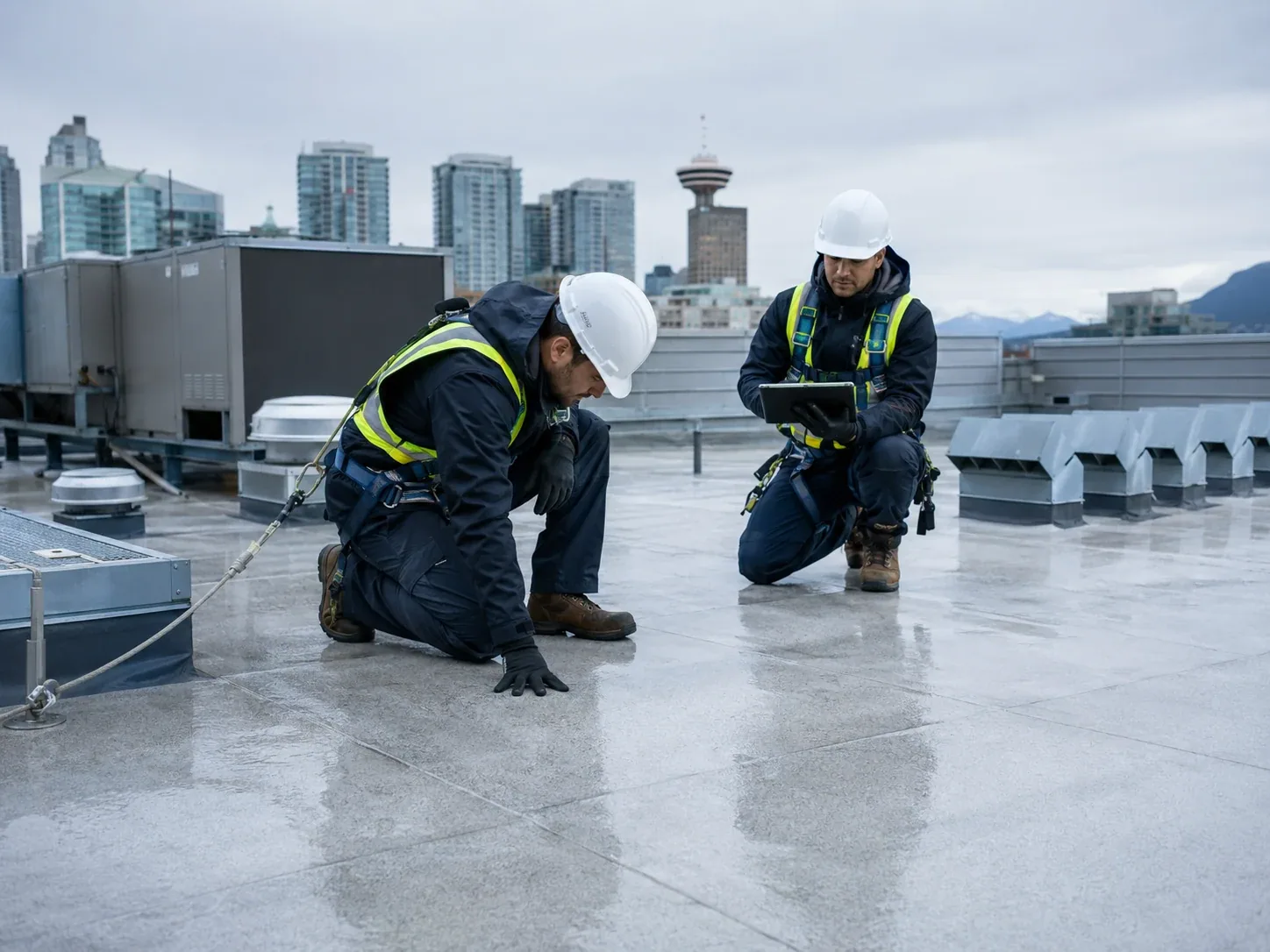
For leaks, we keep a short log of the suite, the date, the weather and the stain, and add it to the intake record. A pattern across suites points to a roof source, while a single stain may be condensation or a plumbing line. That log helps a manager assign cost correctly and helps an owner decide whether repair or replacement is the better spend. Photographs of the ceiling below, taken with permission, tie the roof findings to what tenants see and give the manager something concrete to share with them.
How do lease dates and the capital plan shape the work?
The roof schedule follows the lease calendar. A tenant renewing in the fall may be more patient with noise in the spring, while a tenant opening a new suite wants the ceiling dry before fit-out. We ask for the lease dates, the planned renovations and the owner's hold period at the first meeting, then place the roof work where it does the least harm.
For capital planning, the record gives the owner a replacement window, the cost range and the maintenance that extends it. Offices along Interstate 35 and Loop 363, and those near the hospital district, share Temple's weather and are compared on the same scale. An owner who sees the numbers can decide to repair this year, restore next year or replace in three, with the evidence at each step.
What changes for downtown office and mixed-use buildings?
Santa Fe Plaza opened in Downtown Temple in October 2019 with a 34,000-square-foot office development at the historic Santa Fe Depot, and the City Center project turns the Hawn Hotel, Arcadia Theater and Sears Building, roughly 85,000 historic square feet, into residential and retail space. Downtown business owners can apply for incentive grants through the city's Strategic Investment Zone. The roof of each of those buildings is something the survey establishes. Older downtown structures often have several roofs, parapets and masonry walls, and each junction needs its own detail.
Access is tighter downtown. Street staging, sidewalks and adjacent buildings shape the plan, and a Downtown Temple job often needs a lift or a short crane lift in place of a ground-level staging yard. The plan lists the permits, the street closures and the notices to neighbors.
How do we decide between repair and replacement?
With evidence. An infrared moisture survey and core cuts show the insulation, and a commercial roof inspection lists the defects. If the insulation is dry and the membrane flexible, a repair or a restoration holds. If it is wet across large areas, replacement is the answer. A roof recover sits between the two when the deck and insulation allow.
The scope sets the options beside the capital plan. A building to be sold in two years needs a different answer than one to be held for twenty, and the record shows what each path costs and what a buyer's inspector will find. Where a building has been repaired many times, the survey counts the patches and marks them on the plan, because repeated patching in one area suggests a cause that no patch has addressed.
What does a holding repair buy an office owner?
A defined period of dry suites. It could be a re-flashed curb, a patched seam or a new drain, with the date it should be reviewed. After the spring storms, a short check of the repaired areas is part of the dispatch window. May is Temple's wettest month at 5.4 inches, so the record is most useful when it shows what the roof looked like before the rain. Repairs done in spring are rechecked in late summer, when heat has had its turn at the new sealant, and the second photograph goes beside the first in the file.
How are office roofs ranked in a portfolio?
By tenant exposure and condition. Roofs with active leaks over occupied suites come first, then those with wet insulation, then those with aging surfaces. An owner with an office building, a medical office building and a retail center can see all three in one list, along with the alternatives to a like-for-like replacement, such as TPO. The report ends with the next decision and its date. Offices near the hospital district may share exposure with medical tenants, whose tolerance for noise and dust is lower, and the ranking notes it.
Commercial Roofing Questions
Who pays for a roof leak in a leased office suite?
The lease decides, not the roofer. We document the cause, location and cost so the landlord and tenant can assign it, and the log of dates and weather helps.
Can roof work be done without disturbing tenants?
Mostly. Noisy steps are scheduled for agreed hours, interior protection goes up under open areas and notices are issued in advance. Some work, such as crane picks, needs short closures of parking or entrances.
Why do curbs leak so often on office roofs?
Technicians and weather work the flashing loose over years. A failed corner or cracked sealant at a curb admits water directly above the ceiling.
How does a downtown building differ from a suburban office roof?
Access and neighbors. Street staging, lifts and closures replace the open yard, and older masonry walls and parapets add detail work.
What does the roof record give a buyer or lender?
Dated photographs, survey results, repair history and the replacement schedule. It shows the roof's condition and what has been done to it.