Metal Roof Retrofit and Restoration
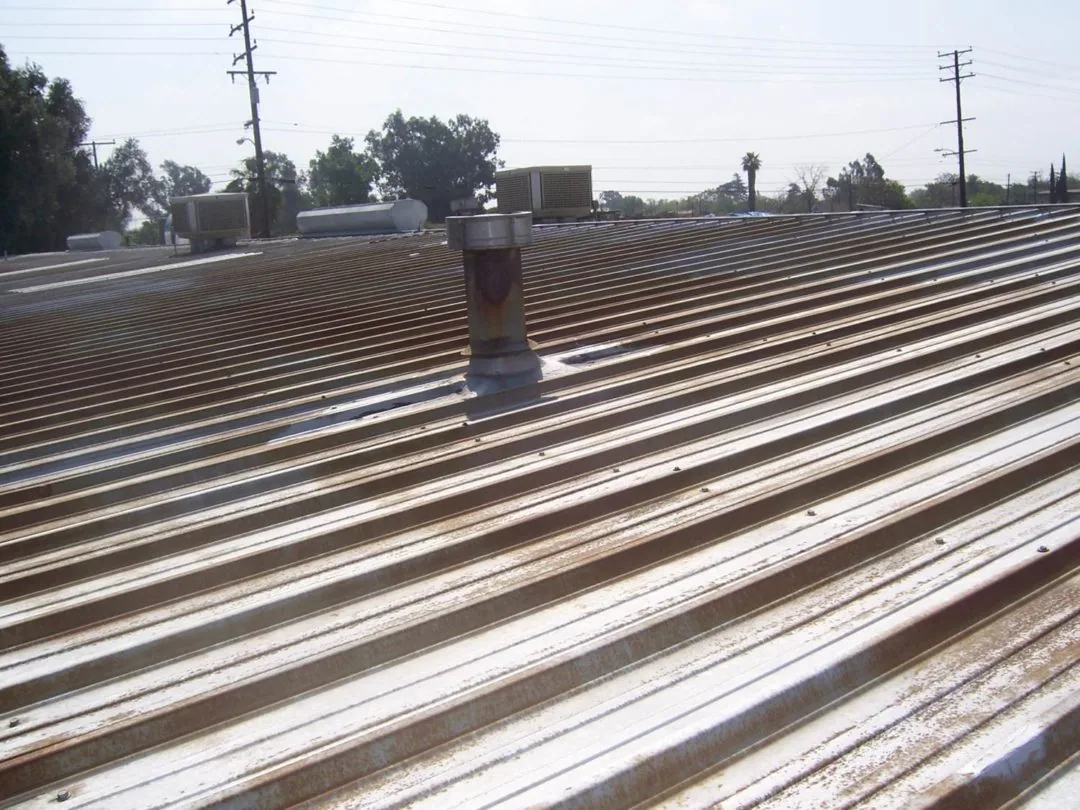
On an exposed-fastener metal roof the failing part is a screw, and a building can have thousands of them. Each one passes through the panel with a rubber washer, and each one is a potential leak the day the washer cracks or the screw backs out. The person who has to decide what to do about thousands of small failure points is the asset manager, and in Temple, TX the decision comes up on any building whose metal panels still look serviceable from the road.
Triage begins at the fasteners and the laps. The make-safe step stops the active leaks, the intake record counts what is failing and the permanent scope compares restoring the roof with covering it.
Why do exposed fasteners fail?
Metal expands and contracts with temperature, and every cycle works a screw a little. Over years the screw backs out of the purlin, the rubber washer hardens in the sun and the hole around the shaft enlarges. Panels in Temple go through August highs near 95F, some eighty days above 90F in a year and about 26 freezing nights, and a panel gains and loses length through all of it.
The same movement opens laps. Panel side laps and end laps depend on sealant or tape, and the sealant ages. Water enters at a lap, runs along the purlin and appears far from where it came in. We count backed-out screws per section, probe the sealant at laps and photograph the failures against a numbered plan, so the repair quantity is known before anyone prices it. Screws installed into a purlin that has since rusted, or into the edge of a rib instead of the flat, fail first, and the pattern across the roof often shows which crew installed which section.
Can an exposed-fastener roof be restored?
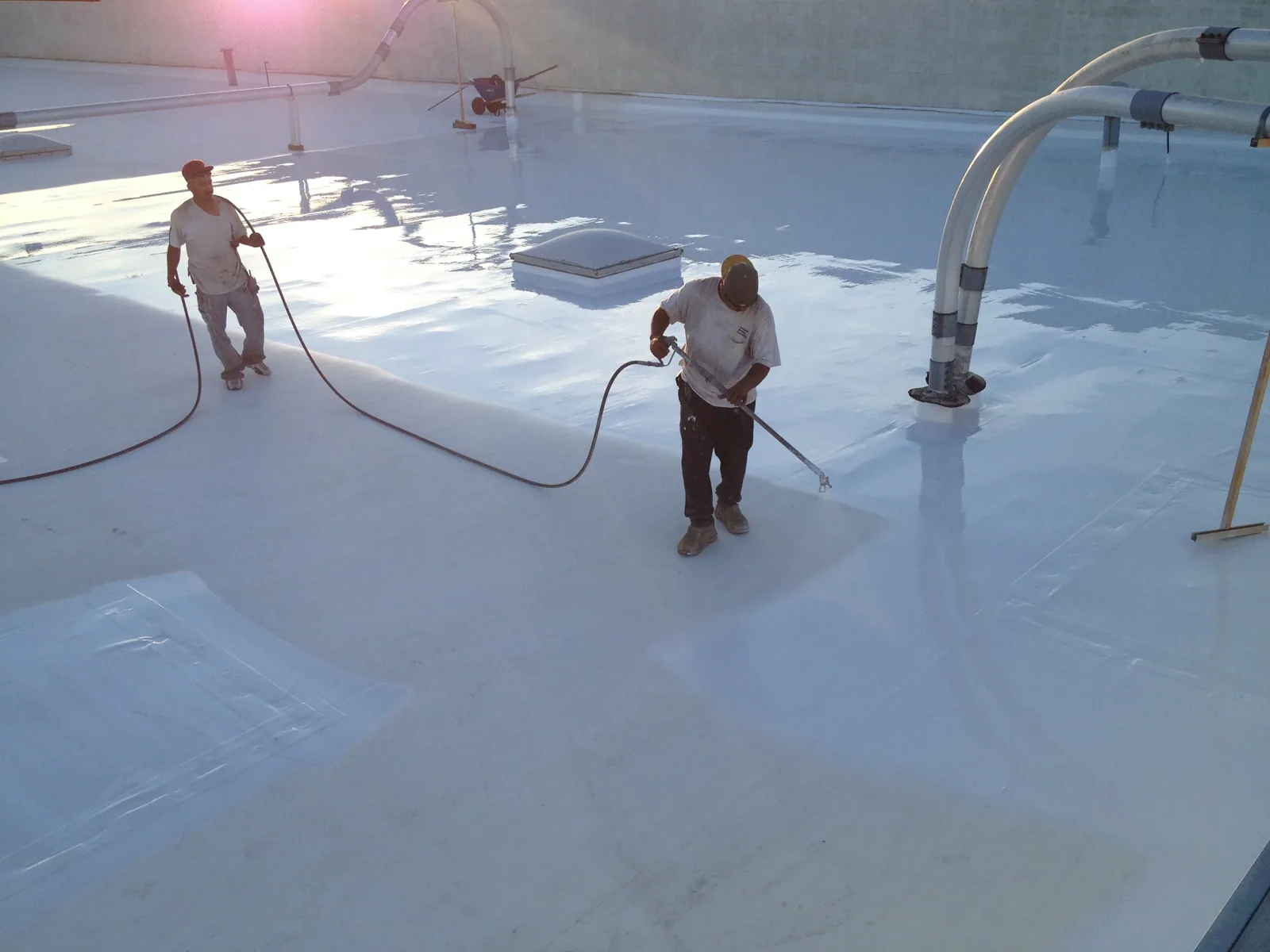
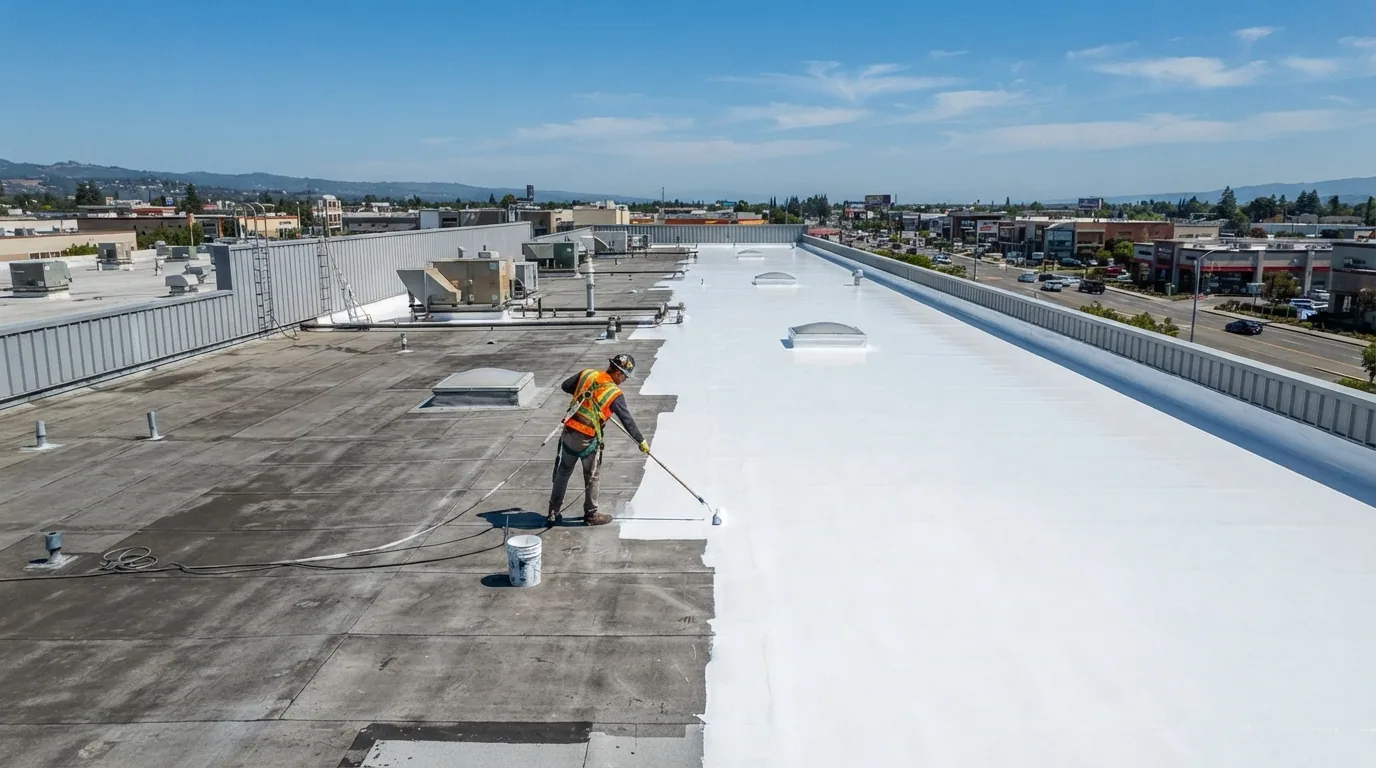
If the panels are sound, yes. Restoration usually means replacing the failed fasteners with larger or better-sealed ones, sealing the laps with butyl tape or mastic, reflashing penetrations and replacing damaged trim. A coating can follow: a silicone coating or an acrylic coating, applied after cleaning and rust treatment, seals small holes and reflects heat.
The panels set the limit. Rust through the metal, large dents or a panel that has lost its paint to the substrate cannot be coated back to health. A fastener pull test shows whether the purlins still hold, since a screw that spins in a rotted or corroded purlin will not stay tight. The record states how much of the roof meets each condition. Each coated roof gets a film check after application, with the thickness recorded at set points on the plan, so the owner knows what was applied and can compare it to the manufacturer's minimum.
When does a retrofit over the existing roof make sense?
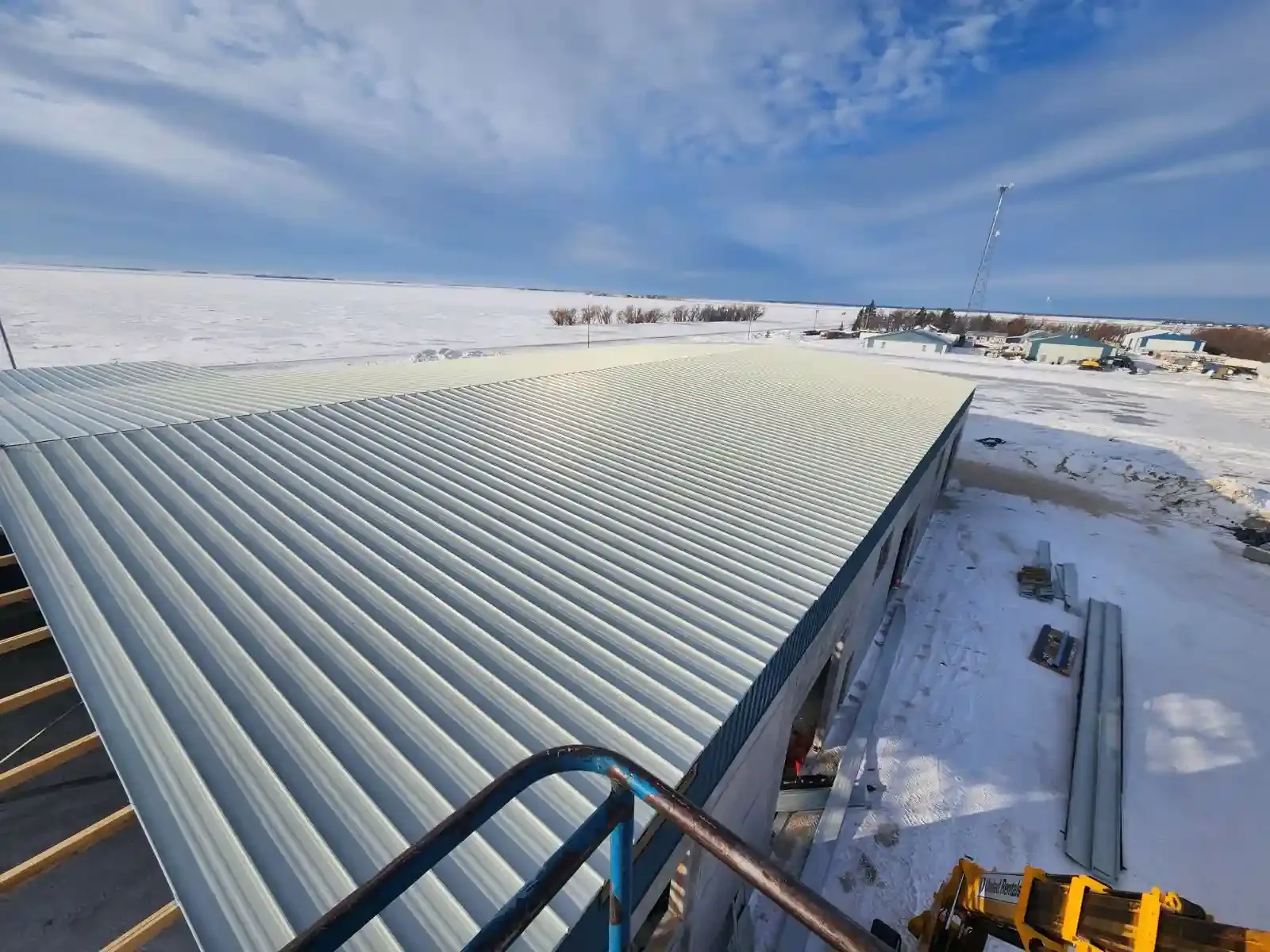
A retrofit installs a new system over the old metal, usually on sub-framing, so the building avoids tear-off, disposal and the interruption to the operation below. The new roof may be a standing seam metal panel, which hides its fasteners, or a membrane over a cover board. The old panels remain as a base, which adds some dead load and can raise the roof line at edges and penetrations.
The scope checks what the structure can carry, how penetrations and edges will be reflashed, and whether the added height creates problems with gutters, walls or equipment. A standing seam metal roof over a sound structure is a common choice. The plan shows the cost, the schedule and the weight of each option. Daylight tests, borescope views and selective panel removal at eaves show the framing condition before the sub-framing layout is fixed, and they reveal rust in places the roof surface hides. The owner receives that evidence before signing a retrofit scope.
What is under the metal panels?
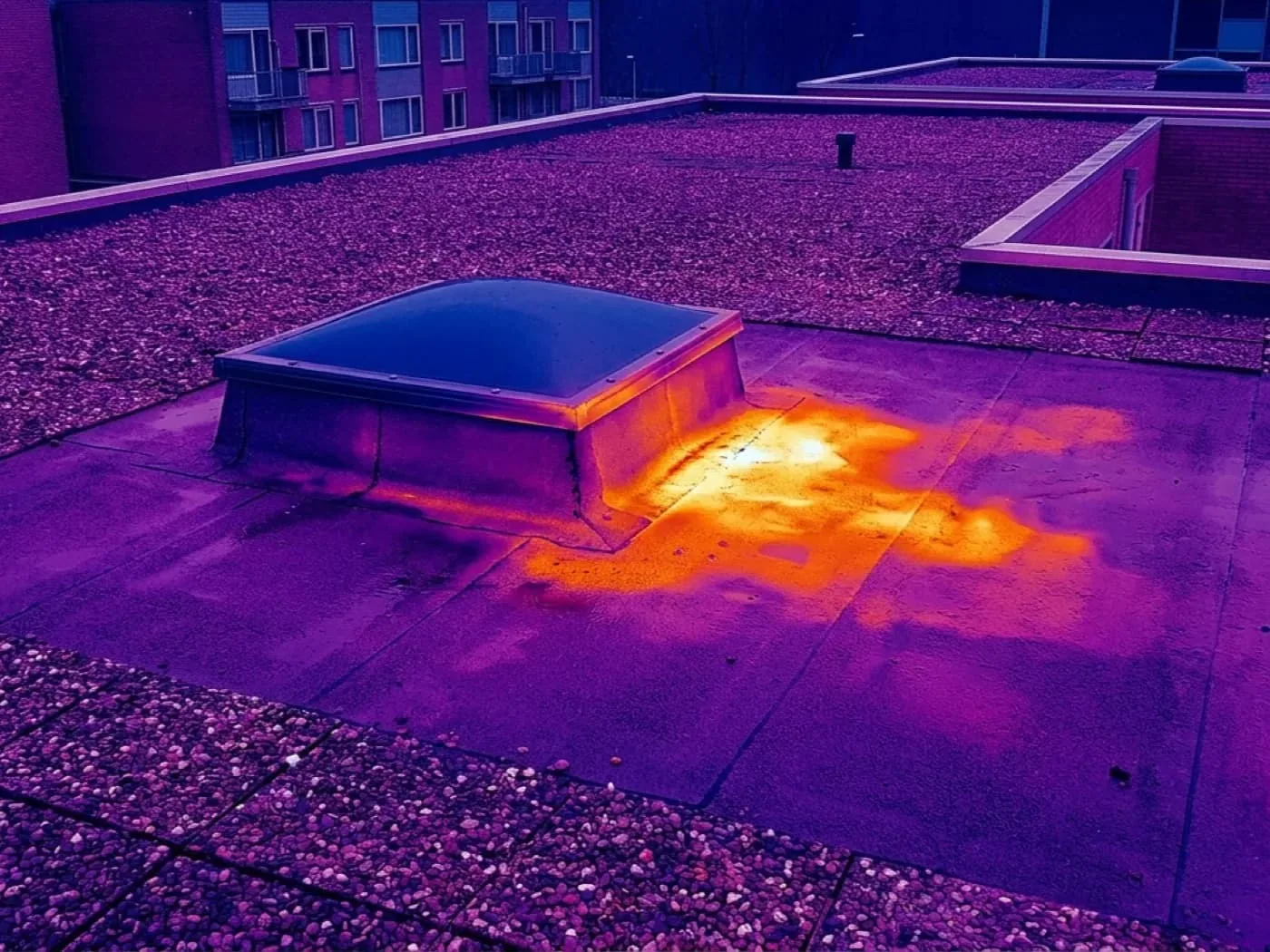
Many metal roofs have insulation under the panels, such as faced batts, rigid board or blanket insulation, and condensation or leaks can wet it. An infrared moisture survey from outside is limited on metal, so the inspection relies on interior checks, moisture meters at the underside and selective cuts. Wet insulation stays wet, and a retrofit over it traps the problem.
Condensation is a separate cause. Warm, humid air meeting a cold panel produces drips that look like leaks. The intake record distinguishes the two by timing and location, because the fix for condensation is ventilation or insulation detail, not more sealant. Where insulation sits against the underside of the panel with no air gap, a leak can soak it quickly, and the survey pays particular attention to eaves and penetrations where water first reaches it.
How does the roof do in a wind event?
Wind is the second test: the EF-2 tornado of May 22, 2024 damaged restaurants, shops, banks and strip malls in the city. Exposed-fastener panels depend on screw pull-out resistance, so loose fasteners reduce wind resistance well before a panel peels. Edges, ridge caps and eave trim are checked first.
After a storm, the make-safe crew tightens or replaces loose trim and covers open areas. The wind damage roof repair that follows replaces deformed panels and rebuilds the fastener pattern. Every action is photographed and logged by location.
What does a holding repair look like?
It is a defined fix for a known number of failed fasteners and open laps: re-screw with oversized fasteners, seal with tape, cover the worst panels with a patch and photograph each item. The record notes the date the work should be rechecked, usually before the spring rains. Spring rain, with May at 5.4 inches, is the first real test of the repair. A holding repair does not mean the roof is fixed; it means the building has a defined period of dry weather while the owner chooses between restoration, retrofit and replacement. The asset manager receives the cost of each path and the date after which waiting becomes more expensive than acting.
Where does a metal roof sit in the capital plan?
The ranking weighs fastener failure count, lap condition, corrosion and the building's use. A metal-roofed industrial building near the Temple Industrial Park or a warehouse along Interstate 35 is listed beside the roofs in the owner's other buildings, so the order of funding follows the severity, not the roof type. A warehouse roof that is leaking over stock ranks first. The report that closes the survey gives the asset manager three numbers per roof: the cost to restore, the cost to retrofit and the cost to replace, with the date each stops being a realistic choice.
Commercial Roofing Questions
How many fasteners fail before a roof needs more than repair?
There is no fixed number. When backout is widespread, purlins are corroded or panels are rusted, restoration stops being practical. The count per section, with pull test results, shows where the line sits for a given roof.
Is a retrofit cheaper than tear-off?
Often, because it avoids removal and disposal and keeps the building in use. It adds weight and may need framing, so the structure and the details decide whether it is the better value.
Can leaks in a metal roof be condensation?
Yes. Warm humid air meeting a cold panel can drip. The inspection compares timing with weather and checks the underside for staining, because condensation is solved with ventilation or insulation, not with sealant.
What does a coating do for an old metal roof?
It seals minor holes, stops surface rust and lowers roof temperature. It does not fix structural problems, large rust-through or loose purlins, which are addressed first.
How is a retrofit scheduled around operations?
Framing and panels go on from the outside, so the interior stays in use. The plan fixes the crane pick, the staging area and the hours for noisy work, and each section is closed before the crew leaves.