Copperas Cove
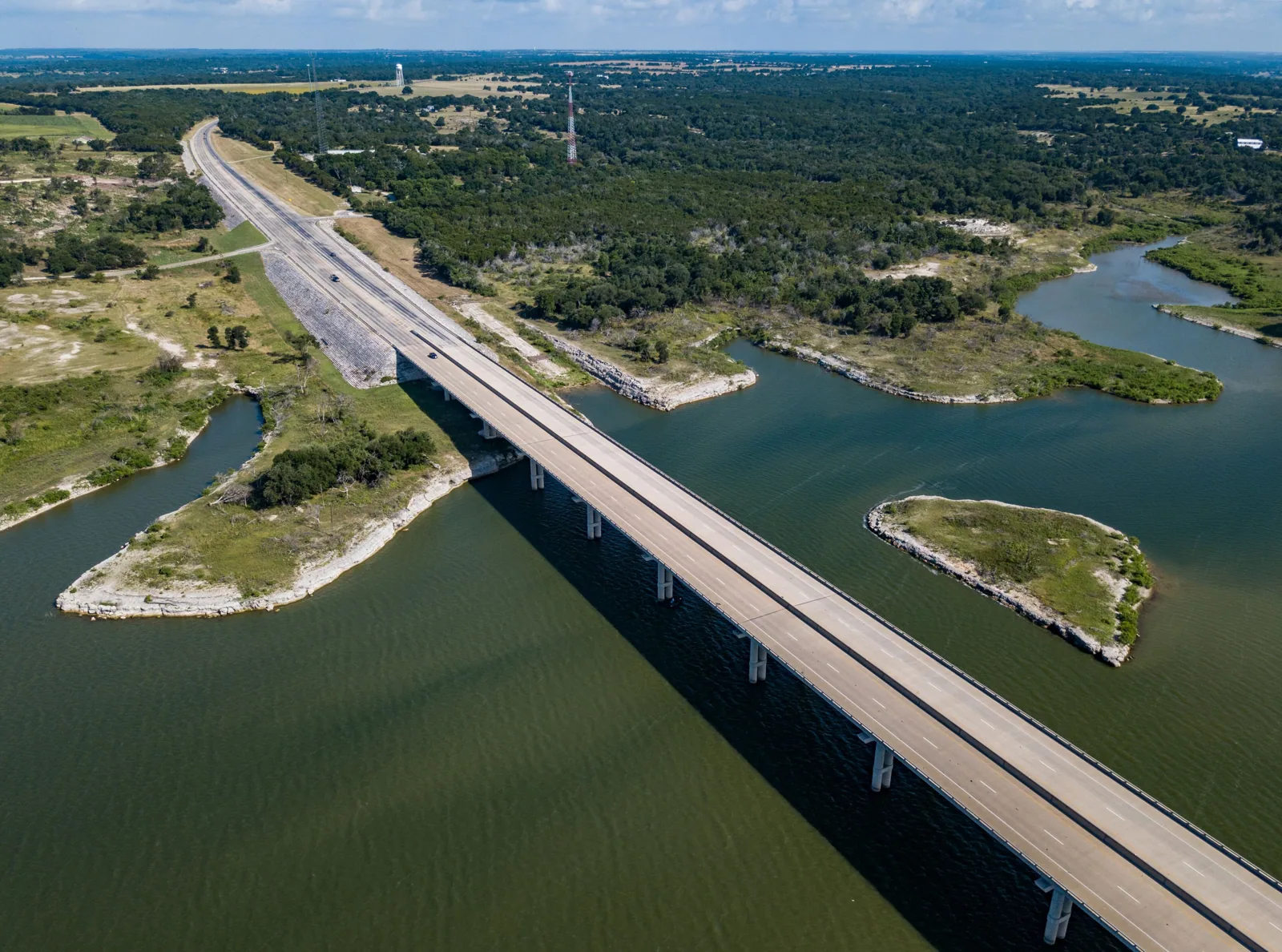
Most of the commercial activity in Copperas Cove, TX runs along US 190, and the city counted 36,670 residents in 2020. Its largest employers include Fort Hood personnel, Copperas Cove ISD, GC Services, and H-E-B. I-14 and US 190 link the city to I-35 in Belton, about 28 miles east. A city strung along one road has its roofs strung along it too, and the first question for an owner on that road is which of the buildings they care for is the weakest link when the next storm crosses it.
What fails first on a roadside roof in a mid-size city?
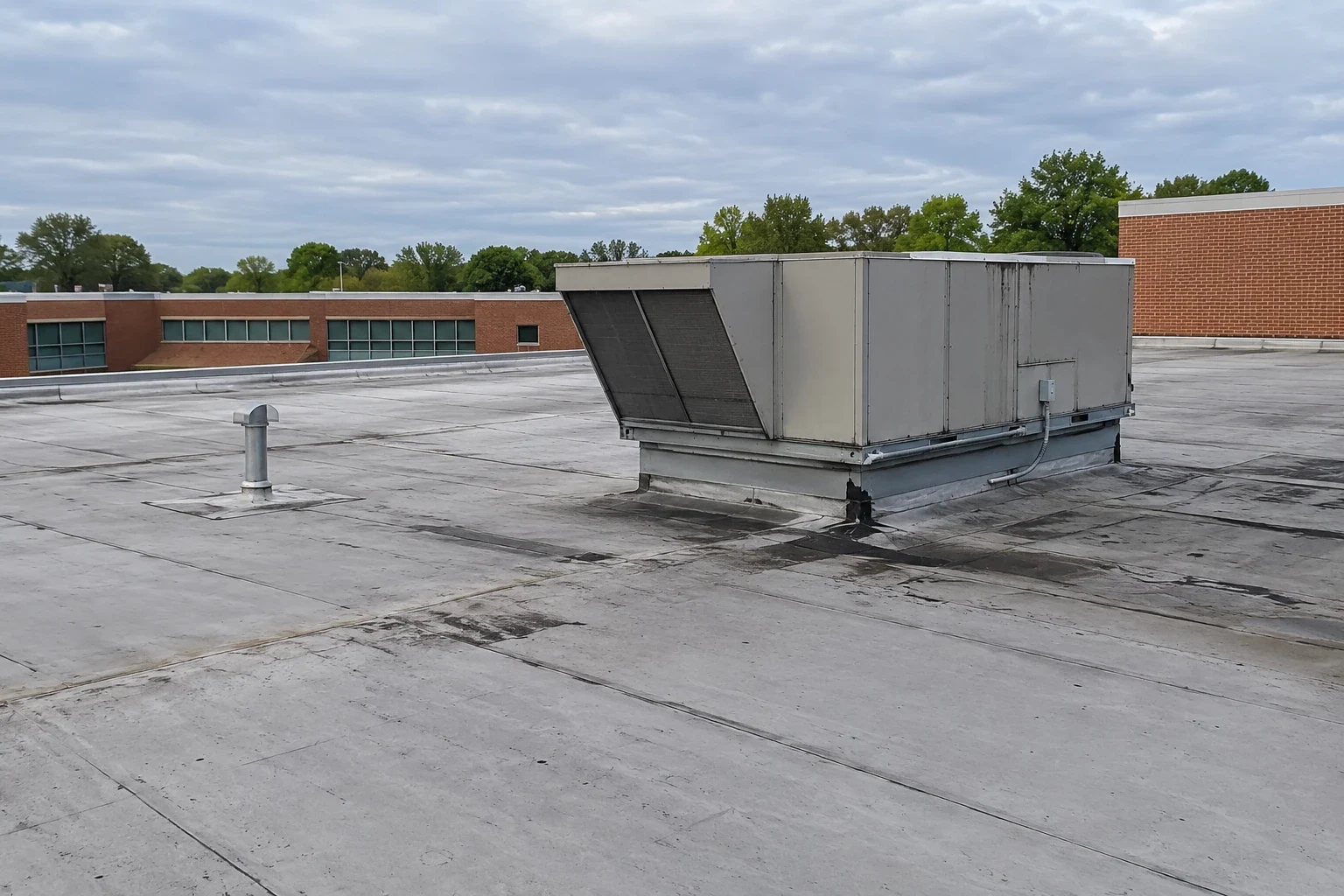
Edge metal, rooftop unit connections, and drains. A roadside building takes wind on its open sides, so coping and trim loosen first. Rooftop units, each with a curb and a flashing, add penetrations as tenants change. Drains and scuppers on a long flat roof carry water toward a few outlets, and one blocked outlet puts a pond over a whole section.
Each roof section is walked on its own: seams, flashings and penetrations photographed, sealants probed, drains counted, and every rooftop unit tied to the space it serves. From May onward heat works on sealants and seams, and Temple's normals, near 95F in August with some 80 days a year past 90F, give the regional baseline. The sketch fixes each penetration and patch in place, so the next walk shows what changed.
Long flat roofs need a second look at their scuppers. A scupper set a little high leaves a permanent pond behind the parapet, and one set low can let water stream down a wall. We measure the sill height, check the opening for debris, and follow the discharge to see where the water lands. Where a downspout feeds a lot or a curb, we note whether the water can leave the site, since a roof that drains into a pond of its own makes a poor neighbor.
What does the first hour look like at a grocery or a school?
The employers on that list point to two different first hours. At a grocery building, water above food is a food-safety matter: staff cover or move product while the roof crew closes the opening from above with a dry-in or sealed patch. At a school, the facilities office decides whether a hallway closes. In both cases the crew stays on the roof, photographs the opening before it is covered, and logs the room below and the materials used.
A holding repair is dated and tagged with what it leaves open. The owner or board then has two things on paper: the emergency step, and the permanent decision still ahead. The two stay in separate entries, so a quick patch is never mistaken for the finished job. Calls are taken at any hour, holidays included.
How does a school district plan around the calendar?
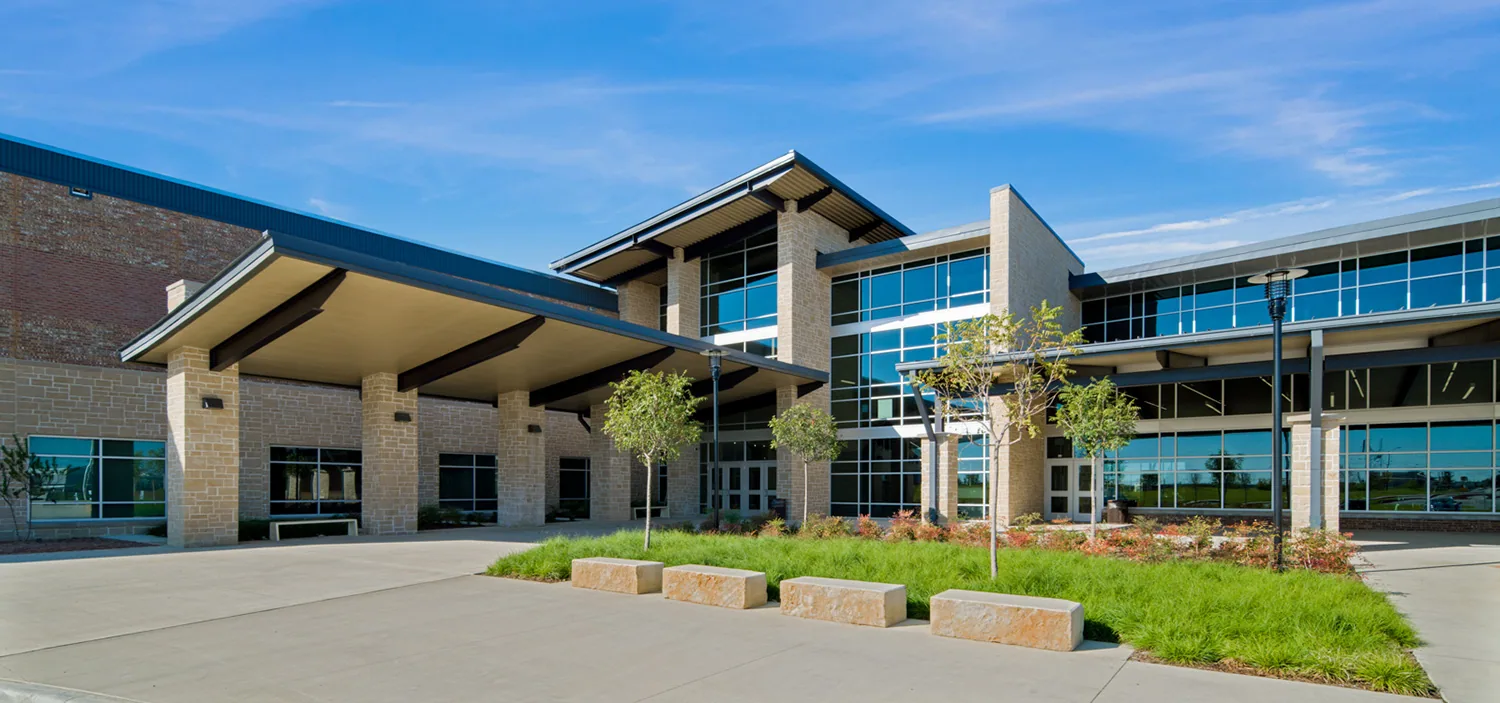
Copperas Cove ISD is among the city's largest employers, which makes school roofing a standing planning item. Roofs must be dry during term and workable in breaks. A condition survey well before summer lets a district price repairs and order materials. Each section is rated, moisture is mapped, and the scope carries measured quantities a district can bid.
A school district that uses one rating sheet across its buildings can rank them and fund the worst first. Dated photographs show whether a monitored roof is holding. If a district holds several campuses, the ranking becomes the capital plan, and the roof record becomes the evidence for each line in it. Because the work has to fit around students, the scope names the phasing: which sections open first, where the crews park, how entrances are protected, and who signs off each day. Fall protection and roof access are planned before the first visit, and the plan travels with the bid documents so every contractor prices the same constraints.
What do grocery and call-center buildings need?
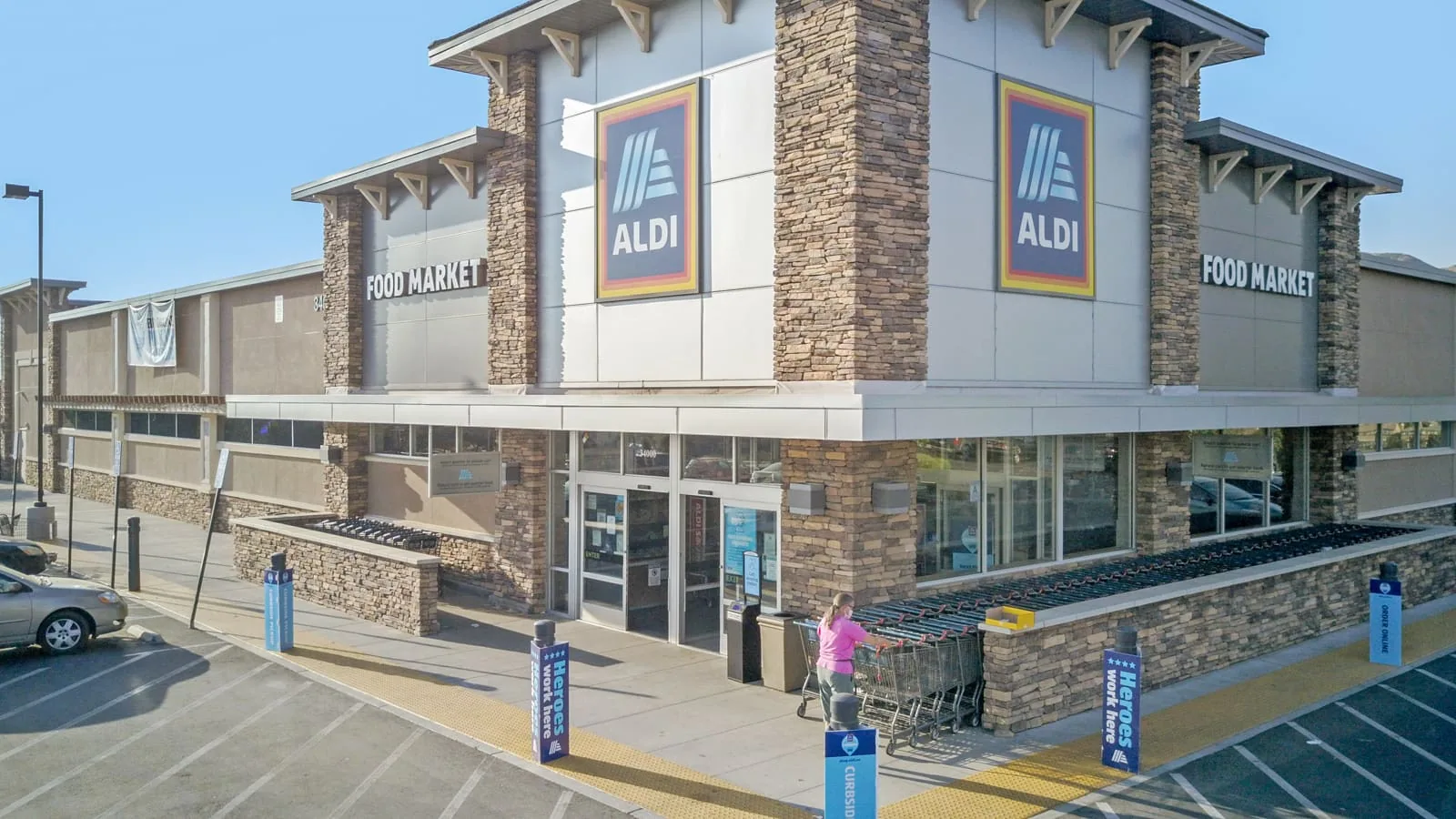
H-E-B is listed among the largest employers, so a grocery building is a reasonable roof type to plan for. A grocery store roof carries refrigeration condensers, air handlers, and the lines between them, each a penetration. Condensate that discharges onto the membrane keeps a spot wet and wears it down. GC Services is also named, and an office or call-center building shares an office roof's concerns: drains, rooftop units, and a ceiling that must stay clean.
These facts describe employers, not particular roofs. We ask the owner about use, age, and system on the first call. Whatever the answer, the walk records the same items: seams, flashings, drains, penetrations, and moisture, with dated photographs and a ranked list at the end. For an office building, the list also notes the ceiling and finish below each roof section, so a facilities manager can see which repair protects which workspace. A dry, sound roof may need only repair or a coating, while repeated failures over wet insulation move the scope toward replacement, and the report lists the measurements behind that conclusion.
How are hidden leaks traced in a long commercial roof?
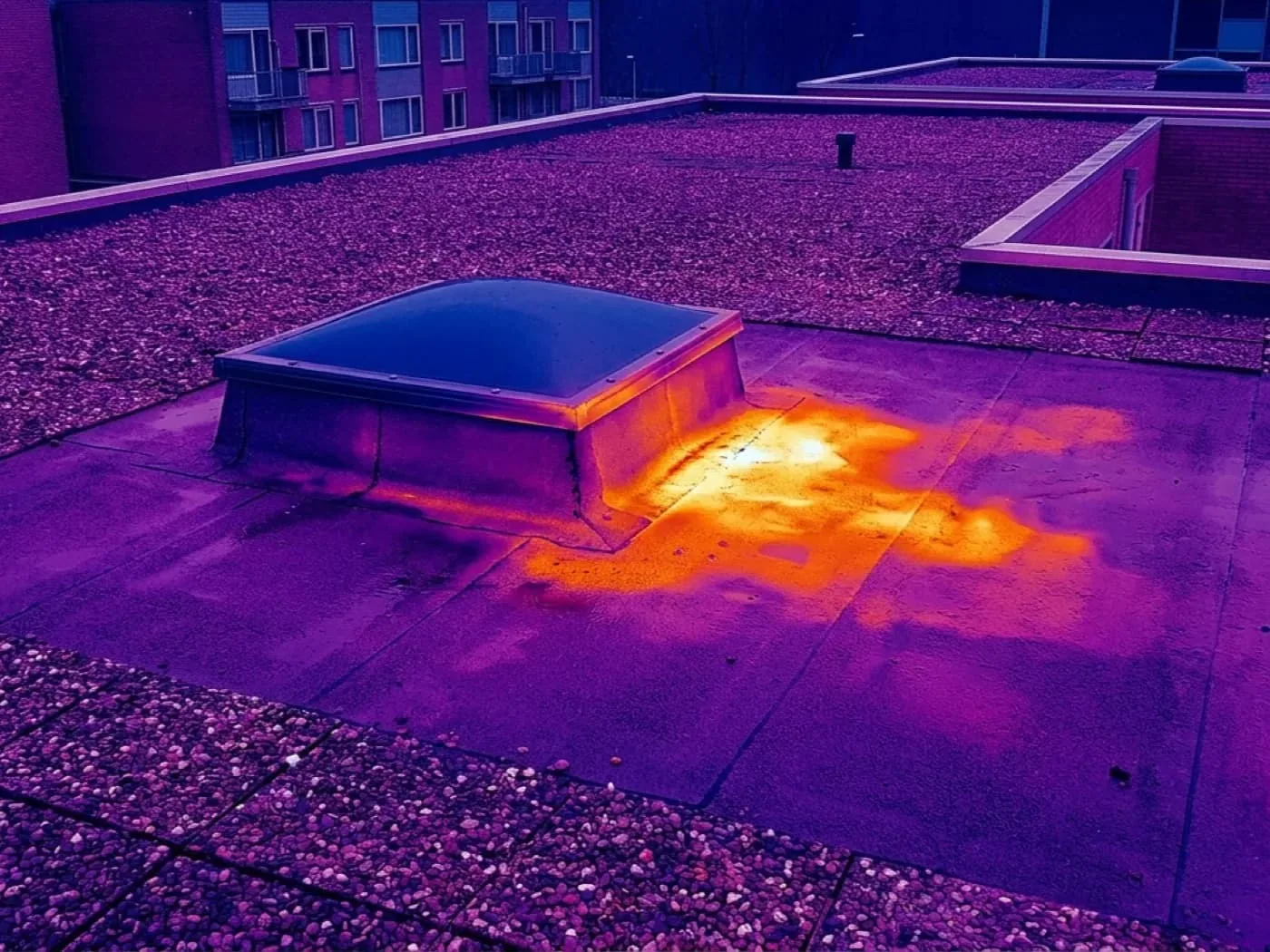
Water enters at one place and shows at another. An infrared moisture survey run on a clear evening covers the whole surface, and core cuts verify the damp spots. The map goes into the owner's file with its date, the repair is sized to the wet area, and a later survey shows whether the boundary moved.
For an owner with buildings in Copperas Cove and in Killeen or Gatesville, the maps feed a single ranking. Buildings with wide moisture rise on the list, and buildings that test clean stay on a monitoring schedule with photographs. A permit question goes to the local permit office, which names the code edition in force.
How does Central Texas wind enter the plan?
Temple's tornado of May 22, 2024 was an EF-2 at peak winds near 120 mph, and the weather service logged damage to restaurants, shops, banks, and strip malls there, with straight-line gusts of 80 to 90 mph over that city and a separate EF-1 near Little River-Academy that night. Copperas Cove is reached from I-35 in Belton by I-14 and US 190, so all of that is regional context for reading a roof, not a record of damage in this city.
Even so, it argues for a pre-season walk over coping, fascia, trim and rooftop unit covers, with a post-storm walk set against the earlier photographs. On a wind-damaged roof the perimeter is secured before anything else, the field comes next, and each finding goes on the sketch in a recommended order of repair.
Commercial Roofing Questions
How does an owner with a grocery building keep product safe during a leak?
Staff cover or move stock while the roof crew stops the water from above. We never enter the sales floor. The intake record shows the time and location of the dry-in, which helps the store's own food-safety file.
What does a district need from a roof survey?
A numbered list of roof sections with photographs, moisture readings, and a condition rating, plus a ranking and a scope with measured quantities. That is enough to price, bid, and schedule work for a summer break.
Does a holding repair commit a school district to anything?
No. It closes one opening so classes can continue, and the file states what it leaves open. The permanent scope goes out to bid on the district's normal calendar, so work that can wait for a break is not bought at rush prices.
How are visits to Copperas Cove scheduled?
Copperas Cove is roughly 28 miles from I-35 in Belton on I-14 and US 190. Visits are planned with the owner ahead of time, while an emergency call is answered at any hour with a dry-in and photographs first.
How do you handle a building on a busy road?
Staging, lifts, and material routes stay out of customer parking and fire lanes. Noisy work is timed away from peak hours, and sections are closed the same day. The plan is agreed with the owner before the first day.