Killeen
Killeen, TX had 153,095 residents in 2020, the 19th-largest city in Texas, and its top employers include III Corps and Fort Hood, Killeen ISD, Central Texas College, and AdventHealth Central Texas. A city that large can hold roofs in most categories an asset manager owns, and the first problem is not any one roof. It is knowing which of many roofs deserves the first call. A roof record that ranks buildings by exposure answers that before the storm, so that the first hour is spent on the right building.
What fails first across a large city's commercial roofs?
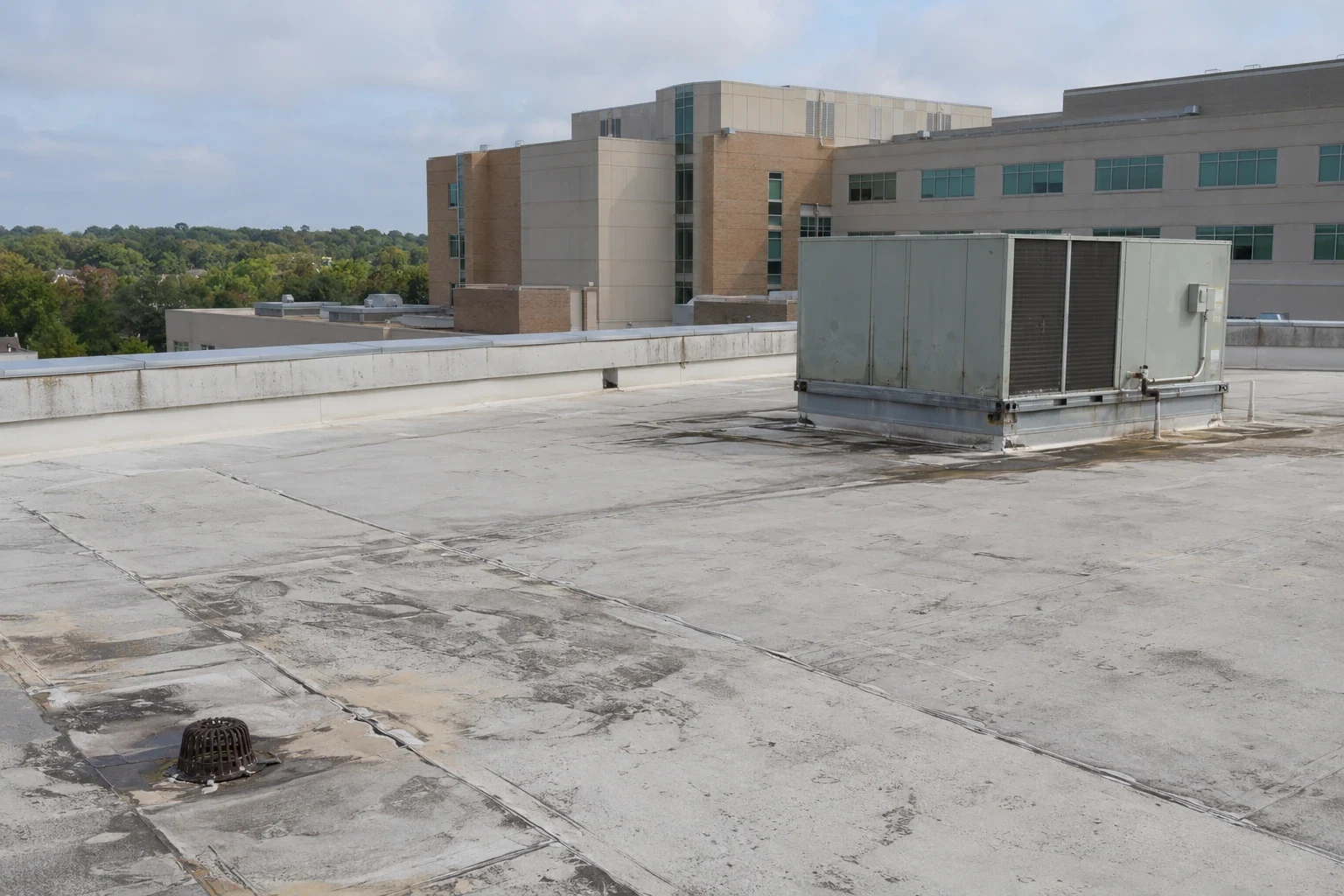
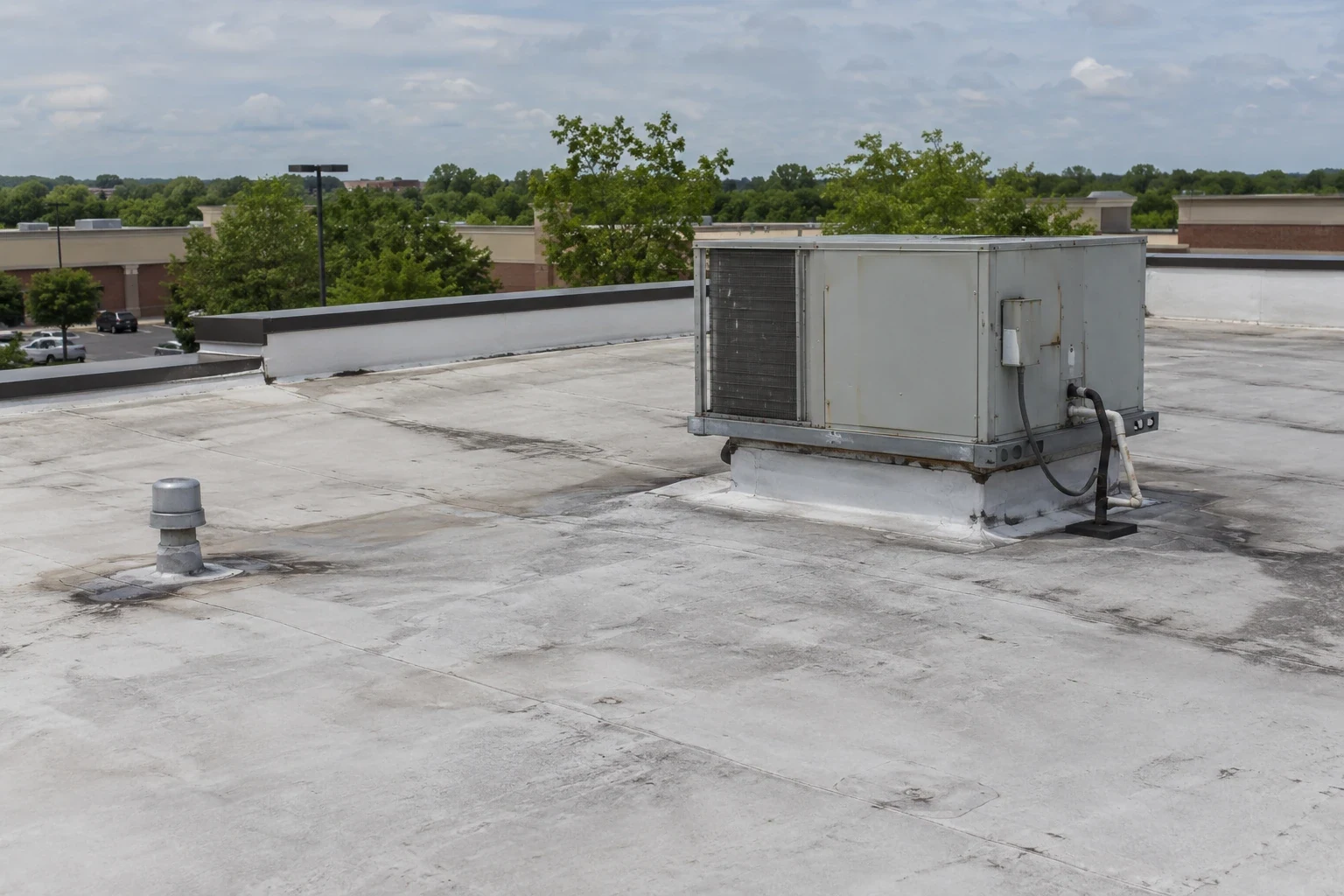
The same few details, repeated: flashings at walls and penetrations, drains and scuppers, edge metal, and the connections at rooftop equipment. Retail, school, healthcare, and housing roofs differ in scale but not in failure points. A defect found on one roof is a warning for others of the same age, installer, or design.
Every section is walked on its own, with seams and flashings photographed, sealants probed, drains counted and rooftop units matched to the rooms they serve. May starts the heat season for sealants and seams, and Temple's August highs near 95F, with some 80 days past 90F, set the regional baseline. For an owner with many buildings, the sketches and photographs become the common language across the portfolio, and the pattern of defects shows where to look next.
Scale changes the logistics more than the roofing. A large owner needs a single point of contact, one reporting format, and a schedule that sequences buildings by exposure instead of by address. We build the walk list by ranking, not geography, then group adjacent buildings so travel does not eat the day. Photographs are named by building and section so a facilities director can find any one in seconds, and every sketch uses the same symbols.
What is the make-safe step when many buildings are affected?
After a wide storm, the first hour is a triage call. Which buildings have water entering? Which have occupants at risk? Which can wait a day? From the roof, crews install temporary dry-ins or sealed patches in order of exposure, photographing each opening before it is covered. Each building's intake record lists the location, the materials, and the time.
Every holding repair gets a date and a list of what remains open. The permanent scope follows the survey, building by building, and the asset manager works down the ranking. Emergency stabilization and permanent scope sit in separate entries, so a rush on one roof does not set the price for the rest. Calls come in at any hour, and no arrival time is promised until we know where the crews are.
How do we find wet roofs across a large inventory?
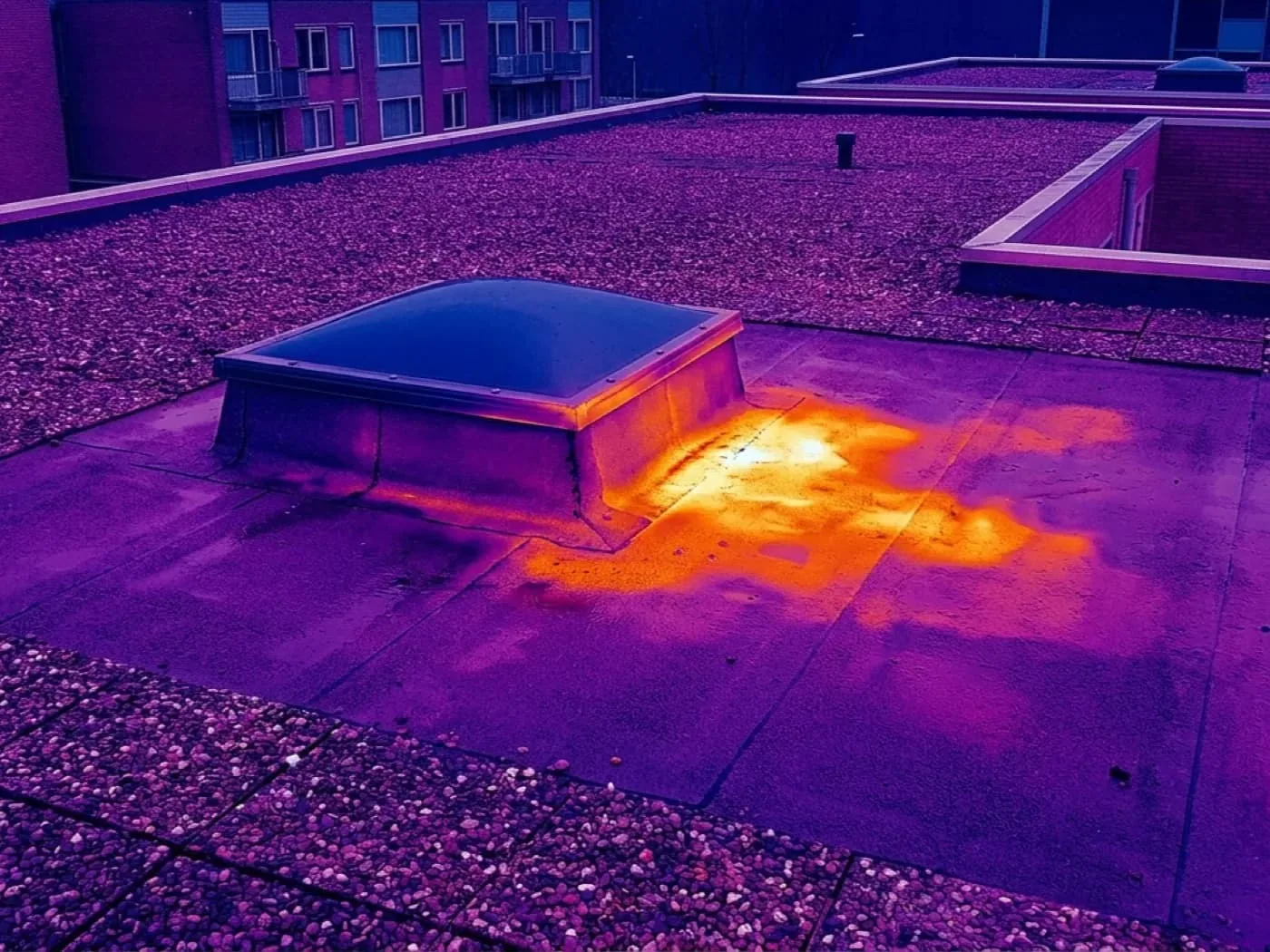
An infrared moisture survey reads a roof's whole surface in an evening, and core cuts at the suspicious spots confirm the findings. Across a portfolio, the surveys produce a ranked list: which roofs have the most wet insulation, which have the least, and which are clean. The maps are dated and filed with the building number, and later surveys show whether repairs held.
For a facilities director, the ranking is the tool for spreading funds. A roof with a few small wet areas is a repair. A roof with widespread moisture is a replacement candidate. A roof that tests clean goes on a monitoring schedule with photographs. The dated record lets the director explain each choice to a board, a lender, or a district office.
Which building types does a city like Killeen put on the list?
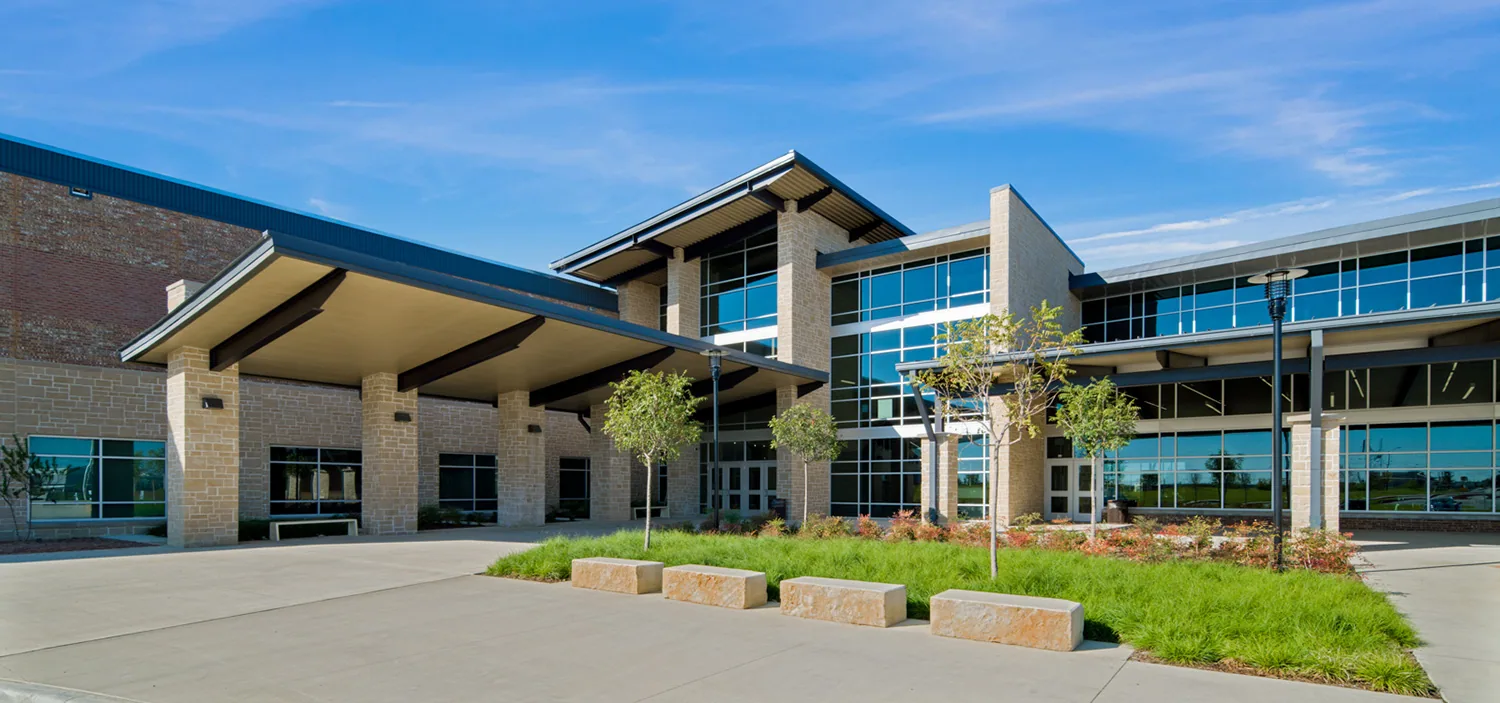
The facts name several. Killeen ISD and Central Texas College bring school and campus roofs, planned as in school roofing and college and university roofing. AdventHealth Central Texas brings healthcare, with the continuity concerns of a hospital roof. Killeen Mall is the city's main shopping destination and one of two regional malls in Bell County, which points to retail roofs like those in shopping center roofing.
None of those facts says what any particular roof is made of. They say what kinds of buildings an inspector expects to meet. Each building is rated on the same scale, so a school, a clinic, and a retail center can be compared, and an owner with a mix of them can see where the money is best spent. A school's roof, a clinic's, and a retail center's may all need work in the same year, and the ranking is what keeps the loudest complaint from setting the order. The Temple Building Department applies the International Building Code inside Temple, and the permit office in Killeen confirms the edition in force there.
How does the city's setting beside Fort Hood affect planning?
Killeen adjoins the main cantonment of Fort Hood, and Killeen Regional Airport, which offers commercial passenger flights, sits on Fort Hood. For a private building owner, that mostly changes the neighbors: a busy city with a large installation next door. Roofing on the installation follows federal criteria and access rules. Roofing in the city follows the ordinary path.
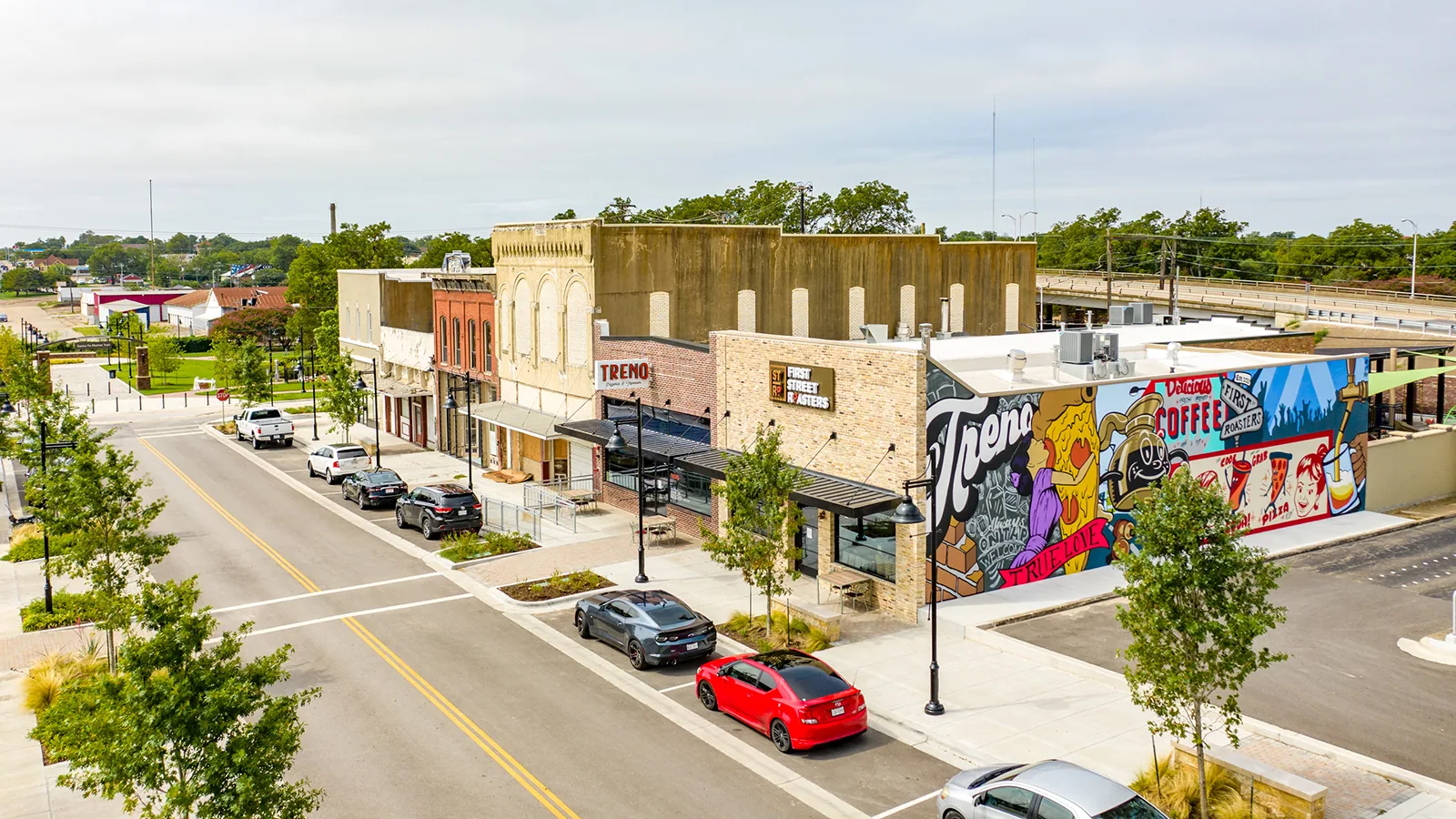
Owners with buildings in downtown Killeen, along the US 190 corridor, and in Harker Heights can keep one rating sheet for all of them. Work in those places is scheduled by cluster, so a crew visits adjacent buildings in one trip, and the first quiet week after a storm goes to the buildings that hold a hold point on the ranking, so nothing marginal stays unchecked.
What does the 2024 tornado record mean for a city this size?
The EF-2 tornado that hit Temple on May 22, 2024 was clocked near 120 mph. Its damage list included restaurants, shops, banks and strip malls, and the weather service estimated 80 to 90 mph straight-line gusts across Temple that day while a separate EF-1 began near Little River-Academy. Killeen adjoins Fort Hood, roughly 25 to 30 miles west of Temple, so all of it is regional context for reading a roof here, not a record of damage in the city.
Even so, it justifies a pre-season check of coping, fascia and membrane edges for loose fasteners, with rooftop unit covers checked for latches and straps. After a storm, earlier photographs are the comparison, and a wind-damaged roof is secured at the perimeter first.
Commercial Roofing Questions
How does an owner with many buildings decide which to call about first?
By the ranking. Buildings with active water entry or sensitive occupants go first, then those with the most exposure. A roof record that sorts buildings before a storm makes the order a known fact when the call comes.
What does a holding repair accomplish across several roofs?
It closes one opening on each roof and goes no further. Every entry records the area, the materials and the date, and says what is left open. Permanent scopes are priced building by building.
Do you promise an arrival time after a storm?
No. After a wide event the crews are working many calls, and where they are decides the answer. We take the intake call, record what failed, and tell the caller where the building sits in the order.
Can school and campus roofs be scheduled around terms?
Yes. Major work goes into breaks, and the scope is written early enough for bidding. Noisy tasks are timed for off hours, and entrances and walkways stay clear. The survey ranks sections so the worst are funded first.
How are healthcare roofs handled differently?
The plan starts inside. Infection control, air handling, and continuity set the phasing. The crew works from the roof, sections are closed the same day, and equipment shutdowns are planned in advance and kept short.