Gatesville
Gatesville, TX is the Coryell County seat, with 16,135 residents in 2020, and five of Texas's ten women's prisons and state jails are there. Kalyn Siebert makes heavy-haul trailers and Laerdal Medical makes plastic medical teaching supplies in the city, and US 84 runs through it with SH 36 passing its eastern side. The roofs that follow from those facts are public, secure, and industrial, and each has an unusual first hour: the person who decides is rarely on the roof, and the building rarely stops.
What fails first on an institutional or industrial roof?
Drains, seams, and penetrations for building systems. Institutional buildings carry ventilation, exhaust, and mechanical equipment, and a secure building may have few roof openings, which concentrates risk at the ones that exist. Industrial buildings add process exhaust, large flat areas, and a handful of drains for a lot of roof. In every case the weak points are where the membrane meets something else.
The walk covers each section separately: seams and flashings photographed, sealants near exhausts probed, drains counted, and equipment matched to the spaces below. Heat does its work from May onward, and Temple's normals, about 95F in August with some 80 days past 90F, are the regional yardstick. A sketch marks penetrations and patches, so the next walk compares against a known state.
Penetrations get a count of their own. Every vent, stack, and conduit through the membrane has a flashing, and flashings fail by age before they fail by accident. We log each one with a photograph, probe the sealant, and flag any that has cracked or pulled from its base. On a secure building where entry is limited, a complete catalog from the first visit means later visits can go straight to the items that matter instead of re-surveying the roof.
How does access work on a secure site?
Access is the first scheduling item, and it is set by the facility, not by the roofer. A correctional or other secure facility generally controls who enters, when, with what tools, and under what escort. Crews are vetted in advance, tools and materials are inventoried at entry, and the working window can be short. The roof plan names the approvals required, the escort, the staging area, and the person who authorizes each day's start.
None of that changes what the roof needs. It changes how long the visit takes and how much the schedule can slip. For that reason a secure facility benefits from a record that makes each visit count: photographs, a sketch, and a list of items to fix ranked by consequence. Variations from the approved plan go back to the facility's representative before work continues.
What is the make-safe step when the building cannot stop?
A temporary dry-in or sealed patch goes on from the roof, and facility staff run the interior under their own procedures. The opening is photographed before it is covered, with the area below and the materials noted. At a secure site the make-safe plan is cleared with the facility before the crew arrives, so the first hour is not spent at the gate.
Each holding repair gets a date and a note on what it does not cover. The permanent decision stays with the owner, in the agency's own approval path, and the record keeps the emergency step apart from the capital item. If the opening is over an area that cannot be entered quickly, such as a cell block or a records room, the make-safe plan follows the facility's own response time, and the bridging repair is rechecked after the next rain. Calls are taken at any hour, and no arrival time is promised before we know where the crew is.
What does a county-seat public building need?
A county seat holds public buildings, and a government building roof has paperwork that a private roof does not: scope documents clear enough to bid, records that survive an audit, and an approval path that includes a board. The roof facts are the same, but they are written for a different reader.
We write scope lines with measured quantities, photographs tied to each item, and cost drivers named in plain terms: roof area, penetrations, wet insulation to remove, access, and the hours the building can accept. A public agency uses the ranking to defend the order of work. Which permits apply, and under which code edition, is answered by the local permit office.
What do manufacturing roofs add?
Trailer fabrication and plastic teaching-supply manufacturing are named among the city's products, which points an inspector to industrial roofs: large flat or low-slope areas, process exhaust, and equipment that cannot go down. Heat, fumes, and oily exhaust age the membrane near vents faster than the field. We check for staining and swelling near each exhaust and flag areas that need a compatible membrane or a protective layer.
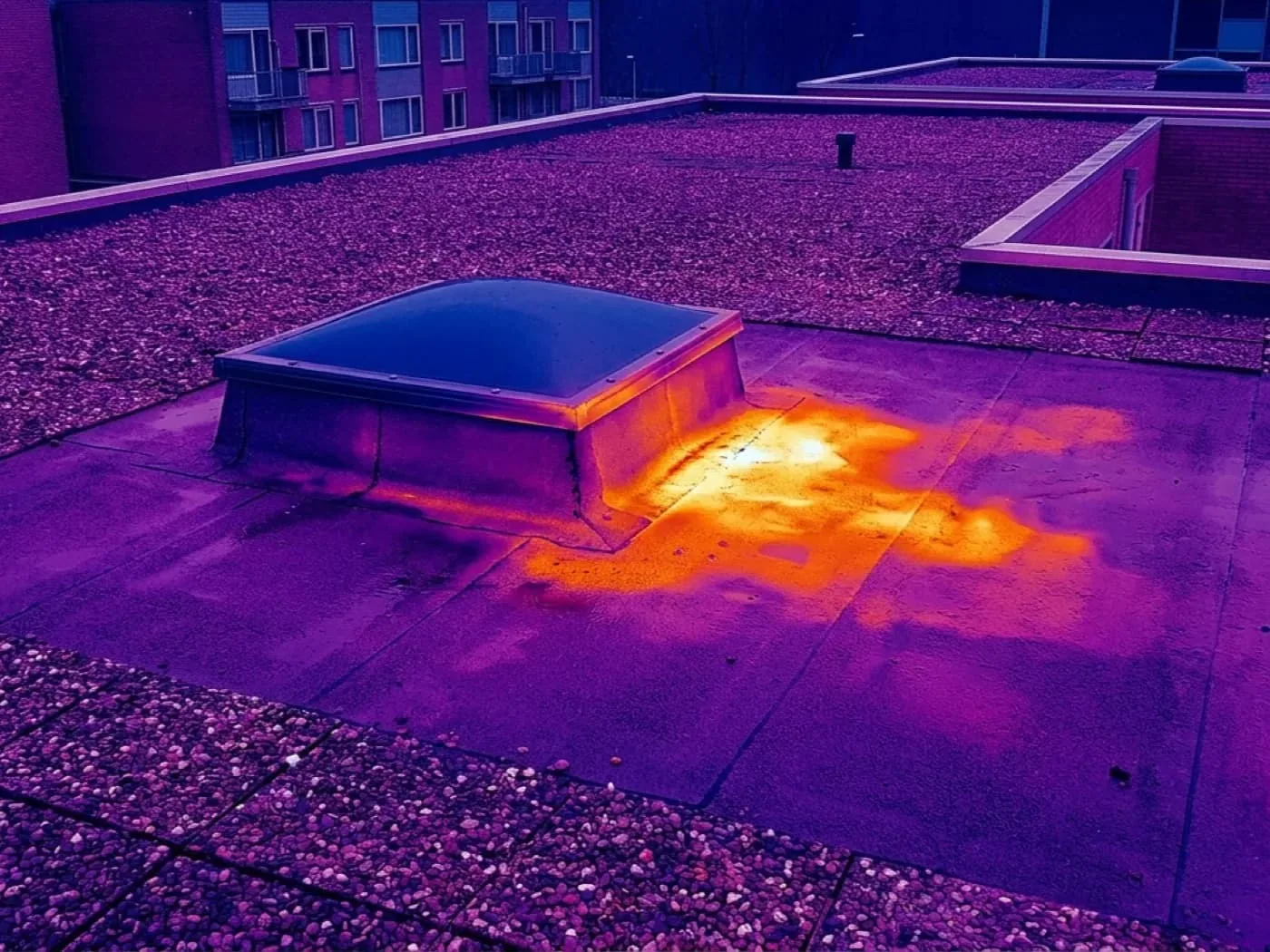
A manufacturer's roof is rated on the same scale as a manufacturing plant anywhere, with the moisture map and the drain log at its center. An infrared moisture survey reads the whole roof in an evening, and core cuts confirm the findings. The repair covers only the wet area, and production keeps moving while the work proceeds in phases. A public owner that also runs offices, a garage, and storage buildings can put every roof on one sheet and fund the weakest first, which is the whole point of a ranking.
How does Central Texas wind enter the plan?
The tornado that hit Temple on May 22, 2024 carried winds near 120 mph and damaged restaurants, banks, shops and strip malls, per the National Weather Service. The same agency put straight-line wind over that city at 80 to 90 mph, and an EF-1 twister began near Little River-Academy later that night. Gatesville is the Coryell County seat on US 84, so those events are regional context for an inspector, not a record of damage in Gatesville.
The sensible response is a pre-season look at coping, fascia, trim and equipment covers, then a post-storm walk set beside the earlier photographs. A Copperas Cove owner, a Killeen owner, and a Gatesville owner are walked the same way. An owner with several buildings across Coryell County can pull them into a multi-site roof program with one rating sheet.
Commercial Roofing Questions
Do you work inside secure facilities?
Access is set by each facility. Where a site allows outside crews, we plan for vetting, escorts, tool inventories, and short working windows. The roof plan names the approvals required and the person who authorizes each day's start.
What does a county-seat owner need for a roof bid?
A scope with measured quantities, photographs for each item, materials and methods, access conditions, and phasing. The owner supplies the contract language and procurement rules, and we supply the roof facts.
What does a holding repair mean at a secure facility?
It keeps one opening closed inside the access limits the facility sets. The file records the area, the materials and the date, says what it leaves open, and the permanent scope follows through the agency's own approval path.
How is a manufacturing roof checked without stopping production?
The work happens on the roof. An infrared scan runs in the evening, core cuts are patched the same day, and nothing inside the plant needs to move. The result is a written summary with photographs.
How are visits to Gatesville planned?
Gatesville is the Coryell County seat, on US 84. Scheduled visits are coordinated with the owner and the facility, and an emergency call gets a dry-in and photographs before anything else, at any hour.