Harker Heights
Harker Heights, TX had 33,097 residents in 2020, making it the third-largest city in Bell County, and I-14 and US 190 run through it about 12 miles west of I-35 in Belton. Much of the local economy is tied directly or indirectly to Fort Hood. A city of that size, with an economy tied to one large employer, is likely to hold retail, housing, office, and service buildings with changing tenants and owners. The roof question that follows is a portfolio question: which of the many roofs in the city fails next, and who has to decide in the first hour?
What fails first on a retail or service roof here?
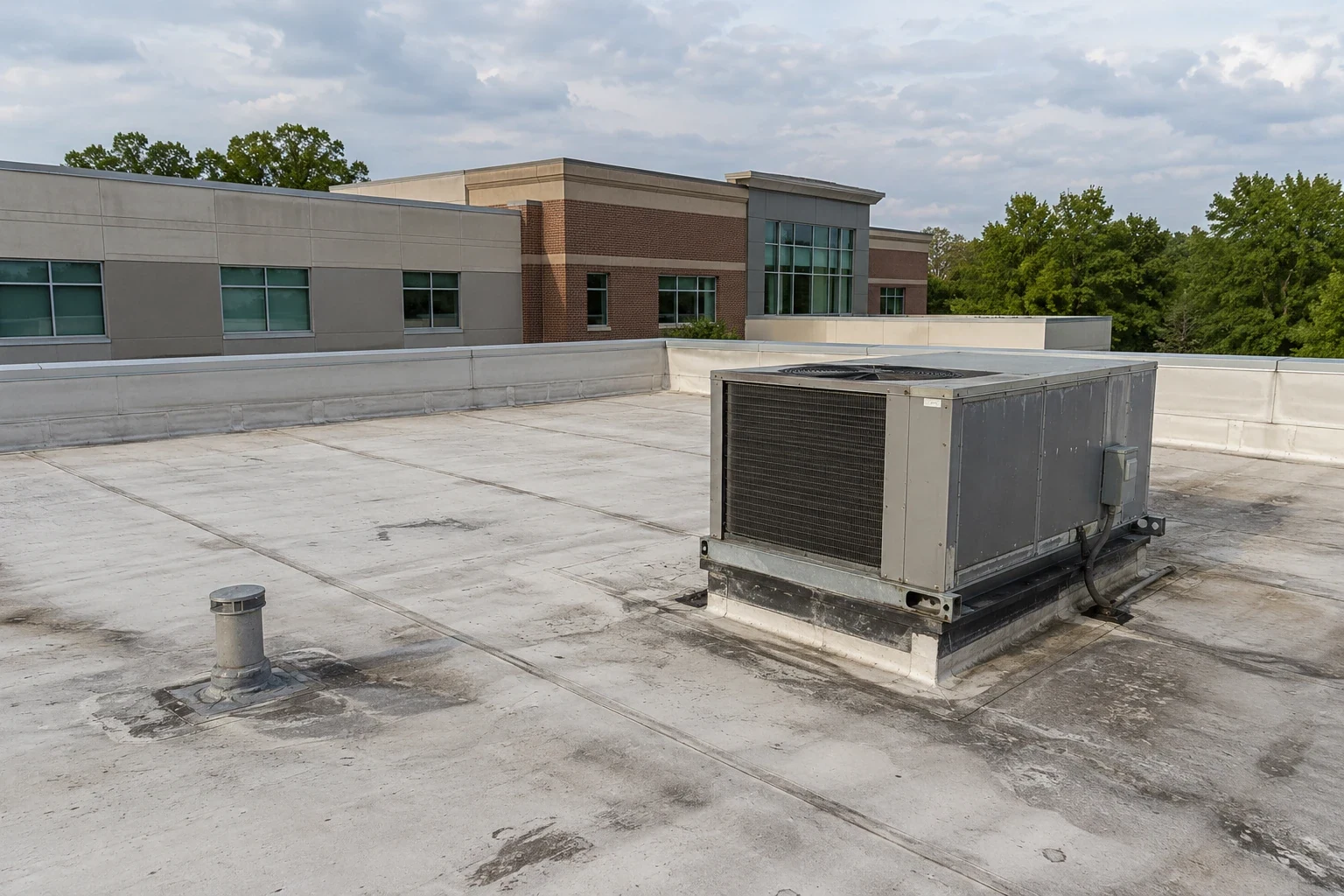
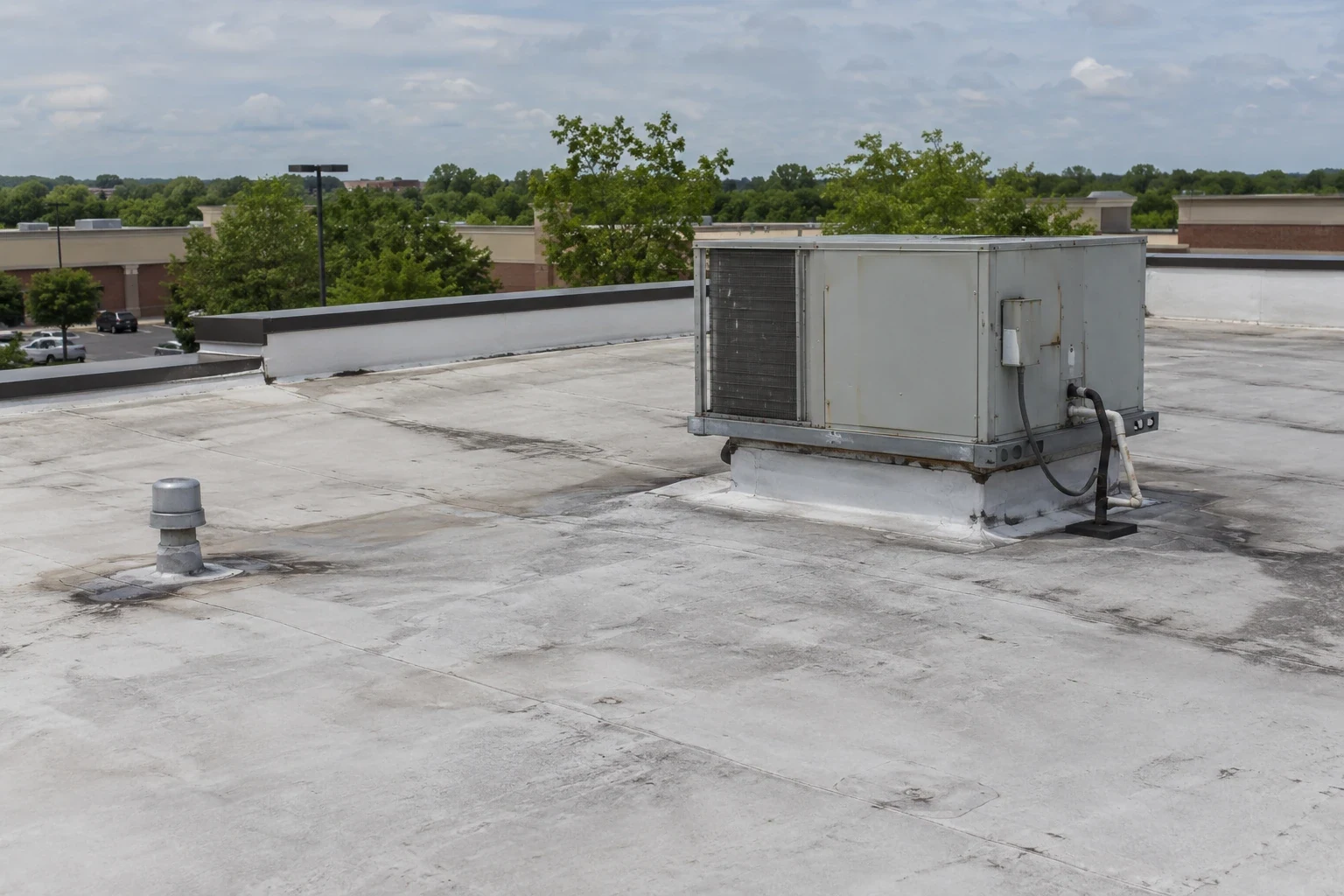
Edges, flashings, and rooftop unit connections. A roof that shelters tenants who change often takes more modifications than one that shelters a single occupant. Every new tenant adds a rooftop unit, a vent, or a conduit, and each is a penetration. Flashings that were sound for the first tenant get disturbed by the third. Drains and scuppers are the other recurring item, particularly on strip centers with long roofs and few outlets.
Each section is walked as its own roof. Penetrations and transitions get photographed, sealants probed, drains tested, and every rooftop unit matched to the tenant it serves. The summer load starts in May, and Temple's record of about 95F in August with some 80 days past 90F gives the regional baseline. A sketch of every penetration means a tenant's change shows up as a change in the record.
Medical and professional offices bring a second concern. A medical office roof sits over exam rooms and records, where a stain is a patient-care problem as well as a repair, so those sections go to the top of the walk. Roof drains over finished interiors are tested with water, and any slow drain is reported with a photograph before the next rain.
What is the make-safe step when tenants are involved?
From the roof, the crew installs a temporary dry-in or sealed patch and photographs the opening before it is covered. The property manager notifies the tenant and handles the interior. The bay or suite below, the materials, and the time go into the log. If the leak started at a rooftop unit, the mechanical contractor is brought in to check the unit while the roof crew secures the flashing.
The holding repair carries its date and a note on what it leaves open, and the intake record reaches the landlord and property manager the same day. Emergency work and the permanent scope sit in separate entries, because a lease question about who pays is easier to settle with facts on the table.
How do we find which bay a leak really starts in?
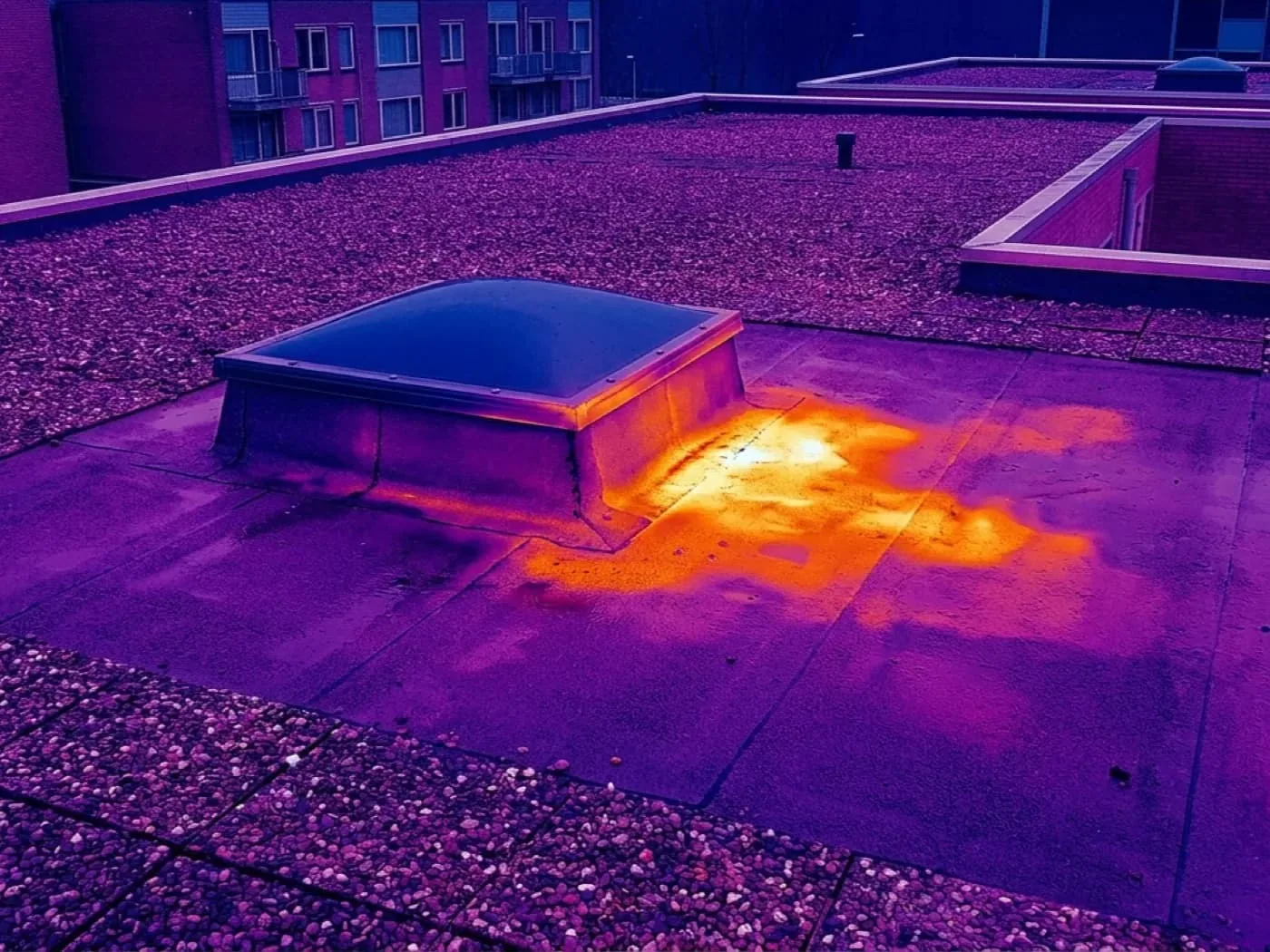
Water travels along the deck, so the stain is not the source. An infrared moisture survey, run after sunset on a clear evening, maps wet insulation across the whole roof, and core cuts verify the readings. The map shows whether the wet area is local to one tenant's bay or spreads across several, which decides whether the repair is a patch or a larger scope.
Each map is dated and tied to bay numbers, and a follow-up survey shows whether the boundary held. When a landlord and a tenant disagree about where water came from, the dated map answers with a photograph instead of a verbal argument.
How does the economy around Fort Hood shape roof planning?
Much of the local economy is tied directly or indirectly to Fort Hood. For a roofer, that points to a mix of building types, such as apartments, retail centers, medical offices, and service buildings, and a mix of owners, from individual landlords to larger investors. The record does not depend on any of that: each building gets the same sheet, and the sheet supports whatever decision the owner needs to make.
A multifamily building is walked like any apartment property. A retail strip is walked like shopping center roofing. The neighboring Killeen and the Knights Way corridor use the same rating scale, so an owner with buildings in more than one can compare them.
What does the 2024 tornado record mean for roofs here?
In May 2024 Temple's tornado reached EF-2 strength. The weather service tied its damage to restaurants, shops, banks and strip malls, estimated straight-line wind across the city at 80 to 90 mph, and logged a separate EF-1 storm that began near Little River-Academy. Harker Heights lies west of I-35 in Belton, so none of that is a record of damage here; it is regional context for the edge review.
Ahead of storm season that means testing coping, fascia and membrane edges for loose fasteners and checking rooftop unit covers for latches and straps. Photographs taken after a storm are laid beside the earlier set to show what shifted. On a wind-damaged roof, the perimeter gets secured first.
How does an investor rank buildings across properties?
Every building is graded on membrane and seam condition, flashings, drains, penetrations and moisture, on one scale. The grades sort buildings into fix-now, watch and replace-soon groups, and the result gives property management companies, and owners who answer to investors, a budget tool that carries its photographs with it.
The scope spells out what moves the price: roof area, penetration count, wet insulation to be cut out, access conditions and the hours tenants will tolerate. A building that shares a parapet or flashing detail with a sibling gets that sibling checked in the same visit, since one failure usually predicts the next. The permit office answers which approvals the work needs. Emergency calls are answered at any hour.
Between emergencies, the cheapest protection is a spring visit and a fall visit. Each one clears drains, tightens trim, reseals small open joints, and adds dated photographs to the file. An owner who keeps that file has a baseline for every later conversation, with an insurer, a buyer, or a tenant, and a record that shows a roof was looked after. The same file helps when a tenant leaves, because the incoming tenant's unit work is checked against the last photographs of the curb and flashing.
Commercial Roofing Questions
Who decides between a patch and a bigger repair on a shared roof?
The owner of the roof, usually the landlord, after hearing from the property manager. We bring the findings and the price of each path. One clear cause over dry insulation reads as a patch; a leak that keeps returning, or insulation that is wet across bays, reads as a bigger job.
How do tenant changes affect a roof?
Each new unit, vent, or conduit adds a penetration. Flashings get disturbed during installation, and a mismatched curb can leave a gap. A penetration log kept at every visit shows what changed and who made the change.
What does a holding repair do on a shared roof?
It closes one opening and says plainly what it leaves open. The file carries the area, the materials, and the date, and the permanent scope is priced and scheduled apart from it.
Can apartments stay occupied during a reroof?
Usually. The roof crew works from above, a section is opened and closed within the day, and residents hear about noisy tasks in advance. Management and the crew settle the plan before anyone mobilizes.
How far is Harker Heights from Temple?
Harker Heights is about 12 miles west of I-35 in Belton, along I-14 and US 190. Owners agree scheduled visits in advance, and emergency calls at any hour get a dry-in and a photographic record first.